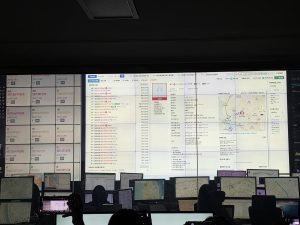

Whether you are on house arrest, supporting someone who is, or running a community supervision program, the same questions keep surfacing: How does a house arrest ankle monitor actually prove you are home? What rules apply beyond the judge’s order? And which technology choices reduce false alarms and charging failures in 2026? This guide answers those questions in plain language—linking house arrest policy to the GPS ankle monitor, GPS ankle bracelet, and RF home systems agencies deploy under electronic monitoring contracts. See also: house arrest GPS ankle monitor complete guide. See also our GPS ankle monitor buyer’s guide.
For program design and procurement depth, start with our house arrest home detention monitoring guide; for continuous GPS specifications see CO-EYE ONE, for RF-centric home proofing see CO-EYE HouseStation, and for officer dashboards see CO-EYE Monitoring Software.
What Is House Arrest?
House arrest—often called home confinement, home detention, or electronic monitoring in court orders—is a community sentence or pretrial condition that requires a person to remain at an approved residence except during specifically authorized activities (work, treatment, court, medical care, and similar exceptions spelled out in writing). It is not a single national statute; it is a bundle of state and local practices implemented through judges, probation, pretrial services, parole, and contracted monitoring centers.
People may be placed on house arrest in pretrial, post-conviction, or transitional justice tracks. Risk level, offense category, victim safety (especially in domestic violence matters), jail crowding, and fiscal pressure all influence whether house arrest is offered versus incarceration. The visible symbol of the arrangement is usually an ankle monitor, but the legal obligation is the order; the device is how agencies gather evidence of compliance. For comprehensive guidance, see our domestic violence GPS ankle monitor guide.
Because readers search both general language and device terms, remember that a GPS ankle bracelet and a GPS ankle monitor are the same class of hardware in most marketing and court filings—one-piece cellular GPS units are the default image of house arrest in news coverage even when the underlying program is actually RF-only at night.

How House Arrest Ankle Monitors Work
A house arrest ankle monitor system answers supervision questions by combining hardware on the body, radio links, and software rules. Two families dominate:
GPS continuous tracking
A GPS ankle monitor uses satellite navigation (typically multi-constellation GNSS) to estimate location, then sends reports over cellular networks to a monitoring platform. For house arrest, staff draw geofences—inclusion zones around the home and sometimes corridors to approved workplaces—plus exclusion zones (addresses or radii a participant must not enter). If the ankle monitor reports a fix outside an allowed window, the platform raises an exception for officer review.
RF proximity (home beacon)
RF models pair a transmitter on the strap with a powered base unit in the residence. The supervision question becomes “Is the strap within RF range of the approved home?” That is ideal for strict curfew house arrest where continuous outdoor route mapping matters less than reliable overnight presence. Many programs layer RF at home with a GPS ankle bracelet when travel is permitted.
One-piece vs two-piece
One-piece designs integrate battery, modem, antennas, and tamper sensors in a single enclosure—common for electronic monitoring tracks that need map-grade accountability. Two-piece architectures historically separated a bulky transmitter from a radio module; modern programs increasingly prefer integrated one-piece GPS ankle monitor units for medium- and higher-risk cohorts while reserving RF bases for specialized curfew-first house arrest tiers.
Geofencing accuracy depends on sky view, multipath, and assisted fixes; officers should pilot devices in local urban canyons rather than trusting brochure-best numbers alone. The ankle monitor is only as fair as the rules loaded in software match the plain-language instructions given to participants.
Supervision centers also tune reporting intervals—more frequent fixes improve timeliness but shorten battery life on any GPS ankle monitor. For house arrest, a common compromise is denser reporting during curfew hours and slightly relaxed cadence when a participant is verified at work inside an approved corridor. Exclusion zones near schools, victim homes, or workplaces require careful radius math: too tight and GPS noise generates false approaches; too loose and victim-safety goals erode. Agencies should document how they test radii with live drives before enforcing new electronic monitoring templates in high-stakes domestic cases.
Finally, participants should understand that loss of cellular service is not a free pass: many programs treat extended communication gaps as technical violations unless pre-approved (for example, documented travel to areas with known dead zones). If your house arrest order requires you to remain reachable, carry the charging kit your vendor supplies and keep monitoring-center numbers accessible.
House Arrest GPS ankle bracelet rules and restrictions
Exact conditions vary by jurisdiction, but most house arrest orders share a common skeleton. Participants typically must:
- Stay inside the approved residence during curfew hours unless an exception is pre-authorized in the monitoring platform.
- Maintain charging discipline; a dead battery can look like non-compliance even when no intent exists—another reason longer battery life matters for any house arrest ankle monitor program.
- Honor exclusion zones and victim-notification logic in domestic-violence-informed electronic monitoring tracks.
- Request schedule changes in advance for employment shifts, medical appointments, or family emergencies rather than assuming retroactive forgiveness.
- Submit to drug or alcohol testing when the order includes sobriety conditions—some cohorts wear alcohol-sensing straps or submit to separate testing even while on GPS house arrest.
- Avoid tampering with straps, housings, or chargers; intentional damage may constitute a new offense independent of the original case.
Travel outside the county or state usually requires written approval; a GPS ankle monitor may technically function nationwide, but the court order still governs where you may legally be. Agencies should give participants a one-page “rules mirror” that matches the geofences actually configured—mismatches are a top source of disputes in house arrest litigation.
Employment exceptions deserve explicit wording: not just “allowed to work” but the approved address, shift windows, and whether transit time is buffered. Retail and gig-economy schedules that change weekly need a standing process for updates so the house arrest ankle monitor rules and the employer’s schedule stay aligned. Drug and alcohol components may add standalone check-in apps, breath schedules, or transdermal straps—each with its own failure modes that can compound electronic monitoring stress if participants confuse alcohol alerts with GPS curfew alerts.
Types of Ankle Monitors Used for House Arrest
Programs label tiers differently, but equipment falls into predictable buckets:
- GPS one-piece ankle monitor: Continuous location for inclusion/exclusion enforcement and travel windows—what most people picture when they hear GPS ankle bracelet.
- RF home tether: Confirms presence near a base station; strong for overnight house arrest and lower cellular data burden when map traces are unnecessary.
- Alcohol monitoring: Transdermal or breath schedules layered on top of location rules for DWI or domestic-violence sobriety packages—often discussed alongside major vendors such as SCRAM (alcohol-centric portfolios) without replacing GPS house arrest entirely.
- Smartphone check-ins: App-based verification for some low-risk tracks; different tamper and continuity assumptions than strap-integrated electronic monitoring.
Vendor landscapes include firms such as BI Incorporated (BLUtag-class GPS portfolios), SuperCom, Track Group, Geosatis, Buddi, and Sentinel—each with different dashboards and fee structures. Agencies evaluate them against local coverage, alert latency, and field-service logistics; this article stays vendor-neutral except where CO-EYE specifications are cited for buyers.
Technology Features That Matter for House Arrest
When a house arrest ankle monitor fails, the failure mode is usually operational—charging gaps, strap disputes, or alert floods—not a missing satellite icon. Prioritize:
- Battery life: One-piece GPS units historically forced daily charging; newer LTE-M/NB-IoT designs can reach roughly seven-day endurance in representative reporting modes, shrinking the gap where house arrest participants are off-body for charging.
- Tamper detection: Fiber-optic strap and case sensing can deliver zero false-positive fiber tamper signaling when installed per manufacturer guidance—reducing the credibility damage when courts review ankle monitor alerts.
- Waterproofing: IP68 ratings support showers and weather exposure so routine hygiene does not break electronic monitoring continuity.
- GPS accuracy: Representative one-piece devices may claim sub-2-meter performance under favorable sky view; always validate in local built environments relevant to your house arrest cohort.
- Install speed: Tool-free fitting in seconds reduces bench time for busy dockets—important when jail alternatives depend on same-day GPS ankle monitor enrollment.
2026 Legislative and Policy Developments
House arrest and GPS-backed supervision continue to move through statehouses alongside victim-safety debates. Highlights as of early 2026 (verify enrolled text before legal use):
- California SB 871 (2025–2026 session): The Domestic Violence Prevention Act framework advanced by Senator Susan Rubio would strengthen restraining-order enforcement with continuous electronic monitoring concepts—including GPS-class devices and victim-alert logic—subject to county implementation agreements and ongoing committee review.
- Texas 89th Legislature: Multiple family-violence and pretrial bills intersect with GPS conditions (for example, analyses and debates around HB 36-class GPS bond measures, HB 1824-style mandatory tracking proposals, HB 2492 release-timing rules, and SB 1020 tamper-notification themes). Note: HB 2891 (89R) concerns Railroad Commission penalties for oil-and-gas rule violations—not ankle monitors—so practitioners should cite the correct bill numbers when briefing judges.
- Florida 2026 packages: CS/HB 277 and CS/SB 682 expand court authority to order GPS-capable electronic monitoring in domestic-violence injunction contexts, with cost allocation to respondents in many scenarios; separate firearm-surrender measures (for example, SB 858-class filings) address weapons apart from the GPS ankle bracelet location stack—both threads matter to supervised release design even though they are not a single combined statute.
- New York capacity debates: NYC Council budget testimony in 2025 highlighted gaps between desired electronic monitoring enrollment and funded bracelet slots (public discussion referenced on the order of tens of millions of dollars to scale capacity materially). Treat dollar figures as politically negotiated line items—check enacted city and state budgets for the obligating language your finance team needs.
These trends increase demand for reliable house arrest ankle monitor hardware and transparent alert handling, not just more maps on a screen.
Federal grant language and NIJ-backed research summaries—such as Florida findings associating electronic monitoring with roughly a thirty-one percent reduction in recidivism in that study context—continue to appear in council staff reports when jurisdictions expand bracelets. Local implementation quality still dominates outcomes: the same GPS ankle bracelet stack can succeed with trained officers and clear policies or founder under alert fatigue and underfunded monitoring centers.
Cost of House Arrest Monitoring
Participants, insurers, counties, and courts split costs differently. Published anecdotes and vendor RFPs often land around $5–$25 per day for active GPS tiers of electronic monitoring, before subsidies or indigency waivers. That is far below marginal jail costs frequently cited above $100 per day in fully loaded detention accounting—one reason house arrest scales fiscally even when per-capita device fees sting families.
Total ownership for agencies includes spare devices, cellular backhaul, monitoring-staff time, training, court reporting, and revocation workflows. A slightly higher daily rate that cuts false ankle monitor alerts can save officer hours and hearing volume—model both sides when scoring bids.
What Happens If You Violate House Arrest?
Violations range from technical glitches to intentional absconding. Platforms emit exception codes—strap tamper, loss of report, exclusion-zone breach, late return to curfew. Agencies follow escalation ladders: phone contact, field visits, modified schedules, hearings, or revocation to custody. Because house arrest is court-ordered, willful circumvention of a GPS ankle monitor can trigger new charges in many jurisdictions. Participants should document charging, medical emergencies, and employer schedule changes through official channels rather than assuming the ankle monitor vendor will intuit context.
Due-process norms vary, but many programs offer a short grace window for provable equipment faults before seeking revocation—bring charger photos, medical paperwork, or employer letters when disputing a house arrest alert. Defense counsel often requests raw location logs and alert timestamps; agencies should maintain exportable histories so electronic monitoring evidence holds up in contested hearings. Victim-notification tracks add another layer: protected parties may receive proximity warnings, which raises the stakes for false approaches and reinforces the need for calibrated geofences on every GPS ankle bracelet deployment.
How CO-EYE Technology Supports House Arrest Programs
REFINE Technology’s CO-EYE line maps cleanly onto layered house arrest architectures:
- CO-EYE ONE — One-piece GPS ankle monitor at about 108 g, roughly seven-day battery life in representative LTE-M/NB-IoT independent reporting configurations, <2 m GPS accuracy under favorable conditions per manufacturer specs, IP68, fiber-optic tamper on strap and case with zero false-positive fiber tamper design, and <3 second tool-free install.
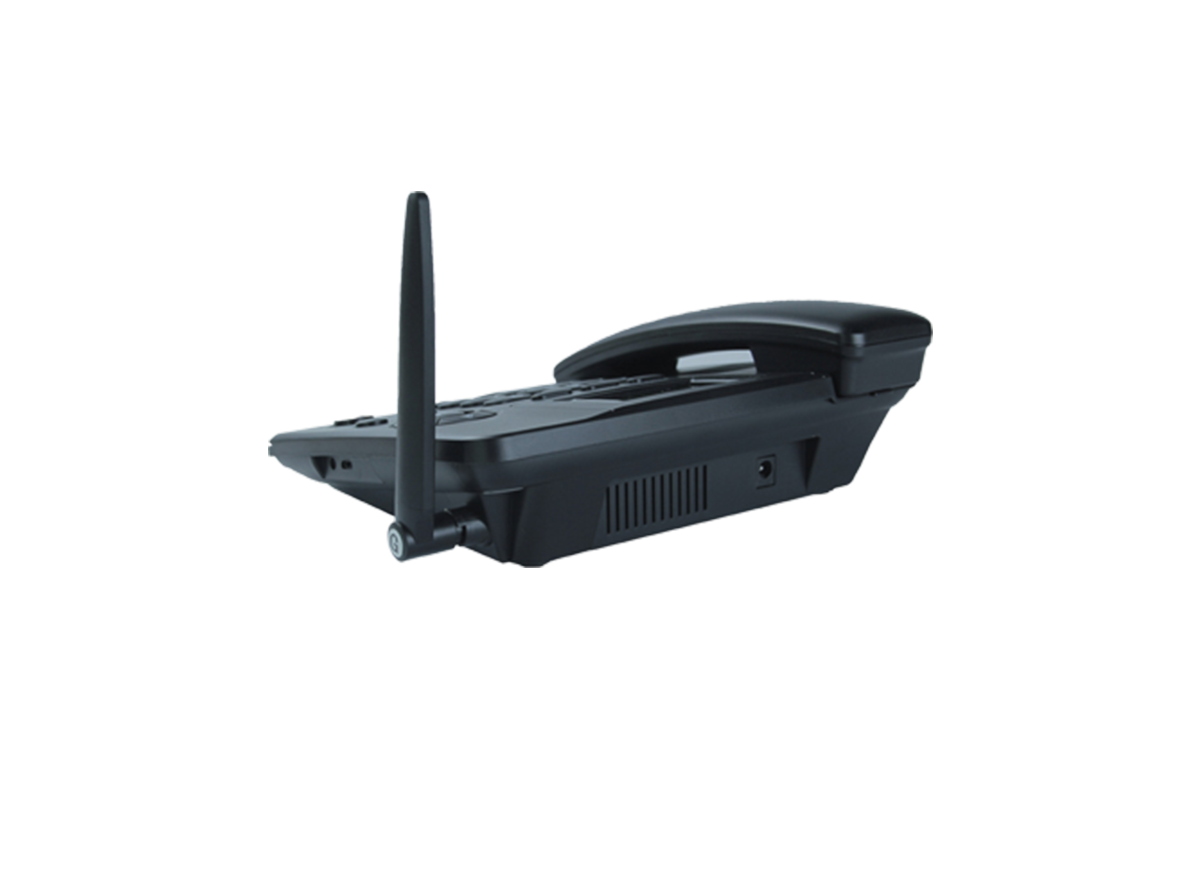
- CO-EYE HouseStation — Approximately 225×173×55 mm, 750 g, enhanced antenna design intended to penetrate multiple concrete walls, 433 MHz RF range on the order of 50 m indoor / 200 m outdoor per manufacturer statements, plus dual SIM telephone capability for voice workflows during electronic monitoring operations.
- CO-EYE DUO — Enhanced anti-tamper architecture where battery drain does not interrupt tamper monitoring, supporting continuity-sensitive house arrest orders that stress strap integrity even during power events.
- CO-EYE Monitoring Software — Thirteen-module unified platform for operators translating GPS ankle bracelet telemetry into officer-ready alerts, schedules, and audit trails.
Procurement teams should still run pilots with local RF noise, housing density, and cellular coverage—spec sheets complement, but do not replace, field evidence for house arrest ankle monitor awards.
FAQ: House Arrest Ankle Monitors
Is a house arrest ankle monitor the same as probation GPS?
Often the same GPS ankle monitor hardware serves both frames; the difference is the court order and software rules. House arrest emphasizes residence-centric curfew and inclusion zones, while broader probation GPS may weight continuous community movement differently.
Can I shower with my ankle monitor on?
Many court-grade units are IP68 and intended for normal hygiene, but always follow your officer’s written instructions—charging contacts and straps differ by model. When shopping as an agency, specify waterproofing in RFPs so house arrest participants are not penalized for routine showers.
Does GPS mean someone watches me 24/7 on a map?
Location fixes are logged according to reporting intervals and platform settings; officers review exceptions rather than staring at live video. The ankle monitor is a compliance tool, not entertainment surveillance.
Who pays for electronic monitoring on house arrest?
Sometimes the participant, sometimes the county, sometimes a mix with sliding scales. Ask your clerk or supervising officer for the fee schedule tied to your GPS ankle bracelet tier.
What should agencies prioritize when buying house arrest technology?
False-alert rates, battery life versus reporting cadence, enrollment speed, dashboard ergonomics, data retention, and total cost of ownership—including spare house arrest ankle monitor inventory for same-day swaps.
Last updated March 2026. Legislative summaries are informational; verify current statutes and enrolled bill text. CO-EYE specifications reflect manufacturer documentation at publication.