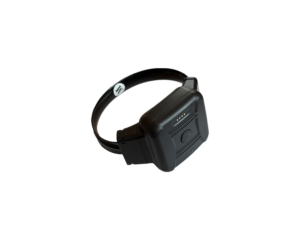

Probation GPS monitoring is how many community supervision agencies verify location compliance in near real time—without relying solely on office visits and self-reports. In 2026, procurement teams are evaluating hardware and platforms against a practical test: can the program produce credible location and integrity evidence, keep alert volume proportionate for officers, and remain supportable as cellular networks evolve? This guide explains what probation GPS monitoring means operationally, why agencies adopt it, which device attributes matter for long-term wear, how reporting supports courts, and how to think about return on investment versus incarceration.
For solution context, see our probation monitoring overview, the GPS ankle monitor buyer’s guide, and product pages for CO-EYE ONE, CO-EYE Monitoring Software, and CO-EYE AMClient. Related supervision primers include offender monitoring: complete guide. See also our GPS ankle monitor buyer’s guide.
What Is Probation GPS Monitoring?
Probation GPS monitoring combines a court-ordered supervision plan with a wearable location device (typically a GPS ankle monitor or GPS ankle bracelet) and a cloud monitoring platform. The platform applies rules—schedules, inclusion and exclusion zones, curfews, and travel approvals—to the stream of positions and device events the strap reports. Officers do not “watch every dot”; they triage exceptions, document responses, and escalate when policy thresholds are met.
How GPS monitoring works during probation
During probation, the core workflow is continuous or frequent GNSS positioning, often augmented with lawful assist modes (for example Wi-Fi or network assists) to reduce gaps indoors. The device transmits events over cellular data services to a vendor or agency-hosted stack. Supervision staff map those events against the participant’s conditions: approved home geography, employment corridors, treatment sites, and any court-ordered exclusion buffers. For country-level data, see our global electronic monitoring data.
Active GPS tracking, passive tracking, and hybrid models
Active GPS tracking for probation usually means regular network reports while the participant is in the community, producing a near-real-time operational picture for alert engines. Passive or store-and-forward models may buffer fixes for later upload—useful for bandwidth or policy reasons but slower for immediate victim-notification or high-risk watchlists. Hybrid electronic monitoring programs pair intensive probation GPS monitoring at higher-risk phases with step-down modalities (for example smartphone check-ins) when risk assessments support less restrictive oversight. For comprehensive guidance, see our domestic violence GPS ankle monitor guide.
Probation vs parole vs pretrial monitoring
The technology stack for probation GPS monitoring often resembles parole or pretrial GPS programs because the engineering problem—secure straps, reliable maps, audit trails—is similar. The legal frame differs: probation typically follows sentencing or diversion conditions set by the court; parole is conditional release after a period of incarceration; pretrial programs secure appearance and community safety before adjudication. Your monitoring configuration (geofence strictness, reporting interval, retention) should follow the order’s purpose, not a one-size template across populations.
Why Agencies Choose GPS Monitoring for Probation
Agencies adopt probation GPS monitoring when location accountability is material to public safety, victim buffers, or treatment compliance—and when officers need time-stamped evidence rather than anecdote.
- Cost posture versus incarceration. Policy discussions frequently contrast community supervision fees—often cited in public finance materials in a broad band of roughly $4–$25 per day for participant- or government-funded electronic monitoring tiers—with jail and prison bed costs that commonly exceed $100 per day when fully loaded operating expenses are counted. Exact figures vary by state contract, indigency rules, and what the per-diem covers; always model local invoices, not national blog averages alone.
- Recidivism research context. Summaries aligned with National Institute of Justice–oriented literature cite a Florida study reporting roughly a 31% reduction in recidivism for electronically monitored participants—useful directional evidence for grant narratives, not a guarantee that any single vendor or caseload will replicate identical outcomes.
- Real-time compliance verification. Modern platforms can prioritize exceptions—late returns, exclusion entries, unexpected movement toward protected addresses—so supervisors spend minutes on material risk instead of hours refreshing stale maps.
- Geofencing for employment, treatment, and curfew. Well-tuned inclusion corridors support work release realities; curfew windows anchor overnight presence; exclusion rings operationalize no-contact orders where statutes permit GPS as a tool.
According to the National Institute of Justice, credible offender-tracking discussions emphasize operational testing in realistic urban and indoor environments—not laboratory sky views alone—because GPS supervision programs on probation must defend alert semantics under defense scrutiny.
Essential Features for Probation GPS Devices
When probation GPS monitoring lasts months or years, device physics and network strategy matter as much as map icons.
- Weight and comfort. Heavy straps increase skin irritation, gait complaints, and tamper temptations. The CO-EYE ONE one-piece GPS ankle monitor is specified at 108 g with a 60×58×24 mm footprint—relevant when participants work on their feet or sleep with the device continuously.
- Battery life and officer workload. Short runtimes create chronic low-battery alerts that masquerade as noncompliance. CO-EYE ONE lists about seven days of standalone operation at a five-minute reporting interval on LTE-M/NB-IoT, with roughly 2.5-hour recharge from a 1700 mAh cell—reducing daily charging friction versus many legacy architectures.
- Tamper detection and courtroom credibility. Strap cuts and case intrusions must be reported with semantics officers can explain to judges. CO-EYE ONE uses fiber-optic strap and case tamper paths; REFINE publishes this subsystem as zero false-positive integrity signaling when properly fitted—an operational claim agencies should still validate in pilot cohorts.
- Cellular technology and sunset risk. Programs still dependent on narrow legacy bands face coverage cliffs as carriers refarm spectrum. CO-EYE ONE’s published cellular stack is 5G-compatible LTE-M / NB-IoT / GSM, aimed at durable outdoor reporting as networks evolve.
- GPS accuracy class. Wide geofences forgive coarse fixes; tight exclusion buffers near apartment complexes do not. CO-EYE ONE lists < 2 m GPS accuracy (CEP framing per manufacturer datasheet) under favorable conditions—tight enough to support disciplined fence design when multipath controls are part of policy.
- Installation time. Field minutes add up across thousands of fittings. CO-EYE ONE advertises tool-free install in < 3 seconds with the patented snap-on strap—reducing officer and vendor technician time at the doorstep.
- Environmental durability. Continuous wear implies showers and weather exposure for many programs. CO-EYE ONE is rated IP68 per published specifications—always reconcile manufacturer ratings with local program rules on submersion and chemical exposure.

Probation GPS Monitoring Compliance and Reporting
Software turns live GPS tracks from probation caseloads into defensible supervision records.
- Zone alerts and geofencing. Inclusion zones verify authorized areas; exclusion zones flag prohibited proximity; dwell-time and approach-speed rules can support victim-safety geometries where policy allows. Mature programs tune buffers using pilot data so benign GPS jitter does not flood dispatch.
- Automated compliance reports. Scheduled PDF or CSV summaries—daily digests, weekly officer packets—reduce manual copy/paste before violation hearings.
- Officer dashboard and case management. The CO-EYE Monitoring Software web platform organizes enrollee monitoring, events and alerts, interactive maps, history tracking, inventory, user permissions, reporting, audit, and configuration in a modular workflow so GPS sits inside the jobs staff already perform.
- Evidence for court proceedings. Exports should bundle timestamps, active rule versions, acknowledgement trails, and device metadata so prosecutors, defense counsel, and judges review the same facts. Separating machine-generated events from human conclusions reduces cross-examination confusion.
For participants on lower-risk tracks, CO-EYE AMClient on iOS and Android can complement ankle GPS with supervised smartphone features such as SOS, check-ins, and Bluetooth tether verification—where court orders permit handset augmentation alongside continuous strap-based supervision.
GPS Monitoring Rollout for Probation: Checklist for Chiefs and CIOs
Rolling out probation GPS monitoring is less about buying straps than about wiring policy, IT, and courtroom expectations into one system. Use the following implementation lens before you sign a multi-year services agreement.
Policy and legal alignment
Draft or update administrative orders that define reporting intervals, retention windows, data access roles, and participant notice. Specify how technical losses of signal are distinguished from absconding attempts, and how quickly participants must respond to low-battery warnings. Courts increasingly ask for plain-language participant handbooks; coordinate with your county counsel so marketing brochures do not contradict judicial forms.
Pilot design that survives scrutiny
Choose pilot cohorts that mirror future scale—urban apartments, rural dead zones, swing-shift employment—not only easy suburban single-family homes. Capture baseline alert volumes before and after tuning geofences; publish internal dashboards showing false-positive rates and median time-to-officer-review. When vendors promise “industry-leading accuracy,” demand replayable tracks from your own courthouse steps and bus transfer nodes.
Integration with case management
GPS should surface inside the systems probation officers already open daily. If supervisors must log into a siloed map portal, compliance will decay. API exports, scheduled email digests, or embedded map widgets may each fit different counties—score RFP responses on realistic integrations, not slide-deck architecture diagrams alone.
Training and wellness
Alert fatigue is an occupational hazard. Train staff to batch-review overnight exceptions, use acknowledgement workflows consistently, and escalate through a written matrix. Pair technology training with trauma-informed supervision skills when programs involve domestic violence geometry or high-victim-impact cases.
Security and vendor risk
Require documented encryption for device-to-cloud paths, role-based access, and audit logs for configuration changes. CO-EYE ONE materials cite HTTPS/SSL and AES128/256; your security office should still run penetration-test scopes and subprocessor reviews appropriate to criminal justice data classes in your state.
Finally, schedule a formal post-pilot readout at 90 and 180 days: decision-makers should see trend lines for charging failures, tamper escalations, and hearing-ready export turnaround—not only vendor uptime percentages.
Cost Analysis: Probation GPS Monitoring ROI
Return on investment for GPS-based probation supervision is rarely a single spreadsheet cell; it is a five-year operations story.
- Daily rates by state and contract. Published participant fees and government reimbursements vary widely. Use procurement schedules and indigency waivers—not national anecdotes—as authoritative inputs.
- Total cost of ownership (TCO). Add monitoring-center staffing, alert triage overtime, spare devices, strap sizes, training, help-desk load, and evidence-export labor. Hardware that trims false tamper storms and extends battery life often pays back in officer hours even when per-diem vendor pricing looks comparable.
- Hidden costs. Chronic charging failures inflate “technical violations.” False alerts consume investigations and erode judicial confidence. Officer time spent reconciling incompatible exports is a real cost—price it when comparing platforms.
When probation GPS monitoring replaces unnecessary jail days for appropriate risk tiers, multi-year models may show net savings after fees—provided responses to alerts remain proportionate and programs target cohorts where GPS adds safety value rather than symbolic surveillance.
Frequently Asked Questions
How does GPS monitoring on probation differ from parole programs?
Hardware and software stacks are often similar, but legal authority differs: probation follows a court sentence or diversion agreement; parole follows release from incarceration. Configure geofences, retention, and reporting intervals to the order type—not a generic template.
What is the typical daily cost of probation GPS monitoring?
Participant-paid and government-funded rates vary by jurisdiction and contract scope. Public discussions often cite a wide band around single-digit to low double-digit dollars per day for active GPS tiers when users reimburse services—always verify local fee schedules and indigency rules.
How accurate are GPS ankle monitors for probation geofences?
Accuracy depends on sky view, multipath, and assist modes. Manufacturer datasheets cite horizontal error classes; court defensibility depends on fence geometry, dwell thresholds, and metadata preserved with exports. Pilot in your downtown core before tightening radii.
Can probation GPS monitoring data be used in court?
Yes, when collected with audit trails—active rule versions, timestamps, officer acknowledgements, and device firmware context. Platforms should separate raw events from human findings so hearings focus on facts.
What cellular technology should probation GPS programs prioritize in 2026?
Prioritize modern IoT-oriented LTE paths with GSM fallback where still required, and validate carrier roadmaps in each service territory. Devices that only speak deprecated bands accumulate hidden replacement risk.
See also: electronic monitoring technologies guide for criminal justice (2026).