A house arrest ankle monitor is the hardware and software stack courts and community corrections use to enforce home confinement: proving someone is at an approved address during curfew, mapping approved travel, and flagging exclusion zones. If you are researching what that technology does in 2026—whether you supervise programs, support a participant, or evaluate vendors—this guide connects policy language to real equipment choices, including how today’s house arrest ankle monitor stacks pair GPS accountability with RF home verification. See also: house arrest GPS ankle monitor complete guide. See also our GPS ankle monitor buyer’s guide. Participant-facing supervision language also belongs in what wearers need to know about GPS ankle bracelets.
For program architecture and procurement framing, see our house arrest home detention monitoring guide; for continuous GPS fundamentals read the GPS ankle monitor guide; for deeper EM context explore electronic monitoring complete guide (2026) and the companion piece house arrest ankle monitor rules and technology.
Introduction: What Is House Arrest GPS Monitoring?
House arrest (home detention, home confinement) is a court-ordered restriction that requires a person to remain at an approved residence except during specifically authorized activities—work, treatment, court, medical care, religious services, or other exceptions written into the order. The public face of that order is often an ankle-worn device, but the legal obligation is the order itself; the technology supplies evidence of compliance.
Who wears a house arrest ankle monitor? Typical cohorts include pretrial defendants released with location conditions, sentenced offenders on community supervision, parolees transitioning from custody, and—depending on jurisdiction—participants in specialty dockets where victim safety or compliance checks require location accountability. Risk level, offense category, housing stability, and victim proximity all influence whether agencies assign a full GPS ankle monitor, an RF-only home model, or a blended stack. For comprehensive guidance, see our domestic violence GPS ankle monitor guide.
Searchers often use overlapping phrases—GPS ankle bracelet, GPS ankle monitor, and house arrest ankle monitor—to describe the same supervision intent. In procurement documents, the precise phrase house arrest ankle monitor usually signals residence-centric rules (curfew, inclusion zones) more than 24/7 trail mapping, even when the same one-piece GPS hardware serves both use cases.
How House Arrest Monitoring Works
Every serious home detention program answers a short list of operational questions: Is the participant home during curfew? If they travel, are they on an approved corridor? Did they enter a prohibited area? Is the strap intact? Operators translate court orders into software rules—schedules, geofences, alert severities, and officer workflows—then map those rules onto devices and apps. Those answers, in aggregate, define what stakeholders mean by a house arrest ankle monitor deployment in practice.
GPS tracking for approved movement
When a GPS ankle monitor is primary, satellite navigation (multi-constellation GNSS) estimates position; cellular backhaul moves reports to a monitoring platform. Staff configure inclusion zones around the home and sometimes around workplaces; exclusion zones protect victims or ban high-risk locations. If the device reports a fix outside an allowed window, the platform raises an exception for human review—reducing the need for an officer to manually watch a live map.
RF home beacon and curfew verification
RF-centric models ask a narrower question: “Is the strap within range of the approved residence?” A base unit in the home listens for a wearable tag. That pattern fits strict overnight curfew and dense housing where continuous GPS fixes indoors are noisy. Many mature programs layer RF at home with GPS when daytime travel is permitted, so the same participant experience still feels like one coherent house arrest supervision plan even though two radio systems are involved.
Daily schedules and exception handling
Schedules encode recurring curfew bands, one-off court windows, and employment shifts. Good implementations separate technical loss of signal from behavioral violations—dead cellular pockets, multi-path indoors, and charger swaps should not automatically equal revocation. Agencies document grace periods, call-down scripts, and evidence exports so hearings can review timestamps fairly.
Victim safety, domestic violence, and layered zones
Many ankle-monitor-based house arrest orders intersect with protected-party concerns. Platforms can enforce standoff radii, speed-based approach analytics, and multi-zone logic so victims receive timely notifications when court language requires them. Implementation quality matters as much as hardware: poorly drawn circles generate nuisance alerts; well-tuned buffers paired with officer triage protect both victims and participants from unnecessary enforcement actions.
Domestic violence dockets sometimes pair location supervision with voice contact rules, check-in apps, or ancillary sensors. Even when the visible device is a single GPS ankle bracelet, the operational playbook should spell out escalation, language access, and documentation standards so contested hearings do not collapse into dueling anecdotes about signal bars.
Data retention, exports, and courtroom readiness
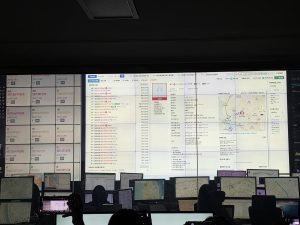
Supervision generates terabytes of fixes, heartbeats, and tamper codes. Agencies need retention policies aligned with local rules—how long raw tracks live, who may export PDFs, and how chain-of-custody logs prove integrity. When defense counsel requests discovery, monitoring centers should produce timestamped sequences that match the court order’s plain language rather than dumping unreadable vendor hex.
Training staff to narrate what a chart means is as important as procuring ankle hardware with strong RF performance for curfew-centric house arrest models. Judges respond to concise timelines: curfew window, expected home presence, observed exceptions, follow-up calls, and resolutions.
Types of House Arrest Monitoring Equipment
No two jurisdictions label SKUs identically, but most catalogs cluster into four families. Mapping those families to court orders is how agencies translate a purchase requisition into a working house arrest ankle monitor ecosystem participants can actually comply with.
GPS ankle monitors (continuous outdoor tracking)
One-piece cellular GPS ankle monitors dominate news coverage: they report location at programmed intervals, support geofences, and travel with the participant. They are the default choice when orders require route accountability, victim-radius buffers, or multi-location inclusion zones beyond a single residence.
RF home beacons (HouseStation-type curfew verification)
RF home units verify presence during curfew hours without relying on indoor GPS performance. They are especially useful when court language stresses “remain at the residence” rather than continuous community tracking. Pairing RF at night with GPS by day is a common hybrid architecture in modern house arrest monitoring contracts.
Smartphone-based monitoring (low-risk supervision)
App-centric supervision uses handset GPS, Wi-Fi hints, and check-in workflows for lower-risk tiers. It can reduce hardware logistics but depends on device integrity, OS permissions, and participant digital literacy—so policies spell out charging, biometric locks, and escalation when the phone is offline.
Combined systems
Combined stacks merge strap-mounted GPS, RF home proofing, optional alcohol or biometric accessories, and officer dashboards. The goal is one supervision narrative: participants know the rules, victims receive agreed notifications, and agencies retain auditable logs.

CO-EYE Product Solutions for House Arrest
REFINE Technology’s CO-EYE portfolio maps directly onto layered home detention architectures. Below is how each product line supports operators who run house arrest ankle monitor caseloads today.
CO-EYE ONE — outdoor GPS accountability
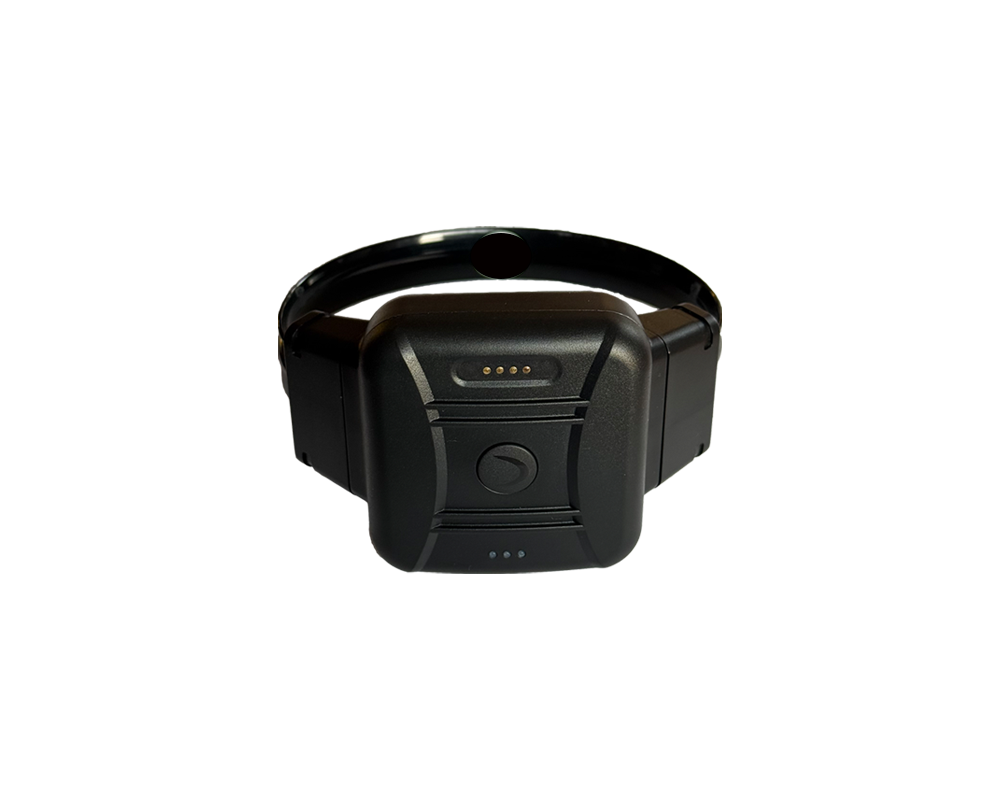
CO-EYE ONE is a one-piece GPS ankle monitor at 108 g (approximately 60×58×24 mm) with fiber-optic tamper detection on strap and case, IP68 waterproofing, and tool-free install in under three seconds. Positioning combines GPS, BeiDou, GLONASS, Galileo, Wi-Fi, and LBS assistance. Battery life reaches about seven days in representative independent reporting configurations using LTE-M/NB-IoT at a five-minute cadence, with about 2.5 hours to full charge—reducing officer time lost to charging logistics during house arrest programs.
CO-EYE HouseStation — RF home curfew verification
CO-EYE HouseStation is the RF home beacon side of many curfew-centric deployments: approximately 225×173×55 mm, 750 g, with an enhanced antenna design intended to penetrate multiple concrete walls. The 433 MHz RF link supports on the order of 50 m indoor and 200 m outdoor range per manufacturer specifications, plus dual SIM telephone capability for voice workflows that still matter in field operations.
CO-EYE AMClient — smartphone supervision for lower-risk tiers
CO-EYE AMClient delivers iOS/Android continuous tracking with SOS, scheduled check-ins, and Bluetooth tether features—useful when agencies stratify risk and reserve strap-mounted GPS units for higher house arrest tiers while maintaining location accountability on phones for compliant participants.
CO-EYE DUO — high-security tamper continuity
CO-EYE DUO extends the one-piece architecture for cases where tamper continuity must persist even as power states change—supporting orders that stress strap integrity during extended home confinement. Pair DUO discussions with the CO-EYE ONE specifications for baseline GPS performance and with CO-EYE Monitoring Software for alert routing.
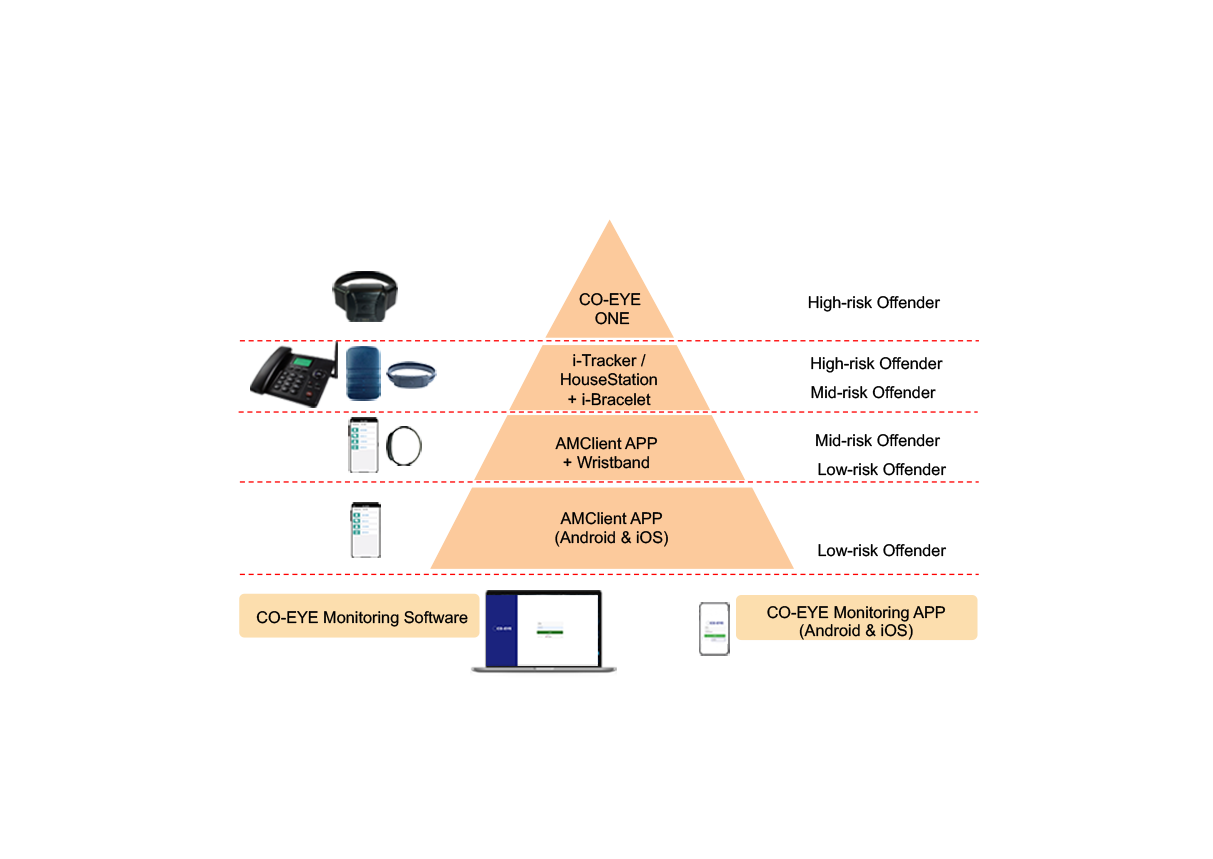
Agencies comparing vendors for house arrest ankle-monitor RFPs should pilot devices against local cellular coverage, home construction materials, and officer dashboard ergonomics—spec sheets complement, but do not replace, field evidence.
Choosing GPS-Only, RF-Only, or Hybrid Supervision
Selecting the right house arrest ankle monitor architecture is rarely a pure technology decision—it is a match between court language, housing stock, officer staffing, and risk tier. Procurement teams often debate whether contracts for ankle-based house arrest should standardize on one-piece GPS, RF home units, or hybrids. GPS-only suits orders that emphasize community movement, victim-radius buffers, and variable schedules. RF-only can be appropriate when court language is strictly residence-bound and indoor GPS reliability is poor. Hybrids remain popular because they match how participants actually live: home curfew overnight, approved daytime travel, and predictable charging routines.
When scoring proposals, weight enrollment time, mean time to replace a failed strap, cellular failover behavior, and whether tamper alerts require officer dispatch versus remote verification. A lightweight one-piece device with long battery life can shrink field visits, while a robust RF anchor reduces “GPS drift inside apartment blocks” arguments that clog hearings.
Implementation Checklist for Agencies
Rollouts succeed when policy, training, and devices move together. A disciplined house arrest ankle monitor go-live checklist prevents the classic failure mode: perfect hardware specs on paper paired with ambiguous court orders and undertrained call centers. Before participants strap on hardware, confirm addresses are geocoded accurately, employment sites are authorized in writing, and victim-notification numbers are current. Train officers on the difference between device-off scenarios (dead battery) and strap-cut scenarios (tamper). Publish participant-facing FAQs that explain charging, showering, medical emergencies, and how to request schedule changes.
Finally, schedule quarterly reviews of alert-to-resolution times. If your house arrest monitoring platform floods staff with low-value pings, adjust reporting cadence or geofence geometry before burnout drives sloppy revocations.
House Arrest Rules and Restrictions
Rules are always order-specific, but most programs that assign a house arrest ankle monitor share themes: remain inside the residence during curfew unless an approved exception applies; charge the device on schedule; do not tamper with straps or enclosures; keep monitoring staff informed of address, employment, or schedule changes; and avoid exclusion zones such as victim addresses or schools when ordered.
Travel outside approved windows— even for emergencies—should be communicated through official channels as soon as safely possible. Courts may distinguish technical false alarms from intentional violations, but participants strengthen due-process outcomes when they document charger photos, medical paperwork, or employer letters tied to disputed alerts.
Cost of House Arrest Monitoring
Understanding the full cost of a house arrest ankle monitor program means looking past the per-day line item on a participant invoice. Participant-paid, county-subsidized, and blended fee models all appear in US practice. Published anecdotes and vendor RFP language frequently cite roughly $5–$25 per day for active GPS tiers of electronic monitoring before indigency waivers—far below fully loaded jail costs often cited above $100 per day. Total ownership for agencies still includes spare ankle-monitor inventory sized to house arrest caseloads, cellular backhaul, monitoring-center staffing, training, court reporting, and revocation workflows.
When evaluating bids, model officer time saved by longer battery life, fewer false tamper events, and faster enrollments—a slightly higher daily rate that cuts alert fatigue can reduce hearings and field visits over the life of the contract. For broader monitoring economics, see GPS monitoring guide alongside this deep dive on the house arrest ankle monitor category.
Practical Tips for Participants and Families
If you or a family member is entering home confinement, treat the house arrest ankle monitor as both a legal obligation and a piece of electronics that behaves like other connected devices—it needs power, clear sky or authorized indoor RF coupling, and prompt communication when life gets messy.
First, build a charging routine that matches your officer’s expectations. Many one-piece units use magnetic cradles; place the charger where you will see it daily and set phone reminders before bed. Second, keep paperwork for schedule changes. Employers shift hours; doctors run late; courts amend orders. A written trail beats arguing after the fact about whether you “should have been home.” Third, map your home’s RF environment honestly. If your program uses a home beacon, thick concrete, metal siding, or basement bedrooms can matter—report dead spots during installation rather than during an alert at 2 a.m.
Fourth, understand the difference between losing cellular signal and violating curfew. If you live in a marginal coverage pocket, ask your officer how to document provable outages. Fifth, avoid DIY strap adjustments. Tamper algorithms flag unexpected strap events; call your monitoring center if the band pinches, spins, or needs resizing. Sixth, plan travel conservatively. Leave buffers around court-end times and workplace arrivals so geofence timers are not flirting with the edge of compliance.
Seventh, coordinate victim-notification rules if they apply to your case. Even lawful detours can trigger automated warnings if software has not yet caught up with an amended order—get changes entered before you rely on them. Finally, keep emergency contacts aware that you are on monitored release so they can help with charger swaps or hospital transports without turning a medical crisis into an enforcement misunderstanding.
FAQ: House Arrest Ankle Monitor Programs
What does a house arrest ankle monitor prove?
It proves compliance with location and schedule rules encoded in software—home presence during curfew, approved corridors when travel is allowed, and avoidance of exclusion zones—plus strap integrity alerts depending on device class.
Is an ankle monitor for house arrest the same as a GPS ankle bracelet?
Often yes in daily language: many programs use one-piece cellular GPS ankle bracelet hardware for house arrest. The difference is the court order and rule set, not necessarily the plastic housing.
Can you shower while on house arrest with an ankle monitor?
Many court-grade units such as CO-EYE ONE are IP68, but participants should follow officer-written instructions for charging and strap care specific to their program.
Who pays for electronic monitoring during house arrest?
Fee schedules vary: participants, counties, or mixed models with sliding scales are common. Clerks and supervising officers can provide the authoritative cost table for a given case.
How do agencies reduce false alerts on house arrest programs?
Calibrate geofences, align reporting intervals with officer capacity, use RF home verification when indoor GPS is unstable, and prioritize tamper technologies with low false-positive rates—fiber-optic tamper designs aim for zero false-positive strap alerts compared with legacy conductive straps.
What should buyers prioritize in 2026?
Battery life versus reporting cadence, enrollment speed, dashboard UX, data retention exports, spare-device logistics, and total cost of ownership across the life of a house arrest monitoring contract.
Last updated March 2026. Court orders and statutes vary by jurisdiction; verify local rules. CO-EYE specifications reflect manufacturer documentation at publication.