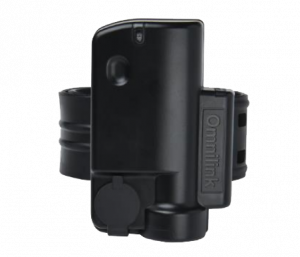

The electronic ankle monitor—often discussed alongside the GPS ankle monitor and GPS ankle bracelet—is a core tool of modern electronic monitoring in pretrial monitoring, probation, parole, and victim-safety programs. According to Vera Institute of Justice estimates cited in national EM overviews, on the order of 125,000–150,000 people are on electronic monitoring in the United States on a typical day, a scale that makes corrections technology choices consequential for courts, sheriffs, pretrial services, and community corrections agencies. This guide translates electronic ankle monitor technology—from architecture, radio links, tamper semantics, and geofence logic—into procurement-ready language, summarizes 2026 policy momentum, and shows how CO-EYE’s product continuum supports tiered supervision. Supervised populations should still map personal GPS ankle bracelet restrictions onto the tier tables their officers publish.
For foundational definitions, start with what is an ankle monitor. When you are ready to compare SKUs and RFP tests, use the product pages for CO-EYE ONE (one-piece GPS), CO-EYE HouseStation (RF home beacon for curfew and hybrid tracks), CO-EYE AMClient (smartphone supervision), CO-EYE wristband tether, and CO-EYE Monitoring Software. For pricing and deployment scoping, use Contact Sales or Request Quote—we do not offer free trials or demo devices.
Procurement teams should also document evidentiary standards: export formats for discovery, retention windows aligned with state records law, and whether location fixes are admissible as business records from the monitoring vendor. Those governance details belong in the same RFP package as radio specifications.
How Electronic Ankle Monitors Work
A modern electronic ankle monitor is a supervised IoT device: it fixes position with satellite navigation, moves data over cellular (and sometimes Wi-Fi) backbones, enforces court-ordered zones, and emits tamper signals officers can triage in a monitoring center. The following layers are what agencies evaluate in architecture reviews.

GPS and multi-constellation positioning
Most GPS ankle monitor hardware relies on multi-constellation receivers—commonly GPS, BeiDou, GLONASS, and Galileo—supplemented by Wi-Fi and cellular tower references when sky view is limited. The National Institute of Justice’s offender tracking standard (NIJ 1004.00) historically framed reporting accuracy expectations on the order of 10 m (CEP50) and 30 m (CEP95) for many certified systems; newer one-piece designs marketed to agencies often claim substantially tighter performance in open-sky conditions. CO-EYE specifies < 2 m CEP class performance for CO-EYE ONE, which procurement teams can map to acceptance tests and field validation plans.
Cellular communication (LTE-M, NB-IoT, 5G-compatible paths)
Because participants move continuously, ankle-worn devices typically use low-power wide-area bearers such as LTE-M and NB-IoT, with GSM fallbacks where carriers still support them, and 5G-compatible module roadmaps where vendors advertise future-ready radios. The practical goal is resilient reporting through buildings and urban canyons while controlling modem power draw—directly tied to how often participants must recharge and how often devices drop off the map during critical hours.
Tamper detection: fiber-optic vs resistive/capacitive
Strap and enclosure tamper channels separate professional electronic monitoring hardware from consumer trackers. Traditional resistive or capacitive strap sensors can generate nuisance alarms when moisture, abrasion, or temperature shifts mimic a cut event—one reason industry discussions and NIJ-era field literature often reference high administrative burdens from false tamper alerts. Fiber-optic tamper paths, as implemented on CO-EYE ONE’s strap and case, are designed to provide zero false-positive tamper signaling per CO-EYE engineering specifications—language agencies can place beside escalation rules in SOPs.
Zone enforcement: inclusion and exclusion geofences
Supervision orders translate into inclusion zones (must remain inside), exclusion zones (must not approach—often victim addresses, schools, or bars), and schedule-based curfews. The ankle bracelet firmware and the monitoring platform must agree on grace timers, speed-based transit exceptions, and how partial GPS fixes are handled so officers are not flooded with ambiguous boundary hits.
Data transmission to the monitoring center
Encrypted uploads carry fixes, tamper bits, battery telemetry, and diagnostic flags. CO-EYE Monitoring Software consolidates these streams with app and beacon events so pretrial monitoring and probation teams see one timeline per participant rather than parallel silos—an operational requirement that belongs in any corrections technology modernization checklist.
Types of Electronic Ankle Monitors
Buyers usually choose among four families, sometimes blended inside one program.
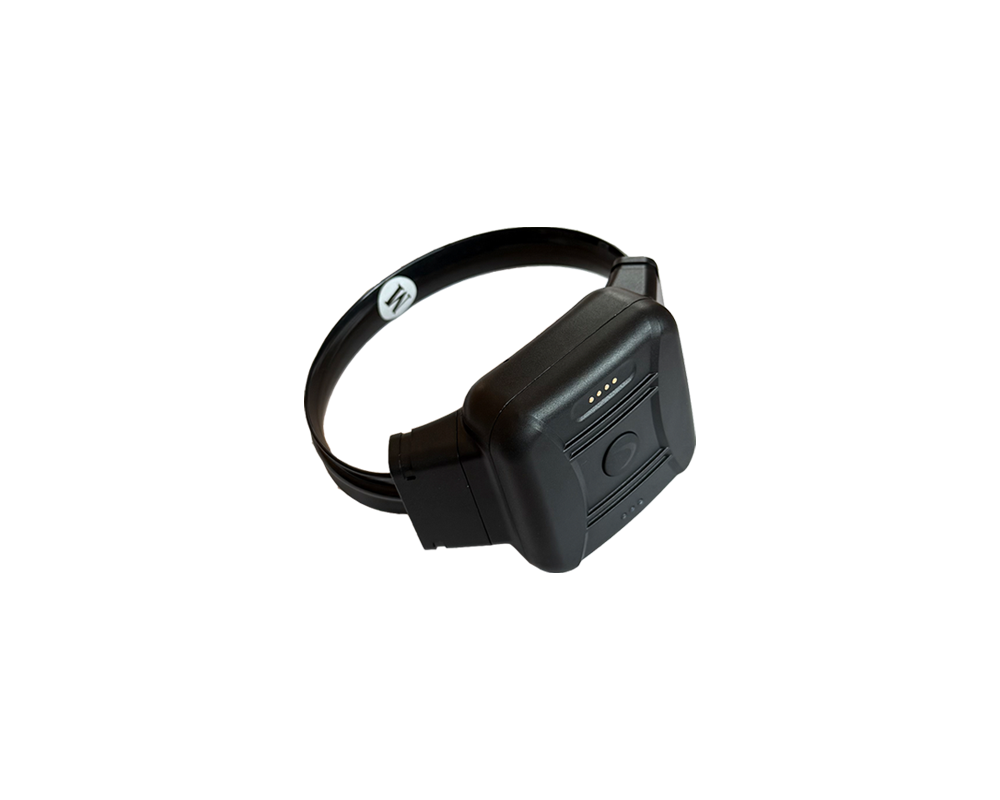
One-piece GPS (all-in-one ankle bracelet)
All radios, battery, GNSS antenna stack, and tamper sensors live in a single enclosure secured to the strap. CO-EYE ONE represents this class at 108 g, about 7 days of standalone battery life on typical LTE-M/NB-IoT reporting (5-minute interval), IP68 waterproofing, and tool-free < 3 second snap installation per CO-EYE specifications—attributes agencies correlate with charging compliance and officer install throughput.
Two-piece GPS plus home beacon
Some programs pair an ankle transmitter with a home base station for curfew verification and power budgeting; participants may need more frequent charging cycles depending on vendor architecture. CO-EYE’s RF-centric home beacon line is centered on HouseStation for house-arrest and hybrid RF supervision when continuous cellular ankle GNSS is not the only requirement.
RF / curfew-only supervision
Radio-frequency check-ins prove presence at a residence during ordered hours without full GPS track continuity everywhere. These tracks remain common in budget-constrained dockets but require clear policy language about what happens when participants leave the home for approved activities.
Smartphone app with BLE tether
Lower and medium-risk cohorts may use CO-EYE AMClient on iOS and Android with optional CO-EYE BLE wristband tethering (~17 g, multi-year battery life on dual CR1632 cells, IP68) for continuous proximity confirmation between wearable and handset—an architecture APPA-style smartphone supervision guidance contrasts with purely periodic check-in models.
Key Specifications That Matter
Use this section as a scorecard when writing RFP language; numbers below for CO-EYE ONE come from the published specification table in our knowledge base.
- Weight and wearability: Heavier ankle bracelet hardware correlates with skin irritation complaints and attempts to loosen straps. CO-EYE ONE at 108 g compares favorably to many legacy one-piece units agencies still inventory in the roughly 150–250 g range—exact competitor weights should be verified from current manufacturer datasheets.
- Battery life: Short intervals between charges increase the risk of dead-battery gaps. CO-EYE ONE targets roughly 7 days standalone (LTE-M/NB-IoT, 5-minute interval); ONE-AC adds BLE-connected modes with up to on the order of six months battery life when operated in approved tether configurations.
- GPS accuracy vs NIJ benchmarks: Map vendor claims to NIJ 10 m / 30 m framing, then specify field tests. CO-EYE advertises < 2 m CEP class GNSS performance.
- Tamper integrity: Ask vendors for false-positive rates and how moisture or strap adjustment is classified. CO-EYE documents zero false-positive fiber-optic tamper signaling; industry discussions often cite elevated false-alert burdens where legacy sensing stacks struggle—always validate with your vendor’s latest test reports.
- Waterproof rating: Showers, pools, and weather matter. CO-EYE wrist-worn and ankle products in this guide are specified at IP68, exceeding typical IP65–IP67 consumer-grade seals.
- Installation time: Tooling and appointment length drive labor cost. CO-EYE’s snap-on target is < 3 seconds compared with multi-minute strap riveting workflows still seen in some programs.
2026 Regulatory and Legislative Landscape
State capitals continue to tighten electronic monitoring rules—especially around domestic violence, post-release supervision, and victim notification. The examples below are illustrative of 2026 momentum; always verify statutory text and effective dates with your counsel.

- Ohio — Reagan Tokes Act strengthening (2026): Following high-profile failures of post-release supervision tracking, Ohio lawmakers advanced measures in 2026 to tighten real-time GPS oversight for violent offenders on post-release control, improve interoperability for law enforcement access, and reduce caseload risk factors—details continue to evolve as bills move through committees.
- Oklahoma — SB 1325 (domestic violence GPS): The 2026 session advanced GPS supervision requirements for certain domestic-violence-related defendants on pretrial release, with victim-notification concepts and cost allocation debated publicly; monitor enrolled text for final scope and effective dates.
- Florida — HB 277 (effective July 1, 2026): Florida’s 2026 domestic-violence package expands court authority to order GPS electronic monitoring, defines monitoring modalities, and pairs obligations with pilot programs—implementation guidance will matter for county clerks and monitoring vendors alike.
- Nationwide pattern: Beyond these states, 2026 sessions have produced a broad wave of filings touching GPS mandates, victim proximity alerts, and parole reforms—agencies should subscribe to state association trackers and county counsel bulletins to capture every jurisdiction they serve.
Choosing the Right Electronic Ankle Monitor for Your Program
Match hardware to risk, statute, and victim-safety constraints—not to vendor defaults.
High-risk populations
Violent crime, documented intimate partner violence with protective orders, and high public-safety dockets generally warrant continuous GNSS on a dedicated electronic ankle monitor with advanced tamper semantics. CO-EYE ONE or the enhanced-tamper CO-EYE DUO line fit this tier when orders require strap-grade integrity and long battery intervals.
Medium-risk populations
Stable employment, treatment compliance, and moderate FTA risk may allow smartphone-centric models with BLE tethering: AMClient plus wristband, possibly combined with part-time curfew verification through HouseStation where policy allows hybrid RF pathways.
Low-risk pretrial and administrative tracks
Non-violent misdemeanors and compliance-oriented dockets may use app-led check-ins and calendar accountability when judges approve—provided your jurisdiction’s definition of electronic monitoring encompasses those modalities.
Cost and operational considerations
One-piece cellular designs can eliminate separate beacon purchase lines for some use cases and, when paired with reliable tamper semantics, reduce officer hours wasted on false tamper dispatch. Model total cost across cellular plans, officer alert handling, charging support, and replacement inventory—not only per-diem vendor fees. Industry planning conversations often cite active GPS supervision in the rough $5–$25 per day range depending on contract scope, while smartphone-led tracks may land lower when participants supply handsets—local bids determine reality.
CO-EYE Product Solutions
- CO-EYE ONE / ONE-AC: Flagship one-piece GPS ankle monitor with LTE-M/NB-IoT/GSM paths, multi-constellation GNSS, fiber-optic tamper detection, IP68 sealing, and ONE-AC options for eSIM plus extended BLE-connected battery modes.
- CO-EYE DUO + HouseStation: DUO emphasizes uninterrupted tamper surveillance even at low battery states; HouseStation delivers RF home-detection range for curfew-centric house arrest workflows.
- AMClient + wristband: Smartphone pretrial monitoring and probation engagement with optional BLE tether integrity.
- CO-EYE Monitoring Software: Thirteen modules spanning alerts, caseload dashboards, mapping, reporting, and device lifecycle management to unify corrections technology operations.
Pair this article with our buyer paths on GPS selection, then Contact Sales or Request Quote to translate requirements into a supported deployment plan.
Frequently Asked Questions
What is an electronic ankle monitor? It is a court-ordered wearable device—usually ankle-worn—that uses GNSS and cellular links to report location, tamper status, and battery health to a certified monitoring center, often alongside geofence rules.
How accurate is GPS on an electronic ankle monitor? NIJ offender-tracking standards cite 10 m / 30 m benchmarks for many certified systems; modern one-piece devices may publish tighter open-sky figures—CO-EYE ONE is specified at < 2 m CEP-class performance.
What is the difference between one-piece and two-piece GPS ankle monitors? One-piece units integrate modem, battery, and GNSS in a single enclosure on the strap; two-piece designs split functions between ankle and home or carried components, which can change charging cadence and officer workflows.
Can electronic ankle monitors false alarm? Legacy strap sensors may generate nuisance tamper events; fiber-optic tamper designs such as CO-EYE’s are engineered for zero false-positive tamper signaling—confirm with vendor test evidence for your procurement file.
Which CO-EYE products support pretrial and parole programs? CO-EYE ONE and DUO cover continuous GPS supervision; AMClient plus BLE wristband supports smartphone tracks; HouseStation supports RF home compliance; CO-EYE Monitoring Software ties the tiers together.