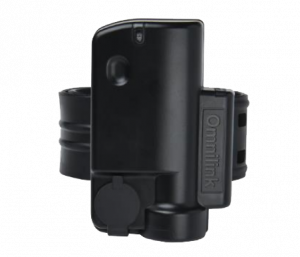
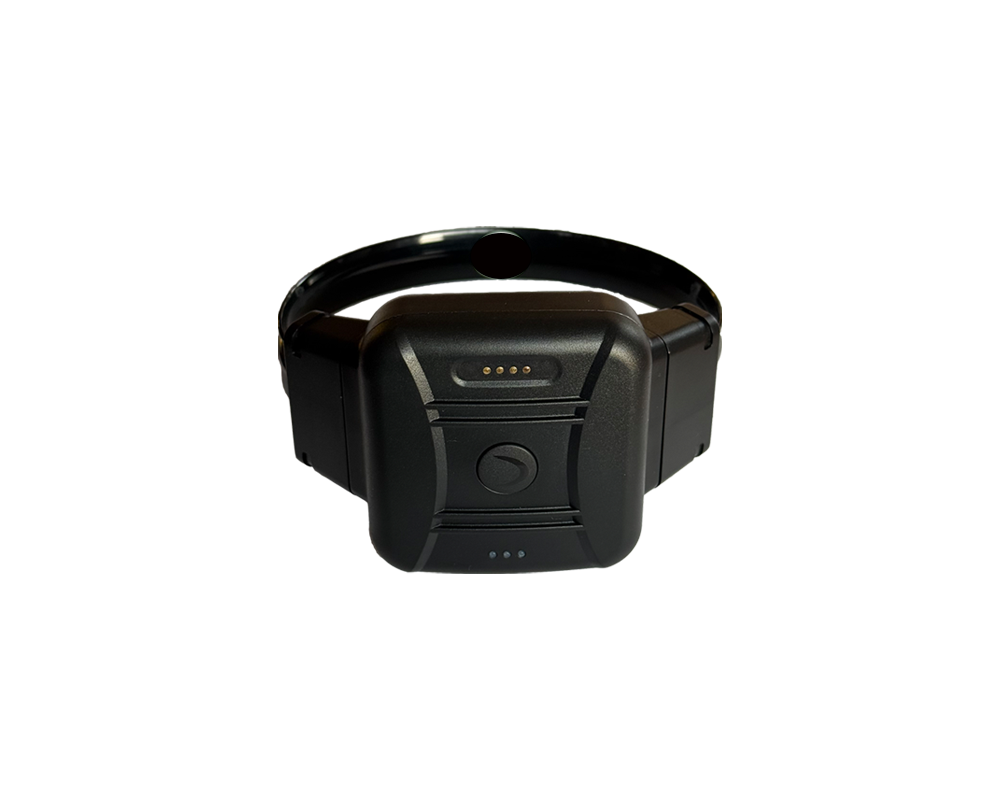
The electronic ankle monitor is no longer a single, bulky radio strapped to an ankle—it is a supervised IoT platform that courts, pretrial services, and probation agencies depend on for public-safety outcomes. In 2026, procurement teams are evaluating GPS ankle monitor and GPS ankle bracelet programs against a new baseline: lighter hardware, cleaner tamper evidence, cellular roadmaps that survive 2G/3G sunsetting, battery economics that reduce charging friction, multi-constellation accuracy, smartphone hybrid tracks for lower-risk cohorts, and analytics that help officers prioritize true risk. This article walks through seven advances that define the modern ankle monitoring device category—and how to translate each into RFP language and field acceptance tests. For a deep dive on bracelet-focused procurement, see our GPS ankle bracelet guide; for program design, see electronic monitoring programs.
Advance #1 — One-Piece Electronic Ankle Monitor Design
Legacy two-piece architectures often paired an ankle-worn transmitter with a separate beacon, hub, or carried modem. That split solved early power budgets, but it introduced pairing failures, “base not home” ambiguities, and inventory complexity for agencies managing thousands of ankle monitoring device assets. Eliminating the external beacon for continuous cellular GNSS tracks simplifies the participant experience: there is no separate wall-powered unit to misplace, and help-desk tickets shrink when the strap-mounted radio is the single source of truth for fixes, tamper bits, and battery state.
The one-piece class still demands disciplined RF engineering—antenna placement, human tissue loading, and SAR considerations all interact—but the operational payoff is a straighter supervision story for judges and victims: one sealed module, one chain of custody, one warranty path. The consolidated GPS ankle monitor form factor also tends to accelerate intake: officers fit, click, verify over-the-air provisioning, and release to the docket without returning to a bench to pair accessories.
In procurement committees, comparing one-piece versus two-piece proposals often settles on total touches: how many times per month staff must visit a home to troubleshoot beacons versus how often they can resolve issues remotely when the entire stack lives on the strap. That operational lens is why many 2026 solicitations treat the electronic ankle monitor as a single managed endpoint rather than a kit of parts.
- Sky-view and urban-canyon reporting consistency at your agency’s target fix interval.
- Charging cadence versus court-ordered check-in windows—dead-battery gaps are operational risk, not user inconvenience alone.
- Strap swap and refurbishment workflows: one-piece designs should reduce truck rolls when install time is measured in seconds, not minutes.
Weight has been one of the most visible pain points in community supervision. Older one-piece units frequently landed in roughly the 200–350 g range in public specifications from prior-generation vendors—heavy enough to drive skin complaints, gait adjustment, and attempts to loosen mounting hardware. Newer flagship one-piece designs push toward triple-digit grams; the CO-EYE ONE electronic ankle monitor is specified at 108 g with a 60 × 58 × 24 mm footprint, magnetic charging, and tool-free install targeted under 3 seconds per CO-EYE’s published datasheet—useful benchmarks when writing wearability acceptance criteria for any GPS ankle bracelet pilot.
Procurement teams should also score ingress protection and chemical resistance alongside mass. Showering, seasonal humidity, and workplace exposure to solvents are not edge cases—they are Tuesday. CO-EYE specifies IP68 waterproofing on CO-EYE ONE, which exceeds many legacy IP65–IP67 seals still circulating in spare pools.
For architecture trade-offs between integrated and split designs, pair this section with our one-piece vs two-piece comparison—especially if your docket mixes curfew-centric RF tracks with continuous outdoor GPS.
Advance #2 — Fiber-Optic Tamper Detection in Electronic Ankle Monitors
Tamper signaling is the integrity layer that turns a location feed into court-admissible supervision. Traditional resistive or capacitive strap sensors can misclassify moisture, temperature swings, or strap adjustment as cut events—workload drivers that show up in NIJ-era field discussions and industry analyses, which often cite false-positive tamper alert burdens in the 15–30% range for some legacy sensing stacks depending on program SOPs and environment. Fiber-optic tamper channels, by contrast, detect a broken light path through the strap or enclosure with physics-based certainty; on CO-EYE ONE, fiber-optic strap and case paths are engineered for zero false-positive tamper signaling per CO-EYE specifications—language your monitoring center can align with escalation matrices.
From a records perspective, fiber events are easier to narrate: either the optical circuit is intact or it is not. That clarity matters when defense counsel challenges a violation petition or when prosecutors explain why a dispatch occurred. Agencies should still define human review steps—technology does not remove discretion—but reducing nuisance alarms frees reviewers to focus on genuine integrity breaks and correlated location anomalies.
SOP writers should map each tamper code to a response tier—from silent log-only events to immediate law-enforcement notification—before any electronic ankle monitor fleet scales past a pilot. Without that mapping, monitoring centers default to “page everyone,” recreating the fatigue fiber optics were meant to cure.
Credibility also depends on plain-language explanations for judges and defense counsel. Pair tamper policy with our article on ankle monitor tampering consequences—so orders, notices, and violation hearings reference the same technical facts your vendor exports in discovery packets.
Advance #3 — 5G and eSIM Connectivity
Carrier sunsetting of 2G and 3G voice/data layers has left millions of legacy GPS ankle monitor endpoints on borrowed time. Agencies are refreshing contracts with explicit roadmaps for LTE-M and NB-IoT—low-power wide-area bearers that improve building penetration compared with classic smartphone LTE—and for modules marketed as 5G compatible where vendors future-proof modem firmware without forcing a strap redesign every network cycle. Any new ankle monitoring device you buy in 2026 should list supported bands, carrier certifications, and whether GSM fallback remains available in your service territory.
Migration is not a forklift moment only for radios—it is a contract, training, and spare-pool problem. Counties that stagger refreshes by risk tier reduce cash spikes: high-public-safety cohorts move first to LTE-M/NB-IoT hardware, while carefully bounded legacy tracks sunset on documented dates. Vendor SLAs should include swap timelines, data porting, and rollback plans if a carrier profile fails in the field.
Because carriers publish sunset calendars years in advance, finance teams can bond refresh projects knowing the electronic ankle monitor replacement wave is predictable rather than reactive—provided your RFP forces vendors to commit to module generations, not just month-to-month MVNO deals.
eSIM removes physical SIM logistics at scale: no swappable cards to track in evidence lockers, fewer truck rolls for profile changes, and cleaner lifecycle management when participants move between carrier agreements. CO-EYE’s ONE-AC variant adds eSIM alongside nano-SIM options per published specs—evaluate eSIM with your IT security team’s requirements for remote provisioning and audit logs.
Advance #4 — Extended Battery Life
Short battery endurance cascades into noncompliance: participants forget chargers, outlets are scarce, and dead devices create gaps that look like absconding even when they are not. Older cellular generations often required 12–24 hour recharge cycles in vendor marketing—implicitly pushing daily charging rituals that courts sometimes characterize as overly punitive when paired with work schedules and travel restrictions.
Charging burden is also a equity issue. Swing-shift employment, long bus commutes, and unstable housing can make nightly top-ups unrealistic. Programs that document charging support—loaner cables, approved power banks, and intake education—see fewer “technical” violations that are actually power management failures.
Judges increasingly ask whether monitoring conditions are narrowly tailored; demonstrating that participants can meet reporting and charging obligations without sacrificing employment is easier when the electronic ankle monitor itself only needs a weekly charge window instead of a nightly ritual.
Modern one-piece designs stretch standalone endurance when reporting intervals and radio modes are tuned responsibly. CO-EYE ONE targets roughly 7 days of battery life in standalone LTE-M/NB-IoT operation at a 5-minute reporting interval, with about 2.5 hours to full charge and a 1700 mAh cell per datasheet values. ONE-AC adds BLE-connected modes with up to on the order of six months battery life when operated in approved tether configurations with a handset or hub—relevant when you want smartphone-class economics without abandoning strap integrity for higher-risk cohorts.
Budget discussions should connect battery performance to officer time and participant stability; use our guide to electronic ankle monitor costs when modeling total cost of ownership alongside daily service fees.
Advance #5 — Multi-Constellation GNSS Positioning
Single-constellation GPS was sufficient for early prototypes; today’s receivers in professional GPS ankle bracelet hardware routinely blend GPS, GLONASS, BeiDou, and Galileo with Wi-Fi and LBS references when sky view degrades in parking structures, downtown canyons, and single-family homes with metal siding. More satellites in view generally mean faster fixes and better horizontal accuracy when firmware fuses measurements responsibly.
Fallback positioning deserves explicit policy. Wi-Fi fingerprinting and tower-centric LBS can stabilize maps when GNSS drops, but accuracy and latency differ from open-sky GPS. Your geofence SOPs should state how long a Wi-Fi-assisted fix may authorize an exclusion-zone alert versus a lower-severity breadcrumb, and how “last known good” displays in the officer console.
Snapshot exports that show constellation contribution, dilution of precision, and fix type help auditors verify that your electronic ankle monitor data tells the same story in civil discovery as it does on the live map—especially when victims or defense experts challenge a single boundary hit.
NIJ Standard 1004.00 historically framed reporting accuracy expectations around 10 m (CEP50) and 30 m (CEP95) for many certified systems—still useful as a compliance baseline in procurement. CO-EYE publishes < 2 m CEP class GNSS performance for CO-EYE ONE in open-sky conditions; map any vendor claim to field tests on your campus and along typical commute corridors, not just bench demos.
Advance #6 — Smartphone App Integration
Not every supervised person needs the same hardware tier. Smartphone-centric supervision—exemplified by platforms such as CO-EYE AMClient on iOS and Android—can cover check-ins, messaging, schedule accountability, and SOS workflows for lower-risk tracks, especially when paired with a lightweight BLE wearable for tether integrity. Hybrid models combine strap-mounted GPS ankle monitor hardware for high-risk cases with app-led programs for administrative dockets, letting agencies shift spend toward officer triage instead of over-instrumenting everyone with the same SKU.
BLE tethering with CO-EYE’s featherweight wrist-worn tags (~17 g, dual CR1632 cells, multi-year battery life, IP68 per knowledge-base specs) can confirm continuous proximity between handset and wearable when policy demands more than periodic selfies or app opens. That architecture mirrors APPA-style smartphone supervision guidance that contrasts pure check-in models with integrity-backed tethering.
When statutes or protective orders explicitly require continuous outdoor GNSS tracks, the electronic ankle monitor path remains mandatory regardless of app quality—smartphones augment supervision but rarely replace strap-grade receivers in those high-stakes dockets.
Industry fee bands vary by contract, but planning conversations often bracket continuous active GPS supervision around $15–35 per day all-in while smartphone-led or light-touch programs may land nearer $2–5 per day when participants supply compatible handsets and reporting loads are lower—always validate against your jurisdiction’s bids and payer rules.
Advance #7 — AI-Powered Analytics and Predictive Compliance
Location streams become overwhelming at scale: thousands of GPS ankle monitor fixes per day, boundary grazes, speed anomalies, and tamper bits that need context. Analytics layers—rules engines, clustering, and increasingly machine-assisted pattern recognition—help agencies move from reactive paging to risk-ranked queues. Practical deployments focus on transparent thresholds: geofence dwell timers that suppress jitter, transit corridors that recognize lawful commuting, and escalation playbooks that supervisors can defend in audits.
Automated geofence maintenance is maturing: bulk imports from case management, standardized school or victim proximity templates, and schedule-aware inclusion zones reduce analyst keyboard time. Still, someone must own the authoritative address list; stale polygons generate false confidence.
Predictive language should stay grounded. Courts respond better to “higher relative alert volume correlated with past absconding windows” than to black-box scores. Pair analytics investments with training for line staff so supervision programs that rely on an electronic ankle monitor remain explainable, equitable, and legally durable.
Putting the Seven Advances into Procurement
When you consolidate these advances into a single scorecard, the modern ecosystem for the electronic ankle monitor looks like a coordinated refresh: hardware that is wearable and tamper-credible, radios that survive carrier transitions, batteries that respect real life, positioning that is testable against NIJ baselines, hybrid modalities that match risk, and software that makes officer attention scalable. Start cross-walking requirements with the CO-EYE ONE electronic ankle monitor specification set if you need a reference architecture for one-piece LTE-M/NB-IoT GNSS with fiber-optic tamper paths—and use GPS ankle bracelet resources to keep bracelet and monitor vocabulary aligned for SEO and public communications alike.
Line up documentation before the RFP drops: export formats for discovery, retention aligned with state records law, maps of third-party subprocessors, and penetration-test summaries for the monitoring portal. Those attachments separate serious electronic monitoring vendors from catalog resellers.
For stakeholders focused on budgets, return to electronic ankle monitor costs; for operational design, see electronic monitoring programs; for device physics and court narratives on cuts and alerts, read ankle monitor tampering. When you are ready to translate requirements into deployment, use Contact Sales or Request Quote.
Frequently Asked Questions
What is an electronic ankle monitor? It is a court-supervised wearable, usually ankle-mounted, that reports location, tamper status, and battery health to a certified monitoring center using GNSS and cellular links—often alongside geofence rules.
How is a GPS ankle bracelet different from other ankle monitoring devices? The terms overlap: a GPS ankle bracelet emphasizes continuous satellite positioning, while RF or app-led tracks may emphasize curfew or proximity without full-time outdoor tracks.
Why does fiber-optic tamper detection matter? It reduces nuisance tamper alerts compared with many legacy resistive sensors; CO-EYE documents zero false-positive fiber tamper signaling on CO-EYE ONE—confirm with vendor test evidence.
How long should strap-mounted GPS battery life last in 2026? Standalone LTE-M/NB-IoT one-piece designs may reach multi-day intervals; CO-EYE ONE targets about seven days at a five-minute reporting interval, with BLE-connected modes on ONE-AC reaching far longer endurance when approved.
Can smartphone apps replace ankle-worn GPS hardware? For some low-risk orders, yes; for high-risk GPS mandates, apps often complement rather than replace strap-grade hardware—policy and statute determine the mix.