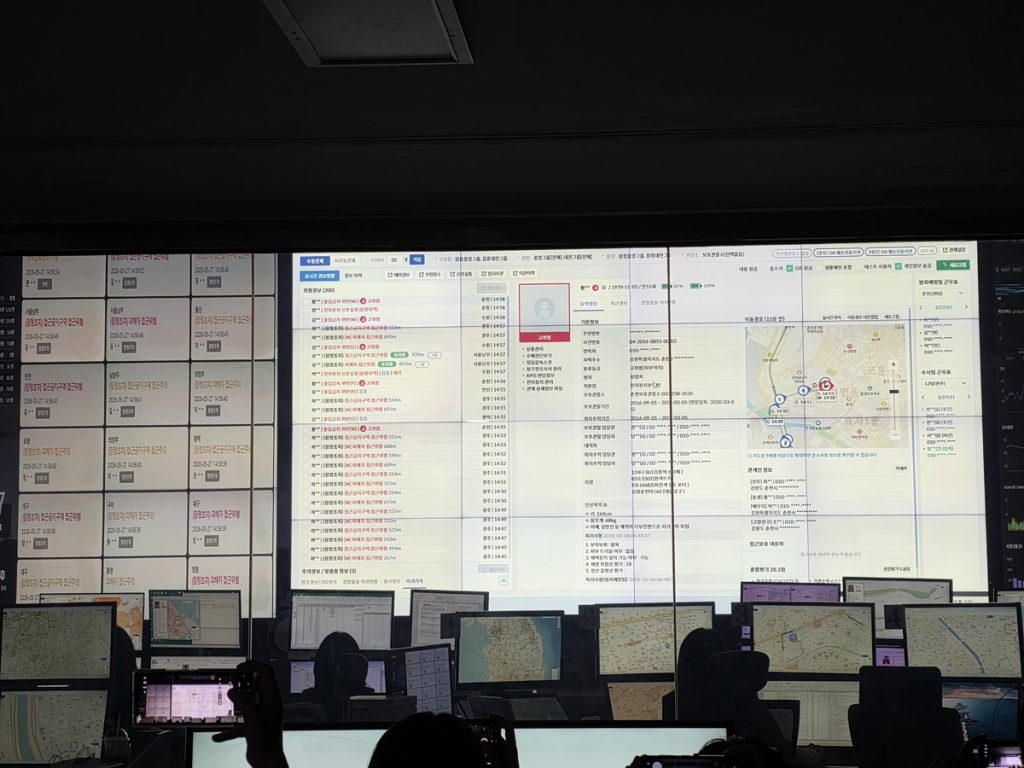
On June 24, 2026, South Korea will launch a system that no other country has attempted at national scale: giving stalking victims direct, real-time access to the GPS location of their offenders on a smartphone map. The Ministry of Justice demonstrated a working prototype on May 27 at the Central Location Tracking Control Center in Seoul, and 534 victims already enrolled in protection services will be the first to use it.
This is the most aggressive victim-empowerment approach to electronic monitoring any government has deployed. And it was born from tragedy.
The Namyangju Murder: When Two Systems Failed to Talk to Each Other
On March 14, 2026, a woman in her twenties was stabbed to death on a street in Onam-eup, Namyangju, Gyeonggi Province. Her killer — a man in his forties identified as Kim Hoon — was wearing an electronic ankle monitor for a prior sexual offense. He was under a court-issued restraining order prohibiting him from approaching within 100 meters. The victim had filed multiple domestic violence and stalking reports. She had been issued a police smartwatch for emergencies.
Every protection measure the Korean system offered was in place. None of them worked together.
The ankle monitor was managed by the Ministry of Justice’s probation office. The smartwatch was managed by the National Police Agency. The two systems were not linked. When Kim drove to the victim’s location with a weapon that morning, the ankle monitor tracked his position — but no alert reached the victim or responding officers in time. The victim pressed her smartwatch SOS button at 8:56 a.m. Kim killed her. He then damaged his ankle monitor and fled, only to be arrested in Yangpyeong an hour later.
The Korea JoongAng Daily’s investigation into the case revealed the core systemic failure: Korea’s electronic monitoring infrastructure and its victim protection infrastructure operated as completely separate silos. Professor Han Min-kyung of the Korean National Police University told the paper that “the current system focuses on victim protection measures such as smartwatches and increased patrols because of the difficulty in detaining or separating the perpetrator.” In high-risk cases, she argued, detention may be the only effective intervention.
The Namyangju murder was not the first time this gap killed someone. In July 2025, a woman in her fifties was murdered by a stalker in Uijeongbu despite having police smartwatch protection. In Daegu, another stalking victim was attacked despite filed reports. The pattern was consistent: individual tools existed, but the architecture connecting those tools was missing.
What Does the New System Actually Do?
The “Stalking Offender Location Alert” service launching June 24 represents a direct response to these systemic failures. Here is how it works, based on the May 27 demonstration at the Central Location Tracking Control Center:
When a stalking offender wearing an electronic ankle monitor enters within a 2-kilometer straight-line distance of the victim, the monitoring center initiates intensive surveillance. The victim receives an immediate notification on the app installed on their smartphone. Unlike the old text-message alerts that simply said “the offender is nearby,” the new app shows:
- The offender’s real-time location on a map, updated continuously
- The offender’s approximate mode of transportation (walking vs. vehicle) based on movement speed — Asia Business Daily reported the threshold is approximately 8-9 km/h
- The direction and distance of approach
- Evacuation routes to nearby safe locations: probation offices, police stations, and public institutions marked with blue icons on the map
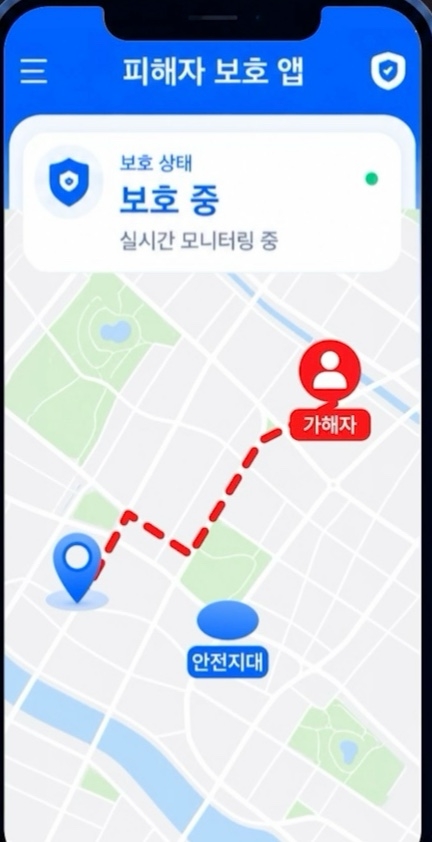
Simultaneously, a probation officer calls the victim. This is not an automated alert — a human operator at one of the two 24-hour monitoring centers confirms the threat and coordinates the response.
The next phase, scheduled for completion by end of 2027, will integrate the Ministry of Justice’s location tracking system directly with the National Police Agency’s 112 emergency system. Once live, responding officers will see both the victim’s and offender’s real-time positions on a shared map — the exact capability that was missing when the Namyangju victim pressed her SOS button.
Korea’s EM Program by the Numbers: 18 Years of Data
South Korea’s electronic monitoring program provides one of the strongest evidence bases for GPS ankle monitor effectiveness anywhere in the world. The program launched in 2008 for sex offenders and has expanded steadily:
| Year | Monitored Individuals | Expansion |
|---|---|---|
| 2008 | 151 | Program launched — sex offenders only |
| 2012 | ~1,800 | Extended to kidnapping, murder, robbery |
| 2016 | ~2,700 | Stalking crimes added |
| 2020 | ~4,050 | Expanded scope including retaliatory offenses |
| June 2025 | 4,604 | All-time high at that point; economic crimes added |
| May 2026 | 5,262 | Current — stalking victim app launching June 24 |
The recidivism data is striking. According to the Ministry of Justice and UNODC documentation, the sex offender recidivism rate dropped from 14.1% before electronic monitoring to 0.7% under active GPS supervision — a 95% reduction. The two national monitoring centers now process approximately 13,000 alarms per day, with 7,000–8,000 cases per month escalated to probation offices for potential condition violations.
These are not small-sample pilot results. This is 18 years of operational data from a centralized, well-funded national program.
The Stalking Crisis That Forced Korea’s Hand
The urgency behind the new victim app is driven by numbers that keep climbing. South Korea recorded 13,533 stalking crime cases in 2024, a 12.3% increase from 12,048 the previous year and the third consecutive annual rise. The Korea JoongAng Daily documented that 54.2% of stalking crimes involve current or former intimate partners, and 76.2% of offenders are men.
South Korea enacted its first dedicated anti-stalking law in 2021, following the murder of a mother and her two daughters in Nowon District, Seoul. The law was revised in 2023 to lower prosecution barriers. Reports surged from 7,600 in 2022 to over 13,000 by 2024. But actual prison sentences remained rare — the proportion of stalkers receiving fines or suspended sentences dropped only from 22.7% in 2022 to 17.5% in 2024.
Critics point to a fundamental problem: when the legal system cannot reliably detain dangerous stalkers, the burden of safety falls on technology. That is precisely why the quality of the ankle monitor hardware and the integration of victim-facing applications matter so much.
What Korea’s Approach Reveals About DV Electronic Monitoring Everywhere
Korea’s victim app is a live case study in what the electronic monitoring industry has been moving toward but rarely achieves: a victim-centric architecture where the monitoring system serves the person being protected, not just the institution doing the monitoring.
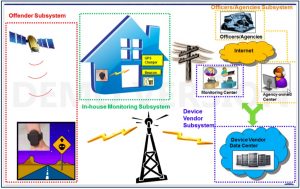
Most EM systems worldwide are offender-centric. The ankle monitor tracks the offender’s position. Alerts go to a monitoring center. A probation officer decides whether to act. The victim, if considered at all, might receive a delayed text message. Korea’s new system inverts this: the victim gets direct, map-level situational awareness — the same quality of information the monitoring center has.
This architectural shift has implications for every jurisdiction considering DV GPS monitoring. At least 14 U.S. states expanded GPS monitoring for domestic violence offenders in 2025–2026, including Texas (Sharon Radebaugh DV Protection Act), Oklahoma, North Carolina (Iryna’s Law), Tennessee (Debbie and Marie DV Protection Act), and Michigan. All of them require some form of victim notification. None of them, as of this writing, provide the victim with real-time offender location sharing at the level Korea will deploy on June 24.
What Makes a Victim-Centric EM System Work?
The Korea demonstration highlights several technical requirements that are non-negotiable for effective victim protection:
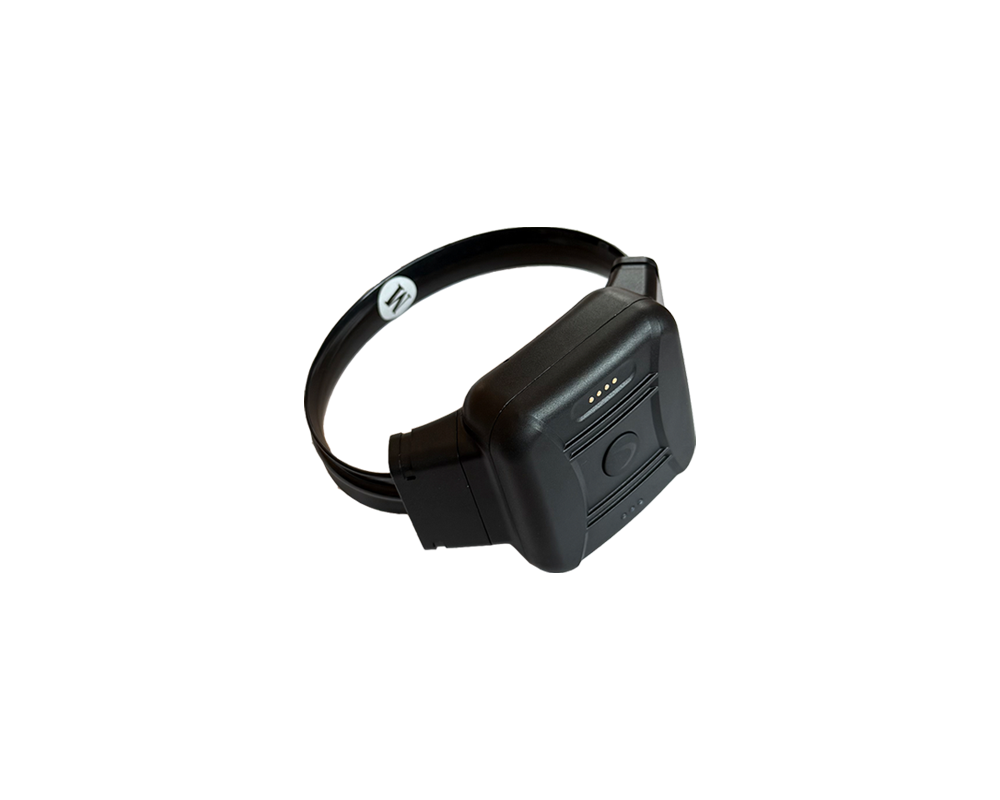
Sub-5-meter GPS accuracy. When a victim needs to determine whether the offender is outside their apartment building or inside their parking garage, 10-meter accuracy is not enough. Korea’s system identifies the offender’s position “down to the specific apartment building or in front of a particular store,” according to Asia Business Daily. That requires consistent sub-5-meter positioning. CO-EYE ONE delivers sub-2-meter CEP accuracy using quad-constellation GNSS (GPS + GLONASS + Galileo + BeiDou), exceeding the demonstrated Korean system precision.
Zero-tolerance tamper detection. The Namyangju killer damaged his ankle monitor after the attack. In a victim-centric system where the victim relies on the offender’s GPS position for safety decisions, a compromised device is not just a compliance violation — it is a direct threat to life. Tamper detection technologies that produce false alarms (15–30% false-positive rates are common with heart-rate and resistive sensors used by some vendors) degrade the system’s credibility, because victims and officers stop trusting alerts. CO-EYE ONE’s fiber-optic tamper detection operates on binary physics: the light signal is either continuous or interrupted. There is no ambiguity, no false positive, and no way to defeat it without physically breaking the fiber loop — which triggers an immediate, unambiguous alarm. The device maintains tamper detection for 3+ months even after battery depletion.
Companion app for victim-side protection. Korea built a custom government app for this purpose. But the underlying architecture — a smartphone application that receives real-time positional data from the offender’s ankle monitor and presents it with evacuation routing — is exactly what CO-EYE’s AMClient app delivers as part of the standard product ecosystem. AMClient installs on the victim’s iOS or Android device, provides continuous GPS tracking, SOS panic button functionality, and proximity-based alerts when a monitored offender approaches. It pairs with the CO-EYE ONE ankle monitor through the centralized monitoring platform, creating the same victim-centric information flow that Korea is now deploying nationally.
Multi-mode connectivity that eliminates dead zones. A victim relying on real-time offender location data cannot afford gaps in coverage. If the offender enters a cellular dead zone — a basement, rural area, or steel-framed building — and the ankle monitor goes silent, the victim loses situational awareness at the worst possible moment. CO-EYE ONE’s adaptive BLE/WiFi/LTE connectivity engine addresses this directly: when cellular signal weakens, the device automatically switches to WiFi or BLE transmission paths, maintaining continuous monitoring where traditional LTE-only devices report “signal lost.”
From Korea to Global: The DV Monitoring Standard Is Rising
Korea’s victim app will be studied by every country expanding electronic monitoring for domestic violence and stalking. The UK Ministry of Justice completed its process evaluation of DV ankle monitor programs (DAPOL orders) in 2024. Alberta, Canada invested $4.1 million in a victim notification system. France, Spain, and multiple EU nations operate DV-specific EM programs under their respective domestic abuse protection frameworks.
What Korea has demonstrated is that the technical capability to share real-time offender location with victims is mature, deployable, and constitutional — the December 2025 amendment to the Electronic Device Attachment Act passed the National Assembly with broad support. The question for other jurisdictions is no longer “can we do this” but “why haven’t we done this yet.”
For agencies evaluating GPS ankle monitor technology for DV programs, the Korean case establishes a new minimum bar:
- The device must support victim-facing applications, not just agency-facing dashboards
- GPS accuracy must be sufficient for street-level positioning (sub-5 meters)
- Tamper detection must be reliable enough that victims can trust the location data they receive
- Connectivity must be resilient enough that gaps in coverage do not create windows of vulnerability
- The platform must integrate with emergency response systems — Korea’s 112 integration, scheduled for late 2027, is the next frontier
These are not aspirational features. They are operational requirements proven by 18 years of Korean data and one policy born from the failure to protect a woman in Namyangju. When the app goes live on June 24, 534 victims will gain something no text message could provide: the ability to see exactly where the threat is, decide where safety lies, and move toward it.
About REFINE Technology (CO-EYE)
REFINE Technology is the leading electronic monitoring solutions provider in China with over 16 years of experience in the criminal justice industry. As the exclusive supplier for top security agencies, REFINE Technology has deployed 200,000+ devices across 30+ countries, monitoring 130,000+ individuals. The CO-EYE product line — featuring the next-generation all-in-one GPS ankle monitor, BLE wristbands, RF home beacons, and a unified monitoring platform — delivers high-security, low-stigma supervision for high-risk, mid-risk, and low-risk offender monitoring and victim protection. All CO-EYE devices carry full European NB CE directives (RED/Cybersecurity/LVD/SAR) and FCC certifications, with IP68 waterproof and REACH/RoHS/WEEE compliance. CO-EYE solutions are trusted in the USA, Europe, Africa, Bhutan, Papua New Guinea, Dominican Republic, Armenia, and expanding globally.
For more information, visit www.ankle-monitor.com or contact marketing@rfidcn.com.