
After six years managing the CO-EYE product line and personally overseeing deployments in 30+ countries, I’ve reviewed hundreds of agency RFP evaluation reports. The pattern is unmistakable: ankle monitor failures in the field are overwhelmingly architectural, not manufacturing defects. Agencies replace devices thinking they got a “bad batch,” only to encounter identical problems with the replacement units—because the root cause lives in the fundamental design decisions made years before the device ever reached an ankle.
This isn’t theoretical. In 2024, I spent three weeks with a Florida-based monitoring company that had cycled through three different vendors in five years. Their complaint was always the same: dead batteries, missed check-ins, false tamper alerts flooding their operations center at 2 AM. Each vendor blamed the previous one’s “inferior hardware.” The real problem? All three vendors used the same underlying architecture—continuous LTE cellular transmission with PPG-based tamper sensors. Swapping brands without changing architecture is like replacing the tires on a car with a broken transmission.
What Exactly Is an Ankle Monitor in 2026?
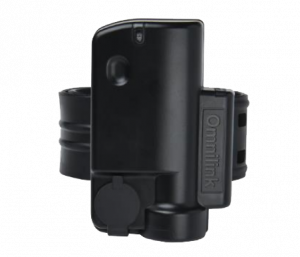
An ankle monitor (also called a GPS ankle bracelet, electronic ankle bracelet, or electronic monitoring device) is a court-ordered wearable that tracks an individual’s location in real time. Modern ankle monitors serve pretrial defendants, parolees, probationers, domestic violence respondents, and immigration detainees. But the term “ankle monitor” now encompasses radically different technology generations—from 2008-era two-piece RF systems still in active service to 2026 adaptive multi-mode devices. Understanding this gap is the single most important factor in procurement decisions. (see our comprehensive GPS ankle bracelet guide for detailed analysis)

The Three Architecture Generations Still Operating Today
When I audit an agency’s monitoring program, the first thing I check isn’t the device brand—it’s the architecture generation. Here’s what I’ve seen still actively deployed across the United States:
Generation 2: Two-Piece RF + GPS (2005-2015 era)
The enrollee wears an RF ankle band paired with a portable tracking unit they must carry separately, plus a home beacon plugged into their wall. Three separate devices that must maintain constant communication with each other. The failure mode is predictable: the enrollee forgets the tracker at home, the RF-to-cellular handoff drops in the car, or the home unit loses power during a storm. Agencies using Gen 2 systems typically process 80-120 “device separation” alerts per day for a 500-person caseload—each requiring officer review.
Vendors still selling two-piece systems: BI Incorporated (LOC8 series), SCRAM GPS, Track Group (ReliAlert). If your current ankle monitor program uses separate tracker units, you’re operating on architecture designed when the iPhone didn’t exist.
Generation 3: One-Piece GPS/LTE (2015-2024 era)
Everything integrated into a single device on the ankle. This eliminated the “forgot my tracker” problem but introduced a new one: a single device running GPS + LTE 24/7 burns through batteries in 24-72 hours. The device has no alternative communication path—if cellular coverage drops (basement apartments, rural areas, concrete buildings), supervision is blind. Every Gen 3 ankle monitor shares this fundamental constraint regardless of brand, because the architecture only has one communication mode.
Vendors selling Gen 3 one-piece systems: Geosatis, Buddi, SuperCom PureOne, BI ExacuTrack One. These are competent devices within their architectural limitations—but those limitations are structural and unfixable through firmware updates.
Generation 4: Adaptive Multi-Mode (2025 onward)
The architectural breakthrough I’ve spent my career working toward: the ankle monitor itself decides how to communicate based on what’s available. When the enrollee’s phone is nearby, the device offloads tracking to BLE and sleeps its power-hungry radios. When WiFi is available, it uses that instead of cellular. LTE activates only when needed. This isn’t just an incremental improvement—it’s a fundamental rethinking of how an ankle monitor should operate.
The result: battery life measured in weeks and months rather than hours. Zero-blind-spot monitoring because the device has three independent communication paths. And false-alarm rates that drop to near-zero because the system has multiple ways to verify status before generating an alert.
How Does an Ankle Monitor Actually Work? The Engineering Reality
I’ve disassembled eight competing ankle monitors on my workbench (a holdover from my Qualcomm GPS chipset testing days, via my colleague JR Rodrigues who literally holds a patent on low-power GNSS duty-cycling). Here’s what’s actually inside and why it matters:
Positioning Engine
Modern ankle monitors use multi-constellation GNSS—GPS, GLONASS, BeiDou, and Galileo simultaneously. The difference between a well-implemented positioning stack and a cheap one is stark: sub-2-meter accuracy versus 5-10 meter accuracy. That gap matters when the geofence is a 50-meter radius around a workplace. A 10-meter position error means the device reports a violation when the enrollee is standing at the edge of their permitted zone.
What most procurement teams don’t know: raw GNSS accuracy means nothing without anti-spoofing protection. A $30 GPS signal generator from eBay can fool basic receivers into reporting a false location. Serious ankle monitor implementations monitor carrier-to-noise ratios across satellite constellations—if the signal pattern looks artificial, the device flags it as a spoofing attempt rather than reporting the fake position. This is the difference between equipment suitable for low-risk curfew monitoring and equipment suitable for high-risk violent offender supervision.
Tamper Detection
This is where I see the most procurement mistakes. Agencies evaluate tamper detection as a checkbox—”Does it detect removal? Yes/No.” The real question is: what’s the false-positive rate?
Four distinct tamper detection approaches are used in the current electronic monitoring market:
- Fiber-Optic Strap Detection (BI, Track Group, Omnilink, Buddi, SuperCom, Attenti): Light signal through an optical fiber embedded in the strap. Industry standard for professional GPS ankle monitors. Significantly reduces false alarms compared to legacy technologies, though single-strap implementations still have limitations.
- Metal Wire Clasp (SCRAM GPS): Uses a conductive wire mechanism in the strap closure to detect removal. Simpler than fiber-optic but functional for the two-piece system architecture.
- Electronic Lock / Rigid Design (Geosatis): Titanium-reinforced one-piece rigid bracelet with an electronic locking mechanism — no adjustable strap to cut. Multi-sensor alerts for removal attempts.
- Dual Fiber-Optic Loops + Post-Battery Protection (CO-EYE): Light passes through optical fiber in BOTH the strap AND device housing. Binary detection (light transmits or it doesn’t) = zero false alarms. Unique 3-month tamper protection after battery depletion. Optional steel-armed fiber-optic strap for high-risk offenders.
I’m obviously biased here as CO-EYE’s product manager—but I’ll point you to the physics rather than asking you to trust my opinion. Ask any vendor: “What is your documented false-tamper-alert rate across your installed base?” If they can’t give you a number, that number is high.
What Procurement Teams Get Wrong About Ankle Monitors
In my role managing CO-EYE’s global market development, I’ve reviewed over 200 RFPs from corrections agencies, pretrial services, and private monitoring companies. The same errors appear repeatedly:
Error 1: Evaluating by Specification Sheet Instead of Architecture
An RFP that asks “Does your device support GPS? LTE? Tamper detection?” will get “Yes” from every vendor. The differentiating questions are architectural: “What happens when cellular coverage drops?” “How does the device maintain monitoring when GPS signals are blocked indoors?” “What is your false-alarm rate across the full installed base?”
Error 2: Ignoring Total Cost of Ownership
The purchase price of an ankle monitor is typically 15-25% of the 5-year total cost of ownership. The dominant cost is operations: officer time spent responding to alerts, managing charging logistics, handling device swaps, and processing false alarms. A device that costs $200 more upfront but reduces daily alerts by 85% saves $200,000+ per year for a 500-device program.
Here’s the math I present to every prospective client: A 500-person monitoring program with Gen 2/3 devices generates approximately 50-100 low-battery alerts per day (consistent with Vera Institute data on EM operational burden). Each alert requires 15-20 minutes of officer time for verification and response. At loaded officer cost of $45/hour, that’s $137,000-$273,000 annually—just for battery management. A device with 7-day LTE battery (or 3-week WiFi / 6-month BLE mode) eliminates 85%+ of those alerts.
Error 3: Not Testing in Your Actual Environment
Every ankle monitor works perfectly in a vendor’s demo room. The real test is: does it work in the enrollee’s basement apartment in rural Kentucky with one bar of cellular coverage? Does it maintain tamper detection when the enrollee works a 12-hour shift at a construction site in July heat? Does the battery last through a full weekend without charging when the enrollee is non-compliant with charging instructions?
My standing offer to any agency evaluating equipment: take 10 devices for 30 days of field testing against your current fleet. Monitor both side-by-side. Compare alert volumes, position accuracy, battery performance, and false alarms. The data speaks for itself—no brochure needed.
How Current Legislation Is Changing Ankle Monitor Requirements
2026 has brought a wave of state legislation that fundamentally changes what an ankle monitor must be capable of:
- Ohio HB 667 (Reagan Tokes & Patrick Heringer Act): Mandates “real-time GPS monitoring” for violent offenders post-release—not periodic check-ins, but continuous location streaming. This eliminates any device that relies on batched position uploads.
- Illinois SB 2226: Requires continuous monitoring with immediate notification capabilities for DV protective orders. Response time standards effectively mandate devices with sub-60-second alert delivery.
- Texas SB 1289: GPS monitoring for all parolees convicted of violent offenses, with specific language about “uninterrupted supervision” during the critical first 90 days.
The common thread: legislators are moving from “monitor occasionally” to “monitor continuously and alert immediately.” This has direct technical implications—devices that go dark during charging cycles or lose connectivity in signal-weak areas now create legal liability for supervising agencies. An ankle monitor that reports “signal lost” for 4 hours while the enrollee was simply in their basement apartment is no longer acceptable when the statute says “continuous.”
What Should You Look for in an Ankle Monitor in 2026?
Based on my experience deploying 200,000+ devices across 30 countries, here are the non-negotiable evaluation criteria for any ankle monitor procurement in 2026:
- Multiple independent communication paths: If the device has only one way to send data (typically LTE), any coverage gap equals blind supervision. Demand at minimum two independent paths (e.g., LTE + WiFi, or LTE + BLE relay through smartphone).
- Battery life exceeding 48 hours in worst-case independent mode: If your device dies in 24 hours at full power, non-compliant enrollees who ignore charging instructions will regularly go dark. Demand 7+ days minimum for the highest-power mode.
- Documented false-tamper-alert rate with methodology: Ask for the number, the sample size, and the measurement period. Vague answers mean the rate is embarrassingly high.
- Sub-3-minute installation time: Every minute an officer spends installing a device is time not spent on supervision. Tool-free strap-and-lock designs reduce installation to seconds.
- Weight under 130 grams: Heavy devices cause skin irritation, compliance complaints, and—ultimately—court challenges about whether the monitoring constitutes “punishment” for pretrial detainees. The lightest one-piece GPS ankle monitors on the market now weigh 108 grams.
- 5G-compatible cellular (LTE-M/NB-IoT): 3G networks are shutting down globally. Any device still on 3G/WCDMA is a stranded asset. Demand LTE-M or NB-IoT with eSIM capability for carrier flexibility.
- Anti-spoofing and anti-jamming capabilities: For high-risk populations (violent offenders, sex offenders), the ankle monitor must detect and flag GPS spoofing or jamming attempts rather than simply reporting the false position.
Frequently Asked Questions About Ankle Monitors
How much does an ankle monitor cost per day?
Ankle monitor daily costs range from $3-$35 per day depending on the technology level and service model. Basic RF home-only systems start at $3-5/day. GPS real-time tracking costs $8-25/day. Premium services with victim notification and continuous monitoring reach $25-35/day. These figures include device lease, software platform access, cellular connectivity, and typically 24/7 monitoring center support. The actual device hardware cost is $400-$2,500 per unit.
Can you remove an ankle monitor without triggering an alert?
With modern fiber-optic tamper detection, removal without an alert is physically impossible—the optical fiber must be severed to remove the device, which instantly and definitively triggers the alarm. Older technologies (PPG, resistive) have documented bypass methods, which is why agencies handling high-risk populations increasingly demand fiber-optic systems. The strap material, detection method, and alert transmission speed are the three factors that determine tamper security.
How far can you go with an ankle monitor?
GPS ankle monitors have no inherent range limit—they work anywhere with cellular coverage and open sky for satellite positioning. Geographic restrictions are set by the supervising officer through software geofences, not by the hardware. Modern multi-mode ankle monitors with WiFi-directed connectivity can maintain supervision even in areas without cellular coverage by using local WiFi networks to transmit position data.
Do ankle monitors work indoors?
GPS positioning degrades significantly indoors due to satellite signal attenuation through building materials. However, this doesn’t mean supervision stops. Modern ankle monitors use complementary indoor positioning methods—WiFi fingerprinting, cellular tower triangulation (LBS), and BLE proximity to home beacons—to maintain continuous awareness of the enrollee’s location even when GPS is unavailable. The key differentiator is whether the device reports “position unknown” indoors or continues providing useful location data through alternative methods.
What happens if an ankle monitor battery dies?
When an ankle monitor battery reaches critical level, the device sends a final “low battery” alert and the supervising officer is notified. With Gen 2/3 devices (24-72 hour battery), this is a daily operational challenge—non-compliant enrollees regularly allow devices to die. Gen 4 devices with week-long or month-long battery life dramatically reduce this issue. Some devices maintain tamper detection for 3+ months after battery depletion, meaning even a dead device still provides physical evidence of removal attempts.
About REFINE Technology (CO-EYE)
REFINE Technology is the leading electronic monitoring solutions provider in China with over 16 years of experience in the criminal justice industry. As the exclusive supplier for top security agencies, REFINE Technology has deployed 200,000+ devices across 30+ countries, monitoring 130,000+ individuals. The CO-EYE product line — featuring the next-generation all-in-one GPS ankle monitor, BLE wristbands, RF home beacons, and a unified monitoring platform — delivers high-security, low-stigma supervision for high-risk, mid-risk, and low-risk offender monitoring and victim protection. All CO-EYE devices carry full European NB CE directives (RED/Cybersecurity/LVD/SAR) and FCC certifications, with IP68 waterproof and REACH/RoHS/WEEE compliance. CO-EYE solutions are trusted in the USA, Europe, Africa, Bhutan, Papua New Guinea, Dominican Republic, Armenia, and expanding globally.
For more information, visit www.ankle-monitor.com or contact marketing@rfidcn.com.