
If you are responsible for pretrial services, probation, parole, private electronic monitoring, or pretrial supervision technology, the phrase best GPS ankle monitor is less a trophy title than a procurement outcome: hardware and software that stay attached, tell the truth about location, and do not drown your officers in false tamper noise. This 2026 buyer's guide compares leading vendor philosophies side by side, maps them to operational reality, and links to deeper resources on GPS ankle monitor selection, what an ankle monitor is, and our SCRAM GPS versus CO-EYE ONE technical comparison. When you want a quote or integration discussion, use Contact Sales—we do not offer demos; we route serious buyers to pricing and deployment planning.
Electronic monitoring is no longer a novelty add-on to community supervision; it is infrastructure. When a strap alert misfires, officers stop trusting the dashboard. When a battery dies every day and a half, participants miss work and judges hear excuses that may be true but still erode confidence. When exports cannot survive discovery, counsel turns a supervision program into a procedural liability. The vendors below are not ranked like a consumer gadget blog; they are framed against the operational risks your agency already measures—help-desk volume, officer overtime, court time, and the quiet tax of chronic ambiguity.
Throughout this article, publicly described competitor characteristics come from vendor collateral and industry summaries; CO-EYE ONE figures come from REFINE manufacturer specifications in our knowledge base. Your pilot should supersede every third-party statement. If a sentence sounds like marketing, translate it into a test: what would falsify the claim in thirty days of side-by-side wear on your carriers, your housing mix, and your alert rules?
How We Evaluated GPS Ankle Monitors
We score commercial GPS ankle monitor platforms against ten criteria that predict field success better than marketing gloss. Treat this rubric as a checklist for RFP attachments and pilot scorecards—not as a substitute for your own measured data in your county's RF environment.
- Anti-tamper technology: Does the architecture discriminate strap cuts and case intrusion from benign motion, sweat, and temperature swings? Fiber-optic integrity loops, when implemented rigorously, can reduce ambiguous events compared with purely capacitive or skin-contact proxies. Ask for false-positive documentation under your alert definitions.
- Battery life: Model endurance at the reporting interval you will actually enforce—not the vendor's best-case lab footnote. LTE-M and NB-IoT often extend autonomy versus legacy smartphone-style LTE, but carrier attach behavior matters.
- GPS accuracy: Multi-constellation GNSS (GPS plus GLONASS/Galileo/BeiDou) plus WiFi or LBS assistance can shrink unknown-location gaps in urban canyons. Cross-check claims against NIJ Standard 1004.00 vocabulary for offender tracking systems when building court-defensible narratives.
- One-piece design: Integrated GNSS, modem, power, and tamper in one ankle module avoids bracelet-to-hub pairing failures that generate midnight truck rolls.
- Cellular technology: Evaluate sunsetting risk for 2G/3G, domestic FirstNet positioning for eligible U.S. agencies, and international roaming if you supervise across borders.
- Software: Geofence semantics, role-based access, audit logs, export formats, and API availability determine whether your monitoring center can scale.
- Installation ease: Seconds per install translate into labor hours across thousands of fittings annually; tool-free workflows reduce variance between officers.
- Waterproofing: IP68 continuous-wear ratings matter for hygiene, showers, and weather exposure—confirm charging method compatibility.
- Certifications: CE/FCC/IEC battery safety paths signal manufacturing maturity; cybersecurity declarations such as EN 18031 matter where regulators scrutinize device hardening.
- Total cost of ownership (TCO): Sum device, airtime, monitoring fees, spares, training, refurbishment, and officer time lost to false alerts.
Readers who want a full technology primer should continue with our GPS ankle monitor guide after finishing this vendor survey.
Why anti-tamper dominates TCO
Procurement teams often overweight chipset brands and underweight tamper physics. A strap integrity system that confuses perspiration, vibration, or temperature transients with a cut produces alert storms—each event consumes dispatcher minutes, supervisor review, and sometimes sworn officer field checks. Over a year, a few extra ambiguous events per device per month can exceed the capital delta between two hardware SKUs. Fiber-based continuity monitoring, when engineered with disciplined thresholds, aims to classify genuine breaches as high-confidence while starving the noise floor that makes dashboards cry wolf.
Cellular roadmap questions that belong in every RFP
Ask carriers and vendors the same blunt questions: which RATs are sunset on your towers, what fallback exists when LTE-M attach fails, and how the device logs attach failures versus participant noncompliance. A location gap caused by tower maintenance should not automatically generate the same escalation as a strap event—yet naive rules engines often conflate them. Demand log samples and playbooks before award.
Software is half the product
Even perfect GNSS is useless if geofence definitions differ between the officer UI and the export PDF your prosecutor attaches to a motion. Insist on versioned rule sets, immutable audit trails for edits, and documented timestamp semantics (device time versus server ingest time). The best GPS ankle monitor on paper becomes the worst in court if counsel cannot replay the alert chain exactly as the officer saw it.
Best Overall: CO-EYE ONE
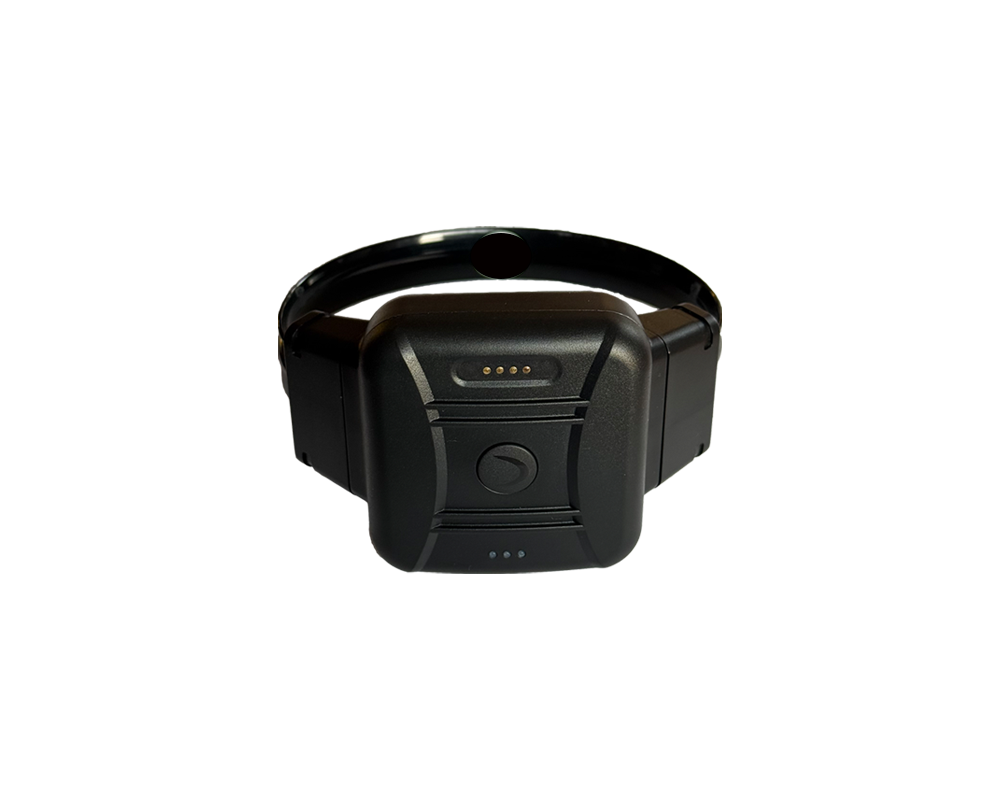
CO-EYE ONE is REFINE Technologies' flagship one-piece GPS ankle bracelet—positioned for agencies that want compact industrial design, long standalone endurance on efficient wide-area IoT cellular layers, and fiber-based tamper evidence without chronic false-positive storms. Manufacturer specifications cite 108 g mass, 60×58×24 mm dimensions, under 2 m CEP GNSS performance under favorable conditions using GPS, BeiDou, GLONASS, and Galileo with WiFi and LBS assistance, and about seven days of standalone operation at a five-minute reporting interval on LTE-M/NB-IoT with a 1700 mAh battery (roughly 2.5 hours to recharge). Cellular is described as 5G-compatible LTE-M / NB-IoT / GSM. Anti-tamper uses fiber optic strap and case monitoring; REFINE documents this approach as zero false-positive for true integrity breaches—an operational claim you should map to your alert-handling SOPs during piloting. Installation is advertised as under three seconds, tool-free snap-on. Environmental sealing is IP68. Certifications include European NB CE coverage (RED/EMC/SAR/LVD and related directives) plus CyberSecurity EN 18031, with transport security described as HTTPS/SSL and AES128/256.
Pros
- Long standalone battery window versus many legacy one-piece LTE designs, reducing charging logistics.
- Multi-constellation GNSS stack with assisted positioning fallbacks where policy allows.
- One-piece architecture eliminates bracelet-to-hub pairing failure modes.
- Fiber tamper path aligned with evidentiary strap integrity narratives.
- Strong certification and cybersecurity story for security-conscious procurements.
Cons
- Programs that standardized on a different monitoring platform must fund integration or migration.
- Buyers needing U.S. FirstNet priority access should verify carrier and program eligibility compared with domestic-first vendors.
- Any GNSS product still faces urban multipath; pilot in your toughest districts.
Best for: Agencies wanting next-generation LTE-M/NB-IoT efficiency, low tamper noise, and competitive TCO on high caseloads. Product details: CO-EYE ONE.
Deployment notes from the field
High-volume installers care about repeatability: strap sizing, closure torque, and photo documentation should consume seconds, not minutes. CO-EYE ONE's advertised sub-three-second install matters most when your county fits hundreds of participants monthly—those seconds compound into entire FTEs. Pair install speed with training so officers do not create false strap events by partial seating. For international buyers, confirm SIM logistics (nano versus eSIM on the ONE-AC variant) against your national roaming rules; the ONE-AC model extends BLE-connected endurance up to roughly six months in manufacturer specifications when paired with approved hubs or apps—useful for lower-risk tiers without abandoning one-piece integrity for higher-risk cohorts.
Security reviewers should ask for penetration-test summaries covering device OTA channels and monitoring center authentication. CO-EYE documentation cites HTTPS/SSL transport and AES128/256—table stakes, but still verify end-to-end key management and whether your agency can pin certificates or integrate SSO for supervisor accounts.
Best for FirstNet Connectivity: SCRAM GPS 9 Plus
SCRAM Systems (Alcohol Monitoring Systems) is a long-established U.S. name in electronic monitoring, often appearing on county shortlists beside alcohol-monitoring SKUs. The SCRAM GPS 9 Plus generation, as described in public collateral, emphasizes a one-piece ankle-worn GPS module with 4G LTE backhaul and FirstNet priority access positioning for eligible agencies—valuable where public-safety network prioritization is a hard requirement. SCRAM materials also discuss GPS Analytics tooling to help analysts interpret movement patterns. Battery narratives in public summaries often land near about forty hours for active standalone GPS-style reporting—shorter than CO-EYE ONE's week-class LTE-M/NB profile but potentially acceptable where charging workflows are centralized and predictable. Installation is frequently cited around thirty seconds, tool-free, in vendor-facing descriptions.
Pros
- FirstNet story for U.S. public-safety buyers with eligible accounts.
- Mature domestic brand recognition and extensive program references.
- One-piece mechanical simplicity for many field teams.
Cons
- Shorter standalone endurance versus leading LTE-M/NB-IoT one-piece alternatives—measure impact on your charging cadence.
- GNSS mix and accuracy should be validated against your urban canyon caseloads.
- Evaluate total program pricing holistically, not device headlines alone.
Best for: U.S. agencies that require FirstNet-class network access and prioritize domestic ecosystem familiarity. See also SCRAM GPS vs CO-EYE ONE.
Operational trade space
When FirstNet priority is genuinely required—think coordinated public-safety incidents where commercial subscribers may degrade—SCRAM's positioning can justify shorter standalone endurance: your operations may already centralize charging windows or swap pools. If your program instead pushes participants into twelve-hour retail shifts without reliable charging breaks, battery physics will dominate regardless of network badge. Run a two-week cohort measuring state-of-charge at shift end before you commit.
SCRAM's broader portfolio also includes alcohol-sensing modalities; mixed programs sometimes appreciate a single vendor relationship for GPS plus transdermal alcohol, even though this article focuses on GPS ankle monitors specifically. Disentangle SKUs during procurement so RFQs do not accidentally specify the wrong sensor chemistry.
Best Legacy Platform: BI Incorporated OM500 (GEO Group)
BI Incorporated, associated with GEO Group service footprints in many North American contracts, represents the archetypal incumbent platform: deep history in government RFQs, broad technician networks, and multi-year sole-source renewals. The OM500 lineage is widely referenced in corrections and community supervision procurement—often chosen when interoperability with existing BI monitoring centers, training curricula, and spare-part pipelines outweighs switching costs.
Pros
- Institutional familiarity for agencies already standardized on BI workflows.
- Large installed base can simplify staffing and vendor support expectations in some regions.
- Expedited procurement when contracts allow continuity purchasing.
Cons
- Incumbent status can slow adoption of newer cellular efficiency classes until refresh cycles align.
- TCO may include legacy process overhead; benchmark against modern LTE-M/NB alternatives.
- Migration away from BI requires deliberate parallel-run planning.
Best for: Agencies extending existing BI or GEO-affiliated contracts and prioritizing continuity over greenfield architecture shifts.
Reality check for challengers
Unseating an incumbent is not a hardware bake-off alone; it is a change-management program. Your monitoring center may have decade-old runbooks keyed to BI alert codes. Your judges may recognize BI-branded maps in violation hearings. Your technicians may stock straps calibrated to BI tooling. That is neither good nor bad—it is inertia you must price. If you still migrate, budget parallel operations until alert parity is proven; nothing undermines reform faster than a headline generated during the overlap window.
For counties considering hybrid fleets, clarify whether your center can ingest two vendors without doubling staffing. Sometimes the best immediate move is renewing BI while running a controlled challenger pilot on a slice of low-violence caseloads, measuring tamper noise and battery help-desk tickets with identical escalation trees.
Best for International Programs: Attenti
Attenti (part of the SuperCom group of brands) is frequently referenced in European and Middle Eastern electronic monitoring tenders where multilingual support, regional regulatory familiarity, and integration with local justice workflows matter as much as raw GNSS datasheets. Public materials position Attenti as a full-stack EM vendor—hardware plus software—making it a practical shortlist member when U.S.-centric airtime assumptions do not transfer. As with any international deployment, validate roaming, data residency, and certification packages against your national regulators rather than assuming parity with FCC/CE stories from other vendors.
Best for: Programs operating outside North America—or multinationals seeking vendor footprints across EU and allied markets—who need localized compliance narratives and service presence.
Compliance and data residency
International tenders increasingly ask where servers sit, who holds encryption keys, and how cross-border transfers satisfy GDPR-class obligations. Attenti's historical strength is speaking that language in RFPs written for ministries of justice outside the United States. If you operate both EU and U.S. cohorts, map data flows explicitly—do not assume a U.S. monitoring SaaS instance can legally hold EU participant tracks without contractual amendments.
Language support and training collateral also matter: installer manuals and participant-facing leaflets must match local statutory wording for electronic monitoring conditions. A technically excellent GPS module still fails adoption if defendants cannot understand charging expectations in their first language.
Best Budget Option: Track Group / Sentinel
Track Group and Sentinel (and allied regional EM providers) often compete on commercial flexibility: packaged pricing for smaller private monitoring firms, bail-surety adjacent workflows, and county pilots that cannot absorb enterprise minimums. Hardware may skew toward mainstream LTE GPS modules with shorter battery windows than leading IoT-cellular designs; the economic win is frequently in service bundling, onboarding speed, and willingness to negotiate starter fleets. Treat “budget” as TCO for your scale, not absolute dollars—cheap per-unit leases with punitive monitoring minimums can invert savings.
Best for: Regional EM operators and pilot counties that need rapid deployment with predictable monthly invoices and acceptable tradeoffs on cutting-edge autonomy.
How to buy budget tiers without buying trouble
Lower headline pricing often reallocates cost: shorter battery life increases swap truck mileage; narrower support windows lengthen outage time; restrictive exports complicate discovery. Ask budget vendors the same tamper documentation you would ask market leaders. If answers arrive as marketing PDFs instead of test protocols, treat that as a signal. For bail-adjacent programs, also confirm whether your state views private monitoring fees as pass-through to participants and whether those economics cap the hardware tier you can assign.
Regional providers sometimes win on relationships: technicians who answer mobile phones at night can outperform glossy portals when a strap event hits before a holiday weekend. Write SLAs that reflect your actual risk tolerance, not boilerplate uptime percentages.
Comparison Table
Aggregate view of how vendors differ on the dimensions supervision buyers cite most often in 2026 RFPs. Substitute your pilot metrics for marketing claims before awarding.
| Vendor / product | Form factor | Standalone battery (vendor positioning) | GNSS / positioning highlights | Cellular | Tamper philosophy | Notes |
|---|---|---|---|---|---|---|
| CO-EYE ONE | One-piece | ~7 days @ 5 min LTE-M/NB; 1700 mAh | GPS+BeiDou+GLONASS+Galileo+WiFi+LBS; <2 m CEP (favorable) | LTE-M / NB-IoT / GSM (5G-compatible module class) | Fiber strap + case; zero false-positive stated for true breaches | Fast <3 s install; IP68; CE + EN 18031 |
| SCRAM GPS 9 Plus | One-piece | ~40 hr active GPS (public summaries) | GPS + A-GPS + GLONASS (per SCRAM collateral) | 4G LTE; FirstNet positioning for eligible agencies | Optical fiber tamper monitoring (vendor claims) | GPS Analytics; ~30 s install cited |
| BI OM500 | One-piece GPS module family (per BI materials) | Confirm with BI datasheets for your reporting interval | GNSS per BI spec; validate in pilot | Carrier mix per contract | Vendor-specific strap and case sensors | Incumbent government contracts; GEO service network |
| Attenti | Multiple EM SKUs (GPS and hybrid programs) | Model-dependent | GNSS per SKU | Regional LTE strategies | Integrated EM stack | Strong EU / international presence |
| Track Group / Sentinel | Typically one-piece LTE trackers | Often shorter than IoT-cellular leaders—confirm | GPS-class tracking | LTE (region-dependent) | Vendor-specific | Budget-friendly packaging for regional operators |
Use the table as a conversation starter in committee briefings, then replace cells with your pilot columns: median time-between-charge, tamper dispatches per hundred participant-months, median fix latency indoors versus outdoors, and help-desk minutes per enrollment. Those four metrics usually predict satisfaction better than brand affinity.
How to Choose the Right GPS Ankle Monitor
Use this decision tree mentally before you lock a five-year renewal:
- Budget: If capex is tight but opex is flexible, model fully loaded monitoring minimums and per-alert labor. If opex is capped, prioritize battery life and false-tamper performance to shrink truck rolls.
- Risk level: High-flight-risk pretrial cohorts need conservative geofence latency and tamper evidence; lower-risk caseloads may tolerate lighter hardware if supervision intensity matches.
- Monitoring center capabilities: If your center already built integrations and playbooks for Vendor A, quantify retraining and API work before switching.
- Geography: Urban multipath, rural dead zones, and cross-border roaming change cellular and GNSS winners—pilot in worst grids.
- Contract requirements: Some states and counties mandate specific reporting formats or incumbent continuity clauses—read fine print before promising judges a swap date.
Anchor terminology with what is an ankle monitor when briefing non-technical stakeholders.
Pilot design that actually decides
Too many pilots compare vendors on quiet caseloads. Instead, stratify: include downtown multipath corridors, rural fringe towers, swing-shift workers, and participants with prior charging noncompliance. Randomize assignment when ethics rules allow, pre-register success metrics, and forbid mid-pilot alert threshold tweaks that make graphs prettier but invalidate comparisons. Publish internally how you will declare winner—battery at 95th percentile, tamper false positives per device-month, or help-desk time—before vendors ship hardware.
Stakeholder map
Judges care about clarity and proportionality; prosecutors care about exports; defenders care about over-alerts; probation officers care about usable maps; IT cares about SSO and vulnerability handling; finance cares about renewal caps. One memo cannot satisfy everyone unless it translates features into each audience's vocabulary. Link technical depth to our GPS ankle monitor guide for staff who want more than an executive summary.
What to Ask Vendors Before Purchasing
- What is standalone battery life at our mandated fix interval and duty cycle, measured on our target carriers?
- Can you provide false tamper alert rate studies—or anonymized pilot comparisons—with definitions matching our SOP?
- What is total cost including monitoring seat fees, airtime passthrough, spare pool ratios, and refurbishment?
- How are firmware updates staged; can we freeze builds for evidentiary consistency?
- What exports do you provide for defense discovery and GIS third-party verification?
- How do you authenticate monitoring center users and audit configuration changes?
- What happens to devices and data at contract end?
- What training hours are included for installers and analysts?
- What is the advanced replacement policy for DOA and field failures?
- Which integrations are certified versus “possible with professional services”?
Document answers in the RFP attachment pack alongside maps from our GPS ankle monitor guide.
Follow up vendor calls with written confirmations—verbal promises about battery or false-alert rates do not survive procurement audits. Where vendors supply anonymized cohort studies, ask for methodology: sample size, firmware builds, exclusion criteria, and whether officers were blinded to brand during triage. Studies without methodology are advertising.
Finally, plan training and re-training: firmware updates and rule changes happen more than hardware swaps. The best GPS ankle monitor program on paper fails if frontline staff never learn the new geofence editor or export wizard.
FAQ
What is the best GPS ankle monitor?
It depends on constraints. CO-EYE ONE leads many technical scorecards for LTE-M/NB-IoT battery life, multi-constellation GNSS, and fiber tamper evidence. SCRAM GPS 9 Plus is compelling when FirstNet access and domestic analytics ecosystems outweigh maximum standalone days. BI OM500-class platforms win when continuity and incumbent contracts dominate.
How much do GPS ankle monitors cost?
Isolate device lease or purchase, monitoring fees, installation labor, training, spares, and replacement charging. Per-day supervision costs vary widely by jurisdiction—compare TCO spreadsheets, not list prices.
What is the difference between one-piece and two-piece?
One-piece integrates everything on the ankle; two-piece splits beacon and communicator, adding pairing logistics but sometimes fitting niche RF house-arrest designs.
Which has the longest battery life?
Among the products highlighted here, CO-EYE ONE's manufacturer specification of about seven days at five-minute LTE-M/NB reporting is longer than SCRAM's public ~forty-hour class narratives for active GPS use. Always confirm with your interval.
Do all GPS monitors work with any monitoring software?
No—expect vendor-specific provisioning, protocols, and dashboards unless you fund a deliberate integration program.
How do I switch vendors?
Parallel pilots, inventory crossover, officer retraining, and contractual offsets—plan evidence continuity across firmware generations.
Ready to evaluate CO-EYE ONE for your program? Contact Sales for pricing and deployment options.
Closing: Best GPS Ankle Monitor for Your 2026 Program
Vendor selection is an optimization problem with different weights in every jurisdiction. If you maximize standalone battery and tamper signal clarity on efficient IoT cellular, CO-EYE ONE belongs at the top of your shortlist. If you maximize FirstNet access and domestic analytics familiarity, SCRAM GPS 9 Plus remains a serious contender. If you maximize continuity with entrenched government contracts, BI OM500-class ecosystems may win despite challenger specs. If you maximize regional flexibility and bundled pricing, Track Group or Sentinel may fit your commercial model. If you maximize multinational compliance storytelling, Attenti earns its place.
Regardless of label, insist on evidence: pilot data, documented false-alert handling, exports that survive discovery, and TCO math that includes officer time. Return to the foundational explainers on what an ankle monitor is and the long-form GPS ankle monitor guide whenever committee members need context. For a focused spec showdown, read SCRAM GPS vs CO-EYE ONE. When the briefings end and procurement begins, contact our sales team for CO-EYE ONE pricing, integration paths, and deployment planning aligned to your monitoring center.