
Two International GPS Monitoring Providers, Two Different Strategies
SuperCom Ltd. (NASDAQ: SPCB) and CO-EYE (REFINE Technologies) both compete for international electronic monitoring contracts outside the US domestic market dominated by BI Incorporated and SCRAM. SuperCom, headquartered in Israel, positions its PureSecurity platform as an end-to-end national EM solution. CO-EYE, from Shanghai, focuses on hardware excellence and global scalability. Both target corrections ministries, justice departments, and law enforcement agencies in Europe, Latin America, Africa, and Asia-Pacific — making this comparison directly relevant for international procurement teams evaluating GPS monitoring platforms.
For procurement teams, the practical question is whether you are buying a GPS ankle bracelet fleet with clear performance envelopes, or a bundled national stack where the ankle monitor is one module inside a broader identity and case-management architecture. NIJ-sponsored research on location-based offender tracking emphasizes subsystem interoperability, data integrity, and officer-facing workflows — not brand narratives. If your program must scale from hundreds to tens of thousands of supervised individuals, the durability of device architecture, cellular roadmap, and tamper-evidence quality will dominate total cost of ownership (TCO) regardless of vendor headquarters.
What Should Agencies Prioritize When Comparing GPS Ankle Bracelet Vendors?
Prioritize tamper-signal integrity, cellular longevity (LTE-M/NB-IoT vs legacy GSM), reporting latency, and exportable evidence packages. A GPS ankle bracelet that generates ambiguous tamper events will consume officer hours and undermine court confidence even if the map looks polished.
Readers evaluating vendor-neutral fundamentals should start with our GPS ankle bracelet guide and GPS ankle monitor guide, then map those requirements to contract structure (national bundle vs hardware-first purchase). The what is an ankle monitor explainer translates device features into supervision outcomes — useful for cross-functional teams that include courts, probation, and IT security.
How Does Electronic Monitoring Procurement Differ Between National and County Programs?
National programs often optimize for single-vendor integration and multi-year service margins; county and regional buyers optimize for device interoperability, phased pilots, and transparent per-unit pricing. Electronic monitoring procurement should still specify the same technical baselines for encryption, CJIS alignment (where applicable), and evidence exports.
County-scale buyers frequently discover that a national-stack vendor’s minimum commercial terms exceed their pilot budget. A hardware-centric ankle monitor purchase with licensed software can preserve optionality: expand device counts as docket pressure grows, without renegotiating an entire national platform. When comparing SuperCom’s bundled PureSecurity approach with CO-EYE’s scalable purchase model, ask how each vendor handles spare inventory, advance replacement RMA workflows, and firmware updates across mixed fleets.
Why Does Tamper-Alert Reliability Matter for Ankle Monitor Programs?
Courts and prosecutors treat tamper alerts as potential public-safety signals. When an ankle monitor generates repeated ambiguous tamper events, agencies lose the ability to escalate genuine strap cuts quickly — the classic alert-fatigue failure mode.
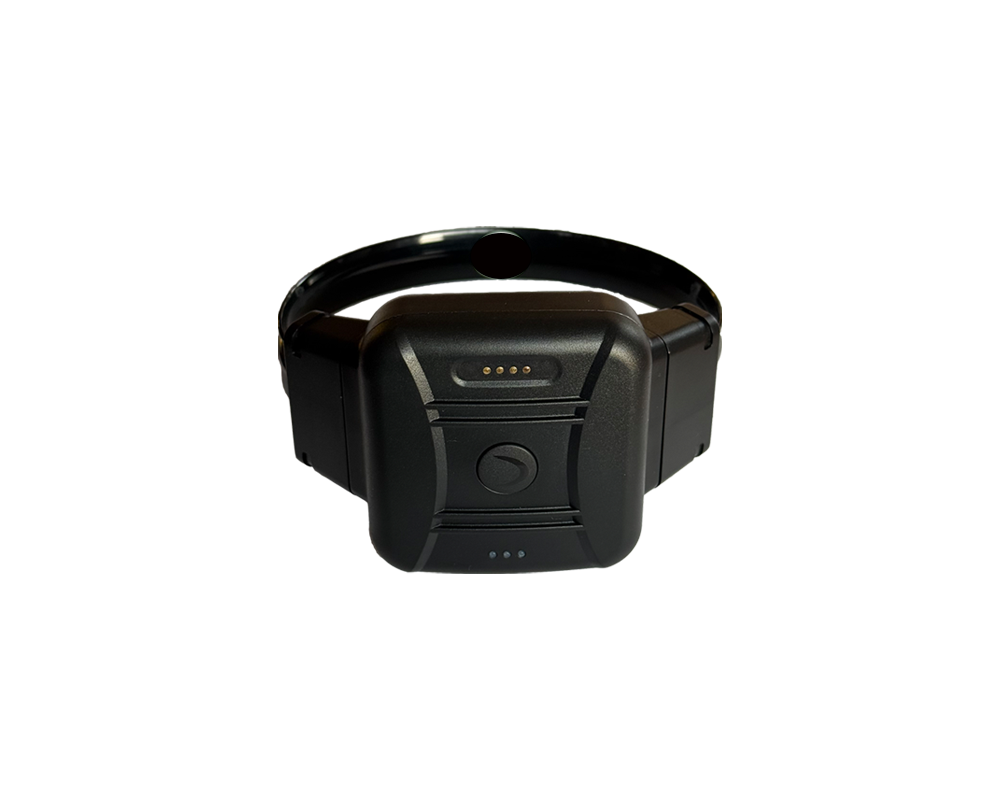
CO-EYE’s optical fiber loop (strap and case) is designed as a binary integrity check: the circuit is either intact or violated, which supports deterministic alerting when combined with proper installation training. SuperCom documents multi-sensor tamper approaches on PureOne-class hardware; buyers should request written false-alert handling procedures and sample export packets from both vendors. For architecture context on firmware, encryption, and gateways, see GPS ankle monitor architecture and security.
Company Profiles
SuperCom Ltd.
SuperCom is publicly traded on NASDAQ (SPCB). The company evolved from its origins in smart-ID and identity management into electronic monitoring through its PureSecurity division. SuperCom has secured EM contracts in multiple countries including Israel, several European nations, and select emerging markets. The company offers both hardware (PureOne ankle bracelet, PureTrack devices) and the PureSecurity software platform as a unified solution. SuperCom’s business model typically involves multi-year government contracts combining technology deployment with operational services.
Notable capabilities include integration with national ID systems (leveraging the company’s identity management heritage), which can simplify offender enrollment workflows in jurisdictions that already use SuperCom digital ID infrastructure.
CO-EYE (REFINE Technologies)
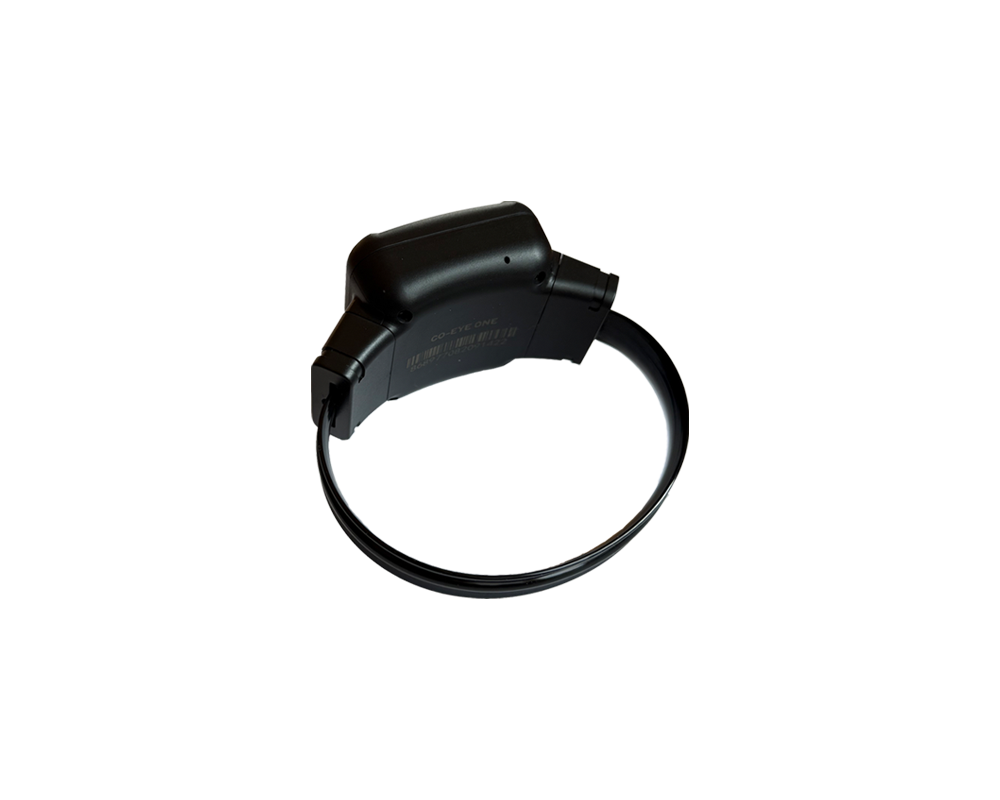
REFINE Technologies has been building electronic monitoring hardware since 2004. With 200,000+ devices deployed across 30+ countries and 130,000+ offenders monitored, CO-EYE’s global footprint covers the Americas, Europe, Africa, and Asia-Pacific. The company sells hardware and licenses software directly to agencies — no mandatory multi-year managed service contracts. Key technical differentiators: one-piece GPS design (CO-EYE ONE at 108 g; CO-EYE ONE-AC at 111 g with eSIM + Nano SIM dual-SIM management), optical fiber anti-tamper detection, tri-mode adaptive connectivity (BLE / WiFi-directed / LTE) on ONE-AC, and a full product matrix spanning high-risk GPS ankle bracelets through low-risk smartphone app monitoring.
ONE-AC adds dual-core ARM M3 + M0 processing for parallel communications and positioning workloads — relevant when agencies require aggressive reporting intervals without sacrificing runtime targets (up to 7 days LTE standalone, up to ~3 weeks WiFi-directed mode, up to 180 days BLE-connected mode, per published specifications).
Technology Comparison
| Feature | CO-EYE | SuperCom |
|---|---|---|
| Primary GPS device | CO-EYE ONE (one-piece, 108 g) | PureOne (one-piece design) |
| Product range | 8 hardware products + software platform | PureOne + PureTrack + PureSecurity platform |
| Anti-tamper | Optical fiber (strap + case) | Proprietary multi-sensor |
| Battery life | 7 days LTE standalone / ~3 weeks WiFi-directed / 180 days BLE-connected (ONE-AC) | Varies by configuration |
| Cellular | 5G-compatible LTE-M / NB-IoT / GSM | 4G LTE / 2G fallback |
| Satellite positioning | GPS + BeiDou + GLONASS + Galileo + WiFi + LBS | GPS + GLONASS (varies by model) |
| GPS accuracy | < 2 m CEP certified | Standard GPS accuracy |
| Installation | < 3 seconds snap-on | Standard strap fitting |
| eSIM support | Yes (ONE-AC variant) | Not publicly documented |
| Waterproofing | IP68 certified | Water-resistant (varies) |
| Cybersecurity cert | EN 18031 | ISO certifications (varies) |
| CE certification | Full NB CE (RED/EMC/SAR/LVD) | CE marked (scope varies) |
| National ID integration | No (standalone EM platform) | Yes (PureSecurity + smart ID) |
| OTA firmware updates | Yes, remote | Platform-dependent |
| Victim notification | AMClient app + exclusion zones | PureSecurity platform alerts |
When procurement teams normalize specifications across bids, translate marketing language into testable acceptance criteria: maximum report latency under LTE-only stress, indoor reporting behavior when GNSS is unavailable, and tamper-event adjudication workflow in the monitoring platform. The one-piece vs two-piece GPS ankle monitor analysis explains why architecture choices affect pairing failures and field maintenance hours — factors that appear late in pilots if RFPs focus only on price per GPS ankle bracelet.
SuperCom’s strength in national digital-ID integration can shorten enrollment in jurisdictions that already standardized on its identity stack. CO-EYE’s strength is hardware-first performance envelopes for agencies that already selected case-management systems but need a modern ankle monitor fleet with fiber tamper evidence and multi-mode connectivity to reduce charging workloads and cellular dead-zone outages. Either path can be valid; the mistake is choosing a stack for political visibility when the operational bottleneck is alert quality on the device layer.
Market Positioning and Contract Approach
SuperCom’s National-Contract Model
SuperCom targets national-level EM deployments — entire country programs rather than individual county or agency purchases. Their pitch integrates identity management with offender monitoring, which resonates in jurisdictions building comprehensive justice technology stacks. Contract values tend to be large ($5M–$50M+ range) with multi-year terms. For smaller agencies or individual counties, SuperCom’s national-scale model may not be the right fit.
CO-EYE’s Scalable Purchase Model
CO-EYE sells at any scale — from a 50-unit county pilot to a 10,000-unit national deployment. Agencies purchase devices, license software, and scale incrementally. There’s no minimum contract value or mandatory multi-year commitment. This flexibility makes CO-EYE accessible to smaller agencies, bail bond companies, and organizations piloting EM programs before committing to full-scale deployment.
For budget planning beyond device MSRP, use our ankle monitor cost guide to model cellular, staffing, and charging-support costs. Electronic monitoring TCO diverges less on dashboard licensing and more on how many officer hours each vendor’s alert profile consumes per 100 supervised individuals.
Deployment Scale and Track Record
| Metric | CO-EYE | SuperCom |
|---|---|---|
| Total devices deployed | 200,000+ | Not publicly disclosed (several thousand estimated) |
| Countries active | 30+ | 10+ (primarily Europe, select others) |
| Company founding | 2004 (22 years EM experience) | 1988 (EM division ~2014) |
| EM-dedicated years | 22 years | ~12 years |
| Public listing | Private | NASDAQ: SPCB |
| Annual revenue (EM) | Private | ~$20-30M total (public filings) |
Scale is not vanity — it is a proxy for manufacturing yield, supply continuity, and field failure modes observed at volume. International buyers should request failure-in-time (FIT) summaries, mean time between critical alerts (MTBCA) studies from pilots, and references in comparable cellular environments. Public listing status helps some finance departments; others prioritize delivery SLAs and spare-parts availability for the specific GPS ankle bracelet SKU they will deploy.
Decision Criteria for International Procurement
CO-EYE is the stronger choice when:
- You need proven deployment scale (200,000+ devices globally)
- Your program requires the lowest false tamper alert rates (optical fiber)
- Budget structure favors hardware ownership over managed-service contracts
- You need flexible scaling from pilot to full deployment without contract restructuring
- 7-day LTE battery life, WiFi-directed and BLE-connected modes, and rapid installation are operational priorities
- Multi-constellation positioning and 5G-ready cellular are procurement requirements
SuperCom may fit better when:
- You’re deploying a national-scale program that integrates EM with digital ID infrastructure
- Your jurisdiction already uses SuperCom identity management systems
- You prefer a publicly traded vendor with NASDAQ disclosure requirements
- Your procurement vehicle favors large bundled technology contracts
Regardless of vendor shortlist, require a supervised pilot with court-quality exports before full award. For product-level acceptance tests on CO-EYE hardware, see CO-EYE ONE specifications and Contact Sales for evaluation and pricing — we do not publish list pricing because programs vary by carrier, integration, and support tier.
International RFP Language That Survives Legal and Audit Review
Model procurement packages from U.S. federal and state programs often reference NIJ-informed performance expectations for offender tracking — even when the buyer is outside the United States. Translate those expectations into measurable acceptance tests: maximum time-to-first-fix after cold start, maximum report latency under LTE-only mode, minimum hours of stored events on-device before overwrite, and tamper-event packet contents suitable for prosecutors. BJS and NIJ publications on community supervision emphasize transparency in how location data are collected and used; aligning your electronic monitoring data dictionary with those principles reduces downstream privacy disputes.
Ask each vendor for a redacted sample of its chain-of-custody export, including how server clocks are synchronized to GNSS time and how daylight-saving transitions are recorded. For mixed fleets, document how spare GPS ankle bracelet inventory is enrolled, decommissioned, and wiped. Finally, require a transition plan if the vendor changes cloud regions or subprocessors — custody of criminal justice data is not a generic IT migration.
Close procurement loops with a 90-day post-award review: compare observed tamper-alert adjudication time, spare-pool utilization, and export defects against the pilot baseline. Those operational metrics predict long-term program credibility better than slide-deck feature matrices.
Head-to-Head: Where CO-EYE and SuperCom Diverge on Key Specifications
The most productive way to evaluate these two vendors is not through feature checklists, but by understanding the engineering trade-offs each has made — and what those trade-offs mean for your specific program requirements.
Battery Architecture: Fundamentally Different Approaches
SuperCom’s PureOne uses a conventional always-on architecture: the device continuously runs GPS positioning and LTE data transmission. This provides consistent, predictable behavior — but limits battery life to 24-48 hours between charges. For programs with reliable enrollee charging compliance, this is adequate.
CO-EYE ONE-AC takes a different approach with its adaptive three-mode connectivity engine. When the enrollee is near their smartphone (BLE mode) or within WiFi range, the device offloads GNSS and cellular operations to the companion device or network — reducing power consumption by 90-95%. The device only activates full GPS+LTE when truly operating independently outdoors.
The practical difference: a CO-EYE device in BLE-connected mode can operate for 180 days without charging. In WiFi-directed mode, approximately 3 weeks. In standalone LTE mode, 7 days. This means that for enrollees who carry a smartphone daily (most do), the device rarely needs charging at all.
What this means for your program: If your enrollee population has good charging compliance and your officers have capacity to manage daily charging alerts, SuperCom’s approach works. If charging management is consuming significant officer time (our data shows the average 500-enrollee program spends 33-50 officer-hours per week on charging-related alerts), the multi-mode approach eliminates that operational burden.
Tamper Detection: The Specification With the Largest Hidden Cost Impact
SuperCom PureOne uses fiber-optic tamper detection with multiple tamper mechanisms — a proven technology used across the industry. Documented false-positive rates for this detection method range from 5-15% depending on environmental conditions, strap tension, and enrollee skin characteristics.
CO-EYE uses fiber-optic loop detection through both the strap and device housing. The operating principle is binary: light either passes through the intact fiber (device on) or doesn’t (fiber compromised). There is no analog threshold, no calibration drift, no environmental sensitivity. Documented false-positive rate: zero.
Additionally, CO-EYE’s fiber-optic detection continues operating for 3+ months after battery depletion — the passive optical fiber retains physical evidence of any tampering regardless of power state. This eliminates the “wait for the battery to die, then remove” vulnerability.
What this means for your program: Calculate your current false tamper alert volume. Multiply by your average officer response cost per alert ($15-25). That number represents the annual savings differential between these two tamper detection approaches. For most mid-size programs, this figure exceeds the hardware cost difference between the vendors.
Network Connectivity: Today’s Choice, Tomorrow’s Constraint
SuperCom PureOne supports 4G LTE cellular connectivity — the current industry standard. This provides reliable communication in areas with cellular coverage.
CO-EYE ONE-AC supports LTE-M and NB-IoT (5G-infrastructure-compatible IoT bands) plus eSIM for remote carrier switching. More significantly, the WiFi-directed communication mode means that a $10 WiFi repeater placed in an enrollee’s basement apartment or rural home can eliminate cellular dead zones entirely — providing both connectivity and extended battery life simultaneously.
What this means for your program: If your program operates in urban areas with strong cellular coverage, both vendors perform comparably on connectivity. If you have enrollees in rural counties, underground apartments, or large concrete workplaces where cellular signals are weak, CO-EYE’s WiFi-directed mode solves a problem that SuperCom’s architecture cannot address through software updates — it requires WiFi radio hardware that the PureOne doesn’t include.
Making the Decision: Match the Vendor to Your Program’s Constraints
Neither vendor is universally “better.” The right choice depends on which operational constraint is most painful for your program today:
| If your biggest challenge is… | Consider | Because |
|---|---|---|
| End-to-end platform integration with victim notification, alcohol monitoring, and case management | SuperCom | PureSecurity platform offers the broadest feature set within a single vendor ecosystem |
| False tamper alarms consuming officer time and undermining court credibility | CO-EYE | Fiber-optic detection eliminates false positives entirely — this cannot be matched by firmware updates to resistive/capacitive systems |
| Battery management and charging compliance | CO-EYE | Multi-mode architecture extends battery from days to weeks/months, eliminating the charging management burden |
| Cellular dead zones in your coverage area | CO-EYE | WiFi-directed mode provides coverage where no cellular alternative exists |
| Existing SuperCom contract and trained staff | SuperCom | Migration costs and retraining may outweigh hardware specification advantages in the current contract period |
| International deployment across multiple countries/carriers | CO-EYE | eSIM remote carrier switching and multi-band LTE-M/NB-IoT simplify international logistics |
The most effective evaluation approach: request evaluation units from both vendors and run a 30-day side-by-side comparison with a subset of your enrollee population. Track false alarm rates, battery charging events, connectivity reliability, and officer time consumption. The operational data from your own program will make the decision clear.
Ready to evaluate CO-EYE equipment against your current fleet? Contact our sales team to arrange evaluation units and a technical consultation with our deployment specialists.