If you are building a 2026 budget for pretrial, probation, parole, or house arrest, ankle monitor cost is the line item everyone sees—and the one most often underestimated. Stakeholders ask for a per-day number; finance needs capex, opex, and replacement curves; chiefs need to know how many false tamper runs will burn overtime. This ankle monitor cost breakdown translates vendor quotes into procurement language: typical daily bands by modality, realistic GPS ankle monitor equipment ranges, total cost of ownership (TCO), and how community supervision compares to incarceration on a dollars-per-day basis. Start with our pillar ankle monitor cost guide, then use this article when you need a 2026 fee-and-TCO snapshot for RFP attachments. For hardware context, see the GPS ankle bracelet guide and the GPS ankle monitor technology primer. Ready to scope fleet pricing? Use Contact Sales or Request Quote on ankle-monitor.com—never pay for speculative “demo” hardware you cannot operationalize.
Ankle monitor cost overview: three ledgers, one program
Every time a committee Googles “ankle monitor cost,” three different answers collide. Hardware is the device on the ankle. Daily monitoring is the cellular, software, map engine, and monitoring-center labor that turns blips into court-ready narratives. Internal agency time is training, alert triage, field response, and evidence packaging—often larger than the vendor invoice. Mature programs model all three before they sign a master agreement.
Across modalities, planning bands useful in 2026 RFP discussions include:
- Daily supervision fees: roughly $5–$25/day depending on whether the stack is full outdoor GPS ankle monitor tracking, RF home tethering, smartphone-app supervision, alcohol-capable bundles, or high-touch victim-notification workflows.
- Capital equipment (GPS class): professional one-piece cellular/GNSS hardware frequently appears near $800–$3,000+ per unit before volume discounts, spares, chargers, and depot refurbishment—quotes vary sharply by carrier strategy, warranty, and whether monitoring is bundled.
- Jail counterfactual: fully loaded incarceration commonly appears in policy comparisons around $75–$200/day per person, versus community EM cited in single-digit-to-low-tens dollars per day—framing why legislatures keep funding GPS expansions even when electronic monitoring cost draws political scrutiny.
When you present ankle monitor cost to elected officials, separate vendor pricing from your marginal jail cost. If the comparison uses an artificially low jail bed rate, EM will look “expensive” even when detention is the less efficient public-safety investment.
Daily fee breakdown: what the per-diem actually buys
Daily fees are not profit padding—they are the operational spine of electronic monitoring cost. They cover cellular data, cloud hosting, map and rules engines, audit logs, software seats, after-hours escalation, and the people who answer when a geofence breaches at 11 p.m.
| Modality | Indicative daily band | What drives the spread |
|---|---|---|
| GPS ankle monitor (continuous outdoor accountability) | About $5–$25/day | Fix interval, geofence count, victim services integrations, bilingual monitoring, after-hours SLA |
| RF home monitoring / presence tether | About $3–$10/day | Cheaper when orders require curfew and home presence—not full route history |
| Smartphone supervision apps | About $2–$8/day | BYOD vs agency handset, MDM, biometric check-ins, tethered wearables |
Because ankle bracelet cost quotes are sensitive to service tier, always demand an itemized per-diem: cellular carrier, dashboard seats, training hours, spare swap SLA, and whether software updates are included. If those lines are vague, your “low” ankle monitor cost becomes a change-order story by month six.
Equipment pricing: capex bands buyers actually see
Hardware quotes move with radio architecture, sealing, battery chemistry, certifications, and whether you purchase outright or accept subsidized hardware tied to higher per-diems. For GPS ankle monitor fleets, single-unit list pricing in competitive solicitations often lands in the $800–$3,000+ range for justice-grade one-piece designs with multi-constellation GNSS, sealed charging, and tamper subsystems suitable for high-stakes dockets.
Two-piece stacks may distribute spend across bracelet and hub—or shift cellular burden to a relay device—so apples-to-apples comparisons require a system price plus expected replacement rates for lost components. RF-centric house arrest cost programs can show lower strap-side hardware when continuous outdoor tracking is not court-ordered, but you still capitalized home base stations, cabling, and installation visits.
For procurement teams comparing ankle monitor cost across three vendor finalists, score each bid on equivalent reporting intervals and alert taxonomies—not headline device MSRP alone.
Total cost of ownership: depreciation, backhaul, training, alarms
TCO is where ankle monitor cost stops being a spreadsheet fantasy. A disciplined model includes:
- Hardware depreciation and refresh: batteries, seals, and cellular modules age; plan a 3–5 year replacement curve unless your vendor certifies longer service life with field data.
- Cellular backhaul and roaming: LTE-M/NB-IoT profiles differ by carrier; dead zones generate violations that look like noncompliance unless you tune cadence by risk tier.
- Cloud platform and integrations: case-management feeds, prosecutor exports, and SSO/SAML requirements are not free—price them in the electronic monitoring cost model up front.
- Officer and monitor-staff training: retraining after firmware changes, court testimony prep, and QA on evidence exports belong in opex, not “miscellaneous.”
- False alarm / false tamper management: every bogus priority event consumes the same radio channel as a real emergency. Programs with noisy tamper stacks can spend more on overtime than they “saved” on cheaper straps—directly raising ankle monitor cost in practice even when the vendor per-diem looked low.
When finance asks whether to capitalize devices, remember: ankle bracelet cost is not just amortization—it is also the logistics of hot swaps, shipping labels, and evidence-grade chain-of-custody when units cycle through depot repair.
Hidden costs that inflate ankle monitor cost after go-live
Beyond TCO line items, watch for “invisible” multipliers:
- Help-desk load from charging friction: frequent charge cycles increase participant forgetfulness and officer home visits.
- Beacon inventory (two-piece GPS): separate home units add purchase, install, truck rolls, and spare-pool complexity—each line whispers upward into house arrest cost and pretrial budgets.
- Court credibility tax: ambiguous tamper narratives trigger emergency hearings; prosecutors and defenders both bill time when data quality is weak.
If your program lead says, “We’ll fix operations later,” assume ankle monitor cost rises 15–30% in year two—unless you pilot with realistic caseloads and measure alert noise before full rollout.
Jail vs electronic monitoring: the dollars-per-day comparison
Policy briefs frequently contrast detention priced near $75–$200/day with community supervision priced far lower—often roughly $5–$25/day for active GPS tiers. That spread is why states continue appropriating GPS lines even when headlines focus on participant fees.
North Dakota illustrates the legislative pattern: lawmakers approved roughly $105K in GPS expansion funding while publicly framing the spend against incarceration economics—exact dollar outcomes vary by facility accounting, but the policy logic is consistent: when a bed day costs orders of magnitude more than a supervised day, supervised release becomes fiscally rational wherever risk allows.
Meanwhile, Tennessee’s domestic-violence supervision landscape has included high-profile deployments—Nashville has operated large defendant-funded GPS ankle monitor cohorts (on the order of 172 units in public reporting) tied to state DV statutes—showing how ankle monitor cost allocation shifts between county general funds and participant contributions depending on statute and court order. Always verify current local rules before you copy a funding model; indigency protections and fee caps differ materially by jurisdiction.
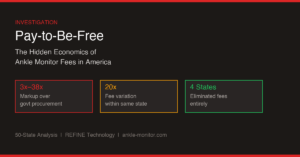
Heading into 2026, legislative and media tracking suggests roughly fourteen states are expanding EM statutes, appropriations, or monitored populations—evidence that electronic monitoring cost debates are now central to statewide justice budgets, not one-off pilot grants.
County-funded vs defendant-funded models
County-funded models simplify participant compliance and reduce payment-related technical violations, but they concentrate ankle monitor cost entirely on the taxpayer ledger. Defendant-funded models attempt cost recovery yet can collide with ability-to-pay rulings and create perverse incentives if fees exceed what supervised individuals can sustain. Hybrid approaches—county pays monitoring base, participants pay statutory co-pays within caps—are common where courts demand both accountability and constitutional safeguards.
Procurement officers should document who pays hardware replacement after negligent damage, who pays cellular overages, and whether vendor invoices reconcile to court orders—otherwise ankle bracelet cost disputes land on your clerk’s desk Friday afternoon.
CO-EYE ONE: engineering choices that bend ankle monitor cost downward
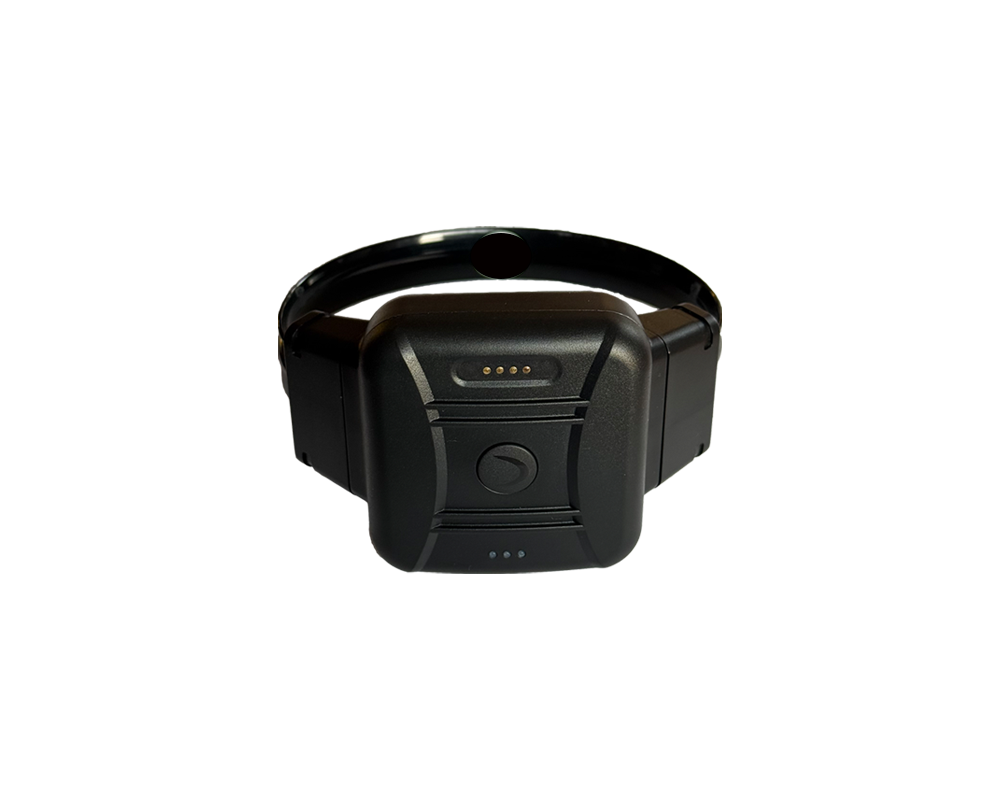
When buyers challenge ankle monitor cost, they are really asking whether the architecture eliminates avoidable opex. CO-EYE ONE is a one-piece design—so agencies avoid purchasing, installing, and refreshing separate home beacons that often add roughly $200–$400 per seat in two-piece stacks when charger bases, spares, and truck rolls are included. Removing that beacon line is direct capex and logistics savings.
Operational touchpoints matter as much as invoices. A 7-day battery window shrinks how often participants miss charging windows—reducing officer welfare checks tied to dead batteries. In field math, cutting charge-related encounters by up to about 85% versus legacy daily-charge patterns is a realistic planning assumption when moving from near-daily charge cycles to week-long endurance (your mileage varies by fix interval and RF environment).
Tamper integrity also moves electronic monitoring cost: fiber-based strap and case sensing that produces zero false-positive tamper events for genuine integrity breaks (per CO-EYE specifications) lowers monitor-staff noise and reduces unnecessary officer deployments—hours that never appear on a vendor quote but dominate union overtime in noisy programs.
Pair hardware with the CO-EYE software stack when you need unified dashboards across risk tiers—from CO-EYE ONE through HouseStation home beacons for RF-tether workflows and AMClient smartphone supervision when orders permit step-down. Explore the full line on our products page and bail monitoring solutions if pretrial release is part of your portfolio.
How to use this cluster with your existing ankle monitor cost guide
This article is a cluster companion—not a replacement—for the deep-dive ankle monitor cost guide (pricing psychology, false-alert economics, and long-form FAQs). Send the pillar to executives; attach this ankle monitor cost breakdown to finance and RFP committees that need 2026 fee tables and TCO reminders in five pages or less. Link both from your intranet procurement wiki so program managers stop reinventing the same spreadsheet each grant cycle.
For adjacent buyer content, see GPS ankle bracelet technology trends and the GPS ankle monitor deployment guide—each reinforces keywords without cannibalizing your primary ankle monitor cost landing experience.
Next step: When you are ready to model fleet totals with certified pricing, use Contact Sales or Request Quote on ankle-monitor.com for CO-EYE ONE, ONE-AC, DUO, and integrated software—scoped to your reporting intervals, geofence complexity, and monitoring-center workflow.
Frequently asked questions
What is a realistic ankle monitor cost range per day? Planning bands often fall near $5–$25/day for active GPS supervision depending on SLA and integrations, with RF home monitoring nearer $3–$10/day and smartphone-app programs nearer $2–$8/day—always validate against your solicitation.
How much does GPS ankle monitor equipment cost? Justice-grade one-piece cellular/GNSS hardware frequently quotes in the $800–$3,000+ per-unit range before volume discounts and spare pools—two-piece and RF-only systems differ.
Does ankle monitor cost include cellular data? Usually yes in per-diem pricing, but confirm whether overages, roaming, or carrier swaps trigger pass-through fees.
How does electronic monitoring cost compare to jail? Incarceration is commonly modeled near $75–$200/day fully loaded versus community EM often in the single-digit-to-low-tens dollars per day—exact ratios depend on your facility marginal cost model.
Who pays ankle bracelet cost in defendant-funded programs? Statutes and court orders vary; indigency rules may cap or waive fees. Document payer responsibility for hardware damage, lost chargers, and monitoring suspensions.
How can CO-EYE ONE reduce total ankle monitor cost? One-piece architecture avoids separate beacon purchases (often $200–$400 TCO savings in two-piece comparisons), week-long battery reduces charge-related officer workload, and fiber tamper sensing targets zero false-positive integrity events per manufacturer specs—lowering alert-handling labor.