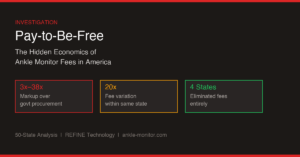

In 2026, ankle monitor cost is not a finance footnote—it is a line item that decides how many people counties can supervise in the community versus in jail. Legislative momentum around GPS-led electronic monitoring now spans well over a dozen U.S. states (plus selected Canadian provinces expanding community GPS capacity), which translates into synchronized procurement waves for courts, sheriffs, pretrial services, and community corrections vendors. Budget officers need a transparent breakdown of capital, per-diem service, cellular, training, and hidden operational labor before they sign multi-year master agreements. The macro comparison remains stark: fully loaded incarceration is widely discussed in roughly $75–$200 per bed-day depending on jurisdiction accounting, while electronic monitoring per diems for active GPS supervision commonly appear in roughly $3–$15 per day (with many contracts landing higher when analytics, victim modules, or alcohol layers are bundled). That spread is why commissioners ask for defensible ankle monitor cost models—not slogans.
This guide walks through each cost component, contrasts GPS versus RF economics, surfaces hidden expenses that blow post-award budgets, sketches a five-year total cost of ownership (TCO) lens, and points to funding patterns agencies use in 2026. Pair it with our earlier deep dive on ankle monitor cost—complete pricing and daily fees, the flagship GPS ankle bracelet pillar, and the GPS ankle monitor guide for evaluation criteria. For hardware and platform specifics, see CO-EYE ONE and CO-EYE Monitoring Software. When you are ready to translate this framework into a quote for your census and SLA, use Contact Sales or Request Quote.
Ankle monitor cost components procurement teams must line-item
Most RFP responses bundle numbers into a single “daily rate.” Savvy procurement teams unbundle that stack so auditors can trace every dollar.
Hardware acquisition (one-time capital or implied lease)
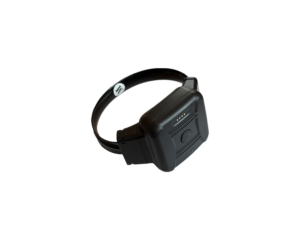
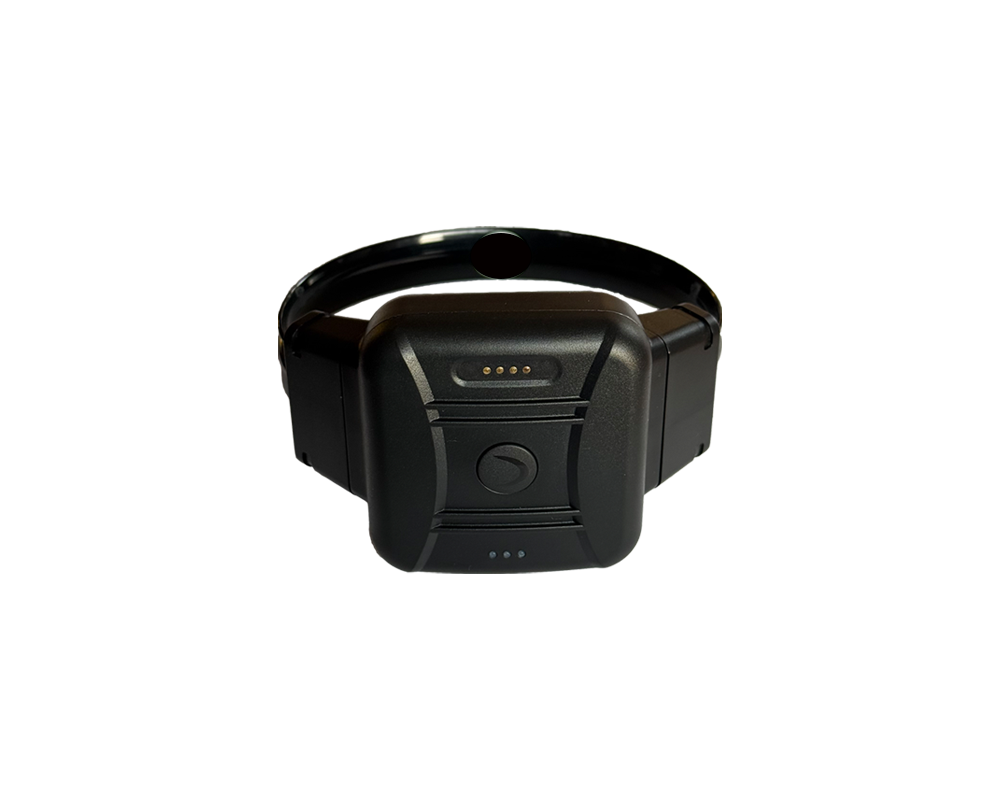
One-piece GPS ankle monitors, home beacons, spare straps, and charging kits are often quoted between roughly $500–$2,000 per unit depending on volume, warranty, and whether the agency purchases inventory or rents from the vendor. Two-piece GPS architectures frequently carry additional home beacon or hub hardware on top of the ankle-worn transmitter—typically discussed in the $200–$400 per beacon range before installation labor. The CO-EYE ONE one-piece design removes that separate beacon capital line for programs that need continuous cellular GPS without a dedicated home radio tether: GNSS, LTE-M/NB-IoT/GSM backhaul, tamper detection, and reporting live in a single 108g wearable with IP68 sealing.
Daily monitoring fees (per diem service)
Vendor monitoring centers, map seats, alert escalation, and help-desk coverage usually appear as $3–$15 per day for streamlined GPS programs, with higher tiers when courts require premium victim-notification workflows, specialized risk analytics, or shorter reporting intervals. Ask whether the per diem assumes five-minute fixes, two-minute fixes, or event-driven reporting—because airtime and labor scale with chattiness.
Cellular and data backhaul
Some contracts bundle LTE-M/NB-IoT data; others pass through megabyte surcharges or require agency-owned SIM estates. Unbundle this line explicitly: sunset risk on legacy 2G/3G radios has forced unplanned refresh spend for programs that deferred upgrades. CO-EYE ONE’s 5G-compatible LTE-M / NB-IoT / GSM path is structured for modern low-power wide-area service profiles that align with long-cycle corrections contracts.
Installation, training, and change management
Field fitting, officer certification, and monitoring-staff playbooks vary widely. Programs should budget not only vendor trainers but also internal FTE time for policy rewrites, court forms, and quality assurance. Rapid-install hardware changes those curves: CO-EYE ONE’s <3 second snap-on installation reduces tool time and line-of-sight training hours compared with tool-heavy strap systems.
Replacement, repair, and warranty
Water intrusion, strap cuts, and lost chargers are routine. Contracts differ on whether replacements are capped, fully covered, or billed per incident—model a conservative annual loss rate and multiply by the vendor’s replacement fee to avoid mid-year supplements.
GPS ankle monitor cost versus RF monitor cost
GPS ankle monitor cost is higher than basic radio-frequency home curfew checks in most markets because continuous outdoor tracking, geofencing, and real-time maps consume cellular data, map APIs, and analyst attention. RF-centric programs that only verify presence near a residence during ordered windows can land lower on the per diem line—often discussed roughly $3–$8 per day—but they cannot answer the same outdoor risk questions that victim-exclusion zones, gang set restrictions, or high-risk pretrial release require.
The 2026 policy trend is unambiguous: agencies that once mixed RF and GPS are shifting toward GPS-primary fleets wherever statutes, grants, or judicial expectations require continuous location accountability. When buyers compare modalities inside a single ankle monitor cost workshop, the decisive question is not “which is cheaper in a spreadsheet cell” but “which modality prevents the next failure that triggers media scrutiny and overtime.”
For GPS fleets, battery architecture is a hidden labor multiplier. Short-cycle batteries force charging calls, field visits, and “low battery” noise in dashboards. CO-EYE ONE delivers roughly seven-day standalone battery life on LTE-M/NB-IoT at a five-minute reporting interval—stretching the time between charge touchpoints and reducing the soft labor that never appears on vendor invoices.
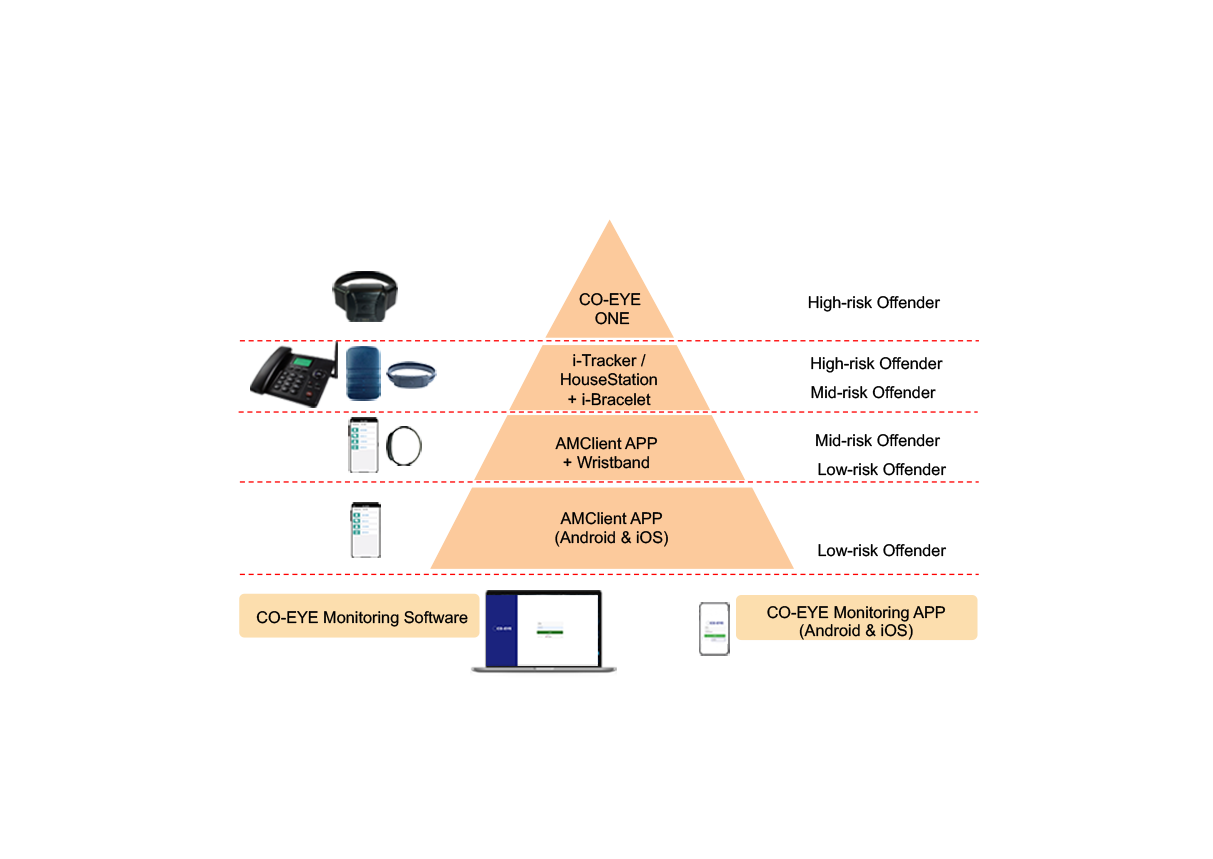
Agencies that blend high-risk continuous GPS with lower-touch tethered supervision should also evaluate CO-EYE ONE-AC: the same one-piece form factor with eSIM flexibility and a BLE-connected mode that extends battery life up to roughly six months when paired with approved hubs or smartphone pathways—useful when procurement wants one SKU family that spans multiple risk tiers without multiplying vendor relationships.
Hidden costs that inflate ankle monitor budgets after go-live
False alarm response and officer overtime
Tamper and zone alerts that are not trustworthy consume dispatch, probation, and monitoring-center time. Industry discussions tied to National Institute of Justice market survey contexts frequently cite false-positive tamper alert rates on the order of 15–30% for legacy resistive or indirect sensing paths—meaning a large share of officer review time can be spent clearing alerts that did not correspond to genuine removal attempts. Each cleared alert has an opportunity cost: it is time not spent on victim callbacks, employment verification, or new intakes.
CO-EYE’s fiber-optic strap and case tamper detection on CO-EYE ONE is engineered for zero false-positive tamper signaling on the optical detection chain—shrinking wasted response cost while preserving evidentiary clarity when a true break occurs.
Two-piece ecosystem drag
Beyond the beacon capital noted earlier, two-piece GPS systems introduce pairing failures, cradle logistics, and participant confusion (“which unit needs charging first?”). Those frictions show up as help-desk tickets—not as a row on the award spreadsheet.
Network sunset and forced refresh
Devices that depend on deprecated cellular generations drive surprise capital events. Buyers should ask vendors for explicit LTE-M/NB-IoT roadmaps and spare-pool strategies. CO-EYE ONE’s modern cellular stack is positioned to reduce stranded-hardware risk relative to aging 2G/3G-only designs.
Total cost of ownership (TCO): five-year view
TCO is where headline per diems meet reality. A five-year model should include:
- Hardware capital (or rental amortization) including spares
- Monitoring center fees and software seats
- Internal labor for enrollment, charging support, alert triage, and court exports
- False-alarm burden (even rough FTE estimates beat ignoring it)
- Replacement and sunset refresh
Illustrative models that remove separate beacon purchases, shorten install/training time, cut false-positive tamper queues, and extend battery intervals often land near 35–45% lower five-year TCO versus traditional two-piece GPS plus home beacon fleets—your savings depend on caseload, union labor rates, vendor tiering, and local cellular economics. Treat the percentage as a planning sensitivity, not a guarantee.
When building the spreadsheet, assign dollar values to mean time to clear a tamper ticket, mean time to restore charging compliance, and mean devices per officer hour during mass enrollment weeks (legislative surges often compress installs into a 30-day window). Those three assumptions usually explain why two programs with identical per diems diverge by six figures in year three.
Pair TCO discussions with the GPS ankle monitor guide so technical requirements (accuracy, reporting interval, tamper evidence) stay aligned with finance assumptions.
State funding patterns and payer models in 2026
Legislatures are increasingly explicit about who pays. Oklahoma’s defendant-funded frameworks (including statutes such as SB 1325 discussed in policy coverage) illustrate how courts codify $5–$15 per day participant contributions for electronic monitoring where appropriate—while agencies still need capital for spare pools and integration. Tennessee, Florida, and other states continue expanding supervised-release technology budgets; Canadian provinces such as Saskatchewan have publicly framed multi-year GPS bracelet procurements as part of community supervision modernization.
Federal channels—including BJA justice assistance and formula programs—still matter for counties stitching together initial pilots. SCAAP-adjacent discussions (State Criminal Alien Assistance Program) appear episodically in congressional debates; treat federal lines as competitive and verify eligibility with your finance office. Private foundations and state criminal justice planning offices sometimes co-fund “electronic monitoring modernization” when statutes add GPS conditions for domestic violence, pretrial, or specialty dockets—worth scanning when your legislature is in session even if the headline bill is not labeled an EM appropriation.
REFINE Technology supports CO-EYE customers with flexible commercial structures aligned to agency-owned inventory, vendor-managed spares, or blended pretrial programs. Start the conversation through Contact Sales or Request Quote once census, risk tiers, and reporting intervals are defined.
Software and integration: where ankle monitor cost meets uptime
Hardware per diems are only half the operational story. Alert routing, map replay, role-based permissions, audit logs, and mobile supervisor tools determine how many FTEs a program truly needs. CO-EYE Monitoring Software delivers a unified web platform with eleven integrated modules covering enrollee monitoring, events and alerts, notifications, interactive maps, history tracking, device inventory, user permissions, reporting, system configuration, mobile application management, and audit trails—so agencies are not paying duplicate SaaS fees for parallel “shadow” systems.
Frequently asked questions about ankle monitor cost
How much does an ankle monitor cost per day? Published vendor service bands for active GPS supervision often fall roughly $3–$15 per day before premium modules; RF home curfew programs may land lower. Always separate per diem monitoring from capital, activation, and pass-through cellular.
Who pays for ankle monitors—the agency or the offender? Both models exist. Many counties fund supervision entirely from criminal justice budgets; others use participant contributions where statute allows. Payment design affects compliance, so courts increasingly require plain-language fee disclosures.
What is the total cost of ownership for GPS ankle monitors? TCO stacks hardware (or rental), multi-year monitoring fees, internal labor for alerts and charging support, false-alarm triage, replacements, and network migration. Five-year views expose “cheap per diem” awards that were expensive on FTE.
Are one-piece GPS ankle monitors more cost-effective than two-piece systems? When continuous cellular GPS is required, one-piece designs frequently reduce beacon capital, pairing failures, and dual-device training. Battery life and tamper credibility determine whether savings persist in operations, not just on the capex tab.
How do ankle monitor costs compare to incarceration costs? Incarceration is typically discussed at roughly $75–$200 per day fully loaded, while EM per diems are much lower—often single or low double digits for core GPS—before hidden labor. The policy question is risk suitability, not price alone.
For the next level of detail on quotes, payer ethics, and annualized examples, return to our ankle monitor cost guide and cross-link procurement language with the GPS ankle bracelet resource. Technical buyers should finish on CO-EYE ONE (108g one-piece, <2m GPS CEP, IP68, seven-day battery, fiber-optic tamper) and CO-EYE Monitoring Software for the platform stack.