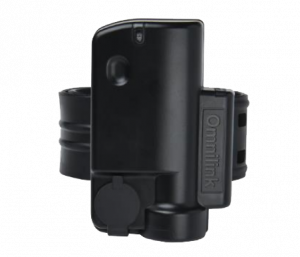

GPS Ankle Monitor System Architecture
Electronic monitoring device architecture determines reliability, battery life, and security. Understanding GPS tracking platform architecture — from firmware on the device to communication protocols and back-end storage — helps procurement officials evaluate vendor claims and write RFP specifications. This guide covers system architecture, GPS tracking firmware design, cellular GPS tracking technology, GPS monitoring communication protocols, monitoring system cybersecurity tools, GPS monitoring encryption technology, and CJIS compliance.
Agencies increasingly treat the GPS ankle bracelet as an edge IoT node: it must authenticate like any criminal-justice endpoint, tolerate hostile RF environments, and produce evidence-grade records. The ankle monitor is not merely a tracker — it is part of a chain-of-custody story that begins at installation and ends in court exports. NIJ’s body of work on location-based offender tracking systems provides a useful mental model: device subsystem, communications path, vendor processing, and officer workstation — each with explicit trust boundaries.
Procurement RFPs that specify only “GPS ankle monitor” leave critical gaps. Vendors vary widely in anti-tamper technology, cellular protocol support, and security posture. Detailed technical requirements — including encryption standards, firmware update capability, and CJIS attestation — filter vendors that cannot meet criminal justice requirements and improve comparison across qualified bidders. Cross-read GPS ankle monitor guide and what is an ankle monitor for non-technical stakeholders who still sign security addenda.
System Architecture Overview
A typical GPS ankle monitor system has four layers:
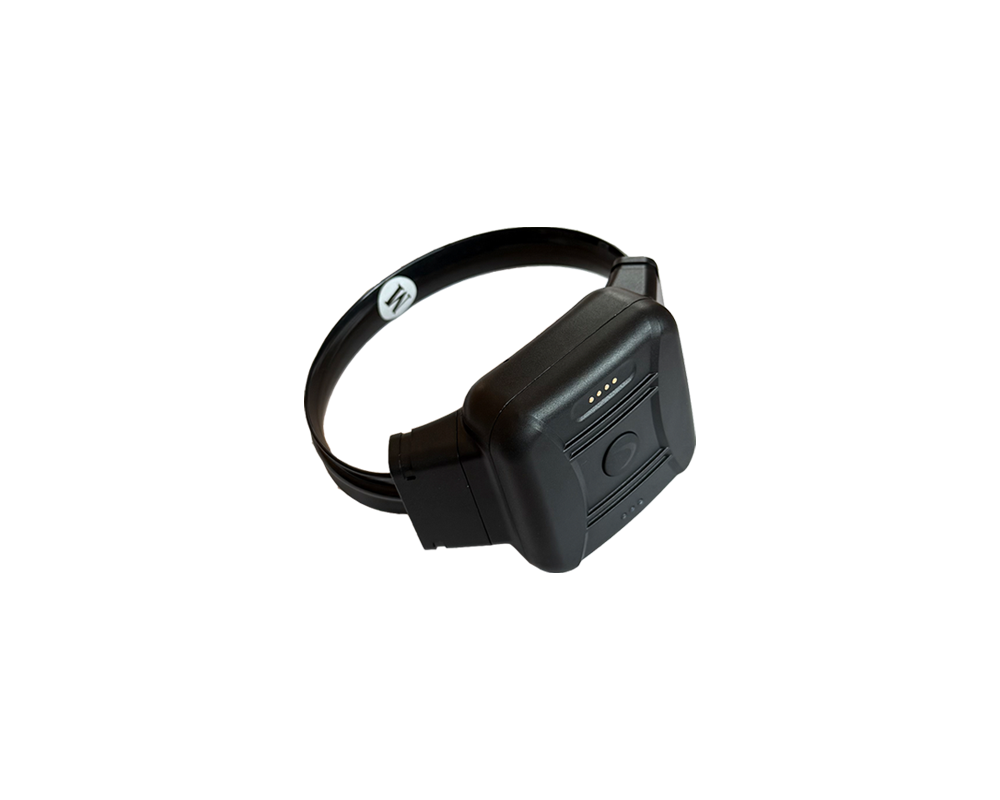
- Device layer: Ankle-worn unit with GPS receiver, cellular modem, anti-tamper sensor (optical fiber or electronic), and battery. Firmware runs on an embedded processor.
- Communication layer: Cellular network (LTE-M, NB-IoT, GSM) or Wi-Fi for backup. Device transmits location and events to a secure gateway.
- Platform layer: Cloud or on-premise server that receives data, runs business logic (geo-fencing, alert rules), and stores records.
- Application layer: Web and mobile interfaces for monitoring staff, officers, and administrators.
Data flows device → cellular gateway → platform → application. Outbound commands (zone updates, schedule changes) flow in reverse. Electronic monitoring device architecture should minimize latency for real-time alerts — typically under 60 seconds from event to officer notification.
Modern high-end devices may add companion links (smartphone BLE, home beacon) to reduce LTE duty cycles. CO-EYE ONE-AC documents tri-mode adaptive connectivity (BLE / WiFi-directed / LTE) with dual-core ARM M3 + M0 processors to separate communications stacks from positioning workloads — a useful reference architecture when writing RFP questions about “mixed indoor/outdoor” reporting behavior.
GPS Tracking Firmware Design
Device firmware controls positioning, reporting, and anti-tamper logic. Key functions:
- Position acquisition: GPS fix with Wi-Fi and cellular LBS as fallback for indoor or urban canyon scenarios. Configurable fix interval (e.g., 5 minutes for continuous monitoring).
- Reporting logic: Send location at fixed intervals or on event (zone crossing, tamper). Batch transmission reduces cellular cost and battery draw.
- Anti-tamper monitoring: Optical fiber circuit continuously monitors strap integrity. Cut, stretch, or obstruction triggers immediate alert. CO-EYE ONE family maintains tamper monitoring even at 0% battery via independent circuit paths (per vendor documentation).
- Power management: Sleep modes between fix/report cycles extend battery life. Configurable tradeoff between reporting frequency and runtime.
Firmware should be field-updatable (OTA) so vendors can patch security issues and add features without hardware recall. Verify the vendor’s firmware update process, staged rollout, and rollback capability. Ask specifically how the ankle monitor verifies signed images and how it fails safe if an OTA session is interrupted mid-write.
Cellular GPS Tracking Technology: LTE-M, NB-IoT, GSM
GPS monitoring communication protocols rely on cellular networks. Common options:
| Technology | Use Case | Characteristics |
|---|---|---|
| LTE-M | Primary for new deployments | Low power, extended coverage, supports voice (if needed); US carrier support (AT&T, Verizon, T-Mobile) |
| NB-IoT | Narrowband IoT | Very low power, long range; limited US availability vs Europe/Asia |
| GSM / EDGE / GPRS | Legacy, international | Wide global coverage; US carriers phasing out 2G; still used in many countries |
| Wi-Fi | Backup / indoor | Offload cellular when near known networks; improves indoor accuracy |
Dual or multi-mode devices (e.g., LTE-M + GSM) provide fallback when one network is unavailable. Verify carrier coverage in your operational area before selecting cellular GPS tracking technology.
Monitoring System Cybersecurity and Encryption
GPS monitoring encryption technology protects location and offender data in transit and at rest. Require:
- Encryption in transit: TLS 1.2 or higher for device-to-gateway and application-to-platform communication.
- Encryption at rest: AES-256 for stored location history, offender records, and audit logs.
- Authentication: Mutual TLS or certificate-based device authentication prevents spoofed devices from injecting false data.
- Access controls: Role-based access; least privilege for monitoring staff; audit logging for all data access.
Monitoring system cybersecurity tools include intrusion detection, anomaly detection on access patterns, and regular penetration testing. Request the vendor’s security documentation and incident response procedures.
CJIS Compliance for Electronic Monitoring
Criminal Justice Information Services (CJIS) security standards apply when systems store or transmit criminal justice information — including offender identifiers and location history. Requirements include:
- FBI CJIS Security Addendum signed by vendor
- Background checks for personnel with system access
- Audit logging with retention per state requirements
- Data residency (US-only for many agencies)
- Encryption and access controls as specified above
Cloud-based GPS tracking platforms must demonstrate CJIS compliance. Request attestation letters and audit reports before contract award.
Carrier sunset timelines affect device longevity. US carriers are phasing out 2G GSM networks. Devices that rely solely on GSM will require replacement before end of life. LTE-M and NB-IoT have longer deployment horizons. When evaluating electronic monitoring device architecture, ask vendors for their carrier migration plan and whether existing devices can receive firmware updates to support new networks. Devices with 5+ year deployment expectations should use future-proof cellular technology.
Why Does the GPS Ankle Bracelet Need a Defined Trust Boundary?
Because location and tamper data become court exhibits. Procurement should document where keys live, who can rotate them, and how the platform proves a given record came from a specific device at a specific time.
Practical RFP language includes mutual authentication, hardware-backed key storage where available, and immutable audit logs for administrator actions. Pair this section with GPS ankle bracelet buyer context and CO-EYE ONE hardware specs when scoring vendor responses.
How Should Agencies Test GPS Monitoring Communication Protocols Before Award?
Run scripted soak tests: indoor stairwells, basement apartments, rural fringe cells, and rapid zone boundary oscillation. Measure report latency, fix integrity, and battery impact — not just map aesthetics.
Protocol tests should include failover between LTE-M and legacy bands, behavior when the assigned APN throttles, and server-side queueing when the device regains connectivity after an outage. Electronic monitoring programs fail in production when edge cases were never exercised during vendor demos.
What Firmware Capabilities Separate Enterprise-Grade Ankle Monitors?
Signed OTA with rollback, deterministic tamper state machines, configurable backoff for failed uploads, and cryptographic freshness for server commands. Without these, operators burn credibility on false positives and unexplained gaps.
Ask vendors to demonstrate downgrade protection: if TLS negotiation fails, does the device store-and-forward safely? Does it resist replayed commands? CO-EYE ONE-AC’s published architecture (dual-core, BLE/WiFi/LTE) is one example of separating real-time comms from positioning tasks — use it as a benchmark when evaluating other GPS ankle bracelet designs, without assuming competitors share identical silicon.
For procurement economics tied to charging and field visits, read ankle monitor cost guide and the architecture implications in one-piece vs two-piece GPS ankle monitors.
Companion Links, BLE Tethering, and Indoor Presence
Some modern GPS ankle bracelet architectures add encrypted Bluetooth links to smartphones or fixed home beacons so the strap-mounted device can reduce LTE/GNSS duty cycles while still proving proximity. Procurement should ask how companion authentication works, what happens when the phone is powered off, and whether the platform distinguishes “phone absent” from “strap absent.” Document expected behavior for victims’ phones in domestic-violence programs where dual-device models apply.
WiFi-directed reporting introduces another trust surface: SSID trust lists, credential rotation, and captive-portal failures. Architecture reviews should include negative testing — coffee-shop WiFi, misconfigured home routers, and mobile hotspots that drop sessions every few minutes. CO-EYE ONE-AC’s published tri-mode approach (BLE / WiFi-directed / LTE) is a useful benchmark for writing those tests even when evaluating other OEMs.
Platform Logging, SIEM Export, and Long-Term Retention
GPS monitoring platforms generate terabytes over multi-year programs. Specify retention windows for raw fixes vs derived alerts, legal hold procedures, and whether logs can stream to your agency SIEM in CEF or JSON. Electronic monitoring audits frequently fail on administrator actions, not device hacks — require non-repudiation for zone edits, schedule changes, and bulk exports.
Separate “monitoring staff” roles from “system administrator” roles; require two-person approval for bulk data extracts. When courts subpoena historical tracks, your architecture must reconstruct the rule set that was active on the date in question, not only the current geofence library.
Third-Party Penetration Testing and Supply Chain
RFPs should mandate annual third-party penetration tests that include the device OTA channel, mobile officer apps, and vendor administrative consoles. Ask how firmware signing keys are generated, stored, and rotated after staff turnover. Supply-chain attestations (SBOM coverage for modem firmware, GNSS stack provenance) are increasingly common in state RFPs that reference NIST SSDF concepts even when CJIS is not formally in scope.
Close the architecture review loop with what is an ankle monitor for program staff onboarding and GPS ankle monitor guide for operational definitions that IT and line officers share.
Disaster Recovery, Failover, and Court Continuity
Architecture reviews rarely stress-test vendor continuity during regional outages. Require documented RTO/RPO for location ingestion, alert dispatch, and historical replay — including whether officers can operate in degraded mode when the vendor SaaS region is unavailable. If your state court system mandates on-premise retention, specify whether devices buffer unsent events securely and for how many days when the agency WAN fails.
Tabletop exercises should simulate simultaneous failures: cellular backbone degradation during a hurricane, partial staff quarantine, and a surge in caseload from mass citations. Electronic monitoring programs that survive those exercises typically separate alert transport (SMS/email gateways) from map visualization so redundant notification paths remain available. Document which components your agency controls versus the vendor so contractual liability matches operational reality.
Where agencies operate hybrid clouds, specify encryption for backup tapes and cold-storage archives, not only primary databases. Restoration drills should include spot-checking historical geo-fences after restore — schema migrations have silently corrupted zone polygons in production systems.
Finally, capture interface versioning in contracts: mobile officer apps auto-update from app stores faster than on-prem gateways can certify, creating accidental drift between client and server parsers that shows up only as intermittent “unknown event type” errors in production. Require regression tests across every major release.
How Does Multi-Mode Connectivity Change GPS Ankle Monitor Architecture?
Next-generation GPS ankle monitors like CO-EYE ONE use adaptive multi-mode connectivity (BLE + WiFi + LTE) that fundamentally changes the device architecture from always-on cellular to intelligent power management, extending battery life from days to months while eliminating coverage blind spots.
Traditional GPS ankle bracelet architecture follows a simple model: the device continuously runs GNSS positioning and transmits data over LTE cellular networks. This approach works but creates two unavoidable problems — rapid battery drain (24-72 hours) and complete failure in areas without cellular coverage.
The next-generation architectural approach, pioneered in devices like the CO-EYE ONE GPS ankle monitor, introduces three distinct operating modes that the device selects autonomously based on environmental conditions:
- BLE Connected Mode (180-day battery life): When within range of a paired smartphone app (AMClient) or HouseStation beacon, the ankle monitor offloads high-power GNSS and cellular operations to the companion device. The ankle monitor itself operates in ultra-low-power BLE mode, extending battery life to six months. This mode activates automatically when the enrollee is at home or carrying their phone.
- WiFi Directed Mode (3-week battery life): When BLE companions are unavailable but WiFi is accessible, the device connects through standard WiFi networks to transmit monitoring data. A simple WiFi repeater ($10-50) placed in an enrollee’s home or workplace provides both data connectivity and position reference — simultaneously solving the cellular dead zone problem.
- LTE Independent Mode (7-day battery life): When neither BLE nor WiFi is available, the device operates as a fully autonomous GPS ankle monitor with integrated GNSS positioning and LTE-M/NB-IoT cellular transmission. Even in this highest-power mode, CO-EYE ONE achieves 7-day battery life compared to the industry standard of 24-48 hours.
The mode switching is automatic and seamless — zero manual intervention from officers or enrollees. The device evaluates connectivity options in real time, always selecting the most power-efficient mode that maintains required monitoring fidelity.
What Security Protocols Protect GPS Ankle Monitor Data?
Modern GPS ankle monitors employ multi-layer encryption including AES-128/256 for data transmission, SHA-256 authentication for BLE connections, HTTPS/SSL for server communication, and anti-spoofing algorithms for GNSS signal validation. EN 18031 cybersecurity certification represents the highest current standard for electronic monitoring device security.
Data security in ankle monitor systems operates across four layers, each addressing different threat vectors:
Device-Level Security: The firmware on the ankle monitor itself must resist physical and remote tampering. Dual-core processor architectures (such as the ARM Cortex-M3 + M0 in CO-EYE ONE-AC) enable hardware-isolated security processing — the M0 coprocessor handles cryptographic operations independently, preventing main processor compromises from exposing encryption keys.
Communication Security: All data transmitted from the GPS ankle monitor to the monitoring server must be encrypted end-to-end. BLE connections use SHA-256 mutual authentication and AES-CBC/ECB encryption. Cellular transmissions use HTTPS/TLS 1.3. These protocols ensure that intercepted data packets are unreadable without the proper decryption keys.
GNSS Anti-Spoofing: Location spoofing — where an attacker broadcasts fake GPS signals to make the device report a false position — represents a sophisticated threat to electronic monitoring integrity. Advanced devices counter this through carrier-to-noise ratio monitoring (detecting anomalous signal strength patterns), kinematic consistency checks (flagging impossible movement patterns), and multi-constellation cross-validation (comparing GPS, GLONASS, Galileo, and BeiDou signals for consistency).
Server-Side Security: The monitoring platform must maintain CJIS (Criminal Justice Information Services) compliance levels, including role-based access control, comprehensive audit logging, encrypted data at rest, and secure API endpoints for third-party integrations. Rolling-code lock/unlock mechanisms prevent replay attacks on device configuration commands.
How Does Firmware Architecture Affect GPS Ankle Monitor Reliability?
GPS ankle monitor firmware must manage real-time sensor fusion, power optimization, tamper detection, and secure communication simultaneously. Dual-core architectures provide hardware-level task isolation that prevents any single failure from compromising the entire monitoring chain.
The firmware running on a GPS ankle bracelet is arguably the most complex embedded software in the corrections technology space. It must simultaneously:
- Process multi-constellation GNSS signals to calculate position with sub-2-meter accuracy
- Manage three wireless communication protocols (BLE, WiFi, LTE) with automatic failover
- Monitor fiber-optic tamper detection circuits continuously — including for three months after battery depletion
- Execute power management algorithms that dynamically adjust operating mode based on connectivity conditions
- Store up to 20,000 events locally when communication is temporarily unavailable
- Run anti-spoofing algorithms to detect and reject fraudulent GNSS signals
Traditional single-processor ankle monitors handle all these tasks in a time-slicing model, where any computational overload can delay critical functions. The dual-core architecture used in advanced devices like CO-EYE ONE-AC dedicates the primary ARM M3 processor to application logic (positioning, communication, power management) while the M0 coprocessor handles security-critical operations (encryption, tamper monitoring, anti-spoofing) in hardware isolation.
This architectural separation ensures that even under heavy load conditions — such as rapid geofence transitions generating multiple alerts — the tamper detection and security subsystems continue operating without interruption. For agencies evaluating ankle monitor vendors, firmware architecture quality directly correlates with device reliability and the false-alarm rates that drive operational costs.
Related Resources
- CO-EYE ONE GPS Ankle Monitor — one-piece architecture with LTE-M/NB-IoT/GSM
- CO-EYE DUO GPS Ankle Monitor — enhanced anti-tamper with 0% battery operation
- CO-EYE Monitoring Software — platform architecture
- GPS Ankle Monitor Buyer’s Guide — pillar resource