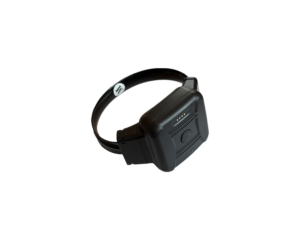
An ankle bracelet monitor is the wearable hardware agencies rely on to supervise location, compliance, and safety across pretrial, probation, parole, and specialized programs. In 2026, procurement teams are comparing battery life, tamper reliability, cellular longevity, and total cost of ownership—not just sticker price. This guide explains what an ankle bracelet monitor is, how technologies differ, how programs use them, and why the CO-EYE ONE ankle bracelet monitor is built for modern community corrections and bail-related supervision.
Whether you represent a county corrections department, a statewide electronic monitoring vendor, or a bail bond company coordinating pretrial release, the same question applies: which ankle bracelet monitor reduces officer workload while improving court confidence in the data? Read on for definitions, architecture, program fit, and a practical selection framework—plus links to deeper resources on our site.
What Is an Ankle Bracelet Monitor?
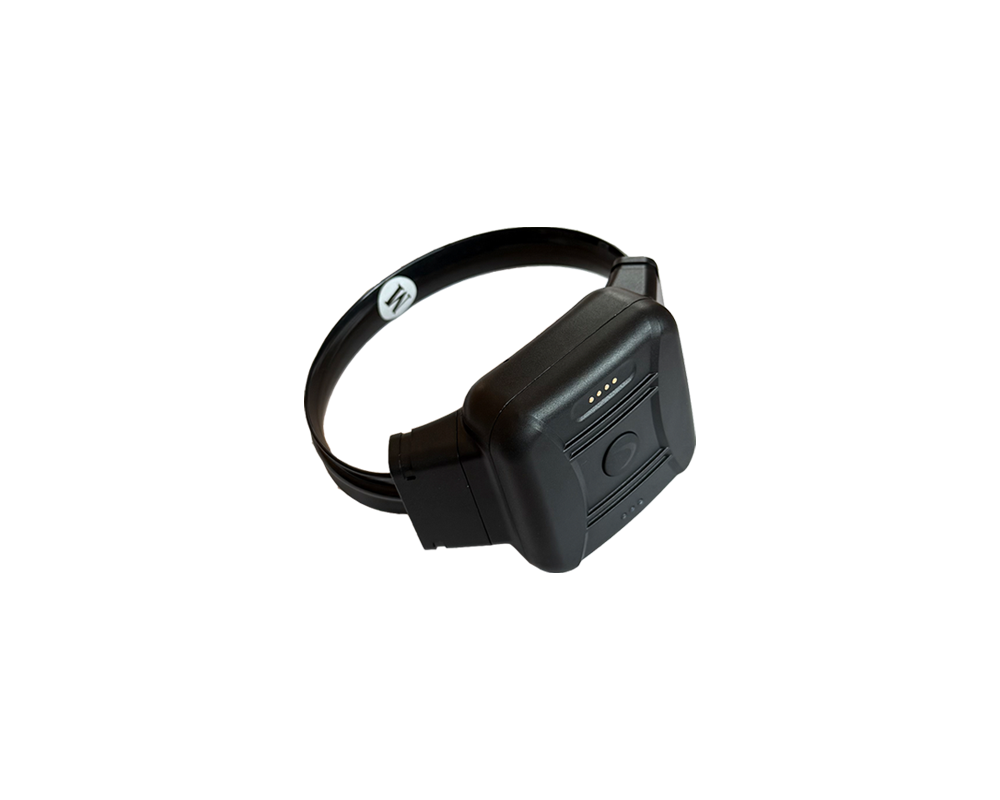
An ankle bracelet monitor is a court- or agency-authorized wearable that continuously or periodically reports an individual’s location and status to a monitoring center or case management platform. The term is widely used by the public, but agencies often standardize on language such as “GPS ankle monitor” or “electronic monitoring device.” In procurement documents, you may see ankle bracelet monitor used interchangeably with electronic ankle bracelet and GPS ankle bracelet monitor when the device includes satellite positioning and cellular backhaul. See also our GPS ankle monitor buyer’s guide.
Unlike consumer fitness wearables, a professional ankle bracelet monitor must support evidentiary-grade logging, tamper detection, secure firmware, and long operational duty cycles between charges. It is one component of a full stack: the wearable, the communications network, the monitoring software, and the agency workflows that turn alerts into officer action.
Stakeholders typically evaluate an ankle bracelet monitor across five dimensions: accuracy in real-world urban and rural environments; resistance to false tamper alerts; battery life under the program’s reporting interval; speed and consistency of installation; and forward-looking cellular compatibility as carriers retire legacy bands. Our CO-EYE ONE ankle bracelet monitor product page details how those requirements map to concrete specifications.
Types of Ankle Bracelet Monitor Technology
Not every ankle bracelet monitor works the same way. Understanding modalities helps agencies match hardware to risk level and written GPS ankle bracelet rules.
GPS / GNSS ankle bracelet monitor
A GPS ankle bracelet monitor uses satellite positioning, often supplemented by Wi-Fi and cellular location references, to plot coordinates on a map. Multi-constellation receivers improve fix availability in challenging environments. For high-risk caseloads, a capable GPS ankle bracelet monitor is usually the default because it supports inclusion/exclusion zones, victim proximity logic, and rapid location on demand—when policy and connectivity allow. For comprehensive guidance, see our domestic violence GPS ankle monitor guide.
RF or beacon-assisted ankle monitoring bracelet
Some programs pair an ankle monitoring bracelet with a home beacon for curfew or house arrest. The wearable may use short-range radio to prove presence at a residence. This approach can work well for structured home detention but is not a substitute for full-field GPS when the court expects continuous outdoor tracking. See also: house arrest GPS ankle monitor complete guide.
Hybrid and smartphone-supervised models
Hybrid electronic monitoring programs may combine an electronic ankle bracelet with a smartphone application for check-ins, biometric verification, or secondary location signals. These models can reduce hardware cost for lower-risk cohorts but require clear policy on device possession, charging, and data ownership.
Industry discussions often reference established vendors and legacy form factors. Traditional two-piece architectures have served many programs for years; newer one-piece designs consolidate radios, battery, and tamper sensing to reduce strap complexity and charging friction. When you compare options, ask how each ankle bracelet monitor minimizes officer time per install and how it behaves under strap stress, moisture, and daily motion—topics we expand in our GPS ankle monitor ultimate guide.
How Ankle Bracelet Monitors Work
At a high level, every ankle bracelet monitor follows the same loop: sense, communicate, record, alert. The wearable captures GNSS fixes (when equipped), tamper state, motion, and battery status; encrypts and transmits events via cellular or auxiliary channels; and the software applies rules such as geofences, curfews, and speed thresholds.
Positioning and mapping
A modern GPS ankle bracelet monitor benefits from multi-constellation GNSS—GPS, BeiDou, GLONASS, and Galileo—plus assisting technologies like Wi-Fi and LBS when satellites are occluded. Agencies should validate performance not only in open sky tests but near buildings, parking structures, and dense urban canyons where many consumer-grade traces fail.
Tamper detection and trust
Tamper integrity is where programs succeed or lose credibility in court. Strap-cut sensors, case sensors, and optical or fiber-based approaches each have tradeoffs. False positives flood monitoring centers and erode judicial confidence; missed events create safety risk. When evaluating any ankle bracelet monitor, request clarity on how the vendor defines a true tamper versus environmental noise, and how officers clear or verify alerts.
Power, charging, and officer workload
Battery life directly drives how often officers chase charging failures. Longer intervals between charges reduce home visits and phone calls, especially on large caseloads. Installation time matters too: cumbersome tools and multi-step pairing increase training cost and inconsistency across field staff.
For a market-wide view of vendors and evaluation criteria, see our best GPS ankle monitors 2026 comparison—useful context even when your RFP language centers on ankle bracelet monitor as the public-facing term.
CO-EYE ONE: The Most Advanced Ankle Bracelet Monitor
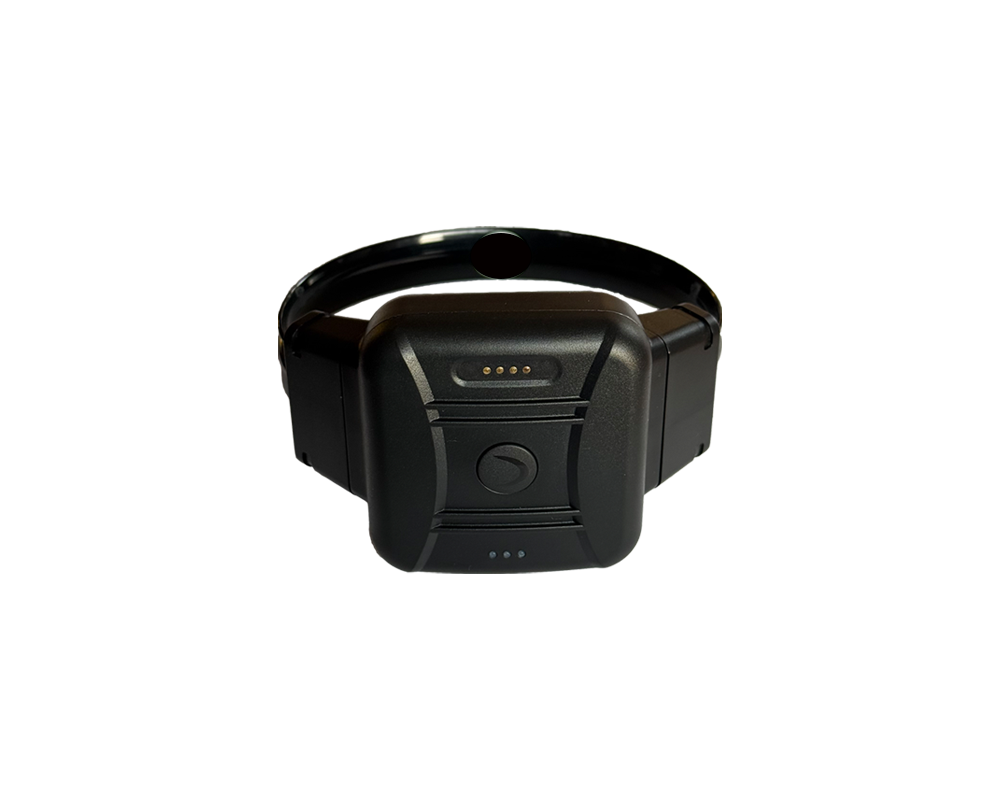
The CO-EYE ONE is a one-piece ankle bracelet monitor engineered for agencies that need reliable field performance without the operational drag of legacy designs. It is the flagship ankle bracelet monitor in the CO-EYE lineup and is specified for weight-critical comfort, durable environmental sealing, and cellular longevity.
Documented CO-EYE ONE specifications:
- Weight: 108g—an exceptionally light one-piece ankle bracelet monitor for daily wear.
- Dimensions: 60×58×24mm compact footprint.
- Tamper detection: Fiber-optic tamper detection on strap and case, designed for zero false-positive tamper alerts—reducing noise that overwhelms monitoring staff.
- Battery: Up to 7-day battery life in standalone operation (program settings and network conditions affect real-world results).
- Installation: Tool-free, snap-style installation in under 3 seconds—lowering training time and variability across technicians.
- Cellular: 5G-compatible architecture with LTE-M / NB-IoT / GSM support for broad carrier flexibility.
- Positioning: Multi-constellation GNSS—GPS, BeiDou, GLONASS, Galileo—plus Wi-Fi and LBS assistance.
- Environmental: IP68 waterproof rating for showering and wet environments common in community supervision.
Compared with well-known industry names that built their reputations on earlier two-piece ecosystems, the CO-EYE ONE ankle bracelet monitor emphasizes a different operational thesis: fewer parts to mis-pair, faster installs, lighter wear, and tamper sensing that aims to eliminate the false-alert storms that plague strap-resistance-only designs. Legacy approaches from vendors such as SCRAM (alcohol and GPS lines), BI Incorporated, SuperCom, Geosatis, Track Group, and others remain part of the competitive landscape—often with extensive service networks—yet many procurement teams now prioritize weight, battery, and tamper integrity as first-order metrics.
Pricing and total cost conversations should include hardware refresh cycles, spare inventory, charging accessories, and staff time per participant. Our ankle monitor cost and pricing guide walks finance and program leaders through how to model those factors alongside the sticker price of each ankle bracelet monitor.
Quick comparison: one-piece ankle bracelet monitor highlights
| Solution | Form factor | Weight | Tamper approach | Battery / install notes |
|---|---|---|---|---|
| CO-EYE ONE ankle bracelet monitor | One-piece GPS/GNSS | 108g; 60×58×24mm | Fiber-optic strap + case; zero false-positive design | Up to 7-day battery; <3s tool-free install; LTE-M/NB-IoT/GSM; IP68 |
| Legacy two-piece GPS (typical) | Ankle unit + beacon/body unit | Often heavier combined | Strap/case resistance; higher false-alert risk | More frequent charging/pairing friction; older cellular modules |
| RF-only / home curfew | Bracelet + home base | Varies | Presence-focused tamper | Strong for home detention; limited outdoor track |
| Smartphone-centric | Phone + optional wearable | N/A | App and policy dependent | Lower hardware cost; higher policy risk |
If your jurisdiction needs community-based programming—from standard probation checks to intensive compliance—our community corrections solutions page shows how a capable ankle bracelet monitor fits operational playbooks.
Ankle Bracelet Monitor Programs and Applications
The same ankle bracelet monitor SKU often serves multiple program types with different rule sets. Mapping hardware capabilities to statutory requirements prevents costly mismatches.
Pretrial and bail-adjacent supervision
Pretrial programs may require frequent location verification, curfews, or association restrictions. A dependable GPS ankle bracelet monitor helps courts balance liberty with public safety. Bail-affiliated workflows should align messaging with court expectations and insurer rules; for program design context, see bail and pretrial monitoring solutions.
Probation and parole
Longitudinal supervision stresses durability and battery predictability. Officers need an ankle monitoring bracelet that participants can wear during work, travel approvals, and treatment appointments without constant low-battery escalations.
Domestic violence and protected-person programs
Some orders require proximity logic, exclusion zones around protected persons, or expedited alerts. These use cases demand not only a sensitive electronic ankle bracelet but also software latency and 24/7 response discipline. Explore alignment with policy stacks on our domestic violence monitoring solutions page.
Specialized and emerging dockets
DUI courts, veterans courts, and behavioral health dockets may combine location monitoring with treatment attendance verification. Here, the ankle bracelet monitor is one data stream among many—yet it remains the anchor for physical presence in the community.
Choosing the Right Ankle Bracelet Monitor for Your Agency
Use a scored RFP matrix so vendor marketing language converts to testable claims. For any finalist ankle bracelet monitor, validate the following in pilot—not just on a datasheet.
- GNSS performance: Does the GPS ankle bracelet monitor maintain usable accuracy indoors, near structures, and in vehicle contexts typical for your region?
- Tamper integrity: Can the device demonstrate clean tamper signaling without environmental false positives?
- Cellular roadmap: Will the modem family remain viable as carriers shift IoT traffic toward LTE-M and NB-IoT?
- Officer time: Measure median install time and first-week support tickets—proxy metrics for scalability.
- Participant ergonomics: Weight and strap design correlate with comfort complaints and attempted removals; a 108g one-piece ankle bracelet monitor like CO-EYE ONE addresses this head-on.
- Software integration: APIs, alert fidelity, and audit trails matter as much as the wearable.
When your team is ready to compare CO-EYE against other options, start with the flagship hardware on our CO-EYE ONE page, then cross-read the 2026 vendor comparison and the ultimate GPS ankle monitor guide for deeper technical framing.
Next step: For pricing, integration questions, or pilot planning for the CO-EYE ONE ankle bracelet monitor, use Contact Sales or Request Quote on ankle-monitor.com.
FAQ
What is an ankle bracelet monitor used for?
An ankle bracelet monitor is used to supervise individuals under court or agency authority by reporting location and tamper status, supporting pretrial release, probation, parole, domestic violence orders, and specialized dockets.
Is a GPS ankle bracelet monitor accurate in cities?
A well-designed GPS ankle bracelet monitor uses multi-constellation GNSS plus assisting references (such as Wi-Fi and LBS) to improve accuracy when sky view is limited; pilot testing in your urban corridors remains essential.
How long can an ankle bracelet monitor run on one charge?
Runtime depends on reporting interval and network behavior; CO-EYE ONE is specified up to 7 days as a one-piece ankle bracelet monitor in standalone mode under defined operating conditions.
What makes fiber-optic tamper detection different?
Fiber-optic tamper sensing on an ankle bracelet monitor detects strap or enclosure interference with high specificity; CO-EYE ONE is engineered for zero false-positive tamper alerts so staff trust the alarms they receive.
Can participants shower with an electronic ankle bracelet?
Devices vary; CO-EYE ONE carries IP68 waterproofing, making it suitable for wet environments that community supervision programs commonly encounter.
How fast should installation be for an ankle monitoring bracelet?
Operational efficiency favors tool-free workflows; CO-EYE ONE targets under 3 seconds for installation, reducing training variance and field time per participant.