Courts and legislatures are treating the GPS ankle bracelet as a standard safety layer—not an exotic pilot—for intimate partner violence and post-injunction supervision. What changed is the combination of real-time geofencing, victim notification, and statutory mandates that leave less room for county-by-county improvisation. This cluster article explains why domestic violence GPS monitoring is accelerating in 2026, which laws and budgets are driving hardware orders, and what procurement teams should demand from a modern GPS ankle monitor or electronic ankle bracelet platform. For the full buyer-oriented definition stack, costs, and FAQs, start with our pillar guide to the GPS ankle bracelet—then return here for the DV policy arc and CO-EYE ONE specifications.
The Domestic Violence Supervision Challenge in 2026
Domestic violence dockets sit at the intersection of criminal law, civil protection orders, and child safety. Supervision agencies must document location truth, react quickly to zone breaches, and communicate credibly with victims and judges when alerts fire. Traditional radio-frequency home detention can prove presence at a wall plug, but it cannot continuously map how a respondent moves through a city—precisely the assurance many protection-order regimes now expect when risk is elevated.
That gap is why programs increasingly specify a GPS ankle bracelet (often used interchangeably with GPS ankle monitor in court orders) rather than legacy RF-only tethers. A one-piece electronic ankle bracelet with cellular backhaul gives officers continuous tracks, speed vectors, and dwell-time analytics that support exclusion zones around schools, workplaces, and a survivor’s address—when policy, consent rules, and map accuracy are engineered responsibly.
Operational reality still matters: a GPS ankle bracelet does not replace advocacy, shelter capacity, or lethality assessment. It is a sensor-and-workflow layer inside broader electronic monitoring programs. Agencies that succeed pair hardware with 24/7 monitoring center discipline, clear escalation ladders, and victim-facing notification channels so alerts become actionable minutes, not overnight inbox surprises.
Legislative and Budget Signals: Tennessee, Oklahoma, and the 2026 Map
State capitols are no longer debating whether GPS belongs in DV workflows—they are debating when it becomes mandatory, who pays, and how victim alerts are defined in statute. Industry trackers and legislative summaries point to at least fourteen states expanding or clarifying GPS ankle bracelet and electronic supervision programs during 2026 sessions, often bundling DV provisions with pretrial modernization and radio refresh timelines.
Tennessee’s Debbie and Marie Domestic Violence Protection Act frames GPS-enabled supervision as part of a broader survivor-centered package—linking courts, law enforcement, and service providers around monitoring conditions that are easier to audit when hardware generates tamper-evident timelines. Programs rolling out under that policy narrative typically standardize on a rugged GPS ankle monitor class device plus a monitoring platform that can prove chain-of-custody on alert delivery.
Oklahoma Senate Bill 1325 moved through the Senate with a unanimous 47–0 vote in March 2026 as tracked in public chamber records—an unusually clean signal that GPS mandates for qualifying domestic-violence dockets have bipartisan support. Agencies should still verify enrolled text, effective dates, and appropriation riders, but the procurement implication is clear: Oklahoma-style statutes compress sales cycles because they convert discretionary pilots into enumerated duties.
On the coasts and Sun Belt, three bills illustrate how domestic violence GPS monitoring language is converging:
- California SB 871—tracked by practitioners as part of a West Coast push to formalize GPS-capable supervision in DV-related orders; confirm enrolled provisions before changing court forms.
- Texas HB 1824—filed in the 2025–2026 session as an “advanced GPS tracking” enhancement for family-violence bond conditions; reconcile the final chapter with other Chapter 17 tools magistrates already use.
- Florida HB 277—a 2026 domestic-violence package with a July 1, 2026 effective date on key portions, expanding definitions and court authority around electronic monitoring modalities that include GPS-style location accountability.
North of the border, Alberta allocated roughly $4.1 million (CAD) toward a victim-notification oriented GPS program—evidence that DV-specific alerting is a funding category on its own, not an afterthought line item inside generic community corrections budgets.
Victim notification is the product differentiator
Buying a GPS ankle bracelet without a tested victim-notification playbook is how agencies end up with expensive dots on a map and survivors who still feel blind. Mature domestic violence GPS monitoring architectures document three synchronized channels: officer-facing alarms inside the monitoring center, prosecutor-ready event exports with timestamps and map snapshots, and victim-facing signals that respect consent, language access, and safety planning (for example, staggered alerts when proximity risk spikes near a workplace rather than only at a home address).
Alberta-style budget lines and Florida’s HB 277 narrative both assume those channels exist—not as marketing slides but as contract deliverables. RFP language should therefore score vendors on webhook latency, role-based access for advocacy partners, configurable escalation trees, and audit logs that show who acknowledged an alert and when. When notification latency is measured in single-digit minutes on tested load, prosecutors can argue credibly that a GPS ankle monitor condition materially changed the risk calculus; when latency is measured in “next business day,” judges stop renewing orders.
Finally, train for false-confidence failure modes: a GPS ankle bracelet cannot predict intent, and dense urban multipath can distort fixes near canyoned streets. Pair geofence rules with officer judgment, lethality assessment updates, and shelter coordination so technology amplifies—not replaces—advocacy workflows. Our domestic violence electronic monitoring guide expands the programmatic checklist; this article stays focused on why 2026 statutes and budgets are finally aligning behind GPS-first supervision.
Metro Deployments: Nashville’s 68-Day Sprint
When a jurisdiction commits publicly to DV GPS scale-up, vendor and monitoring-center capacity becomes the gating factor—not statute drafting. Metro Nashville reported equipping 172 GPS ankle bracelet (GPS monitor) participants in a 68-day window as it stood up supervised release workflows tied to protection-order enforcement—an operational tempo that rewards devices with fast installation, predictable charging behavior, and low false tamper load. Programs that drown officers in strap false positives during a surge rollout lose political support quickly; fiber-based tamper integrity is one reason agencies scrutinize electronic ankle bracelet architectures before they sign multi-year leases.
Federal Scale: ICE Alternatives to Detention
While state DV bills drive headlines, federal Alternatives to Detention (ATD) volumes set the macro market for ankle-worn GNSS hardware. Reporting widely cited in industry briefings describes ICE’s monitored population growing from roughly 24,000 to about 42,000 GPS-monitored individuals—roughly a 75% increase—as enrollment expanded. That surge strains cellular plans, charging logistics, and help-desk staffing for every vendor serving federal contractors—capacity that also competes with county DV procurements. Buyers should model lead times against ATD demand when specifying a GPS ankle bracelet rollout.
How a GPS Ankle Bracelet Functions in DV Programs
At a high level, a court-ordered GPS ankle bracelet combines GNSS fixes, cellular reporting, tamper sensors, and battery management inside a single wearable. The monitoring platform geocodes fixes against exclusion and inclusion zones, applies speed and dead-reckoning checks to reduce map errors, and raises officer and (where lawful) victim notifications when rules breach.
DV-specific deployments usually add:
- Victim proximity logic—often layered with participant and third-party education so alerts respect privacy orders and evidentiary rules.
- Multi-speed reporting—tighter intervals near high-risk hours or zones, broader intervals during employment windows when statutes allow.
- Tamper semantics that survive scrutiny—strap cuts, case intrusions, and charge removal need crisp event coding so prosecutors are not arguing over ambiguous resistor-style “maybe tamper” logs.

For a deeper technology primer—including how electronic monitoring intersects pretrial and probation—read our electronic monitoring overview and the GPS ankle bracelet pillar, then map those concepts onto your DV docket’s statutory language.
Technology Requirements Buyers Should Encode in RFPs
Procurement teams translate court mandates into testable specifications. For DV-grade programs, the following criteria consistently appear in successful GPS ankle monitor solicitations:
- Multi-constellation GNSS + assistive modes—urban canyon performance determines whether exclusion zones around shelters and schools are enforceable or cosmetic.
- Modern cellular—5G-compatible LTE-M/NB-IoT paths future-proof reporting as carriers retire legacy bands; eSIM options simplify swaps during long supervision terms.
- Battery life that matches officer workload—programs specifying a GPS ankle bracelet for high-risk DV tracks need multi-day standalone endurance, not nightly panic charging.
- Tamper evidence with low false-positive rates—fiber-optic strap and case sensing can eliminate resistor-style ambiguity that wastes prosecutor and victim-services time.
- IP68 environmental sealing—participants work, shower, and move through weather; sealed industrial designs reduce warranty churn.
- Sub-three-minute field installation—snap-fit straps reduce officer exposure during fitting appointments.
- Unified software—alerting, maps, audit logs, and role-based access should live in one monitoring suite; DV workflows break when victims and officers chase parallel portals.
Use the GPS ankle monitor buyer’s guide to translate these bullets into weighted scoring sheets your general counsel can defend.
Evidence Context: Electronic Monitoring and Recidivism
DV program directors are often asked to justify electronic monitoring spending in budget hearings. Summaries of criminal-justice research—including materials frequently circulated alongside NIJ program discussions—have cited approximate 31% reductions in recidivism for certain electronically monitored cohorts versus comparison groups in published evaluations. Treat any single percentage as contextual, not a statutory guarantee: always pair national figures with local outcome dashboards (violations, new charges, victim contacts) that match your community’s risk profile.
CO-EYE ONE: A DV-Grade GPS Ankle Bracelet Platform
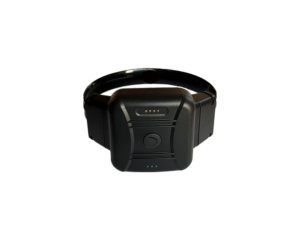
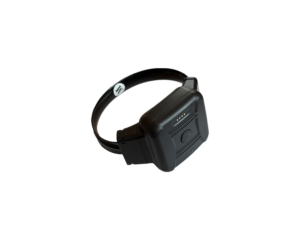
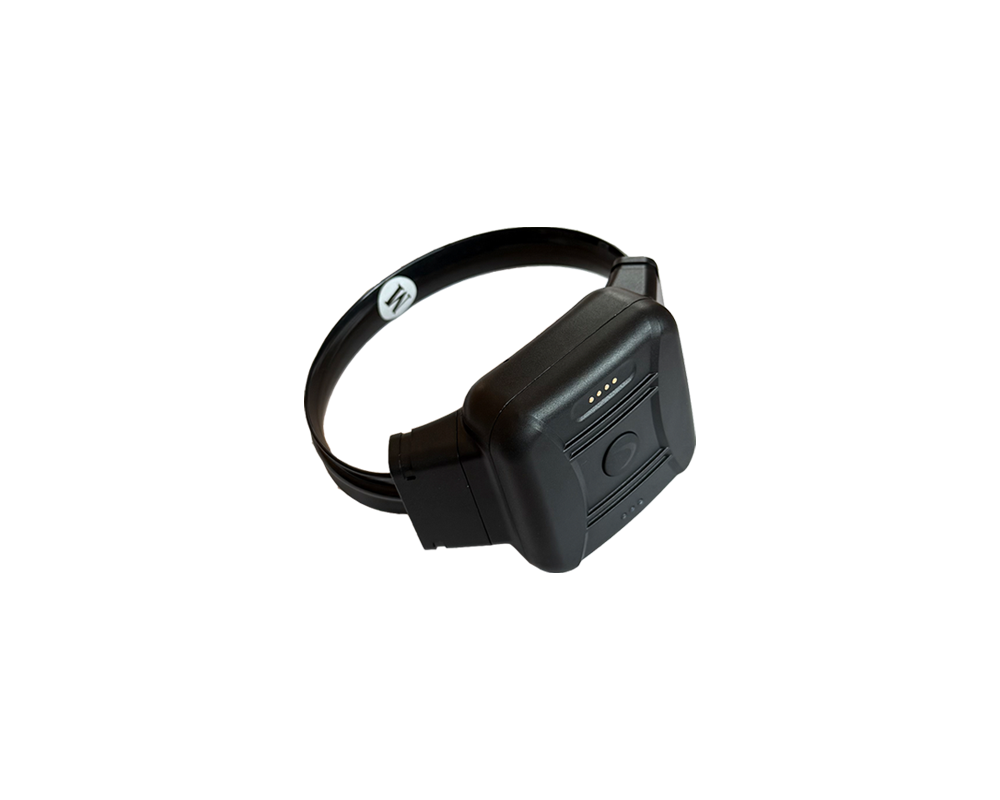
CO-EYE ONE is REFINE Technology’s flagship one-piece GPS ankle bracelet for high-assurance electronic monitoring, including domestic violence GPS monitoring tracks where judges expect continuous GNSS integrity. Specifications from our published datasheet include:
- 108 g lightweight one-piece wearable—less bulk reduces participant friction during employment and treatment access.
- Fiber-optic tamper detection on strap and case with zero false-positive tamper signaling under CO-EYE’s design specifications—critical when every alert may trigger victim notification.
- About 7-day standalone battery life on typical LTE-M/NB-IoT reporting (5-minute interval) with roughly 2.5-hour magnetic fast charge.
- < 3 second tool-free installation using the patented snap strap—speed matters during supervised fitting windows.
- 5G-compatible LTE-M/NB-IoT cellular (Nano SIM); CO-EYE ONE-AC adds eSIM and BLE-connected modes that can reach on the order of six months battery life under approved tether configurations.
- < 2 m CEP-class GNSS performance with GPS, BeiDou, Galileo, GLONASS, Wi-Fi, and LBS blending.
- IP68 waterproofing for real-world wear.

Pair ONE with CO-EYE Monitoring Software for the thirteen-module console supervisors use to manage alerts, maps, and device lifecycles, and review our domestic violence electronic monitoring guide for programmatic framing alongside hardware choices. When you are ready to scope devices, cellular plans, and victim-alert integrations, use Contact Sales or Request Quote—we do not offer free trials or demo devices; engagements begin from written requirements.
Frequently Asked Questions
Is a GPS ankle bracelet the same as a GPS ankle monitor? Yes—orders and RFPs use both terms for body-worn cellular GNSS wearables. Precision matters less than the statutory definition your jurisdiction inserts into conditions of release.
Why are DV programs adopting GPS ankle bracelet technology faster in 2026? Legislatures are encoding GPS mandates, victim-notification expectations are higher, and RF-only tethers cannot deliver continuous location maps for exclusion zones.
What bills should legal counsel monitor alongside Florida HB 277? Track California SB 871, Texas HB 1824, Oklahoma SB 1325, and Tennessee’s Debbie and Marie framework—verify enrolled text before operationalizing workflows.
How does ICE ATD growth affect county DV procurements? Federal GPS monitor volumes near 42,000 units strain manufacturing and airtime capacity; build lead-time buffers into RFP schedules.
Which CO-EYE product fits DV-grade GPS ankle bracelet orders? CO-EYE ONE delivers lightweight one-piece hardware with fiber tamper integrity, week-class battery, IP68 sealing, and modern cellular—paired with CO-EYE Monitoring Software for alerting.