If your agency is standardizing on electronic monitoring hardware in 2026, one decision keeps resurfacing: should you deploy a GPS ankle bracelet that reports location from the strap itself, or an RF ankle monitor architecture that proves presence relative to a home receiver? The answer is rarely “GPS only” or “RF only.” Most mature programs blend risk tiers, supervision goals, and total cost of ownership (TCO).
This guide explains how the two technology families differ, when each is the better primary tool, and how to translate policy language into procurement specs. For a deeper foundation on terminology, standards, and program design, start with our pillar resource on the GPS ankle bracelet—then use this article as a cluster companion focused on GPS-vs-RF trade-offs. You can also align internal IT and field teams using our ankle monitor technology 2026 guide, which covers connectivity, reporting cadence, and platform integration trends.
GPS vs RF Technology Explained
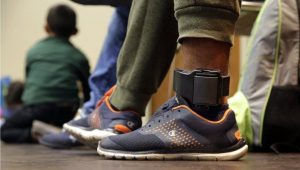
A GPS ankle bracelet (often called a GPS ankle monitor or one-piece GPS tracker) integrates satellite positioning, cellular backhaul, tamper sensing, and power management in a single wearable. Location fixes are computed on or near the device, then transmitted to your monitoring center on a schedule you configure.
By contrast, “RF ankle monitoring” in modern deployments usually means a split architecture: a lightweight ankle monitor band communicates over short-range radio (often 433 MHz RF or BLE) with a fixed home unit that has its own GPS/cellular uplink. The wearable proves proximity and strap integrity; the base unit proves where the supervised residence is in geographic space.
Industry commentary on procurement patterns, vendor dynamics, and supervision ethics continues to evolve; for third-party context you may also follow ongoing electronic monitoring industry analysis from independent publications.
When to Use GPS Ankle Bracelet
Choose a GPS ankle bracelet as the primary wearable when your court orders, policy manual, or risk assessment explicitly require continuous or near-continuous location visibility beyond the residence: employment travel corridors, multi-zone exclusion buffers, victim proximity logic, or rapid response to unauthorized movement.
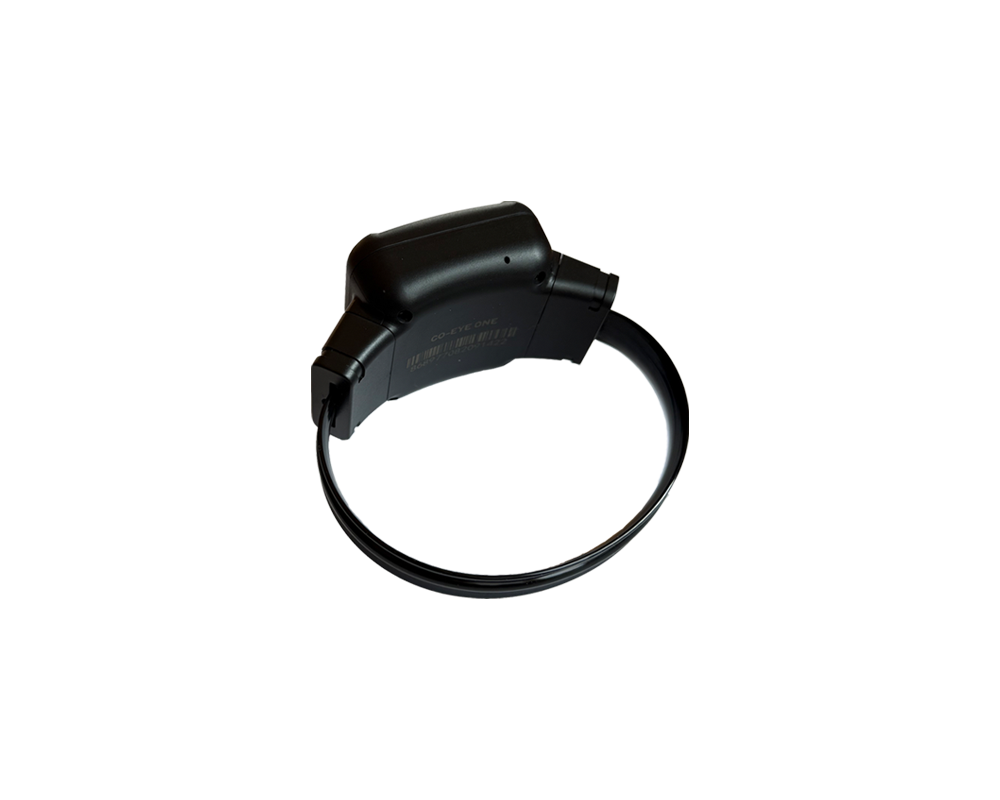
From a hardware perspective, the CO-EYE ONE illustrates what agencies should expect from a flagship one-piece GPS ankle bracelet in 2026: multi-constellation GNSS with reported <2 m CEP accuracy, 5G-compatible LTE-M/NB-IoT/GSM paths for resilient backhaul, IP68 environmental sealing, about seven days of standalone battery life at a five-minute LTE-M/NB reporting interval, and fiber-optic tamper detection on both strap and case. Installation is tool-free—strap engagement in under three seconds.
If your program already standardized on smartphone verification for low-risk tiers, note that some GPS portfolios still include two-piece options: the CO-EYE i-Bracelet paired with i-Tracker moves cellular/GPS load to a portable tracker while the ankle band handles short-range secure signaling.
When RF Makes More Sense
RF-forward (home-centric) designs shine when the supervising question is primarily curfew and presence at an approved address, not minute-by-minute trail analytics across a city. House arrest, home detention phases, and certain post-conviction conditions often translate legally into “remain at residence except for approved absences.”
The CO-EYE HouseStation is representative of a modern RF-aware home hub: it pairs with RF or BLE ankle monitor bands, uses enhanced 433 MHz antenna engineering for deeper in-building coverage (specifications list roughly 50 m indoor and 200 m outdoor range), carries its own GPS/BeiDou/Galileo/GLONASS + Wi-Fi/LBS positioning for the hub location, and includes dual-SIM cellular voice/data paths.
Operational teams managing curfew-heavy caseloads may also appreciate dedicated playbooks—resources such as house arrest compliance monitoring checklists can complement vendor documentation when you train new monitoring staff.
Feature-by-Feature Comparison
Use the matrix below in RFP attachments or interdepartmental workshops. It contrasts a one-piece GPS ankle bracelet (CO-EYE ONE class) against a hub-plus-band RF/BLE home stack (CO-EYE HouseStation + RF i-Bracelet class).
| Capability | GPS ankle bracelet (CO-EYE ONE) | RF / home hub model (HouseStation + RF band) |
|---|---|---|
| Primary positioning | On-strap GNSS + Wi-Fi/LBS fusion; fixes travel with the person. | Wearable proves hub proximity; hub provides anchored GPS/Wi-Fi/LBS location. |
| Coverage intent | Urban/suburban mobility, multi-zone schedules, victim-radius logic. | Domestic perimeter supervision; optional outdoor yard coverage. |
| Cellular burden | Each strap is its own modem; data scales with caseload × fix rate. | One hub uplink can aggregate multiple wearables. |
| Battery / power | ~7 days standalone (5 min LTE-M/NB interval); magnetic recharge ~2.5 h. | RF i-Bracelet up to ~1 year (CR1632); hub has internal battery for power outage supervision. |
| Tamper philosophy | Fiber-optic strap + case sensing on the GPS ankle bracelet itself. | Fiber-optic strap on RF i-Bracelet; hub tampers reported separately. |
| Indoor truth | Strong when Wi-Fi/LBS fingerprints exist; still GNSS-challenged deep indoors. | Excellent “inside the approved walls” certainty when in RF bubble. |
| Best policy fit | High-/mid-risk community cases needing trail evidence. | House arrest, curfew-first sanctions, transitional home phases. |
Cost Comparison
Sticker price rarely equals program cost. For electronic monitoring, TCO includes device amortization, spare pool depth, charger/spares logistics, officer training, false-alert triage labor, cellular data, and vendor platform seats. A GPS ankle bracelet program typically spends more per participant-day on connectivity because each band is an independent modem. RF-centric home models shift spend toward hub deployment but can lower recurring cellular line items when location storytelling is intentionally home-bounded.
When modeling budgets, stress-test two scenarios: (1) maximum allowable reporting for high-risk participants, and (2) curfew-only reporting for compliant participants. The spread between those curves often determines whether your agency can afford GPS-first for everyone or should tier ankle monitor technologies by risk score.
Real-World Use Cases
Pretrial services. GPS-first ankle monitor tracks are common when prosecutors and courts want map-based accountability between hearings. If release conditions tighten to home-only after a violation, switching to a HouseStation-class hub while keeping the same RF band can match the new order without re-teaching an entirely new wearable ecosystem.
Probation / parole mobility. Officers supervising employment travel generally prefer a GPS ankle bracelet trail correlated with approved work windows. RF-only answers the wrong question here unless paired with a separate approved mobility mechanism.
House arrest & home detention. When statutes emphasize presence at dwelling, RF/hub architectures align with officer mental models. Programs that still want occasional away permissions can combine hub supervision with explicit excursion scheduling.
Domestic violence protective orders. Many agencies deploy GPS-grade exclusion buffers; fiber tamper integrity on the GPS ankle bracelet reduces ambiguous strap events that can undermine victim confidence.
How to Choose for Your Agency
- Translate the court order. If the text demands “GPS” or “continuous location,” assume a GPS ankle bracelet or a two-piece GPS system such as i-Bracelet + i-Tracker—not RF alone.
- Score flight risk and FTA history. Elevated risk favors GNSS-dense trails, faster alert routing, and conservative tamper semantics.
- Map indoor supervision questions. If 80% of alerts should be about “home vs not home,” pilot an HouseStation-centric workflow.
- Audit cellular readiness. LTE-M/NB-IoT rollouts differ by carrier region; confirm modem bands against your field survey before committing to a fleet-wide GPS ankle bracelet refresh.
- Plan the blended fleet. Most agencies in 2026 operate multiple radio technologies under one electronic monitoring platform—standardize data schemas and alert severities.
Returning to fundamentals, bookmark the GPS ankle bracelet pillar for vocabulary, FAQ blocks, and structured data examples you can reuse across training docs.
FAQ
Is a GPS ankle bracelet always more accurate than RF supervision?
Not for every question. GNSS excels at geographic trails outdoors; deep indoor “which room” problems still benefit from Wi-Fi/LBS fusion. RF home systems excel at proving tethered presence near an approved hub—accuracy is high for that narrower question.
Can we start participants on RF and escalate to GPS later?
Yes—if your platform supports reassignment without forcing a new vendor ecosystem. Document the risk score that triggers escalation from hub-centric RF monitoring to a full GPS ankle bracelet track.
Does a GPS ankle bracelet replace officer discretion?
No. Hardware generates events; staff still apply supervision standards. Training should connect map artifacts to sanctions guidelines so electronic monitoring does not become automated punishment.
What is the main battery trade-off in 2026?
Standalone GPS ankle bracelet devices trade power for fix frequency—CO-EYE ONE’s ~seven-day window assumes disciplined charging windows. RF bands such as the RF i-Bracelet can run up to about a year on coin cells because uplink duties sit on the HouseStation hub.
How do we explain CO-EYE ONE vs HouseStation to judges?
Describe CO-EYE ONE as “location follows the person” and HouseStation-centric RF supervision as “location anchors at the approved home, while the strap proves proximity.”
Where can we read more about platform-wide trends?
Use our ankle monitor technology 2026 guide alongside vendor-neutral electronic monitoring industry analysis to align IT, field services, and legal stakeholders.
For a detailed analysis of how tamper detection technology affects program costs and courtroom credibility, see our guide to ankle monitor false alarms and tamper detection comparison.