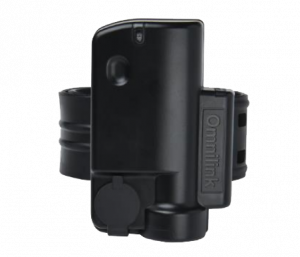
It’s 3 AM. Your on-call officer’s phone buzzes again — another low-battery alert. The third one tonight. Is the defendant actually charging their GPS ankle monitor, or are they running? There’s no way to know without dispatching someone. And by 6 AM, your inbox will have 47 more alerts just like it.
If you run an electronic monitoring program — whether you’re a county probation department, a private EM service provider, or a bail bond GPS monitoring company — you already know this story by heart. The daily charging cycle of traditional GPS ankle monitors isn’t just an inconvenience. It’s a $273,000/year operational drain that’s quietly destroying your program’s efficiency, credibility, and officer morale.
This article breaks down the five operational nightmares that legacy GPS ankle bracelet technology creates — and explains why a fundamental architectural shift, not incremental improvements, is the only way to solve them.
The Hidden Math: What Daily Charging Actually Costs Your Agency
Let’s quantify what most EM vendors hope you never calculate.
A typical 500-defendant monitoring program using traditional GPS ankle monitors generates 50–100 low-battery alerts per day. Each alert requires officer review (2–5 minutes), potential phone contact with the defendant (5–10 minutes), and in 15–20% of cases, a field response to verify compliance.
Nightmare #2: Cellular Dead Zones — The “Lost Signal” Black Hole
Your defendant lives in a basement apartment. Or a rural county where the nearest cell tower is 12 miles away. Or works in a steel-framed warehouse. In all three cases, their traditional GPS ankle monitor reports the same thing: “Signal Lost.”
Is the defendant actually at home? Did they cut the device and flee? Your monitoring officer has no way to know — because legacy devices have exactly one connectivity path: LTE cellular. When that path fails, everything fails.
This creates a cascade of false violations. According to industry benchmarks, cellular coverage gaps account for 20–35% of all “out of service” alerts in rural EM programs. Each one requires investigation. Most are false positives. But you can’t ignore them — because the one you skip might be the one that matters.
The $10 fix: CO-EYE ONE’s WiFi-directed connectivity mode turns this problem into a non-issue. Place a $10 WiFi repeater in the defendant’s basement apartment. Configure a mobile WiFi hotspot for rural coverage. The device automatically detects and connects to pre-configured WiFi networks, maintaining continuous reporting without cellular service.
This isn’t a theoretical feature — it’s a practical operational tool that:
- Eliminates basement/indoor dead zones with inexpensive WiFi repeaters
- Provides rural coverage via mobile WiFi hotspots where cell towers don’t reach
- Simultaneously extends battery life to ~3 weeks (WiFi consumes far less power than LTE)
- Maintains full tamper detection and position reporting throughout
One connectivity mode solves two problems: coverage gaps and battery life. No other GPS ankle bracelet architecture offers this dual benefit.
Nightmare #3: False Tamper Alerts Destroying Courtroom Credibility
Defense attorneys have discovered the most effective challenge to electronic monitoring evidence: “Your Honor, this device generates false tamper alerts 15–30% of the time. How can the court trust it?”
They’re not wrong. Traditional skin-sensing and resistance-based tamper detection systems produce significant false-positive rates. Sweat, leg swelling, strap shifting during sleep, even temperature changes — all trigger alerts that look identical to actual tampering attempts. According to the National Institute of Justice, legacy tamper detection remains one of the most complained-about aspects of GPS ankle monitors.
The physics-based solution: CO-EYE ONE uses fiber optic anti-tamper detection on both the strap and the device case. An optical signal either passes through the intact fiber loop or it doesn’t — there is no “maybe broken” state. The result: zero false tamper alarms.
- Fiber optic strap: Continuous optical loop embedded in the band — any cut, stretch, or breach immediately and definitively detected
- Fiber optic case: Second optical loop protecting the device housing — prying or cracking the case triggers a separate, verified alert
- Steel cut-resistant strap: Optional steel-armed fiber optic strap for high-risk defendants — physically resistant to cutting tools while maintaining tamper detection
- Post-battery tamper detection: Even after the battery fully depletes, the fiber optic tamper system continues to detect strap breaches for 3+ months
When your tamper evidence is binary — broken or not broken, with zero ambiguity — defense attorneys lose their most effective challenge, and judges regain confidence in electronic monitoring data.
Nightmare #4: Two-Piece System Failures — The Pairing Problem
BI Incorporated’s SmartLINK, SCRAM GPS, and Track Group systems use a two-piece architecture: an ankle-worn RF transmitter paired with a separate portable tracking unit (PTU) that the defendant must carry. This creates multiple failure modes that one-piece designs eliminate entirely:
- Forgotten PTU: Defendant leaves the portable tracker at home while going to work — complete loss of GPS tracking
- Dead PTU battery: The tracking unit has its own battery that also needs charging — doubling the charging compliance burden
- RF-cellular pairing loss: Environmental interference disrupts the RF link between ankle band and PTU — triggering false “tamper” or “out of range” alerts
- Physical damage: Two devices means twice the risk of drops, water damage, or deliberate destruction
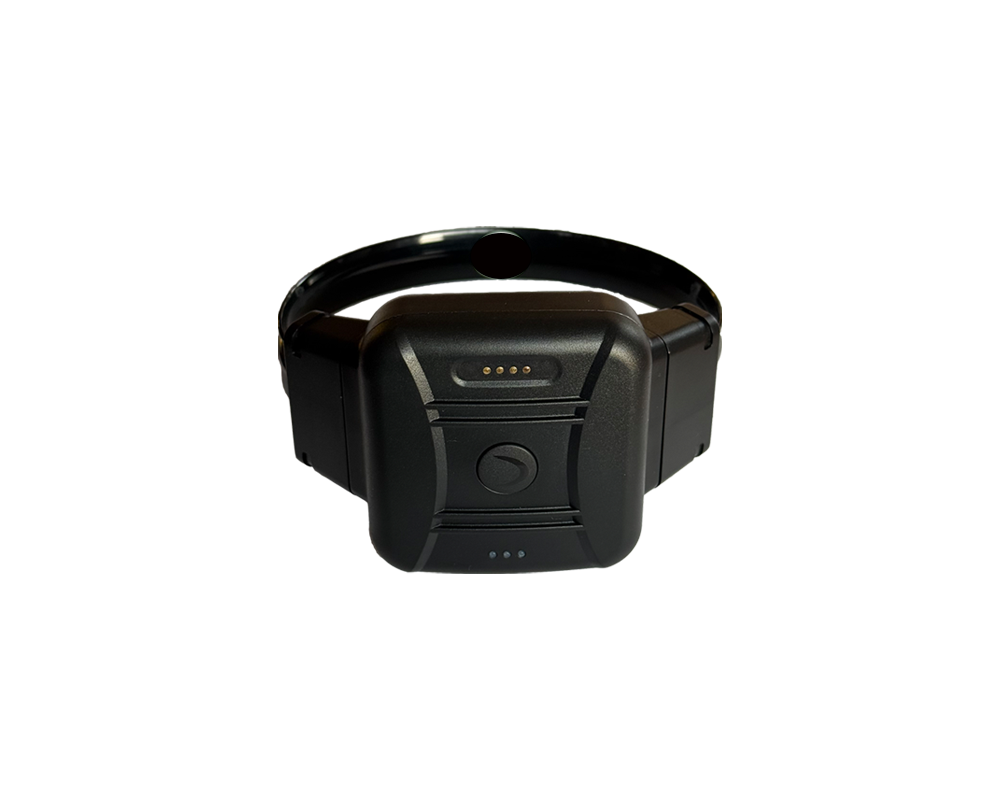
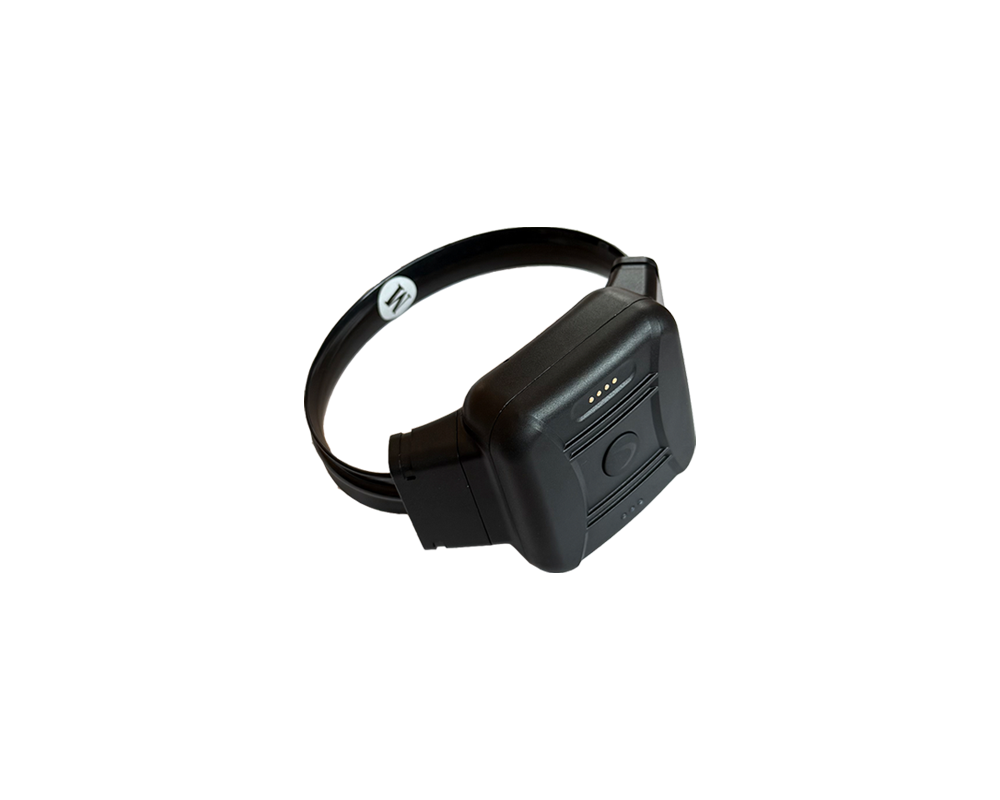
The one-piece solution: CO-EYE ONE integrates GPS/GNSS receiver, LTE/WiFi/BLE radios, fiber optic tamper sensor, and processor — all into a single 108g device that snaps onto the ankle in under 3 seconds with no tools required. There is no second device to forget, charge, or lose. One device. Zero pairing failures.
Nightmare #5: The 3G Sunset — Your Fleet Is a Ticking Time Bomb
If your agency is still running 3G-dependent GPS ankle monitors — and many still are — you’re operating on borrowed time. Major U.S. carriers have already shut down or are actively sunsetting 3G networks. When your carrier flips the switch, every 3G device in your fleet becomes a paperweight — while defendants are still wearing them.
Even 4G LTE-only devices face a medium-term risk as carriers shift spectrum allocation toward 5G services. The next-generation network standard for IoT devices isn’t traditional LTE — it’s LTE-M and NB-IoT, the low-power wide-area network (LPWAN) technologies designed specifically for connected devices.
The future-proof investment: CO-EYE ONE operates on 5G-compatible LTE-M / NB-IoT / GSM networks with eSIM technology (ONE-AC model). eSIM allows remote carrier switching without physical SIM card replacement — critical for nationwide programs where defendants move between carrier coverage areas. This architecture is designed to operate on cellular infrastructure for the next 10+ years.
The Architecture Advantage: Why Incremental Improvements Can’t Compete
It’s worth understanding why established GPS ankle monitor manufacturers haven’t solved these problems. It’s not for lack of engineering talent — companies like BI Incorporated and SCRAM Systems employ excellent engineers.
The constraint is architectural. Every legacy device is built on a single-mode connectivity assumption: the ankle device handles GNSS and LTE by itself, all the time. Within that architecture, you can optimize battery chemistry, improve power management firmware, and reduce component power draw — but you cannot escape the fundamental physics of running a GNSS receiver and LTE radio 24/7 in a device small enough to wear on an ankle.
CO-EYE ONE starts from a different architectural premise: the ankle device should only do what it needs to do, when it needs to do it. When a companion device (smartphone or home station) can handle connectivity, the ankle monitor drops to micro-amp BLE operation. When WiFi is available, it uses that instead of LTE. Full GNSS+LTE only activates as a last resort.
This isn’t a feature addition to an existing platform — it’s a ground-up redesign that produces outcomes physically impossible within legacy architectures:
| Metric | Legacy Single-Mode | CO-EYE Adaptive Multi-Mode |
|---|---|---|
| Battery life (primary mode) | 24–72 hours | 180 days (BLE) |
| Battery life (WiFi available) | N/A (no WiFi mode) | ~3 weeks |
| Battery life (standalone) | 24–72 hours | 7 days |
| Cellular dead zone solution | None | WiFi repeater ($10) |
| False tamper alarm rate | 15–30% | 0% (fiber optic) |
| Pairing failures | Common (two-piece) | Impossible (one-piece) |
| Weight | 150–252g | 108g |
| Installation time | 3–5 minutes (tools) | <3 seconds (snap-on) |
| Network future-proofing | 3G/4G (sunset risk) | 5G LTE-M/NB-IoT + eSIM |
What This Means For Your Program — In Real Numbers
For a 500-defendant electronic monitoring program switching from legacy GPS ankle bracelet technology to CO-EYE ONE’s adaptive multi-mode architecture:
- Battery management labor savings: $130,000–$270,000/year
- False violation investigation reduction: 60–80% fewer field responses
- False tamper alert elimination: From 15–30% false positive rate to 0%
- Cellular dead zone coverage: 100% of previously uncoverable locations resolved with WiFi repeaters
- Device failure rate: Near-zero pairing failures (one-piece design)
- Officer time redirected to supervision: 3,000–7,000 hours/year recovered for actual case management
These aren’t projections based on marketing claims. They’re structural outcomes of an architectural difference. You can verify every one of them with a 30-day side-by-side evaluation against your current fleet.
Don’t Trust a Brochure — Test It Against Your Current Fleet
We don’t ask EM agencies to make purchasing decisions based on specifications sheets. We ask them to request evaluation hardware and run a controlled comparison against whatever they’re currently using — BI SmartLINK, SCRAM GPS, Track Group, or any other system.
Deploy CO-EYE ONE alongside your existing devices on the same caseload for 30 days. Compare:
- Battery alert frequency
- Charging compliance rates
- False tamper alarm counts
- “Signal lost” / dead zone incidents
- Officer time spent on device management vs. actual supervision
The data will speak for itself. Contact our sales team to arrange evaluation units for your program.
Frequently Asked Questions
How does the BLE-connected mode achieve 180-day battery life?
In BLE-connected mode, the GPS ankle monitor offloads GNSS positioning and LTE cellular communication to a companion device — either the defendant’s smartphone running the AMClient app, or a HouseStation home monitoring beacon. The ankle device only maintains an encrypted Bluetooth Low Energy link, consuming micro-amps of power. This reduces energy draw by over 95% compared to running GNSS + LTE continuously, extending battery life from days to approximately 180 days (6 months) on a single charge.
Can WiFi-directed mode really eliminate cellular dead zones?
Yes. WiFi-directed mode allows the GPS ankle bracelet to route telemetry data over any pre-configured WiFi network instead of requiring LTE cellular service. By placing an inexpensive WiFi repeater ($10–$30) in a defendant’s basement apartment, rural home, or any location with poor cellular coverage, the device maintains continuous monitoring without cellular service. This simultaneously extends battery life to approximately 3 weeks, since WiFi consumes far less power than LTE.
What makes fiber optic anti-tamper detection produce zero false alarms?
Fiber optic tamper detection uses an optical signal passing through a continuous loop in both the strap and the device case. The signal either transmits successfully (strap intact) or fails (strap compromised) — there is no intermediate “maybe” state. This binary detection eliminates the 15–30% false positive rates common with resistance-based and skin-sensing tamper systems, where sweat, leg swelling, and temperature changes can trigger false alerts. The fiber optic system continues detecting strap breaches for 3+ months even after battery depletion.
How does the device auto-switch between BLE, WiFi, and LTE modes?
The Adaptive Multi-Mode Connectivity Engine, managed by dual-core ARM M3 + M0 processors, continuously evaluates available connectivity options. When a BLE companion device is within range, the monitor operates in ultra-low-power BLE mode. If BLE is lost but WiFi is available, it seamlessly transitions to WiFi-directed mode. Only when both BLE and WiFi are unavailable does it activate full GNSS + LTE standalone operation. All transitions happen automatically with no officer intervention required.
Is the CO-EYE ONE compatible with 5G networks?
CO-EYE ONE operates on 5G-compatible LTE-M and NB-IoT networks — the low-power wide-area network (LPWAN) technologies that form the IoT layer of 5G infrastructure. The ONE-AC model adds eSIM technology for remote carrier switching without physical SIM replacement. This architecture ensures compatibility with cellular networks for the next decade, eliminating the 3G/4G sunset risk that threatens many legacy GPS ankle monitor fleets.