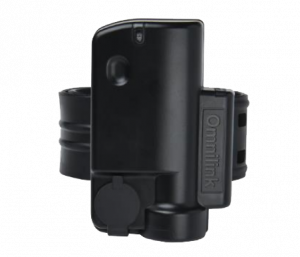

Electronic monitoring programmes generate thousands of alerts daily — low-battery warnings, signal-loss notifications, zone boundary events, and tamper sensor triggers. The vast majority are false positives that consume officer time without improving public safety. A 500-defendant programme typically processes 50–100 low-battery alerts per day alone, costing an estimated $273,000 annually in response labour.
The root cause is not officer inefficiency — it is architectural. Traditional GPS ankle monitors use a single communication path (LTE cellular) that treats every monitoring moment identically, burning maximum power whether a defendant is sleeping at home or crossing state lines. When that cellular signal fails — in basements, rural dead zones, or dense buildings — the device reports “signal loss,” generating yet another false alert.
AI-enhanced GPS ankle monitoring solves both problems simultaneously through intelligent multi-mode connectivity: adaptive systems that automatically switch between BLE, WiFi, and LTE communication paths based on real-time environmental analysis. This is not incremental improvement — it is the architectural foundation that makes genuine AI analytics possible.
The Alert Fatigue Crisis in Electronic Monitoring
Before understanding how AI-enhanced GPS ankle monitors address the problem, it is important to quantify its scale. Alert fatigue — the desensitisation that occurs when monitoring officers are overwhelmed by high volumes of low-value notifications — is the single largest operational cost driver in electronic monitoring programmes.
The Cost of False Alerts
| Alert Type | Daily Volume (500-Person Programme) | Estimated False Positive Rate | Annual Cost Impact |
|---|---|---|---|
| Low battery | 50–100 | 80–90% (charging in progress) | $150,000–273,000 |
| Signal loss | 30–60 | 70–85% (cellular dead zone) | $100,000–180,000 |
| Tamper alarm | 5–15 | 15–30% (sensor type dependent) | $25,000–75,000 |
| Zone boundary | 10–25 | 40–60% (GPS drift) | $50,000–100,000 |
| Total | 95–200/day | — | $325,000–628,000/year |
Table 1: Estimated false alert costs for a 500-defendant GPS ankle monitoring programme. Alert volumes based on operational data from U.S. supervision agencies.
When an officer receives their fifteenth low-battery alert of the morning, the sixteenth — which may indicate a defendant deliberately draining the device before absconding — looks identical. That is how alert fatigue kills programme effectiveness: not through any single failure, but through the cumulative erosion of attention.
What “Intelligent” GPS Monitoring Actually Means
Vendor marketing frequently attaches “AI” and “intelligent” labels to GPS ankle monitors. To separate genuine capability from branding, intelligent monitoring requires three technical foundations:
- Continuous data streams — AI models cannot analyse what they cannot see. Devices that lose connectivity for hours generate data gaps that degrade every downstream algorithm.
- Multi-signal context — A single location fix tells you where. Multiple signals (location + motion + connectivity status + charging pattern + zone proximity) tell you what is happening.
- Adaptive power management — Intelligent power allocation between communication modes extends device runtime, which in turn extends the continuous data window available for pattern analysis.
These three foundations converge in one architectural innovation: adaptive multi-mode connectivity.
CO-EYE ONE-AC: Adaptive Multi-Mode Connectivity Engine
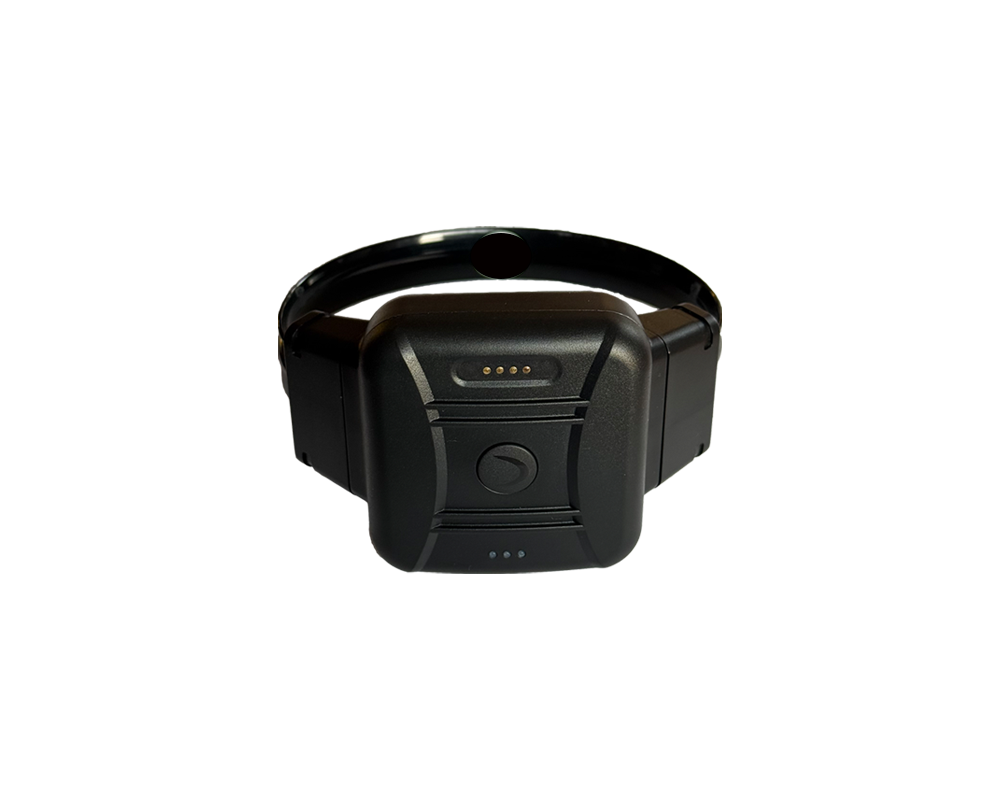 ankle monitor front view – fiber-optic tamper detection with adaptive multi-mode BLE WiFi LTE connectivity” width=”800″ />
The CO-EYE ONE-AC is the first GPS ankle monitor built from the ground up around a three-mode adaptive connectivity engine — BLE, WiFi, and LTE operating as a unified system that selects the optimal communication path in real time, without officer intervention.
How the Three Modes Work Together
| Mode | When Active | Battery Life | Data Capability | AI Analytics Benefit |
|---|---|---|---|---|
| BLE Connected | Smartphone or HouseStation in range (home, work, routine locations) | 180 days (6 months) | Offloads GNSS/LTE to companion device | Ultra-frequent data sampling at minimal power cost |
| WiFi Directed | WiFi Repeater or mobile hotspot available | 20 days (3 weeks) | Data transmission without cellular dependency | Continuous monitoring in cellular dead zones |
| LTE Standalone | BLE and WiFi unavailable (outdoor independent movement) | 7 days | Full GNSS + LTE autonomous tracking | Complete independent positioning |
The critical insight: in a typical supervised individual’s day, 80–90% of time is spent in BLE or WiFi range (at home, at work, in routine locations). The device consumes near-zero power during these periods while still collecting monitoring data through companion devices. LTE activates only for the 10–20% of time when the individual is in transit between known locations.
Why This Architecture Eliminates Blind Spots
Traditional GPS ankle monitors have one communication path: LTE cellular. When that path fails — basement apartments, rural areas with poor coverage, industrial buildings — the device cannot transmit data. The monitoring centre sees “signal loss” and generates an alert.
The CO-EYE ONE-AC’s three-mode architecture provides redundant communication paths:
- Basement apartment: No cellular? → WiFi Repeater ($10 device) maintains data flow → No signal-loss alert
- Rural residence: Spotty cellular? → Home WiFi transmits data → Continuous monitoring maintained
- Office building: GPS blocked, weak cellular? → BLE to smartphone provides location via phone GPS → No data gap
The result: zero blind spots across environments that would generate constant false alerts on single-path devices. A $10 WiFi repeater eliminates the cellular dead zone problem that has plagued the GPS ankle monitoring industry for two decades.
From Raw Data to Actionable Intelligence: The AI Pipeline
Continuous, gap-free telemetry from multi-mode connectivity feeds into a data-to-intelligence pipeline that transforms raw GPS fixes into supervision decisions:
Layer 1: Device-Level Intelligence (Edge)
The CO-EYE ONE-AC’s dual-core ARM M3 + M0 processor architecture handles initial data classification on-device:
- Anti-spoofing detection: GNSS carrier-to-noise ratio monitoring identifies GPS jamming or spoofing attempts in real time
- Motion classification: Accelerometer data distinguishes genuine movement from GPS drift, reducing false zone alerts
- Connectivity optimisation: Automatic mode switching based on signal quality assessment
Layer 2: Platform Intelligence (Cloud)
The CO-EYE Monitoring Software’s Enrollee-Centric architecture (built on Java + React + MySQL + Netty protocol engine) processes telemetry from potentially thousands of devices simultaneously:
- Alert correlation: Cross-referencing battery levels, connectivity status, location history, and zone schedules to contextualise each event
- Pattern recognition: Identifying compliance deterioration signals (charging pattern changes, zone boundary approaches increasing) before violations occur
- Curfew enforcement: Calendar-based curfew schedules (iCalendar format) with automated compliance verification
Layer 3: Officer Decision Support
The final layer surfaces only actionable intelligence to monitoring officers — the compressed 10–15% of events that warrant human attention. Multi-channel notifications (Web + Email + SMS + Push + Telegram + WhatsApp) ensure officers receive time-critical information through their preferred channel.
Traditional vs. AI-Enhanced GPS Monitoring: Complete Comparison
| Capability | Legacy GPS Monitor | CO-EYE ONE-AC |
|---|---|---|
| Connectivity | LTE only (single path) | BLE + WiFi + LTE adaptive (triple path) |
| Battery (standalone) | 24–72 hours | 7 days LTE / 20 days WiFi / 180 days BLE |
| Cellular dead zones | Signal loss → false alert | WiFi/BLE fallback → zero blind spots |
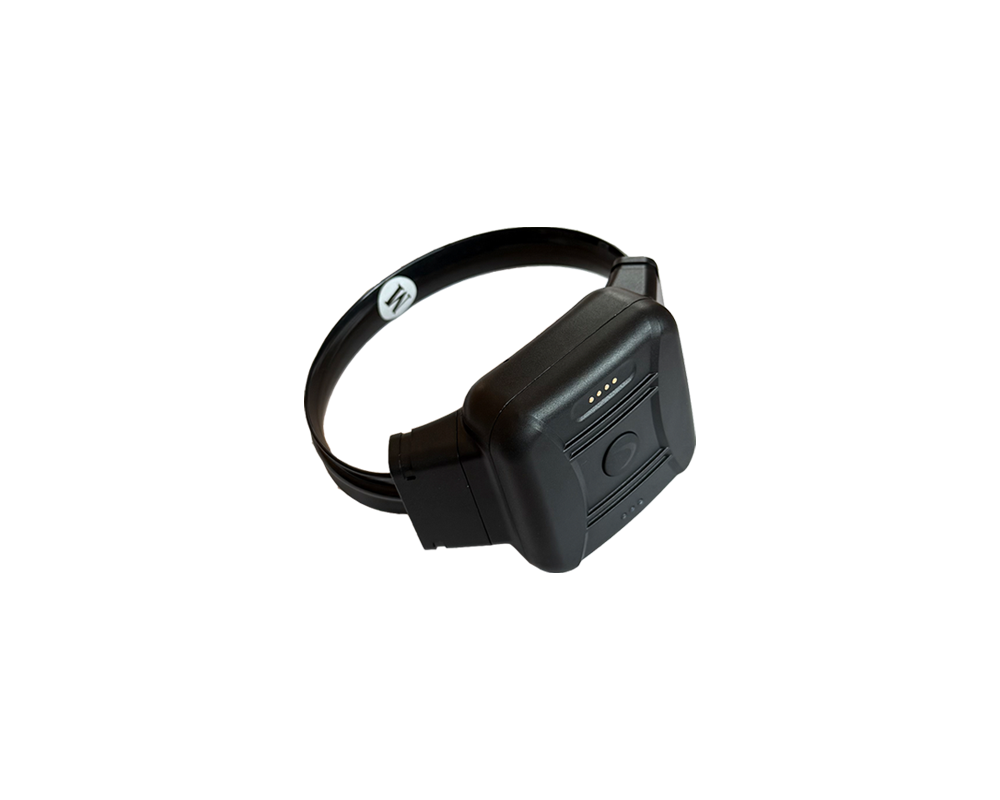
| Weight | 150–252g | 108g (lightest one-piece) |
| Tamper detection | PPG/resistance (15–30% false alarm rate) | Fiber optic (zero false alarms) |
| Power-off tamper protection | None (battery dead = no detection) | 3+ months after battery depletion |
| Installation | Tools required, 2–5 minutes | < 3 seconds, no tools (snap-lock) |
| GPS accuracy | 3–10m CEP | < 2m CEP (4-constellation GNSS) |
| On-device processing | Single processor | Dual-core ARM M3 + M0 (edge AI ready) |
| Event storage | ~5,000 events | 20,000 events |
| Network future-proofing | 3G/4G (3G sunset risk) | 5G-compatible LTE-M/NB-IoT + eSIM |
| Anti-spoofing | Basic or none | GNSS carrier noise monitoring + motion anomaly detection |
| Strap security | Standard strap | Fiber optic + optional steel cut-resistant strap |
| Cybersecurity | Varies | EN 18031 certified + AES-256 + HTTPS/SSL |
Table 3: Feature comparison between legacy single-mode GPS ankle monitors and the CO-EYE ONE-AC adaptive multi-mode system.
Real-World Impact: How Multi-Mode Connectivity Changes Programme Economics
The financial case for AI-enhanced multi-mode GPS monitoring centres on three operational transformations:
1. Charging Management Workload: 85% Reduction
A device with 24-hour battery requires daily charging and generates constant low-battery alerts. The CO-EYE ONE-AC in BLE mode operates for 6 months without charging — eliminating the entire category of low-battery alerts for defendants who maintain their smartphone connection. Even in standalone LTE mode, 7-day battery cuts charging management by 75% compared to daily-charge competitors.
2. Signal-Loss Alerts: Near-Zero
By providing WiFi and BLE communication alternatives when cellular fails, the CO-EYE ONE-AC reduces signal-loss false alerts to near-zero. A monitoring centre receiving 40 signal-loss alerts per day on traditional devices can expect fewer than 5 with multi-mode connectivity — and those 5 represent genuine investigative triggers rather than infrastructure limitations.
3. Tamper Alert Reliability: Zero False Alarms
The CO-EYE ONE’s fiber-optic tamper detection (dual loops through strap and case) produces a binary signal: light passes through the fiber, or it does not. Unlike PPG/heart-rate sensors (15–30% false alarm rate) or resistance circuits (5–15%), fiber optic detection has zero false positives. Every tamper alert is a real event — eliminating the single alert category most likely to undermine court confidence in electronic monitoring data.
Implementation Guide: Deploying AI-Enhanced GPS Monitoring
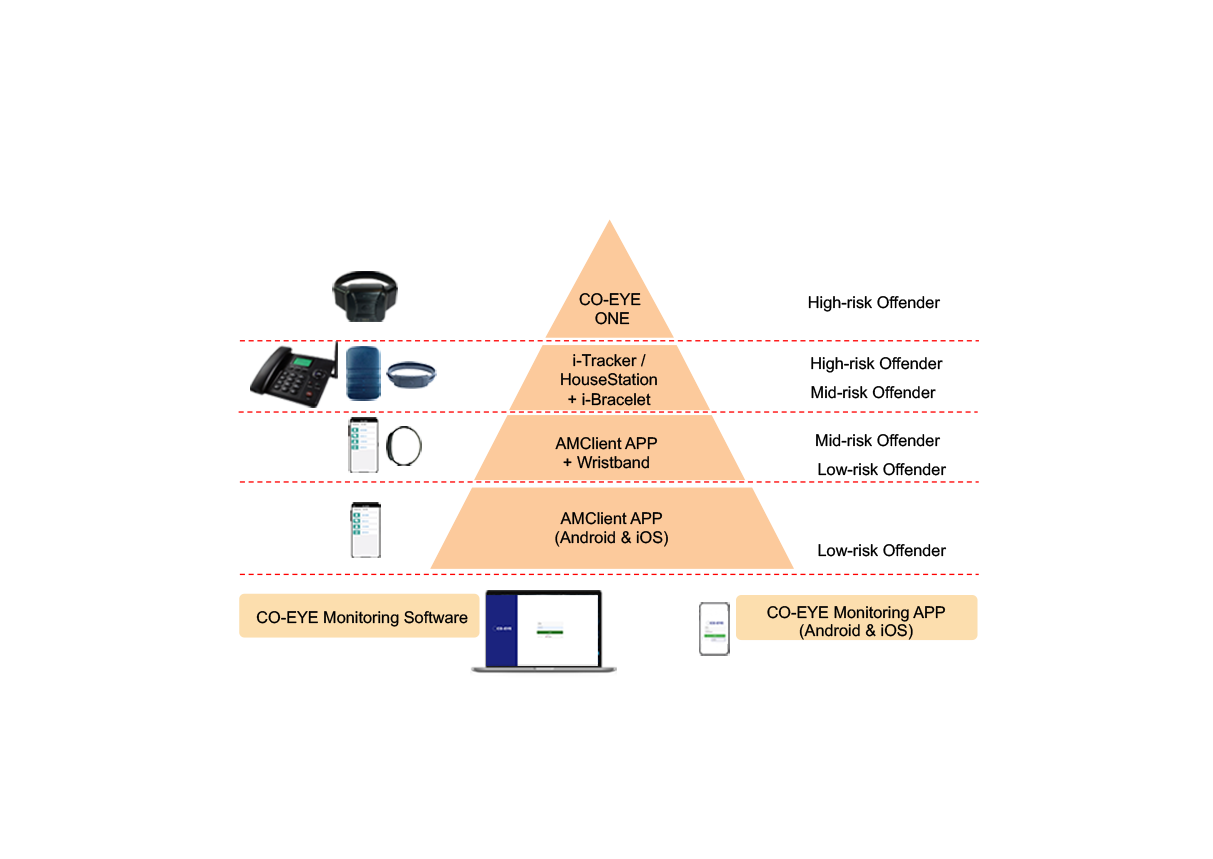
Step 1: Risk Tier Assessment
Map your supervised population into monitoring tiers matched to CO-EYE product capabilities:
- High risk (flight risk, DV, sex offender): CO-EYE ONE / ONE-AC — full GPS + multi-mode connectivity + fiber optic tamper + optional steel-reinforced strap
- Medium risk (pretrial, probation): CO-EYE ONE + HouseStation — GPS outdoor + BLE home confirmation + dual-processor connectivity
- Low/medium risk (house arrest, compliant probationers): CO-EYE AMClient smartphone app + BLE wristband — lightweight monitoring at lowest cost-per-day
Step 2: Infrastructure Setup
For defendants in cellular dead zones (basements, rural areas):
- Deploy WiFi Repeaters at defendant residences ($10–50 per unit)
- Configure HouseStation beacons for home confinement verification
- Issue CO-EYE AMClient app on defendant smartphones for BLE connectivity
Step 3: Alert Threshold Configuration
Leverage the CO-EYE Monitoring Software’s 13 integrated modules to configure contextual alert rules:
- Zone-aware alert suppression: suppress GPS boundary alerts when BLE confirms defendant at registered home
- Time-based curfew enforcement: iCalendar-formatted schedules with automated compliance scoring
- Battery management: multi-mode devices require minimal charging oversight; configure alerts only for genuine device neglect patterns
Step 4: Victim Protection Integration
For DV and stalking cases, deploy CO-EYE AMClient on victim smartphones:
- GPS + BLE proximity detection between victim device and offender ankle monitor
- Automated alerts when offender approaches within court-defined distance
- SOS panic button with GPS-stamped emergency notification
Frequently Asked Questions
What is AI-enhanced GPS ankle monitoring?
AI-enhanced GPS ankle monitoring uses intelligent multi-mode connectivity (BLE/WiFi/LTE) and advanced algorithms to automatically select optimal communication paths, reduce false alerts by 70–85%, and provide continuous monitoring without cellular dead zone interruptions. The CO-EYE ONE-AC is the first GPS ankle monitor built around adaptive multi-mode connectivity.
How does multi-mode connectivity reduce alert fatigue?
Traditional single-mode (LTE-only) devices generate false alerts whenever cellular signal is unavailable. Multi-mode connectivity provides WiFi and BLE backup paths, eliminating signal-loss false alerts. Combined with 180-day BLE battery life, the system eliminates low-battery alerts entirely during connected mode — removing the two largest false-alert categories.
How much does the CO-EYE ONE GPS ankle monitor weigh?
The CO-EYE ONE weighs 108 grams — the lightest one-piece GPS ankle monitor available. For comparison, traditional GPS ankle monitors typically weigh 150–252 grams, making CO-EYE 40–55% lighter for improved comfort and compliance.
Can GPS ankle monitors work in basements and rural areas?
Traditional LTE-only devices lose connectivity in basements and areas with poor cellular coverage. The CO-EYE ONE-AC solves this through WiFi-directed mode: a $10 WiFi repeater placed in a basement or rural home maintains data flow without cellular dependency, eliminating blind spots.
What is fiber-optic tamper detection?
Fiber-optic tamper detection runs light through optical fibers embedded in the ankle monitor strap and case. If the strap is cut or the case is opened, the light signal breaks — producing a binary tamper alert with zero false positives. This contrasts with traditional PPG/heart-rate sensors that produce 15–30% false alarm rates.
How long does the CO-EYE ONE battery last?
Battery life depends on operating mode: 180 days in BLE-connected mode (when a smartphone or HouseStation is in range), 20 days in WiFi-directed mode, and 7 days in standalone LTE mode. In practice, most defendants spend 80–90% of their time in BLE range, achieving near-maximum battery life.
For a detailed analysis of how tamper detection technology affects program costs and courtroom credibility, see our guide to ankle monitor false alarms and tamper detection comparison.