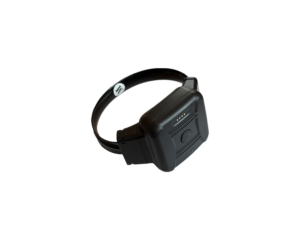

When Cook County State’s Attorney Eileen O’Neill Burke stood before cameras in August 2026 and called the county’s electronic monitoring system “fundamentally broken,” she put a number on what corrections professionals across Illinois have known for years: 327 defendants on pretrial electronic monitoring had gone missing. Not temporarily non-reporting—missing. Their ankle monitors had been cut off, disabled, or simply ignored, and the system designed to track them had failed to trigger the kind of rapid response that public safety demands.
That 327 figure is alarming enough on its own. But it gains devastating context when you consider that Cook County operates the largest pretrial electronic monitoring program in the United States, with roughly 3,000 defendants wearing GPS ankle monitors at any given time. Among them: 79 individuals charged with murder and hundreds more facing weapons charges. The county’s EM population has exploded since Illinois eliminated cash bail under the Pretrial Fairness Act in September 2023, and the infrastructure—both technological and operational—has not kept pace.
What Went Wrong With Cook County’s Electronic Monitoring?
Cook County’s electronic monitoring crisis did not emerge overnight. It is the product of three converging failures: a policy expansion that dramatically increased EM caseloads, an operational framework that lacked the resources to manage that growth, and equipment limitations that created gaps in supervision coverage.

The Pretrial Fairness Act and EM Caseload Explosion
Illinois became the first U.S. state to eliminate cash bail when the Pretrial Fairness Act (PFA) took effect on September 18, 2023. The legislation—part of the broader SAFE-T Act passed in 2021—replaced monetary bail with a detention hearing framework where judges evaluate whether a defendant poses a specific, real, and present threat to any person or the community.
For defendants who do not meet the detention threshold but whom judges want to monitor, electronic monitoring became the primary supervision tool. The result: Cook County’s EM population surged from roughly 1,800 in mid-2023 to over 3,000 by mid-2026, a 67% increase in three years. The Cook County Sheriff’s Office, which administers the EM program, did not receive a proportional increase in monitoring staff, response officers, or technology upgrades to handle this growth.
The 327 Missing Defendants: A Breakdown
According to data compiled by Burke’s office and reported by CWBChicago, the 327 missing EM defendants broke down as follows:
- 79 charged with murder—the most alarming category, representing individuals accused of the most serious violent offenses
- Hundreds charged with weapons offenses including aggravated unlawful use of weapons (AUUW) and armed habitual criminal charges
- Multiple repeat absconders—defendants who had previously violated EM conditions, been re-arrested, and placed back on EM, only to abscond again
Burke specifically cited the case of Antonio Davis, who was charged with first-degree murder in a July 2025 shooting. Davis was released on electronic monitoring, cut off his ankle bracelet, and allegedly committed a second murder while at large. He was eventually re-arrested, placed back on EM, and cut off his bracelet a second time before being apprehended again. The case exemplifies what Burke called a “revolving door” where the consequences for EM violations are insufficient to deter flight.
High-Profile Failures That Drove Public Outrage
Two incidents in particular catalyzed public anger about Cook County’s electronic monitoring program:
The Officer Bartholomew Shooting (August 2026): Chicago Police Officer Larry Neuman was shot during a traffic stop by a suspect who was on pretrial electronic monitoring for a prior weapons charge. The shooting of a law enforcement officer by a defendant who should have been under GPS supervision became an immediate rallying point for critics of the current system.
The CTA Blue Line Fire (2026): A suspect in a CTA Blue Line train fire—an incident that drew national media coverage—was revealed to have been on electronic monitoring at the time. The revelation that someone capable of committing a violent, high-profile crime was theoretically under GPS surveillance further eroded public confidence in EM as a supervision tool.
Why Do Electronic Monitoring Programs Fail? Three Root Causes
Cook County’s crisis is not unique—it is simply the largest and most visible example of challenges that electronic monitoring programs face nationwide. According to research published by the Vera Institute of Justice, 254,700 adults were under electronic monitoring across the United States in 2021, a number that has grown significantly since then. Understanding why EM programs fail requires examining three systemic issues that extend well beyond any single jurisdiction.
1. Equipment Limitations Create Supervision Gaps
Traditional GPS ankle monitors—the type deployed in most U.S. jurisdictions including Cook County—operate on a single connectivity model: continuous GNSS positioning transmitted over cellular (LTE or 3G) networks. This architecture has well-documented limitations:
- Cellular dead zones: When a defendant enters an area with poor cellular coverage—a basement apartment, a rural area, a steel-framed warehouse—the device cannot transmit location data. The monitoring center sees a “signal lost” alert, but cannot distinguish between a technical gap and a genuine abscondment
- Battery dependency: Most GPS ankle monitors require daily charging, with battery life ranging from 24 to 72 hours. A defendant who simply fails to charge their device triggers a low-battery alert—again indistinguishable from intentional tampering without additional context
- Alert fatigue: The combination of cellular gaps, battery alerts, and GPS drift generates a high volume of alerts, many of which are false positives. Monitoring staff—already understaffed in jurisdictions like Cook County—learn to deprioritize alerts, creating response delays that undermine the entire supervision framework
Cook County’s GPS monitoring contract, awarded to Track Group, Inc. for $22.9 million covering 2024-2027, provides traditional two-piece GPS ankle monitoring systems. These devices share the connectivity and battery limitations common to the current generation of EM equipment.

2. Staffing Ratios That Make Supervision Impossible
The International Association of Community Supervision and Corrections (IACSC) recommends a monitoring officer-to-defendant ratio of no more than 1:50 for GPS-monitored high-risk individuals. Cook County’s ratio has been estimated at closer to 1:150 during peak caseload periods—three times the recommended level. At that ratio, meaningful supervision becomes impossible. Officers cannot respond to alerts in real time, cannot conduct the in-person compliance checks that reinforce EM supervision, and cannot coordinate with law enforcement when genuine violations occur.
3. Insufficient Consequences for EM Violations
Burke’s most pointed criticism targets what she calls a “revolving door” where defendants who violate EM conditions—including cutting off their ankle monitors—face minimal consequences. Under current Illinois law, judges have discretion in how to handle EM violations. Some defendants who abscond are simply re-booked and placed back on electronic monitoring. Without meaningful graduated sanctions, the deterrent value of the ankle bracelet diminishes to near zero.
How Can Electronic Monitoring Technology Address These Failures?
The Cook County crisis reveals that EM program failures are partly operational (staffing, response protocols, judicial sanctions) and partly technological (equipment limitations that generate false alerts and create supervision gaps). While technology alone cannot solve operational and policy shortcomings, the emergence of next-generation electronic monitoring architectures directly addresses the equipment-related root causes.
Multi-Mode Connectivity Eliminates Dead Zones
The fundamental limitation of current-generation GPS ankle monitors—single-mode LTE connectivity—is an architecture problem, not an engineering problem. Devices that rely exclusively on cellular networks will always have dead zones in basements, rural areas, and RF-shielded environments. Next-generation devices address this through adaptive multi-mode connectivity engines that automatically switch between BLE (Bluetooth Low Energy), WiFi, and LTE based on environmental conditions. When cellular coverage is unavailable, the device routes data through WiFi or maintains a BLE tether to the defendant’s smartphone, ensuring continuous supervision with zero blind spots.
For agencies like the Cook County Sheriff’s Office, this means the difference between a “signal lost” alert (which may or may not indicate a real problem) and continuous, verified location data regardless of where the defendant is.
Extended Battery Life Reduces Alert Fatigue
When a GPS ankle monitor’s battery lasts only 24-72 hours, every missed charge becomes a supervisory event that demands officer attention. In a program with 3,000 defendants, even a 5% daily non-compliance rate on charging generates 150 low-battery alerts per day—each one requiring evaluation. Extended battery architectures that leverage BLE and WiFi connectivity modes can achieve battery life measured in weeks rather than hours, reducing charging-related false alerts by 85% or more.
Zero False-Positive Tamper Detection Preserves Court Credibility
When defense attorneys can demonstrate that GPS ankle monitors generate frequent false tamper alerts, they undermine the evidentiary value of all tamper alerts—including genuine ones. Binary tamper detection systems, such as fiber-optic continuity monitoring covering both the strap and the device case, eliminate this problem entirely. The signal either passes through the intact fiber loop or it does not. There is no ambiguous middle ground, no environmental interference, and no false positive. For prosecutors like Burke who rely on EM violation data in court proceedings, this distinction between probabilistic alerts and deterministic detection is critical.
NIJ-funded research has demonstrated that electronic monitoring, when properly implemented, reduces recidivism by 31% compared to traditional supervision, according to an NIJ-funded study published by the National Institute of Justice. But that effectiveness depends on the reliability of the monitoring infrastructure. When 327 defendants can go missing from a single jurisdiction’s EM program, it signals not that electronic monitoring itself is flawed, but that the implementation—technology, staffing, and policy combined—has fallen critically short.
What Is the Legislative Response to the Cook County Electronic Monitoring Crisis?
Burke’s public campaign has generated specific legislative proposals that would fundamentally change how electronic monitoring operates in Illinois. Her office has pushed for three key reforms:
- Mandatory detention for EM violations involving violent felony charges: If a defendant charged with murder, attempted murder, or aggravated battery with a firearm cuts off their ankle monitor or absconds, judges would be required to detain them pending trial rather than simply re-booking them on EM
- Real-time alert response requirements: Legislation would mandate staffing levels and response time standards for the Sheriff’s EM monitoring center, with specific ratios tied to caseload size
- Technology upgrade mandates: Proposals include requiring GPS monitoring equipment to meet minimum performance standards for battery life, connectivity redundancy, and tamper detection accuracy—effectively pushing procurement toward next-generation EM technology
The legislative push faces opposition from criminal justice reform advocates who argue that expanding detention authority rolls back the intent of the Pretrial Fairness Act. The ACLU of Illinois has cautioned against “using individual high-profile cases to justify systemic changes that would disproportionately affect Black and Brown communities.” Community organizations have pointed to Cook County data showing that the vast majority of defendants on EM comply with their conditions—the 327 missing defendants represent approximately 11% of the total EM population.
What Can Other Jurisdictions Learn From Cook County?
Cook County’s electronic monitoring crisis offers actionable lessons for every jurisdiction operating or expanding a pretrial EM program:
Staff before you scale. Expanding EM caseloads without proportional increases in monitoring staff, response officers, and supervisory infrastructure is a recipe for the kind of supervision gaps Cook County is experiencing. Every 50 high-risk GPS defendants requires at least one dedicated monitoring officer.
Invest in equipment that reduces alert noise. If 80% of daily alerts are false positives (battery, signal loss, GPS drift), officers cannot effectively identify the 20% that represent genuine violations. Procurement decisions should prioritize connectivity redundancy, extended battery life, and deterministic tamper detection that minimize non-actionable alerts.
Build graduated sanctions into the EM framework. Electronic monitoring only works as a supervision tool if violations carry meaningful consequences. A defendant who cuts off an ankle monitor and is simply re-booked on EM has no incentive to comply. Jurisdictions need clear, escalating sanction protocols that judges apply consistently.
Separate the technology question from the policy question. Cook County’s debate has often conflated “Is electronic monitoring working?” with “Is our specific EM implementation working?” Electronic monitoring as a supervision strategy has strong empirical support. But that strategy depends on reliable technology, adequate staffing, and enforceable conditions—all three of which failed simultaneously in Cook County.
For corrections professionals evaluating their own EM programs, the Cook County case is a warning: the technology platform you select, the staffing model you build, and the policy framework you operate within are not independent variables. They are interdependent components of a system that is only as strong as its weakest link.
About REFINE Technology (CO-EYE)
REFINE Technology is the leading electronic monitoring solutions provider in China with over 16 years of experience in the criminal justice industry. As the exclusive supplier for top security agencies, REFINE Technology has deployed 200,000+ devices across 30+ countries, monitoring 130,000+ individuals. The CO-EYE product line — featuring the next-generation all-in-one GPS ankle monitor, BLE wristbands, RF home beacons, and a unified monitoring platform — delivers high-security, low-stigma supervision for high-risk, mid-risk, and low-risk offender monitoring and victim protection. All CO-EYE devices carry full European NB CE directives (RED/Cybersecurity/LVD/SAR) and FCC certifications, with IP68 waterproof and REACH/RoHS/WEEE compliance. CO-EYE solutions are trusted in the USA, Europe, Africa, Bhutan, Papua New Guinea, Dominican Republic, Armenia, and expanding globally.
For more information, visit www.ankle-monitor.com or contact marketing@rfidcn.com.