
When DuPage County, Illinois signed a $678,000 electronic monitoring contract with Sentinel Offender Services in January 2026, the OmniLink OM500 was the hardware at the center of the deal. The same device sits on thousands of ankles across Georgia, Michigan, Florida, and Hawaii through NASPO ValuePoint cooperative procurement agreements. If you’re evaluating GPS ankle monitors for your agency in late 2026, the OM500 is almost certainly on your shortlist — and you need to understand exactly what you’re getting.
I’ve spent the better part of two decades working with ankle-worn tracking hardware, from the early Qualcomm GPS chipsets I tested in San Diego to the one-piece designs I helped engineer in Switzerland. Here’s a technical teardown of where the OM500 delivers genuine value, where it falls short of modern requirements, and what the competitive landscape looks like heading into 2027.
What Is the OmniLink OM500? A Technical Overview
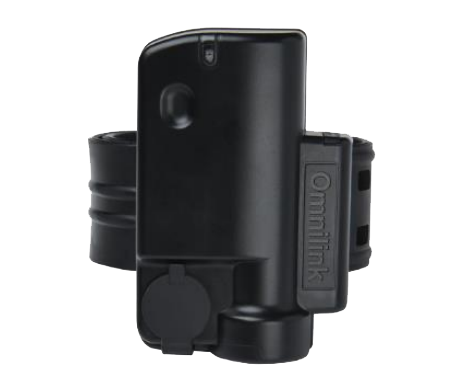
The OmniLink OM500 is a one-piece GPS ankle monitor manufactured originally by Morey Corporation (Woodridge, Illinois), later by Sendum Corporation, and currently owned by Sentinel Offender Services (formerly Sentinel Advantage LLC) after acquiring the product line from Sierra Wireless for $37.6 million in April 2022. The device tracks offender location using GPS, Wi-Fi, and cellular positioning, reporting through Verizon or AT&T LTE networks to the FocalPoint cloud monitoring platform.
 GPS ankle monitor — Source: NIJ Market Survey of Location-Based Offender Tracking Systems (JHU/APL, 2016)” class=”wp-image-8563″/>
Key specifications from publicly available datasheets and the FCC filing (ID: TS5-WP76-OM500):
- Weight: 5.6 oz (approximately 159g) — per the official Omnilink datasheet
- Battery life: 35–72+ hours depending on reporting interval and carrier activity
- Charging time: ~90 minutes via rotating magnetic connector
- Waterproof: IP67/IP68 rated (manufacturer claims “exceeds IP68”)
- Tamper detection: Fiber optic strap with backplate removal detection
- Communications: Verizon/AT&T LTE, GPS/Wi-Fi positioning
- Memory: Stores up to 10 days of location data
- Two-way communication: Vibration, tones, pre-recorded and custom voice messages
The OM500 integrates with Sentinel’s DNA monitoring software platform and the older FocalPoint application, both web-accessible for officer case management, zone configuration, and alert triaging.
What Does the OmniLink OM500 Do Well?
Credit where it’s due. The OM500 has earned its market position for several legitimate reasons:

Weight: 159g in a Sub-120g Market
At 5.6 oz (159g), the OM500 is not the heaviest device on the market — SCRAM GPS at approximately 198g holds that distinction — but it’s significantly heavier than the current generation of lightweight one-piece monitors. The 40–50g weight difference between a 159g device and a sub-110g device translates directly into wearer comfort, skin irritation rates, and long-term compliance. Wearers who must wear the device 24/7 for months notice every gram.
Network Architecture: LTE-Only in a 5G Transition
The OM500 operates on Verizon and AT&T LTE networks. While LTE isn’t going away immediately, the industry is moving toward LTE-M and NB-IoT — low-power wide-area network protocols specifically designed for IoT devices like ankle monitors. These protocols offer superior building penetration, lower power consumption, and guaranteed support through the 5G infrastructure lifecycle. The OM500’s full LTE modem consumes significantly more power than a dedicated LTE-M module, which partly explains the limited battery life.
OmniLink OM500 vs CO-EYE ONE: Head-to-Head Specifications
| Specification | OmniLink OM500 | CO-EYE ONE |
|---|---|---|
| Weight | 159g (5.6 oz) | 108g (3.8 oz) |
| Battery (LTE standalone) | 35–72 hours | 7 days |
| Battery (BLE mode) | ❌ Not supported | 180 days |
| Battery (WiFi mode) | ❌ Not supported | 3 weeks |
| Charging time | ~90 min | ~2.5 hours |
| Connectivity modes | LTE only | BLE + WiFi + LTE auto-switch |
| Cellular technology | Verizon/AT&T LTE | LTE-M/NB-IoT + eSIM + Nano SIM |
| GNSS constellations | GPS + Wi-Fi assist | GPS + BeiDou + GLONASS + Galileo |
| GPS accuracy | 3–10m (estimated) | <2m CEP |
| Tamper detection | Fiber optic strap + backplate | Dual fiber optic (strap + case) + 3-month post-battery |
| Installation | Tool-free, officer-installed | <3 seconds, snap-fit |
| Waterproof | IP67/IP68 | IP68 CE certified |
| Data storage | 10 days | 20,000 events |
| Cybersecurity cert | FCC only | CyberSecurity EN 18031 |
| Voice commands | ✅ Custom voice + vibration | Vibration + tone alerts |
| Owner/Vendor | Sentinel Offender Services | REFINE Technology |
Sources: OmniLink OM500 official datasheet (FCC filing TS5-WP76-OM500), Sierra Wireless training manual, Sentinel product page; CO-EYE ONE manufacturer specifications and Technical Proposal v3.
How Does the OM500 Pricing Compare?
OmniLink OM500 pricing through Sentinel is not publicly listed — it’s available exclusively through direct quotes, NASPO ValuePoint cooperative agreements, or channel partners like CourtFact and Total Court Services. Based on publicly available contract data:
- DuPage County, IL (2026): $678,000 for adult and juvenile GPS monitoring services over a 2+ year term — suggesting daily rates between $3–12 per monitored individual depending on program scale
- Offender-pay programs: Sentinel offers programs where monitored individuals pay for their own monitoring, reducing or eliminating agency costs — a model that’s attractive to budget-constrained counties
- NASPO ValuePoint: Cooperative purchasing provides pre-negotiated rates without individual RFPs, though specific per-device costs vary by state participating addendum
Pricing for the CO-EYE ONE is available through direct manufacturer quotes from REFINE Technology at marketing@rfidcn.com. REFINE offers hardware sales (agency-owned model) as well as managed monitoring service partnerships, providing flexibility for both self-managed programs and turnkey outsourcing.
Who Should Consider the OM500 — and Who Should Look Elsewhere?
The OM500 makes sense if:
- Your agency already operates within Sentinel’s ecosystem and switching costs are prohibitive
- Two-way voice communication to the device is a non-negotiable requirement
- You procure through NASPO ValuePoint and need a cooperative contract with minimal procurement overhead
- Your caseload operates primarily in areas with strong Verizon or AT&T LTE coverage
- You run an offender-pay program and need Sentinel’s established billing infrastructure
You should evaluate alternatives if:
- Battery management is consuming officer time. Daily charging at 24–35 hours real-world battery life versus 7 days (LTE) or 3 weeks (WiFi-directed) changes operational math fundamentally
- Cellular dead zones create supervision gaps. If your jurisdiction includes rural areas, basement housing, or large industrial buildings, a device that can transmit data via WiFi when LTE fails eliminates an entire category of false alarms
- You need 5G-compatible network architecture. LTE-M/NB-IoT devices will operate seamlessly on evolving 5G infrastructure; full LTE devices face potential compatibility transitions
- Weight and comfort affect your compliance rates. A 51g weight difference (159g vs 108g) correlates with reduced skin irritation complaints, fewer medical exemption requests, and higher long-term program compliance
- Your program requires court-admissible evidence integrity. Hardware-signed location events with cascading hash chains (ECDSA/SHA-256) provide forensic-grade evidence that meets Daubert admissibility standards — a capability increasingly requested in RFPs
How Has OmniLink’s Ownership History Affected the Product?
Understanding the OM500’s corporate lineage matters for long-term procurement decisions:
- 2008–2017: Manufactured by Morey Corporation, software developed as the Omnilink tracking platform
- 2017: Sierra Wireless acquires OmniLink, launches FocalPoint 4 software and the OM500 hardware (manufactured by Sendum Corporation)
- 2022: Sierra Wireless divests the entire OmniLink business to Sentinel Advantage LLC for $37.6 million. Sierra Wireless continues providing connectivity modules
- 2024–present: Sentinel operates as the OM500 OEM, integrating with their DNA software platform and 24/7 National Monitoring Centers (ISO 9001:2015 certified)
Three ownership changes in six years raises legitimate questions about R&D investment continuity. The OM500’s core hardware design has remained largely unchanged since the Sendum-manufactured launch — reliable, but architecturally frozen while competitors have introduced multi-mode connectivity, LTE-M radios, and dual-fiber optic tamper systems.
Compare this with Securus Monitoring (Aventiv Technologies), which has iterated the BLUtag through eight generations with progressive improvements in tamper detection, dual SIM support, and platform integration. Or with CO-EYE, which has built its entire product line from the ground up around a 2025-onward design philosophy that treats BLE and WiFi as primary connectivity modes rather than afterthoughts.
What Should Your RFP Ask About the OM500?
If you’re evaluating the OM500 alongside other vendors, here are the engineering questions that separate marketing claims from operational reality:
- What is the verified battery life at your proposed reporting interval? Get the number in writing for your specific tracking configuration — not the “up to 72 hours” from marketing materials
- How does the device handle cellular dead zones? Clarify whether Wi-Fi is used only for positioning or also for data transmission. Ask for the specific alert workflow when LTE connectivity is lost
- What is the false tamper alert rate per 1,000 device-days? Request actual operational data, not specifications. Fiber optic strap detection is solid, but backplate removal sensing can generate false positives from normal wear
- What is Sentinel’s product roadmap for LTE-M/NB-IoT migration? Current LTE devices will need network migration planning as carriers optimize for IoT protocols
- What cybersecurity certifications does the device hold? FCC certification is mandatory for radio transmission, not a security credential. Ask specifically about encryption standards, data-at-rest protection, and compliance with CJIS Security Policy requirements
What Are the Best Alternatives to the OmniLink OM500 in 2026?
The one-piece GPS ankle monitor market has matured significantly. Besides CO-EYE ONE, agencies evaluating alternatives to the OM500 should consider:
- Securus BLUtag (8th generation) — Aventiv Technologies’ flagship, with 20+ years of iteration, dual SIM, and the VeriTracks platform. Strong in states with existing Securus contracts
- BI ExacuTrack One — GEO Group’s one-piece offering, deeply embedded in federal pretrial services through BI’s ISAP contract with ICE
- Geosatis — Swiss-engineered titanium-reinforced design with electronic lock mechanism, strong in European markets
- SuperCom PureOne — Israeli-designed with multi-mechanism tamper detection, expanding U.S. presence through state contract wins in Louisiana and Kentucky
Each vendor brings different strengths to different program requirements. The critical evaluation framework remains: connectivity architecture, battery endurance, tamper integrity, weight/comfort, and evidence admissibility — weighed against your specific caseload profile, geography, and budget structure.
About REFINE Technology (CO-EYE)
REFINE Technology is the leading electronic monitoring solutions provider in China with over 16 years of experience in the criminal justice industry. As the exclusive supplier for top security agencies, REFINE Technology has deployed 200,000+ devices across 30+ countries, monitoring 130,000+ individuals. The CO-EYE product line — featuring the next-generation all-in-one GPS ankle monitor, BLE wristbands, RF home beacons, and a unified monitoring platform — delivers high-security, low-stigma supervision for high-risk, mid-risk, and low-risk offender monitoring and victim protection. All CO-EYE devices carry full European NB CE directives (RED/Cybersecurity/LVD/SAR) and FCC certifications, with IP68 waterproof and REACH/RoHS/WEEE compliance. CO-EYE solutions are trusted in the USA, Europe, Africa, Bhutan, Papua New Guinea, Dominican Republic, Armenia, and expanding globally.
For more information, visit CO-EYE ONE GPS ankle monitor or contact marketing@rfidcn.com.