
Pretrial GPS monitoring has shifted from a niche alternative to mainstream judicial practice. In 2026, more than 14 US states have introduced or enacted legislation expanding pretrial electronic monitoring, the UK has made GPS tagging a presumptive condition for prison leavers, and Harris County, Texas invested $1.4 million specifically to strengthen its GPS ankle monitor oversight infrastructure. For county courts, pretrial services departments, and bail agencies evaluating GPS monitoring technology, the landscape has changed fundamentally — and so have the questions procurement officers should be asking.
This guide examines what GPS ankle monitors can and cannot do in pretrial supervision contexts, identifies the five technical capabilities that distinguish effective devices from legacy hardware, and provides a framework for evaluating vendor proposals against real-world operational requirements.

Why Pretrial GPS Monitoring Is Expanding in 2026
Several converging forces are driving the pretrial GPS expansion:
Legislative Mandates Are Replacing Judicial Discretion
Florida’s HB 277 (effective July 2026) expanded court authority to order GPS electronic monitoring for domestic violence defendants. Oklahoma’s SB 1325 advanced GPS supervision requirements for pretrial DV defendants. Texas SB 1004 (2023, now actively enforced) created criminal penalties for removing a monitoring device — more than 200 tampering cases have been charged since the law took effect.
The pattern is clear: legislatures are moving GPS monitoring from the “available option” column to the “required condition” column for specific offense categories. Courts that currently exercise discretionary GPS monitoring authority will increasingly face mandatory monitoring provisions.
Jail Capacity Constraints
According to the Vera Institute of Justice, approximately 254,700 adults were on electronic monitoring in the United States on a typical day as of 2021 — and that number has grown significantly since. Pretrial detention costs range from $75 to $300+ per day depending on jurisdiction, while GPS monitoring typically costs agencies $5 to $35 per day. At a time when adult male prison populations are at 98% capacity in jurisdictions like England and Wales, GPS monitoring is not just preferred — it is structurally necessary.
High-Profile Failures Are Driving Quality Demands
The 2026 Harris County incidents — where a capital murder defendant fled to Italy after cutting off his GPS device with a 72-hour detection gap — have exposed the gap between monitoring technology capabilities and operational infrastructure. Courts and procurement officers are now asking harder questions about device reliability, tamper detection speed, alert routing, and vendor accountability.
Five Technical Capabilities That Define Pretrial-Grade GPS Monitoring
Not all GPS ankle monitors are equivalent for pretrial supervision. Based on the operational requirements that 2026 legislative mandates and case law are establishing, five capabilities separate pretrial-grade monitoring from legacy systems:
1. Multi-Mode Connectivity for Uninterrupted Tracking
Pretrial monitoring must function in all environments — from suburban homes to dense urban areas to rural jurisdictions where cellular coverage is limited. Legacy devices relying on a single communication mode (typically 3G cellular, many of which are now sunset) fail in precisely the scenarios where monitoring is most critical.
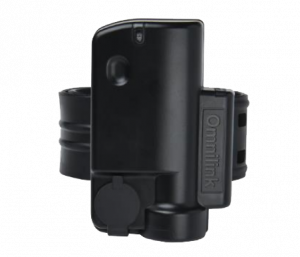
The most robust approach is adaptive multi-mode connectivity — the ability for a single device to automatically switch between communication channels based on available infrastructure. CO-EYE’s ONE-AC model implements this with three modes:
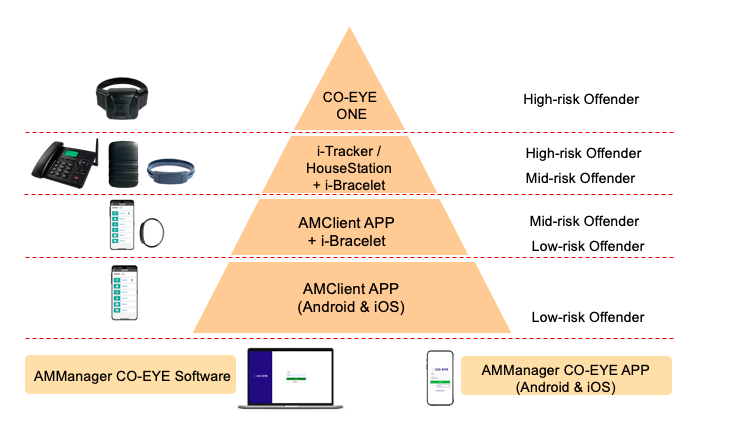
- BLE-Connected Mode: When paired with a CO-EYE HouseStation or the AMClient mobile app, the device communicates via Bluetooth Low Energy — extending battery life to 180 days while maintaining continuous tracking. Ideal for low-risk pretrial defendants on home detention.
- WiFi-Directed Mode: The device connects through available WiFi networks for positioning and data transmission, supporting 20-day battery life. Effective for defendants with predictable daily patterns (home-to-work-to-court).
- LTE Standalone Mode: Full cellular autonomy with 5G-compatible LTE-M/NB-IoT connectivity, delivering 7-day battery life at 5-minute reporting intervals. Required for high-risk pretrial supervision where every location point matters.
This tiered architecture allows a single hardware platform to serve the full pretrial risk spectrum without requiring agencies to procure and manage multiple device types.
2. Extended Battery Life That Eliminates Compliance Gaps
Battery management is the second-largest operational cost in GPS monitoring programs after staffing. Devices requiring daily charging create a compliance gap every 24 hours — a window during which the defendant’s location is unknown. For pretrial supervision, this gap is a liability.
CO-EYE ONE achieves 7-day standalone battery life (LTE mode) and up to 180 days in BLE-connected mode — compared to the 24-72 hours typical of legacy two-piece systems. This translates directly to fewer missed check-ins, fewer non-compliance alerts triggered by dead batteries, and significantly less administrative overhead for officers managing pretrial caseloads.
For perspective: an agency monitoring 200 pretrial defendants with devices requiring daily charging generates approximately 73,000 charging events per year. Each charging event is a potential compliance failure. At 7-day battery life, that drops to approximately 10,400 events — an 85% reduction in charging-related risk.
3. Multi-Layer Anti-Tamper That Courts Can Trust
The Harris County cases demonstrated that tamper detection technology is only as effective as the alert response system behind it. But the inverse is also true: the best operational response system cannot compensate for devices that fail to detect tampering in the first place.
Legacy tamper detection relies on simple strap-tension or electrical-continuity sensors that produce false alarm rates of 15-30%. At pretrial scale, this means officers spend more time investigating false alarms than responding to genuine incidents — creating alert fatigue that can cause real threats to be deprioritized.
CO-EYE’s multi-layer approach combines:
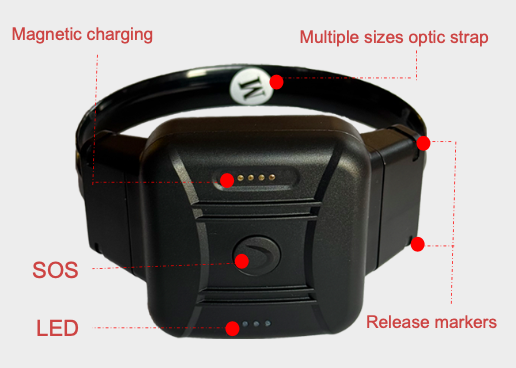
- Optical fiber monitoring on both the strap AND the device case — detecting cutting, stretching, or separation attempts through light signal interruption
- Electronic induction sensing for proximity verification
- Mechanical protection against physical attack
- Post-depletion protection: The anti-tamper system continues operating for 3+ months after battery depletion — ensuring a defendant cannot simply wait for the battery to die before attempting removal
The result is near-zero false tamper alarms, which means when a tamper alert fires, officers can trust it and respond accordingly. For courts, this reliability is the difference between GPS monitoring as a credible supervision tool and GPS monitoring as security theater.
4. Sub-2-Meter Positioning Accuracy
Pretrial monitoring often involves granular geographic conditions — exclusion zones around a victim’s residence, inclusion zones limited to specific addresses, and boundary conditions measured in meters, not miles.
CO-EYE ONE achieves less than 2-meter CEP (Circular Error Probable) accuracy by combining four satellite constellations (GPS, BeiDou, GLONASS, Galileo) with WiFi positioning and cell-tower triangulation. This 5-layer positioning stack ensures accurate location data even in environments where single-constellation GPS fails — parking garages, multi-story buildings, and urban canyons that are common in the very neighborhoods where pretrial defendants live.
5. Rapid Deployment at County Scale
When a court orders pretrial GPS monitoring as a bail condition, the defendant needs to be fitted before leaving the courthouse. Devices requiring specialized training, on-site calibration, or tool-based installation create bottlenecks that delay releases and consume officer time.
CO-EYE’s patented snap-on design enables 3-second tool-free installation with pre-configured S/M/L/XL straps. Field deployment requires no specialized training — any pretrial services officer can install the device during a standard intake process. For agencies processing 50+ pretrial GPS orders per week, this scalability is not a convenience feature — it is an operational requirement.
What to Include in Your Pretrial GPS Monitoring RFP
Based on the operational requirements emerging from 2026 legislation and the lessons of recent monitoring failures, a pretrial-specific RFP should address these categories:
Device Performance Requirements
- Battery life in standalone mode (minimum 5+ days for continuous tracking)
- Available connectivity modes (cellular, WiFi, BLE) and failover behavior
- GPS accuracy specification (CEP standard, multi-constellation required)
- Anti-tamper mechanism type and independent false alarm rate testing
- Device weight and wearability specifications
- IP rating for water resistance (IP68 minimum for daily wear)
- Installation time and tool requirements
Monitoring Platform Requirements
- Real-time alert transmission latency (SLA required, target <60 seconds)
- Configurable geofencing with polygon support (not just radius-based)
- Multi-agency dashboard access with role-based permissions
- Automated alert escalation workflows
- Complete audit trail for compliance verification
- Mobile app for field officers
Operational and Contractual Requirements
- Vendor response time SLA for tamper alerts (24/7, not business hours)
- Device configuration verification process
- Data ownership and portability provisions
- Independent third-party audit requirements
- Pricing model transparency (daily rate, activation fees, equipment costs)
For a complete RFP framework including scoring criteria and evaluation methodology, see our GPS Ankle Monitor RFP Template.
Frequently Asked Questions
How much does pretrial GPS ankle monitoring cost per day?
Pretrial GPS monitoring typically costs agencies $5 to $35 per day per defendant, depending on device type, service level, and vendor pricing model. This compares to pretrial detention costs of $75 to $300+ per day. Extended battery life devices can further reduce costs by minimizing staff time spent managing charging compliance and non-technical alerts.
What is the difference between one-piece and two-piece GPS ankle monitors for pretrial use?
One-piece GPS ankle monitors integrate all components — GPS receiver, cellular modem, battery, and sensors — into a single ankle-worn device. Two-piece systems separate the ankle tag (which communicates via short-range radio) from a separate tracking unit the defendant must carry. One-piece designs are generally preferred for pretrial use because they eliminate the risk of defendants leaving the tracking unit behind, reduce points of failure, and simplify installation.
How quickly can GPS ankle monitors detect tamper attempts?
Optical fiber anti-tamper systems can detect strap cutting or device removal within seconds and transmit a cellular alert within 60 seconds. However, as 2026 incidents in Harris County demonstrated, alert detection speed is only effective when paired with 24/7 staffed monitoring response. Agencies should require both device-level detection speed and vendor response-time SLAs in procurement contracts.
What GPS accuracy is needed for pretrial exclusion zones?
Pretrial exclusion zones — such as a 500-foot perimeter around a victim’s residence — require sub-5-meter accuracy to be reliably enforced. Multi-constellation GNSS systems achieving less than 2-meter CEP accuracy (using GPS, GLONASS, Galileo, and BeiDou) provide the precision needed for court-ordered geographic restrictions without generating excessive false boundary alerts.
Can a single GPS device serve different pretrial risk levels?
Yes. Devices with adaptive multi-mode connectivity can be configured for different supervision tiers using the same hardware. A low-risk defendant on home detention can be monitored via BLE-connected mode (180-day battery, lower data cost), while a high-risk defendant can be tracked via full LTE standalone mode (7-day battery, continuous GPS). This approach reduces procurement complexity and allows agencies to adjust supervision intensity without hardware changes.
As pretrial GPS monitoring becomes a legislative mandate rather than a discretionary tool, the technology standards that courts and agencies require are rising. For a detailed comparison of current one-piece GPS ankle monitor specifications, visit our One-Piece GPS Ankle Monitor Buyer’s Guide.