Three passengers dead. 147 people confined to cabins for over a week. A ship stranded 600 nautical miles from the nearest port with no way to verify who was actually staying in isolation. The MV Hondius hantavirus outbreak of May 2026 isn’t just a public health crisis — it’s a case study in what happens […]
Washington State’s Supreme Court is reviewing CrR 3.2 amendments that would fundamentally reshape pretrial bail rules—capping most misdemeanor bail at $200, requiring prosecutors to prove a “high likelihood of willful flight,” and creating a presumption that defendants can deposit just 10% of bail with the court. The proposal has drawn more public comments than any […]
Domestic violence GPS monitoring is scaling in 2026 as legislatures mandate GPS ankle bracelet programs, counties pilot victim-notification workflows, and federal alternatives-to-detention populations grow. This cluster brief connects Nashville deployments, Tennessee’s Debbie and Marie Act, Oklahoma SB 1325, multi-state bills, ICE ATD growth, Alberta’s victim-alert investment, and buyer-grade hardware requirements—linking to our pillar GPS ankle bracelet guide and CO-EYE ONE.
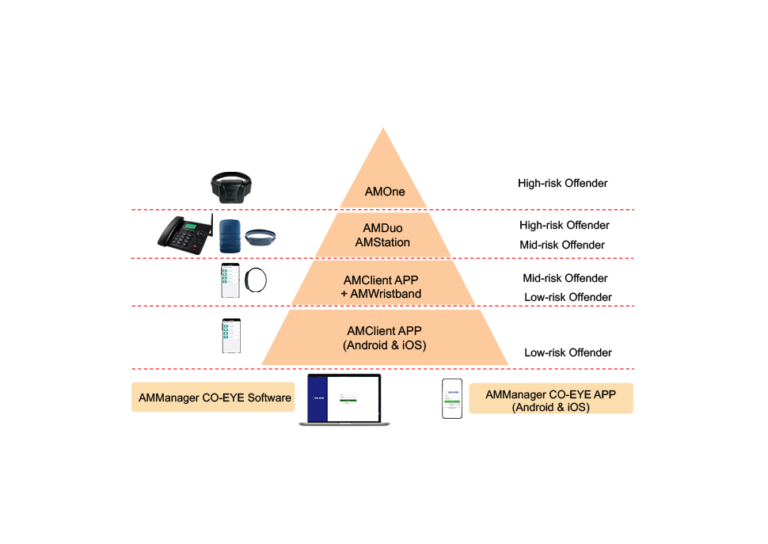
Hybrid electronic monitoring pairs continuous GPS ankle hardware with smartphone supervision apps for risk-proportionate community supervision. This guide covers seven evidence-aligned benefits—tiered technology, reduced stigma, behavioral engagement, TCO savings, compliance gains, step-down pathways, and future-ready platforms—and how CO-EYE ONE, AMClient, BLE wristband, and Monitoring Software fit pretrial, probation, and parole programs.
UK RF electronic monitoring outcomes, Florida recidivism research, Norwegian EM sentencing results, and UK GPS tagging pilots point the same direction: structured electronic monitoring is associated with lower reconviction, fewer breaches, and higher completion—here is the data for procurement teams.
Alberta is investing approximately four million dollars over three years to scale GPS ankle monitor supervision and introduce smartphone-based victim proximity alerts for domestic violence and stalking cases—underscoring why modern electronic monitoring needs sub-2 meter GNSS accuracy, dependable geofencing, and monitoring software that can push real-time warnings to survivors and law enforcement partners.
House arrest ankle monitors are wearable electronic devices that let courts and community supervision agencies verify that a person remains at an approved residence—or within court-ordered movement rules—without maintaining full-time jail or prison custody. In 2026, these programs are expanding as agencies seek alternatives that preserve public safety, reduce facility crowding, and support employment and […]
NIJ-funded study shows electronic monitoring reduces recidivism by 31%. Learn how modern GPS ankle monitor technology like one-piece design and optical fiber anti-tamper improves program outcomes.
Overview of New York pretrial electronic monitoring requirements including bail reform impacts, NYC supervised release program, DAP court-ordered monitoring, and DCJS standards.
Guide to Georgia's bail bond GPS monitoring rules including O.C.G.A. Title 17 pretrial provisions, family violence EM mandates, county sheriff programs, and vendor requirements.