

Market Size and Growth
The global electronic monitoring market exceeded $3.2 billion in 2024 and is projected to reach approximately $6 billion by 2030, representing a compound annual growth rate (CAGR) of 10-12%. This growth is driven by three converging forces: government policy shifts favoring alternatives to incarceration, technology improvements that make GPS monitoring more reliable and affordable, and expansion into new application areas beyond traditional criminal justice.
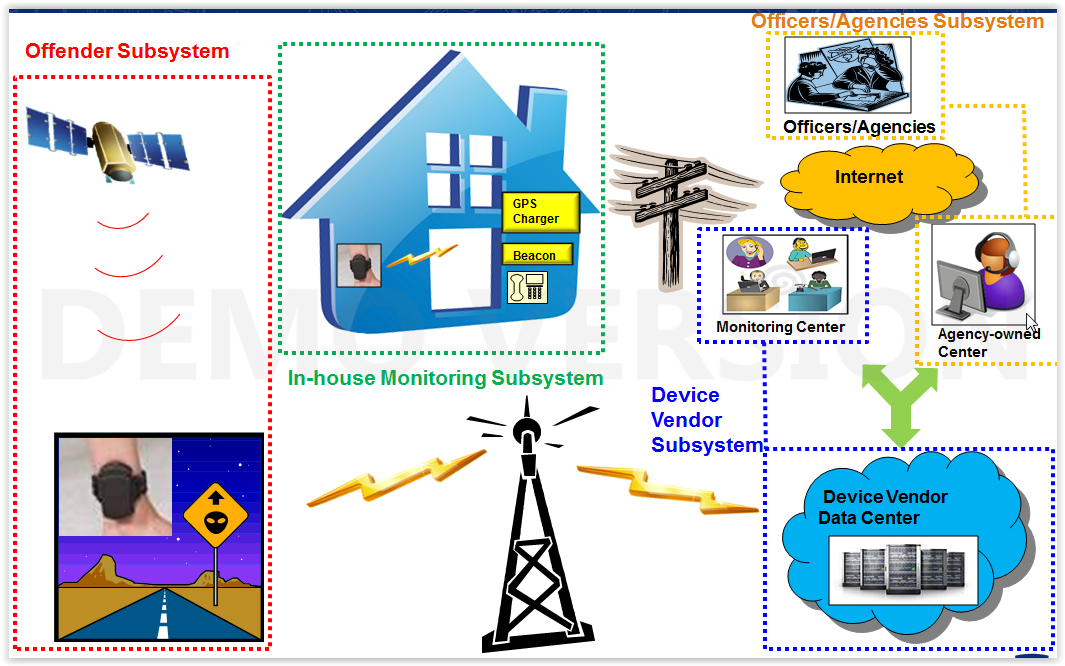
Regional Growth Dynamics
| Region | 2024 Market Share | Growth Rate | Key Driver |
|---|---|---|---|
| North America | 45% | 6-8% CAGR | Sex offender mandates, bail reform, DV enforcement |
| Europe | 25% | 8-10% CAGR | Alternatives to detention policy, GDPR-compliant solutions |
| Asia-Pacific | 15% | 15-20% CAGR | New program adoption in China, India, Southeast Asia, Australia |
| Latin America | 10% | 12-15% CAGR | Jail overcrowding crisis, Brazil and Mexico expansion |
| Middle East & Africa | 5% | 10-15% CAGR | New program implementation, pilot deployments |
Technology Trends Shaping 2026
1. AI-Powered Alert Triage
The single biggest operational challenge in GPS monitoring is alert fatigue — monitoring staff processing hundreds of alerts daily, most of which are non-actionable (brief zone pass-throughs, low battery notifications, motion artifacts). In 2026, AI/ML-based alert triage is moving from experimental to production:
- Pattern-based filtering: ML models trained on historical alert data identify and suppress recurring non-actionable alerts (e.g., an offender who drives past a school zone on their daily commute)
- Behavioral anomaly detection: AI identifies deviations from an offender’s established movement patterns that may indicate risk — even without a zone violation
- Priority scoring: Each alert receives a risk score based on context (proximity to victim, time of day, offender history), directing staff attention to the highest-priority events
See our analysis: How AI-Assisted Monitoring Reduces False Alert Rates.
2. GPS Replacing RF as Primary Technology
Historically, RF (radio frequency) home monitoring was the workhorse of electronic supervision — inexpensive, reliable, and sufficient for curfew enforcement. But the shift toward comprehensive location monitoring is accelerating:
- 2015: Approximately 60% RF / 40% GPS split in US monitoring programs
- 2024: Approximately 35% RF / 65% GPS
- 2030 (projected): 15% RF / 85% GPS
RF is not disappearing — it remains cost-effective for simple curfew monitoring and serves as a facility presence-verification layer in work-release programs. But new program deployments overwhelmingly choose GPS. See our GPS vs RF comparison.
3. One-Piece Device Dominance
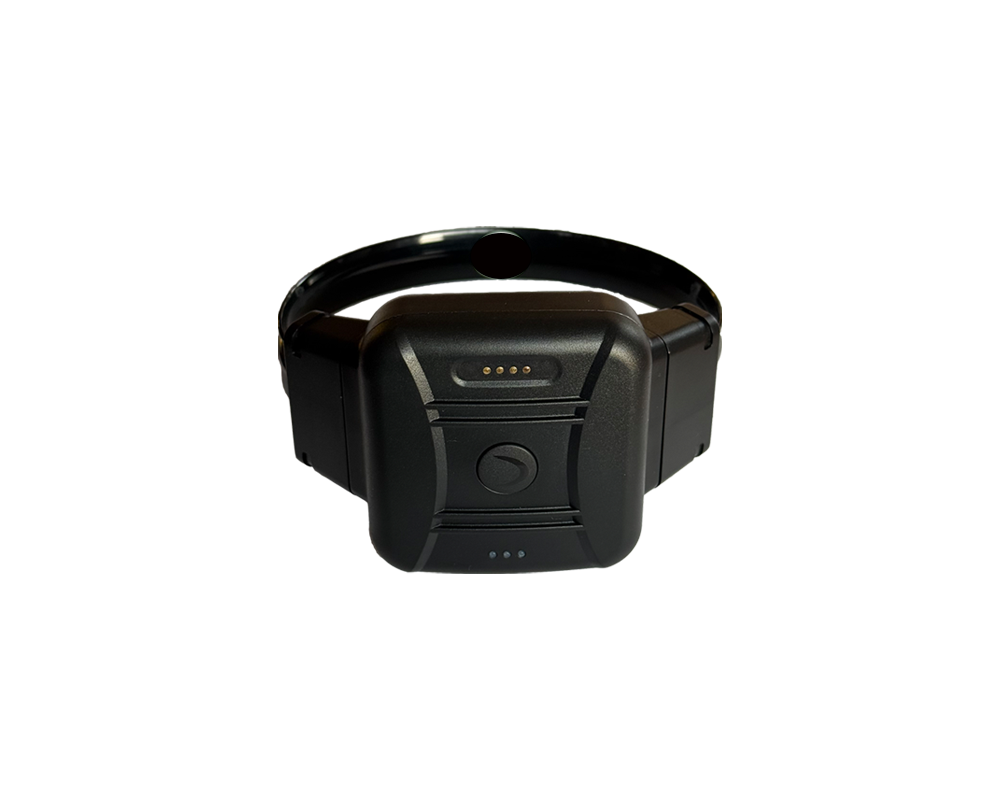
The market is consolidating around one-piece GPS devices (GPS, cellular, and anti-tamper in a single ankle unit) over traditional two-piece systems (ankle transmitter + separate body-worn tracker). One-piece advantages — fewer failure points, simpler logistics, no body-worn unit to lose — are now well established. Major vendors including CO-EYE, BI Incorporated, and Securus all offer one-piece flagships.
4. Multi-Constellation GNSS
Single-constellation GPS-only devices are being replaced by multi-constellation GNSS supporting GPS + GLONASS + BeiDou + Galileo. The benefit: faster time-to-first-fix, better accuracy in urban canyons and dense foliage, and reliable positioning globally. The CO-EYE ONE supports all four constellations.
5. Smartphone as Monitoring Tier
Dedicated ankle monitors remain essential for high-risk populations, but smartphone-based monitoring is emerging as a viable tier for low-risk supervision. Apps like the CO-EYE AMClient provide location check-ins with biometric verification at $1-3/day — a fraction of ankle monitor cost. The trend toward tiered technology portfolios is covered in our Smartphone vs GPS comparison.
Market Consolidation
The electronic monitoring vendor landscape is consolidating. Key developments:
- BI Incorporated (owned by GEO Group) remains the largest US provider but faces pressure from GEO Group’s broader private prison controversy
- Securus Technologies and Attenti (Allied Universal) provide bundled corrections technology suites where EM is one component of a larger platform sale
- SCRAM Systems dominates the alcohol monitoring niche and is expanding into GPS
- International entrants like CO-EYE (REFINE Technologies) and SuperCom offer competitive technology at lower price points, challenging established US vendors
For government buyers, consolidation means fewer but larger vendors — potentially reducing competition in procurements. Agencies should ensure RFPs remain open to smaller and international vendors to maintain competitive pricing.
Non-Criminal-Justice Applications
The EM technology platform is expanding beyond traditional criminal justice:
- Immigration compliance: GPS monitoring as an alternative to immigration detention
- Elder care/dementia tracking: Wearable GPS for patients who wander
- Pandemic quarantine monitoring: Proven during COVID-19 with adaptations of criminal justice technology
- Witness protection: GPS monitoring of witnesses and victims in high-risk cases
Frequently Asked Questions
How big is the electronic monitoring market in 2026?
The global electronic monitoring market exceeded $3.2 billion in 2024 and is projected to reach approximately $6 billion by 2030, growing at 10-12% CAGR. North America represents 45% of the market, followed by Europe at 25% and Asia-Pacific at 15%. The fastest growth is in Asia-Pacific (15-20% CAGR) and Latin America (12-15% CAGR).
What technology trends are driving the EM market in 2026?
Five key trends: (1) AI-powered alert triage reducing monitoring staff workload, (2) GPS replacing RF as the primary monitoring technology, (3) one-piece device designs dominating over two-piece systems, (4) multi-constellation GNSS improving positioning accuracy, and (5) smartphone-based monitoring emerging as a low-cost tier for low-risk populations.
Is the EM market consolidating?
Yes. The trend is toward fewer but larger vendors offering bundled corrections technology platforms. However, international entrants (CO-EYE, SuperCom) are challenging established US vendors on both technology and pricing. Government buyers should keep RFPs open to maintain competitive procurement.
What non-criminal-justice applications use electronic monitoring technology?
EM technology is expanding into immigration compliance monitoring, elder care/dementia tracking, pandemic quarantine enforcement, and witness protection. These applications adapt criminal-justice-grade GPS and anti-tamper technology for non-offender populations.
Will GPS fully replace RF monitoring?
Not completely. RF home monitoring remains cost-effective for simple curfew enforcement and facility presence verification. But new program deployments overwhelmingly choose GPS. The projected 2030 split is 15% RF / 85% GPS, compared to 35% RF / 65% GPS in 2024. RF will continue as a supplementary technology, especially in work-release programs paired with GPS.