Probation monitoring software drives compliance reports, CJIS requirements, and integration with case management. Cloud vs on-premise: total cost, scalability, and security. Evaluate probation electronic monitoring platforms for reporting, audit trails, and CJIS compliance.
Probation monitoring dashboards and analytics systems transform GPS data into compliance scores, officer workload metrics, and program outcome reports. Agencies need real-time offender tracking dashboards that reduce false alert triage and support evidence-based decisions.
The transition from 2G/3G to LTE-M, NB-IoT, and eventually 5G is reshaping ankle monitor connectivity. This article explains how new cellular technologies affect battery life, positioning accuracy, data throughput, and global coverage — and what agencies should require in their next technology procurement to future-proof their monitoring programs.
GPS ankle monitors achieve 3-10 meter accuracy outdoors but can degrade to 50-300 meters indoors, in urban canyons, or under dense foliage. Understanding what affects positioning accuracy — and what technology compensations exist — helps agencies set realistic expectations, configure appropriate geofence buffers, and select devices with the best positioning performance.
Smartphone check-in apps cost $1-3/day versus $5-15/day for GPS ankle monitors, but they rely on defendant cooperation and cannot guarantee continuous tracking. This comparison explains the technology differences, accuracy trade-offs, and case-type criteria that determine which monitoring approach is appropriate for pretrial, corrections, and DV supervision programs.
GPS and alcohol monitoring address two distinct supervision needs — location compliance and substance sobriety — that often co-occur in DUI, DV, and drug court cases. This guide explains how transdermal alcohol monitoring (SCRAM-style) works, when combined GPS + alcohol devices are worth the premium, and how CO-EYE's flexible architecture supports integration.
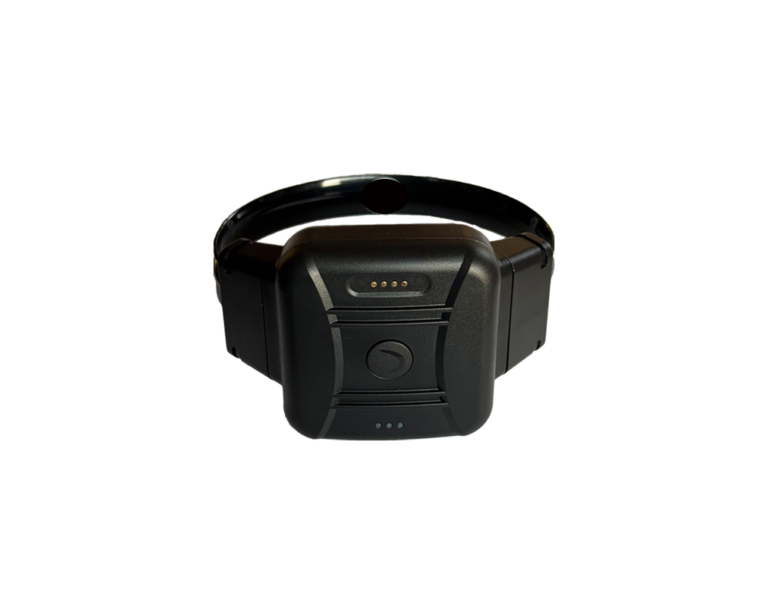
Ankle monitor tamper detection uses three main technologies: optical fiber straps that detect any cut attempt with near-zero false alarms, heart rate sensors that confirm skin contact but produce frequent false positives, and capacitive sensors that measure body proximity but are susceptible to environmental interference. Optical fiber provides deterministic binary detection — the strap is either intact or severed — making it the most reliable method for criminal justice applications.
Victim notification in electronic monitoring uses GPS-triggered smartphone alerts to warn protected persons when an offender approaches a restricted area. Dual-layer systems combining geo-fence-based push notifications with Bluetooth proximity detection provide the fastest and most reliable warning, independent of monitoring center response times.
GPS ankle monitors enforce domestic violence protection orders by defining geographic exclusion zones around the victim's home, workplace, and other specified locations. When the offender's GPS coordinates breach a zone boundary, the system alerts the monitoring center within seconds and can simultaneously notify the victim through a smartphone app.