
How Defendant GPS Tracking Systems Work for Bail Bond Agencies
Bail bond agencies that post bonds for defendants face forfeiture when defendants fail to appear or violate release conditions. Defendant GPS tracking systems provide continuous location monitoring during the pretrial period, giving agencies visibility into defendant movement while satisfying court-ordered supervision requirements. Understanding how these defendant supervision GPS systems operate — and what device features drive compliance — helps agencies select equipment that reduces forfeiture exposure without overinvesting in capabilities they do not need.
Courts increasingly condition release on electronic monitoring. A defendant supervision GPS system satisfies those orders and gives the bonding company leverage: violations surface immediately, allowing the agency to address issues before the court revokes release. Agencies that rely solely on phone check-ins or in-person reporting absorb higher risk when defendants relocate or ignore contact.
Location Reporting and Compliance Monitoring
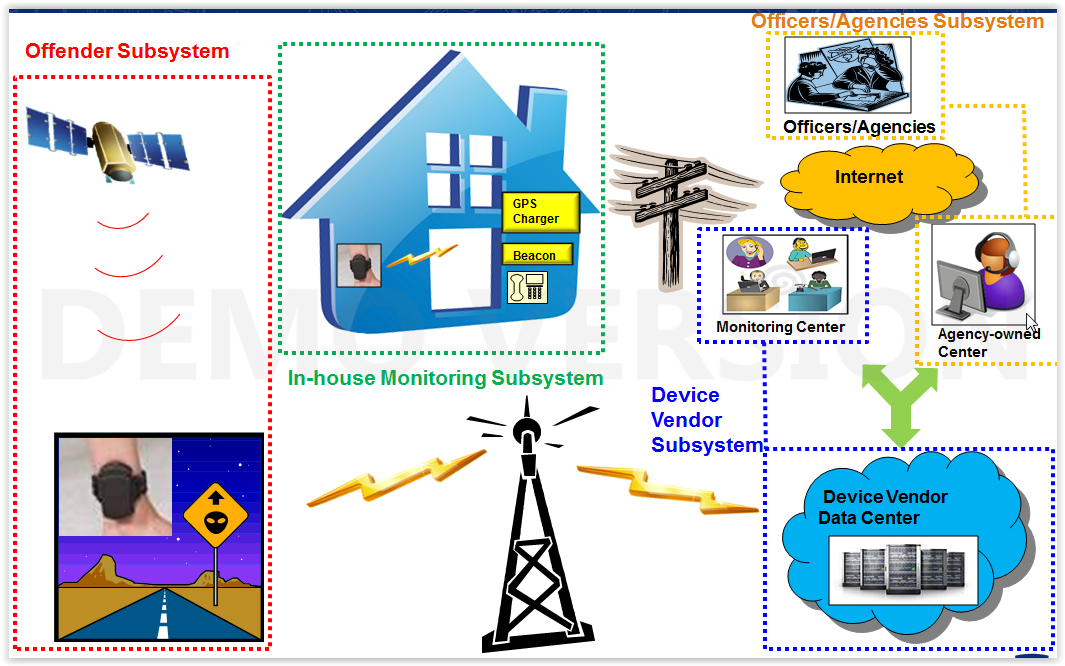
Defendant monitoring compliance systems rely on three technical components: the ankle-worn device, cellular communication, and a monitoring platform. The device collects GPS coordinates at configurable intervals (typically every 5–15 minutes for pretrial cases). Location data transmits over LTE-M, NB-IoT, or GSM cellular networks to a cloud platform. Officers view location history, geo-fences, and curfew schedules through a web or mobile interface. When a defendant enters an exclusion zone, misses a curfew, or tampers with the device, the platform generates alerts so the agency can intervene before forfeiture.
Bail bonds GPS tracking system selection depends on defendant risk level. High-flight-risk defendants need continuous GPS with frequent reporting; low-risk defendants may qualify for RF home monitoring or smartphone-based solutions. Match the technology to the court order and bond amount.
Device Selection Criteria for Bail Bond Agencies
Bail bonds GPS monitoring equipment must balance reliability, cost per day, and ease of use. Key evaluation factors:
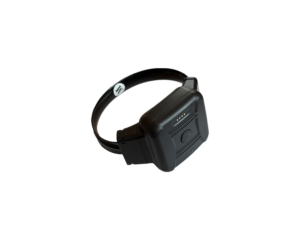
- One-piece vs two-piece design: One-piece GPS ankle monitors combine GPS, cellular, and anti-tamper in a single unit — fewer points of failure, simpler logistics. Two-piece systems use a body-worn transmitter plus a separate tracking unit; they add complexity but may suit budget-sensitive programs.
- Anti-tamper technology: Optical fiber anti-tamper detects cut, stretch, or obstruction attempts in real time and preserves physical evidence. Avoid devices that rely solely on heart-rate or capacitive sensing; these produce false alerts that waste staff time and erode confidence.
- Waterproof rating: Devices should be IP68 waterproof — sufficient for showers and exposure to moisture. IP67 is inadequate for 24/7 wear.
- Installation time: Snap-on designs allow field installation in seconds without tools. Faster installation reduces booking time and officer burden.
- Battery life and charging: Daily charging is typical for continuous GPS devices. Some systems support scheduling and zone-based reporting to extend runtime for curfew-only cases.
Cost Analysis vs Bond Forfeiture Risk
A bail bond agency’s decision to invest in defendant GPS tracking equipment hinges on forfeiture exposure. When a defendant absconds, the agency may lose the full bond amount. GPS supervision for defendants adds a per-day cost — device rental, monitoring fees, cellular data — but offsets that cost by reducing forfeiture events.
| Factor | Consideration |
|---|---|
| Bond amount | Higher bond amounts justify higher per-day monitoring costs; a $50,000 bond forfeiture dwarfs $15/day in monitoring fees |
| Flight risk | Defendants with prior FTA, out-of-state ties, or violent charges warrant GPS; low-risk defendants may use RF or phone check-in |
| Court requirements | Some judges mandate GPS for release; others allow agency discretion — align equipment with court order |
| Volume | Higher caseload spreads fixed platform costs; per-device economics improve with scale |
Calculate break-even: if monitoring costs $X per day and reduces forfeiture by one event per Y defendants, compare that savings to the cost of equipment and monitoring over the program lifecycle. Document the analysis for internal decision-making and, if applicable, court justification when requesting GPS as a release condition.
Integration with Bail Workflow
Defendant supervision GPS systems should integrate with agency operations. Staff need mobile access to view location and respond to alerts. The monitoring platform should support multiple defendants, role-based access for bondsmen and field staff, and exportable compliance reports for court. Bail bonds electronic tracking technology that requires separate logins or manual data export adds administrative overhead.
Evaluate the full workflow: defendant intake, device assignment, alert response, court reporting. Some platforms offer defendant-facing features (e.g., charging reminders, schedule view) that reduce agency support calls. Others focus purely on officer tools. Match platform design to your staffing model — centralized monitoring vs distributed bondsmen each managing their own caseload.
Related Resources
- Bail & Pretrial Electronic Monitoring — solution overview
- CO-EYE ONE GPS Ankle Monitor — one-piece GPS device
- CO-EYE AMClient App — smartphone-based monitoring for low-risk defendants
- GPS Ankle Monitor Buyer’s Guide — pillar resource