
One-Piece GPS Ankle Monitor: What Agencies Need to Know
Ankle monitors used in criminal justice supervision fall into two architectural categories: one-piece (integrated) and two-piece (modular). A one-piece GPS ankle monitor combines the GPS receiver, cellular modem, battery, and anti-tamper system in a single device worn on the offender’s ankle. No separate tracker unit, no Bluetooth pairing, no proximity violations between components. For agencies deploying GPS supervision at scale, the one-piece design reduces operational complexity and device-related false alerts while delivering continuous location data.
This guide covers one-piece GPS ankle monitor specifications, feature comparison, model selection criteria, and deployment considerations across bail, pretrial, probation, parole, house arrest, and domestic violence programs. Use it alongside the GPS Ankle Monitor Buyer’s Guide when evaluating vendors and drafting RFP specifications.
What Is a One-Piece GPS Ankle Monitor?
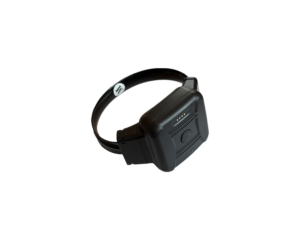
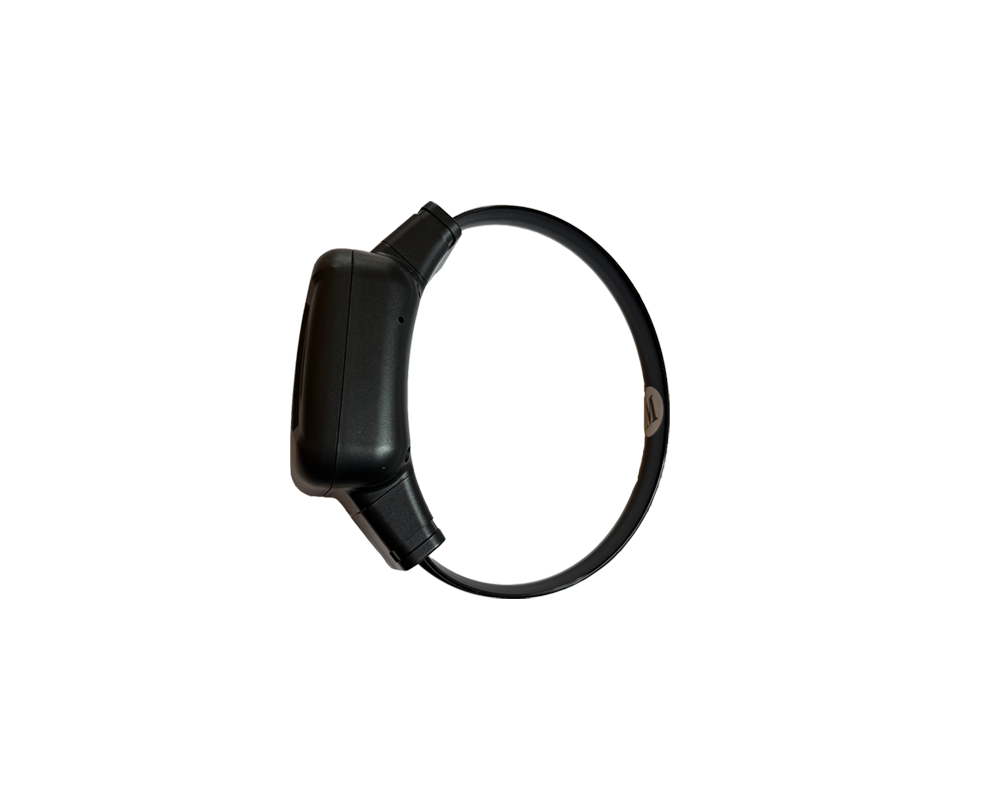
A one-piece GPS ankle monitor is a self-contained unit that performs all functions — satellite positioning, cellular data transmission, tamper detection, and power — within one housing. The offender wears a single device. There is no second unit to pair, charge, or carry. Location updates transmit over LTE-M, NB-IoT, or GSM networks directly from the ankle unit to the monitoring platform.
In contrast, two-piece systems split the ankle transmitter (tamper detection, proximity signaling) from a separate GPS tracker (location, cellular reporting). The two components communicate via Bluetooth or RF. That link becomes a failure point: signal loss between units generates proximity violation alerts that officers must triage, even when no real tampering occurred. One-piece designs eliminate this category of false alerts entirely.
One-piece devices typically weigh more than a simple RF ankle transmitter (which only needs a radio and tamper sensor) because they must house a full GPS module, cellular modem, and battery. Size and weight vary by vendor. The most compact units measure roughly 60mm × 58mm × 24mm and weigh around 108 grams. Battery life ranges from roughly one day to one week depending on report interval, cellular technology, and whether the unit supports power-saving modes such as BLE-connected operation.
Key Features to Look For
When evaluating one-piece GPS ankle monitors, focus on specifications that affect program operations and total cost of ownership.
Anti-Tamper Technology
Anti-tamper quality directly affects monitoring center workload. Heart-rate or capacitive sensing methods are prone to false positives from dry skin, poor fit, or environmental factors — some programs report 80% or higher false alert rates. Optical fiber detection provides deterministic cut/no-cut results: either the fiber loop is intact or it isn’t. No probability thresholds, no environmental interference. Physical evidence of tampering remains after the event. Strap and case detection together deliver both electronic and physical evidence.
Cellular and Connectivity
LTE-M and NB-IoT consume 30–50% less power than standard LTE and offer better building penetration than older 2G/3G networks. US carriers have shut down 2G/3G; devices must support LTE-M, NB-IoT, or at minimum LTE. 5G compatibility protects against future carrier migrations. WiFi as a secondary channel provides redundancy when cellular coverage is weak. eSIM support (in some models) enables flexible carrier switching without physical SIM replacement.
Positioning Accuracy
Multi-constellation support (GPS, BeiDou, GLONASS, Galileo) plus WiFi and LBS fallback improves accuracy and indoor positioning. Best-in-class devices achieve sub-2-meter accuracy outdoors and switch automatically to WiFi triangulation indoors. Accuracy affects exclusion zone design: smaller zones require higher accuracy to avoid false boundary violations.
Installation Time
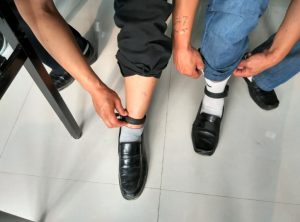
Field installation speed matters for high-volume programs. Some one-piece units use a patented plug-and-click strap requiring no tools; installation takes under 3 seconds. Slower designs requiring screws or tools add minutes per enrollment and increase officer time in the field.
Battery Life and Charging
Standalone one-piece devices typically require daily or every-few-days charging. Battery life depends on report interval and cellular technology. Units offering Generation 4 LTE standalone endurance (CO-EYE ONE family: 7 days at 10-minute LTE intervals; ONE-AC adds 180-day BLE and 20-day WiFi-directed modes) reduce charging logistics. BLE-connected modes (where the ankle unit communicates with a smartphone or base unit via Bluetooth) can extend battery life to months by reducing cellular transmissions — useful for lower-risk curfew or house-arrest cases. Magnetic charging simplifies the charging process and reduces connector wear.
CO-EYE ONE Specifications
The following specifications represent REFINE’s Generation 4 one-piece GPS ankle monitor platform—with the full Adaptive Multi-Mode Connectivity Engine (BLE / WiFi / LTE) delivered on CO-EYE ONE-AC and LTE-forward standalone operation on CO-EYE ONE—used in community supervision, pretrial, bail, parole, probation, and domestic violence programs across multiple countries. Use these as reference points when comparing vendors.
| Parameter | CO-EYE ONE | CO-EYE ONE-AC |
|---|---|---|
| Dimensions | 60 × 58 × 24 mm | 60 × 58 × 24 mm |
| Weight | 108 g | 111 g |
| Waterproof | IP68 certified | IP68 certified |
| Cellular | LTE-M / NB-IoT / GSM (Nano SIM) | LTE-M / NB-IoT / GSM (eSIM + Nano SIM) |
| Positioning | GPS, BeiDou, GLONASS, Galileo, WiFi, LBS | 5-layer resilience: BLE proximity + WiFi-assisted + GNSS + LBS + HouseStation |
| GPS accuracy | < 2 m CEP | < 2 m CEP |
| Anti-tamper | Fiber optic strap + case; zero false tamper alarms (integrity breaks) | Fiber optic strap + case; zero false tamper alarms (integrity breaks) |
| LTE standalone battery (10 min interval) | 7 days | 7 days |
| BLE-connected battery | — (ONE-AC SKU) | Up to 180 days (HouseStation / AMClient) |
| WiFi-directed battery (5 min interval) | — | Up to 20 days |
| Recharge time | 2.5 hours | 2.5 hours |
| Installation | < 3 seconds, plug-and-click | < 3 seconds, plug-and-click |
| Storage | 2 M / 5,000 events | 8 M / 20,000 events |
| Security | HTTPS/SSL, AES256-class encryption, EN 18031 CyberSecurity | HTTPS/SSL, AES256-class encryption, EN 18031 CyberSecurity; dual-core ARM M3 + M0 on ONE-AC |
| Certifications | CE (RED/EMC/SAR/LVD), RoHS/REACH/WEEE | CE (RED/EMC/SAR/LVD), RoHS/REACH/WEEE |
Both models support WiFi as a communication redundancy channel, magnetic or power-bank charging, LED/SOS button/vibrator interaction, and remote OTA firmware updates from the monitoring platform. CO-EYE ONE-AC adds eSIM + Nano SIM flexibility and the industry-first Adaptive Multi-Mode Connectivity Engine—seamless auto-switching across BLE-connected (up to 180 days with HouseStation or AMClient), WiFi-directed (up to 20 days at 5-minute intervals), and LTE standalone (7 days at 10-minute intervals)—orchestrated by dual-core ARM M3 + M0 processors.
CO-EYE ONE vs ONE-AC Comparison
The standard ONE and ONE-AC variants share the same Generation 4 one-piece industrial core: dimensions, IP68 rating, and fiber-optic strap-and-case tamper detection with zero false tamper alarms for true integrity breaks. Both deliver 7-day LTE standalone endurance at 10-minute reporting intervals; ONE-AC adds the full Adaptive Multi-Mode Connectivity Engine (BLE / WiFi / LTE), eSIM support, higher event storage, and dual-core ARM M3 + M0 processing.
Choose ONE-AC When:
- eSIM flexibility — You need carrier switching without physical SIM replacement, or operate across multiple regions with different carrier agreements.
- Extended battery for lower-risk cases — BLE-connected mode delivers up to 180 days when the ankle unit pairs with an offender’s smartphone (AMClient) or a HouseStation home beacon. WiFi-directed mode supports up to 20 days at 5-minute intervals. Useful for house arrest or curfew-only supervision where continuous standalone GPS is not required.
- Higher event storage — 8 M / 20,000 events vs 2 M / 5,000 events. Matters for long deployments or high-report-interval scenarios where offline storage must buffer before cellular uplink.
- Dual-core processing — ONE-AC uses ARM M3 + M0 co-processors versus the standard ONE MCU class, enabling the adaptive connectivity engine and future OTA enhancements.
Choose ONE When:
- Your program needs LTE-first standalone GPS without BLE/WiFi adaptive supervision modes, with offenders charging on a predictable 7-day LTE cadence (10-minute reporting).
- Cost optimization favors the standard variant without eSIM or BLE features.
- All deployments are single-carrier, single-region with no need for eSIM.
How to Choose the Right Model
Model selection depends on caseload mix, risk levels, and operational constraints.
- High-risk, continuous GPS — Standard ONE or ONE-AC in LTE standalone mode. 7-day LTE battery at 10-minute intervals. Deploy for pretrial, parole, sex offender, or DV protection cases requiring 24/7 location tracking.
- Medium-risk, curfew/house arrest — ONE-AC in BLE-connected mode if offenders have smartphones or home base units. 6-month battery reduces charging logistics. Best when exclusion zones and curfew times are the primary enforcement need.
- Bail bond — ONE with fast installation. Plug-and-click under 3 seconds speeds up defendant enrollment at bond offices. See the Pretrial Electronic Monitoring Guide for program design.
- Multi-region or carrier flexibility — ONE-AC with eSIM. Simplifies procurement when devices move between jurisdictions or carrier contracts change.
Use Cases
One-piece GPS ankle monitors serve across criminal justice supervision programs.
Bail
Bail bond agencies use one-piece GPS to monitor defendants released on bond. Fast installation (under 3 seconds) reduces time at the bond office. Standalone operation means no second device for defendants to lose or forget. Continuous tracking supports exclusion zones around victims or crime scenes.
Pretrial
Courts and pretrial services deploy one-piece GPS as an alternative to detention. Sub-2m accuracy and multi-constellation positioning support precise exclusion zone enforcement. For program design and cost data, see the Pretrial Electronic Monitoring Guide.
Probation
Probation departments use one-piece monitors for medium-to-high-risk supervisees requiring GPS. The single-device design reduces compliance issues compared with two-piece systems. For technology selection and vendor evaluation, see the Probation GPS Monitoring Guide.
Parole
Parole officers need reliable tracking for released offenders. Optical fiber anti-tamper reduces false tamper alerts that consume staff time. See the Parole Electronic Monitoring Guide for platform and hardware selection.
House Arrest
One-piece units support home detention with inclusion zones (home), exclusion zones (victim, school, workplace), and curfew enforcement. BLE-connected mode (ONE-AC) extends battery life for curfew-only cases. The House Arrest & Home Detention Monitoring Guide covers technology and implementation.
Domestic Violence
Domestic violence protection programs rely on exclusion zones to keep offenders away from victims. Sub-2m accuracy improves boundary enforcement. Optical fiber tamper detection provides physical evidence when offenders attempt removal. Victim notification integration requires platform support; see domestic violence electronic monitoring resources for implementation details.
Frequently Asked Questions
What is a one-piece GPS ankle monitor?
A one-piece GPS ankle monitor is a self-contained device that integrates GPS positioning, cellular communication, anti-tamper detection, and battery in a single ankle-worn unit. Unlike two-piece systems, there is no separate tracker component to pair, charge, or carry. The device reports location directly to the monitoring platform over cellular networks.
How long does a one-piece GPS ankle monitor battery last?
Battery life varies by report interval and cellular technology. Standalone one-piece devices using LTE-M or NB-IoT at 5-minute intervals typically achieve 5–7 days. BLE-connected modes (where the ankle unit pairs with a smartphone or base station) can extend life to roughly 180 days by reducing cellular transmissions.
What anti-tamper technology is most reliable in ankle monitors?
Optical fiber strap detection provides deterministic cut/no-cut results with no false positives from skin conditions or environmental factors. Strap and case detection together deliver both electronic alerts and physical evidence of tampering. Heart-rate and capacitive methods are prone to higher false alert rates.
How fast can a one-piece GPS ankle monitor be installed?
Units with patented plug-and-click strap designs install in under 3 seconds with no tools. Slower designs using screws or multiple steps can take 5–15 minutes. Installation speed matters for high-volume bail or pretrial programs.
What is the difference between CO-EYE ONE and ONE-AC?
Both share the same dimensions (60×58×24mm), weight (108g vs 111g), IP68 rating, and 7-day LTE standalone battery (10-minute reporting). ONE-AC adds eSIM support, the Adaptive Multi-Mode Connectivity Engine (up to 180-day BLE / 20-day WiFi / 7-day LTE), 8M/20,000-event storage (vs 2M/5,000), and dual-core ARM M3 + M0 processing. Choose ONE-AC when you need eSIM flexibility or extended battery for curfew/house-arrest cases.
Do one-piece ankle monitors work indoors?
GPS signals weaken indoors. Multi-constellation devices with WiFi and LBS fallback provide indoor positioning via WiFi triangulation and cellular location. Accuracy indoors is typically 10–30 meters for WiFi and 100–1000 meters for LBS.
Related Resources
- GPS Ankle Monitor Buyer’s Guide for Government Agencies
- Probation GPS Monitoring: Complete Technology & Implementation Guide
- Parole Electronic Monitoring Guide
- House Arrest & Home Detention Electronic Monitoring: Technology Guide
- Pretrial Electronic Monitoring Guide
- Domestic Violence Electronic Monitoring Guide