
Introduction
Corrections agency procurement officers evaluating GPS ankle monitors for pretrial, probation, parole, or domestic violence programs often compare leading vendors. Two notable options are the CO-EYE ONE from REFINE Technologies and the SCRAM GPS from SCRAM Systems (Alcohol Monitoring Systems Inc). Both serve criminal justice supervision, but they take distinctly different design approaches — one-piece versus two-piece architecture — with implications for battery life, anti-tamper reliability, installation workflow, and total cost of ownership.
This comparison provides an objective, feature-by-feature analysis to support RFP drafting, vendor shortlisting, and procurement decisions. All specifications cited are drawn from manufacturer documentation or publicly available sources. Where SCRAM specifications vary by model or deployment, we indicate that explicitly rather than fabricating figures.
Feature-by-Feature Comparison Table
| Feature | CO-EYE ONE | SCRAM GPS |
|---|---|---|
| Architecture | One-piece (self-contained) | Two-piece (GPS tracker + RF strap) |
| Tracker weight | 108 g (integrated unit) | ~155 g (tracker unit; strap weight varies by model) |
| Dimensions | 60 × 58 × 24 mm | Varies by model |
| Waterproof | IP68 certified | Industry-standard ratings; varies by model |
| Anti-tamper | Optical fiber strap + case detection | Heart-rate based tamper detection |
| GPS accuracy | < 2 m CEP | Industry-standard; varies by model |
| Positioning | GPS + BeiDou + GLONASS + Galileo + WiFi + LBS | GPS with cellular/LBS fallback; varies by model |
| Cellular | 5G compatible LTE-M / NB-IoT / GSM | 4G LTE; carrier support varies |
| Battery life (standalone) | 7 days (LTE-M/NB 5 min interval) | ~40 hours typical; varies by report interval |
| Battery capacity | 1700 mAh | Varies by model |
| Recharge time | 2.5 hours | Varies by model |
| Installation | < 3 seconds, snap-on, no tools | Varies by model; typically requires tools or multi-step procedure |
| Home curfew | Optional CO-EYE HouseStation RF receiver | BLE beacon for home curfew verification |
| Security | HTTPS/SSL, AES128/256, EN 18031 CyberSecurity | Industry-standard encryption; varies by deployment |
| Alcohol monitoring | Not integrated; GPS-only | Available with SCRAM CAM integration (vendor specialty) |
Design Philosophy
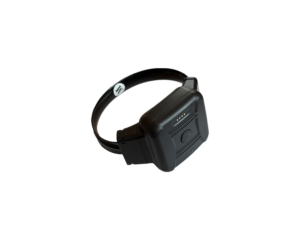
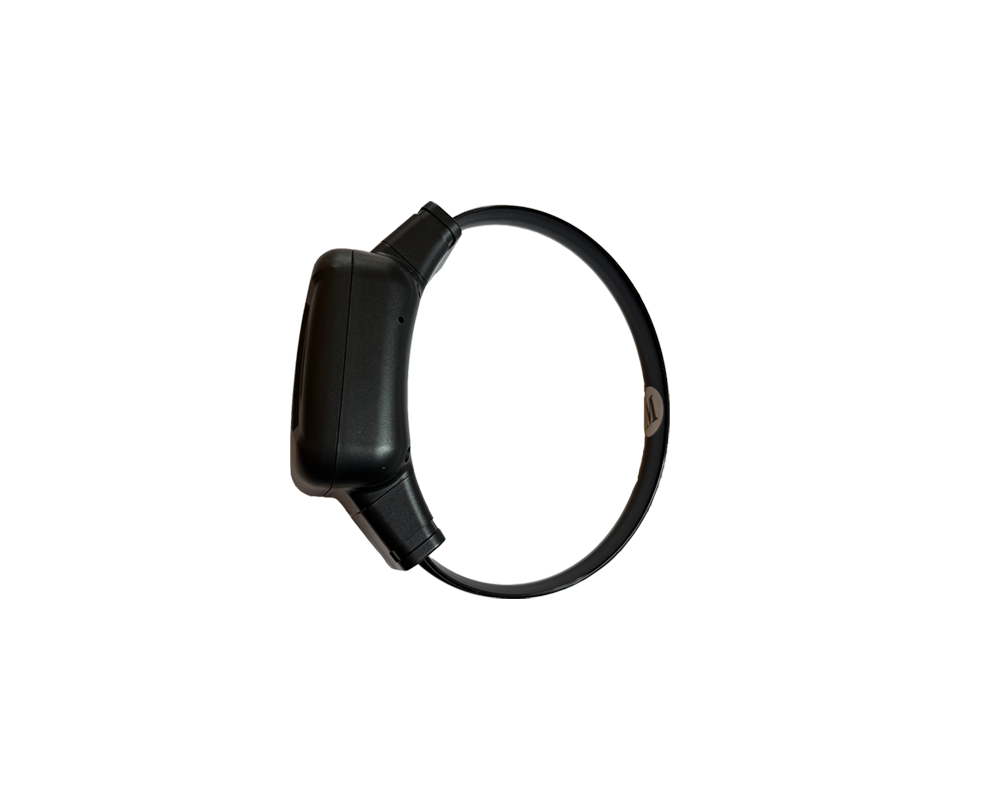
The fundamental difference between these systems lies in architecture. The CO-EYE ONE is a true one-piece GPS ankle monitor: GPS receiver, cellular modem, anti-tamper sensors, and battery are all housed in a single ankle-worn unit measuring 60 × 58 × 24 mm and weighing 108 g. Location data transmits directly over cellular networks from the device to the monitoring platform. There is no second component to pair, charge, or carry.
The SCRAM GPS follows a two-piece design: a GPS tracker unit (approximately 155 g) that performs satellite positioning and cellular reporting, plus an RF strap worn on the ankle that communicates with the tracker via proprietary RF or Bluetooth. SCRAM Systems is best known for alcohol monitoring (SCRAM CAM, transdermal alcohol sensing) and expanded into GPS tracking, so agencies requiring combined alcohol + GPS supervision may find SCRAM’s integrated approach advantageous. For GPS-only programs, the two-piece architecture introduces a pairing relationship between components — signal loss between strap and tracker can generate proximity violation alerts that officers must triage.
One-piece designs eliminate that category of false alerts entirely. For agencies that have struggled with false alarm fatigue from two-piece proximity violations, the single-unit approach reduces monitoring center workload and improves officer trust in alert validity.
Anti-Tamper Technology
Anti-tamper quality directly affects program operations. False tamper alerts consume staff time, undermine confidence in the system, and in some programs account for the majority of all alerts — Cook County, Illinois documented over 80% false alert rates with certain technologies.
CO-EYE ONE uses optical fiber anti-tamper: the strap and case embed fiber optic loops that detect cut, stretch, or obstruction attempts in real time. The technology is deterministic — either the fiber is intact or it is not. No probability thresholds, no sensitivity adjustments for skin type or fit. Physical evidence of tampering remains after the event, supporting court proceedings. The strap and case detection together deliver both electronic alerts and physical evidence.
SCRAM GPS uses metal wire clasp based tamper detection, a common approach in the industry. The sensor detects skin contact to verify the device is worn; loss of contact triggers a tamper alert. Heart-rate and capacitive methods can produce false positives from dry skin, poor fit, movement during exercise, or environmental factors. Agencies switching from heart-rate to optical fiber devices typically report 70–90% reductions in tamper-related false alerts, though outcomes vary by program.
For procurement officers drafting RFPs, specifying anti-tamper technology type — and requiring vendors to provide field-measured false alert rates, not lab results — is critical. Optical fiber is a differentiator for high-volume or false-alert-sensitive programs.
Battery Life
Battery life affects charging logistics, officer workload, and program cost. CO-EYE ONE delivers 7 days of standalone operation at 5-minute report intervals using LTE-M or NB-IoT. The 1700 mAh battery recharges in 2.5 hours via magnetic charging or power bank. Agencies can schedule weekly charging during routine check-ins.
SCRAM GPS typically offers approximately 40 hours of battery life on the tracker unit, depending on report interval and model. That implies charging every 1–2 days for continuous GPS supervision. Daily or near-daily charging increases supervision burden — offenders must return to a charging station, or officers must manage charging during field visits. Some programs mitigate this with home base units or hybrid curfew-only modes, but for 24/7 GPS tracking the battery life gap is significant.
Extended battery life reduces total cost of ownership by cutting charging-related officer time, reducing device swaps for low-battery offenders, and minimizing supervision gaps during recharge. For high-volume pretrial or probation programs, 7-day battery at 5-minute intervals is a meaningful operational advantage.
Installation
Installation speed matters for high-volume programs. CO-EYE ONE uses a patented snap-on strap design requiring no tools. Officers complete installation or removal in under 3 seconds — a plug-and-click mechanism that reduces booking time and training requirements. Bail bond agencies enrolling defendants at bond offices benefit from rapid turnover; county intake processing multiple offenders per day saves minutes per enrollment.
SCRAM GPS installation varies by model and configuration. Two-piece systems typically require fitting the RF strap, pairing it with the tracker, and verifying connectivity. Industry-standard procedures often involve tools or multi-step processes that take several minutes per device. Procurement officers should request vendor-specific installation time data and conduct field trials before committing.
Faster installation reduces officer time per offender, lowers training costs, and improves offender experience during enrollment — a factor some agencies consider when designing supervision programs that minimize friction and support compliance.
Monitoring Software
Both vendors provide web-based monitoring platforms. CO-EYE offers a unified offender tracking platform with roles for monitoring staff, agency managers, probation officers, and service providers. The interface supports advanced search and filtering, event monitoring, location trails, geo-fencing, and scalable deployment across home curfew, location monitoring, and domestic violence deterrence programs. One of the most globally deployed offender monitoring solutions, the platform is desktop and mobile optimized.
SCRAM Systems provides monitoring software integrated with its alcohol and GPS product lines. Agencies using SCRAM CAM for alcohol monitoring can view both GPS location and transdermal alcohol data in a single interface — a significant advantage when supervising DUI or substance-involved defendants. For GPS-only programs, platform capabilities are comparable to other industry solutions; feature sets vary by deployment and subscription tier.
Procurement officers should evaluate software against program needs: exclusion zone types, alert routing, court-ready reporting, CJIS compliance, API integration with case management systems, and mobile access for field staff.
Total Cost of Ownership
TCO extends beyond per-device or per-day hardware fees. Include:
- Hardware: Device purchase or lease, replacement units, charging accessories.
- Software: Platform subscription, user seats, add-on modules.
- Cellular: Data plans, carrier fees.
- Labor: Installation time, charging logistics, false alert triage.
- Training: Officer onboarding, policy updates.
Battery life and false alert rates drive labor cost. A device requiring daily charging consumes more officer time than one lasting 7 days. A system generating high false tamper alerts increases monitoring center workload — some programs report multiple alerts per offender per day with heart-rate based devices. Optical fiber anti-tamper typically reduces tamper-related labor by 70–90%.
One-piece design reduces complexity: one device per offender, one charging schedule, no pairing or proximity violations. Two-piece systems add failure points that can increase support calls and device swaps.
Vendor pricing varies by volume, contract term, and bundled services. Request TCO models over 3–5 years including all line items above. Compare like-for-like: same report interval, same alert types, same support level.
Who Should Choose What
CO-EYE ONE may be the better fit when:
- Your program requires GPS-only supervision (no integrated alcohol monitoring).
- False alert reduction is a priority — optical fiber anti-tamper minimizes tamper-related false positives.
- Battery life matters — 7 days at 5-minute intervals reduces charging logistics.
- High-volume installation is common — under-3-second snap-on speeds intake and bail enrollment.
- One-piece simplicity is valued — single device, no pairing, fewer failure points.
- Sub-2 m GPS accuracy supports precise exclusion zone enforcement (e.g., domestic violence, sex offender).
SCRAM GPS may be the better fit when:
- Combined GPS + alcohol monitoring is required — SCRAM CAM integration is the vendor’s strength.
- Your agency already uses SCRAM for alcohol monitoring and wants a unified platform.
- BLE beacon home curfew verification meets program needs without a separate base station.
- Daily or near-daily charging is acceptable for your supervision model.
- Established vendor relationship and support network matter more than spec differentials.
Programs with mixed caseloads — some defendants needing GPS only, others needing GPS + alcohol — may consider a hybrid approach: CO-EYE ONE for GPS-only cases and SCRAM or similar for combined monitoring, depending on platform integration capabilities and cost.
Frequently Asked Questions
Is CO-EYE ONE or SCRAM GPS better for domestic violence exclusion zone monitoring?
Both support exclusion zones; CO-EYE ONE’s sub-2 m GPS accuracy (GPS + BeiDou + GLONASS + Galileo + WiFi + LBS) enables tighter zone boundaries with fewer false boundary violations. Optical fiber anti-tamper provides physical evidence if an offender attempts removal. SCRAM GPS offers industry-standard exclusion zone capabilities; accuracy varies by model. Choose based on zone precision requirements and tamper evidence needs.
Does SCRAM GPS last longer than 40 hours?
Battery life varies by report interval, model, and configuration. The approximately 40-hour figure is typical for continuous GPS reporting; some configurations may differ. Check with SCRAM Systems for current product specifications. CO-EYE ONE’s 7-day battery at 5-minute intervals is documented in manufacturer specifications.
What causes false alerts on two-piece GPS systems like SCRAM?
Two-piece systems can generate proximity violations when the ankle strap loses connection to the tracker unit — due to distance, signal obstruction, or Bluetooth/RF interference. These are often false positives (no actual tampering). One-piece designs eliminate this category. Anti-tamper technology (heart-rate vs optical fiber) also affects tamper-related false alert rates.
Can CO-EYE ONE integrate with alcohol monitoring?
CO-EYE ONE is a GPS-only device. Programs requiring both GPS and transdermal alcohol monitoring would use CO-EYE ONE alongside a separate alcohol sensor (e.g., worn on the other ankle), or consider vendors offering integrated GPS + alcohol units such as SCRAM GPS. CO-EYE’s platform can display data from integrated systems when configured accordingly.
How do I compare total cost between CO-EYE and SCRAM?
Request a TCO model from each vendor covering hardware, software, cellular, and a realistic estimate of labor (installation time, charging frequency, false alert triage). Use the same assumptions: report interval, caseload size, program duration. Include the cost of false alerts — some agencies allocate 15–25% of monitoring staff time to alert triage; reducing false alerts directly reduces labor cost.
Next Steps
When evaluating ankle monitors for your program, request vendor demonstrations, reference contacts from similar agencies, and field trials with a pilot cohort. Specifications matter, but real-world false alert rates, battery life under your report intervals, and installation time in your workflow are best validated through pilot deployment. For detailed CO-EYE ONE specifications, use cases, and procurement support, visit ankle-monitor.com/coeye-one/.