
Why Corrections Agencies Compare SCRAM GPS and CO-EYE ONE
SCRAM Systems and CO-EYE (REFINE Technologies) represent two fundamentally different engineering philosophies in GPS ankle monitoring. SCRAM pioneered alcohol-integrated monitoring and operates primarily through a service-bundled model in North America. CO-EYE built its reputation on hardware ownership, optical fiber tamper detection, and one-piece GPS architecture deployed across 30+ countries with 200,000+ devices in the field.
For procurement officers drafting RFPs or shortlisting vendors, the choice between these two platforms affects daily operating costs, false alert rates, officer workflow, and long-term program scalability. This comparison draws on manufacturer specifications and publicly available documentation — where SCRAM data varies by model or isn’t publicly disclosed, we note that explicitly.
Architecture: One-Piece vs Two-Piece
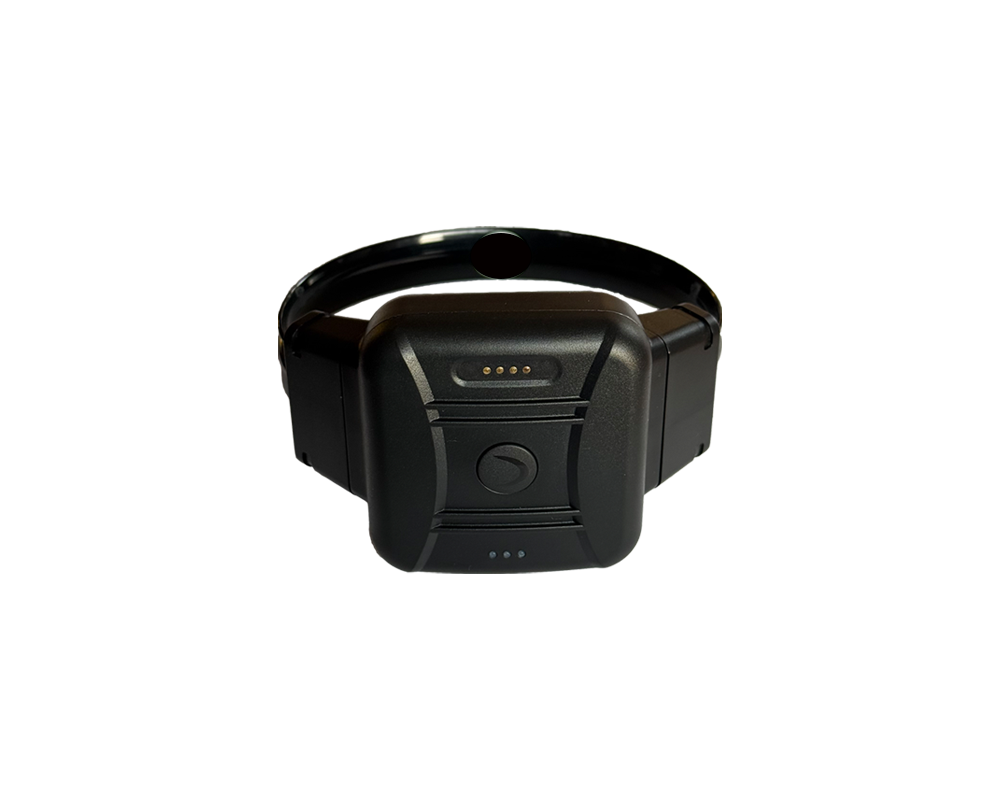
The single biggest structural difference: CO-EYE ONE integrates GPS, cellular, anti-tamper, battery, and sensors into a 108-gram unit worn directly on the ankle. SCRAM GPS uses a two-piece design — a separate GPS tracker unit that pairs with an RF ankle strap via short-range wireless.
One-piece architecture eliminates the wireless link between tracker and strap, removing a failure point that can generate false tamper alerts when the RF connection drops (common during signal interference, shower, or physical activity). Two-piece designs offer modularity — agencies can pair different trackers with different straps — but add logistics complexity: two devices to charge, two devices to inventory, two potential points of failure per offender.
Specification Comparison
| Feature | CO-EYE ONE | SCRAM GPS |
|---|---|---|
| Architecture | One-piece self-contained | Two-piece (tracker + RF strap) |
| Weight | 108 g total | ~155 g tracker + strap weight |
| Dimensions | 60 × 58 × 24 mm | Varies by model generation |
| Waterproof rating | IP68 certified | Water-resistant (rating varies) |
| Anti-tamper method | Optical fiber strap + case | Heart-rate based detection |
| GPS accuracy | < 2 m CEP | Industry-standard; varies by model |
| Satellite constellations | GPS + BeiDou + GLONASS + Galileo + WiFi + LBS | GPS + cellular LBS fallback |
| Cellular | 5G-compatible LTE-M / NB-IoT / GSM | 4G LTE |
| Battery life (standalone) | 7 days (5-min interval, LTE-M) | ~40 hours (varies by reporting interval) |
| Recharge time | 2.5 hours (magnetic charging) | ~2 hours (proprietary charger) |
| Installation time | < 3 seconds snap-on | 5–10 minutes (strap fitting + pairing) |
| eSIM support | Yes (ONE-AC variant) | No (carrier SIM required) |
| BLE connected mode | Up to 6 months battery (ONE-AC) | Not available |
| Cybersecurity certification | EN 18031 | Not publicly documented |
| CE certification | Full European NB CE (RED/EMC/SAR/LVD) | FCC (US market focus) |
| OTA firmware updates | Yes, remote | Not publicly documented |
Anti-Tamper Technology: Fiber-Optic Loop vs Metal Clasp and Other Approaches
This is where the two platforms diverge most sharply. CO-EYE uses proprietary optical fiber detection embedded in the strap and case housing. When anyone cuts, stretches, or obstructs the fiber, the system registers a deterministic tamper event. The fiber either conducts light or it doesn’t — binary, no interpretation needed. Physical evidence of tampering persists even after the event, providing court-admissible documentation.
SCRAM GPS uses a metal wire clasp tamper mechanism rather than biometric sensing. When the sensor fails to detect a consistent heart-rate signal, it flags a potential tamper. The challenge: heart-rate sensors are susceptible to motion artifacts, skin moisture variation, body composition differences, and tattoo ink interference. Multiple published assessments from corrections professionals note that heart-rate-based tamper detection generates significantly more false positives than optical methods, particularly during physical activity, sleep, or when worn by individuals with darker skin tones or lower peripheral circulation.
For agencies where false tamper alerts translate directly into officer callouts, overtime costs, and court proceedings, the tamper detection method can be a defining procurement criterion.
Battery Life and Charging Logistics
CO-EYE ONE delivers 7-day standalone battery life at a 5-minute reporting interval over LTE-M or NB-IoT. The ONE-AC variant extends to 6 months in BLE-connected mode (paired with an i-Tracker base station or AMClient app). Magnetic charging means no exposed ports and full IP68 waterproofing even while charging.
SCRAM GPS battery life is approximately 40 hours at standard reporting intervals — requiring offenders to charge roughly every other day. More frequent charging cycles mean more compliance touchpoints, more potential violations (failure to charge), and more officer follow-up for charge compliance.
At scale, the math is straightforward: an agency monitoring 500 offenders processes approximately 71 charge events per day with 7-day devices versus ~250 charge events per day with 40-hour devices. That’s a 3.5× reduction in charge-related compliance management.
Alcohol Monitoring Consideration
SCRAM’s strongest differentiator is its transdermal alcohol detection (SCRAM CAM and SCRAM Continuous Alcohol Monitoring), a technology CO-EYE does not offer. For DUI/DWI programs, court-ordered sobriety monitoring, or drug courts requiring continuous alcohol verification, SCRAM occupies a category of one among major US providers.
CO-EYE’s product matrix addresses alcohol-related monitoring differently: through behavioral analytics (curfew violations, geofence proximity to bars/liquor stores, schedule adherence patterns) combined with check-in protocols via the AMClient app. For agencies whose primary need is location-based supervision with occasional alcohol verification, this approach may suffice. For agencies with dedicated alcohol monitoring mandates, SCRAM fills a gap that GPS-only platforms do not.
Pricing Model and Total Cost of Ownership
SCRAM typically operates a service-bundled model — agencies or offenders pay a daily monitoring fee (commonly $5–$12/day depending on jurisdiction and service level) that covers hardware, software, monitoring center support, and maintenance. Agencies don’t own equipment; they subscribe to a managed service.
CO-EYE offers a hardware-ownership model — agencies purchase devices outright, license the AMManager software platform, and operate monitoring in-house or through their own third-party center. Upfront hardware costs are higher, but per-day operating costs drop dramatically after the purchase year, particularly for high-volume programs.
For a 300-offender program over 3 years:
| Cost Factor | CO-EYE (ownership model) | SCRAM (service model, est.) |
|---|---|---|
| Year 1 hardware/setup | Higher (device purchase) | Minimal (included in daily rate) |
| Annual per-offender monitoring cost | Software license + cellular data only | $5–$12/day × 365 = $1,825–$4,380/year |
| 3-year TCO trend | Decreasing (hardware amortized) | Linear (daily rate continues) |
| Equipment at end of contract | Agency retains all devices | Devices returned to vendor |
Agencies with stable, long-term monitoring programs (3+ years, 200+ caseloads) typically find the ownership model more economical. Agencies piloting small programs or needing turnkey monitoring may prefer the service model’s lower entry cost.
Decision Framework
Choose CO-EYE ONE when your agency needs:
- Lowest false tamper alert rates (optical fiber detection)
- Extended battery life (7 days standalone, 6 months BLE mode)
- Rapid field installation (< 3 seconds, no tools)
- Hardware ownership and long-term cost reduction
- Global deployment flexibility (multi-carrier, multi-constellation, CE + FCC certified)
- One-piece design with minimal logistics complexity
Choose SCRAM GPS when your agency needs:
- Integrated transdermal alcohol monitoring (SCRAM CAM)
- Turnkey managed monitoring service with 24/7 center
- US-centric vendor with established state contract vehicles
- Low upfront cost for pilot programs