
Two Fundamentally Different Business Models in GPS Monitoring
BI Incorporated (a GEO Group subsidiary) and CO-EYE (REFINE Technologies) sit at opposite ends of the electronic monitoring business model spectrum. BI is the largest managed-service EM provider in the United States, holding federal contracts worth hundreds of millions of dollars. CO-EYE is a global hardware manufacturer with 200,000+ devices deployed across 30+ countries. For corrections procurement officers, the choice between them isn’t just about device specifications — it’s about whether your agency wants to operate monitoring in-house or outsource it entirely.
Company Profiles
BI Incorporated (The GEO Group)
BI has operated for 40+ years and dominates the US federal electronic monitoring market. As a subsidiary of The GEO Group — one of the world’s largest private prison operators — BI leverages parent-company infrastructure for sales, government relations, and contract vehicles. The company’s ISAP (Intensive Supervision Appearance Program) contract with ICE/DHS is one of the largest EM contracts globally. BI’s approach bundles hardware, software (BI TotalAccess®), and 24/7 monitoring center operations into managed-service agreements.
Product portfolio includes BI LOC8® (GPS ankle bracelet), BI VeriWatch® (wrist GPS), BI SmartBAND™ (BLE tether), BI HomeGuard® (RF home monitoring), BI SoberTech™ (alcohol detection), and BI SmartLINK® (mobile app monitoring).
CO-EYE (REFINE Technologies)
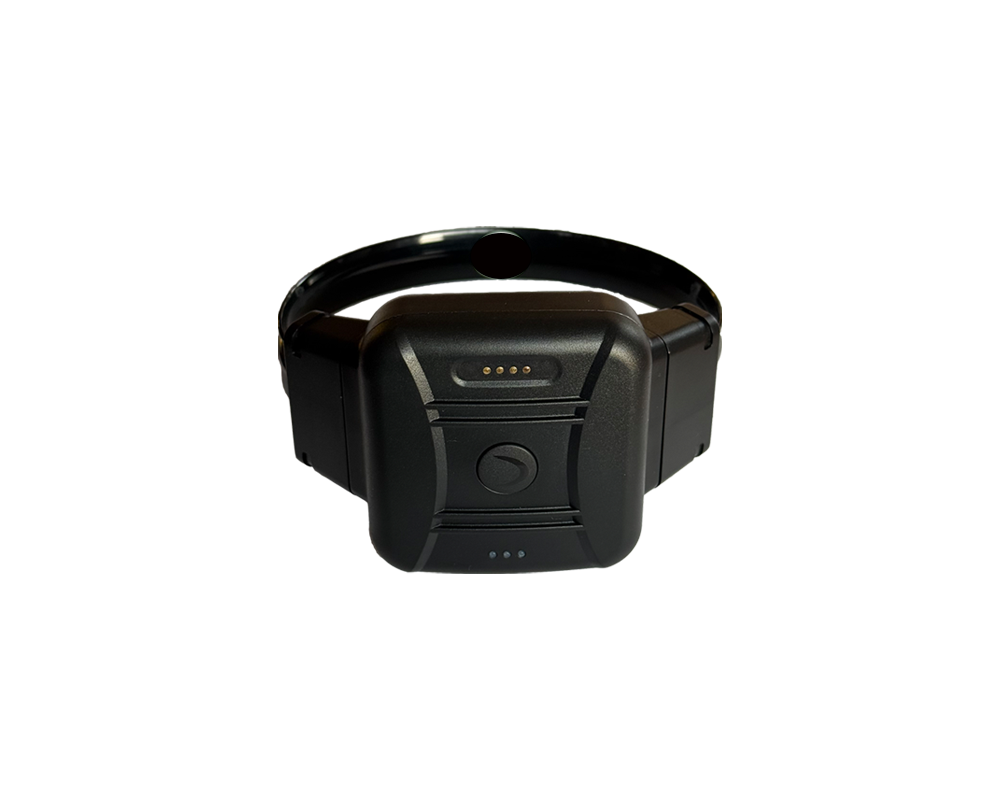
REFINE Technologies, headquartered in Shanghai with 20+ years in EM, markets globally under the CO-EYE brand. The company sells hardware and software licenses directly to agencies, which then operate monitoring programs independently. The product line covers the full risk spectrum: CO-EYE ONE (one-piece GPS ankle bracelet), CO-EYE DUO (enhanced GPS), i-Bracelet/i-Tracker (two-piece BLE), Wristband (BLE tether), AMClient (smartphone app), HouseStation (home base), and AMManager Software (unified platform).
Feature Comparison
| Dimension | CO-EYE | BI Incorporated |
|---|---|---|
| Business model | Hardware ownership + software license | Managed-service contract (daily rate) |
| GPS ankle monitor | CO-EYE ONE — one-piece, 108 g | BI LOC8 — two-piece design |
| Anti-tamper | Optical fiber (strap + case) | Proprietary (details under NDA) |
| Battery life | 7 days standalone / 6 months BLE | Varies by model; typically 24–48 hours |
| Installation | < 3 seconds snap-on, no tools | Standard strap fitting process |
| Alcohol monitoring | Not integrated (behavioral analytics via software) | BI SoberTech transdermal alcohol |
| Monitoring center | Agency-operated (or third-party) | BI-operated 24/7 center |
| Software platform | AMManager (web + mobile) | BI TotalAccess (web + mobile) |
| Mobile app monitoring | AMClient (iOS + Android) | SmartLINK (iOS + Android) |
| RF home monitoring | HouseStation + i-Tracker | HomeGuard |
| US contract vehicles | Direct procurement, international | GSA Schedule, state contracts, federal IDIQ |
| Global reach | 30+ countries, CE + FCC certified | Primarily US-focused |
| Product matrix coverage | Full risk spectrum (high → low) | Full risk spectrum (high → low) |
The Ownership vs Service Model Decision
This is the central procurement decision when evaluating these two vendors.
BI’s Managed-Service Model
BI’s pricing typically ranges from $3–$15/day per monitored individual depending on service level, jurisdiction, and contract volume. That daily rate covers everything: hardware, software, cellular data, monitoring center staffing, device maintenance, and replacement. Agencies get predictable OpEx budgeting and zero capital expenditure. The tradeoff: you never own the equipment, switching costs are high once your data lives in BI’s platform, and per-offender costs remain constant regardless of program maturity.
CO-EYE’s Ownership Model
CO-EYE sells devices outright. An agency purchases its inventory of ankle monitors, licenses the AMManager platform, and operates monitoring with its own staff (or contracts a third-party center). Year-one costs are higher — capital budget required for device procurement. Years two through five see dramatically lower per-offender costs because hardware is amortized. Agencies retain full control of data, can switch cellular carriers, and own equipment at program end.
Break-Even Analysis
For a mid-size program (200 active offenders), the ownership model typically breaks even against a $7/day service rate within 14–18 months, assuming standard device utilization and 3-year device lifespan. Larger programs break even faster. Small pilots (under 50 offenders) may never reach break-even if utilization is low.
Contract and Procurement Considerations
| Factor | CO-EYE | BI Incorporated |
|---|---|---|
| Contract type | Purchase order + annual license | Multi-year service agreement |
| Typical contract term | One-time purchase + 1-year renewable license | 3–5 year service agreement |
| Switching cost | Low (own hardware, export data) | High (return hardware, migrate data) |
| Data ownership | Full agency control | Shared per contract terms |
| Scalability cost | Incremental device purchase | Additional daily-rate enrollment |
| Technology refresh | Agency decides when to upgrade | Vendor manages equipment rotation |
When Each Vendor Fits Best
BI Incorporated suits agencies that:
- Prefer turnkey managed service with zero hardware management
- Need established US federal/state contract vehicles (GSA Schedule)
- Want 24/7 vendor-operated monitoring center support
- Are running small programs where capital investment isn’t justified
- Need integrated alcohol monitoring (SoberTech)
CO-EYE suits agencies that:
- Want to own equipment and control long-term costs
- Operate mid-to-large programs (100+ active offenders) where ownership economics dominate
- Need the lowest false tamper alert rates (optical fiber technology)
- Require rapid field installation (< 3 seconds) for high booking volumes
- Deploy internationally or need multi-carrier/multi-constellation flexibility
- Value 7-day battery life to reduce charge compliance burden