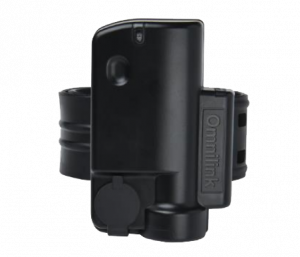

Electronic monitoring programs are under pressure to deliver accurate location truth, trustworthy tamper signals, and workflows that scale when caseloads spike. For a growing share of agencies, the answer is architectural: move from two-piece bracelet-plus-tracker kits toward one-piece GPS ankle monitors that combine GNSS, cellular, power, and integrity sensing in a single ankle-worn module. This guide explains what that shift means operationally, how integrated design changes total cost of ownership, and where products like CO-EYE ONE fit into procurement discussions in 2026.
Judges, pretrial services directors, and monitoring center supervisors rarely disagree on the objective: know where the person is, know whether the device is intact, and know it quickly enough to intervene. The disagreements begin when legacy hardware architectures inject noise—alerts that look like flight risk but trace back to a Bluetooth timeout, or tamper storms that train staff to ignore the queue. One-piece GPS ankle monitors attack those failure modes at the source by collapsing the radio topology.
REFINE Technologies, the engineering organization behind CO-EYE, has shipped electronic monitoring solutions since 2004 and reports 200,000+ devices deployed across 30+ countries, with aggregated supervision statistics exceeding 130,000 monitored individuals in public company materials. Those scale figures do not replace your pilot data, but they frame why integrated designs are now mainstream conversation in RFP committees that used to treat “ankle bracelet + pocket tracker” as the default image of GPS supervision.
If you are comparing vendors broadly, start with our GPS ankle monitor guide and best GPS ankle monitors 2026 comparison; for foundational definitions, see what is an ankle monitor. When you are ready to translate specifications into budget lines, the ankle monitor cost guide walks through daily fees, hardware amortization, and hidden operational expenses—including the ones that two-piece pairing problems quietly inflate.
Throughout this article, “one-piece” refers specifically to integrated GNSS-cellular-tamper modules worn on the ankle—not alcohol-only transdermal bracelets, not RF home-detention tethers without continuous outdoor tracks, and not consumer smartwatches. The buyer’s question is narrowly professional: Which GPS ankle architecture minimizes false work and maximizes evidentiary clarity?
What Is a One-Piece GPS Ankle Monitor?
A one-piece GPS ankle monitor is a self-contained supervision device: satellite positioning, cellular reporting, on-board battery, tamper detection, and firmware-controlled scheduling live inside one housing that is fitted to the ankle. Officers install a single SKU, participants charge one unit, and monitoring centers interpret one stream of location and integrity events. That simplicity is not cosmetic—it removes entire categories of failure that occur when two radios must stay linked while a person sleeps, showers, commutes, and charges.
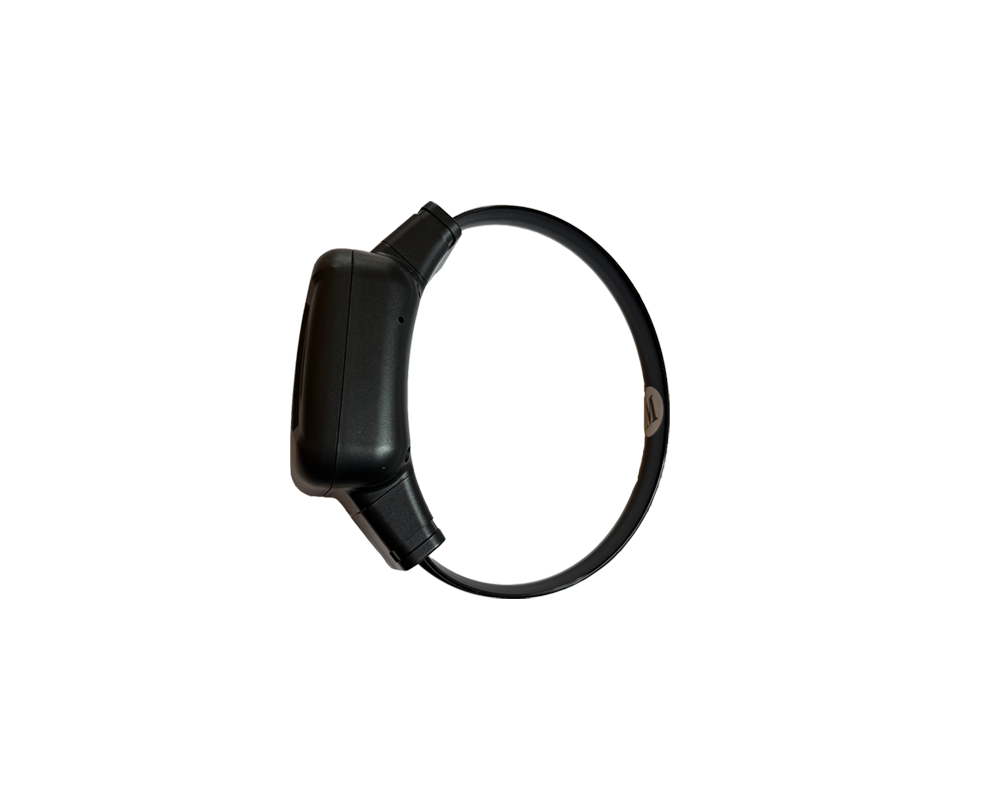
Contrast this with the traditional two-piece pattern still common in many programs: a bracelet or beacon on the ankle communicates over Bluetooth or proprietary short-range RF to a separate tracker or hub that carries the GPS chipset and cellular modem. The ankle component may be light, but operational reality is heavier: participants must keep spacing, pairing, and battery discipline for two devices. Supervision staff answer alerts asking whether a disconnect reflects evasion, a dead battery on the hub, radio interference, or software drift.
Integrated design therefore delivers clear engineering advantages:
- No bracelet-to-tracker pairing—there is nothing to “fall out of sync” at 2 a.m.
- Single chain of custody photo during intake—one sealed module, one serial, one seal checklist.
- Unified tamper semantics—strap and case integrity can be engineered as one physical story instead of debating which component moved first.
- Simpler participant training—one charging routine, one LED pattern, one help-desk script.
One-piece architectures do not eliminate all supervision challenges—urban multipath, indoor coverage, and policy design still matter—but they do remove the redundant RF hop that so often pollutes alert queues. For a deeper comparison of architectures, read one-piece vs two-piece GPS ankle monitor on our blog and cross-check claims against your own pilot telemetry.
What Are the Key Differences Between One-Piece and Two-Piece GPS Ankle Monitors?
One-piece GPS ankle monitors integrate GPS receiver, cellular modem, battery, and tamper sensors into a single device worn on the ankle. Two-piece systems split these between a lightweight ankle tag (RF only) and a separate portable tracking unit. One-piece designs eliminate pairing failures and “forgot my tracker” compliance issues but must fit larger batteries into the ankle form factor.
The table below summarizes how integrated one-piece GPS ankle monitors differ from classic two-piece bracelet-plus-tracker deployments. Figures for two-piece examples reflect typical field compositions (light ankle beacon plus separate cellular tracker); exact weights and endurance vary by vendor SKU.
| Factor | One-piece GPS ankle monitor | Two-piece (bracelet + separate tracker) |
|---|---|---|
| Device count | 1 integrated module on the ankle | 2—ankle bracelet/beacon plus portable tracker/hub |
| Pairing failures | None—no BLE/RF tether between components | Common Bluetooth or RF disconnections generate alerts |
| Battery life (typical high-accuracy GPS reporting) | 7+ days (CO-EYE ONE: 7 days at 5-minute LTE-M/NB-IoT interval) | Often 1–2 days on the tracker under active fix schedules; frequent charging |
| Tamper detection | Fiber optic strap + case coverage on leading designs | Often strap-focused on bracelet; tracker tamper separate |
| GPS accuracy (vendor claims) | <2 m CEP-class with optimized antenna in the ankle module | Often 3–5 m class when antenna lives in a separate pocket device |
| Installation time | <3 seconds snap-on, no tools (CO-EYE ONE) | Frequently 30+ seconds multi-step pairing and fit checks |
| Loss / damage risk | Single device inventory story | Tracker can be lost, left at home, or damaged independently |
| Weight on ankle | 108 g total (CO-EYE ONE) | Example: ~17 g bracelet + ~105 g tracker often carried on belt/pocket |
Programs should not select hardware from the table alone—map each row to your actual fix interval, geozone density, and officer staffing. However, when alert analytics show hundreds of “disconnect” events per month that resolve without incident, the architecture column often explains why.
Why Agencies Are Switching to One-Piece Design
Procurement officers rarely wake up wanting a new hardware form factor—they want fewer 3 a.m. pages, defensible maps in court, and predictable opex. Integrated one-piece GPS ankle monitors address those outcomes through five repeatable mechanisms:
1. Eliminating pairing failures
In two-piece systems, Bluetooth or RF disconnection between bracelet and tracker is frequently the number-one contributor to false or ambiguous alerts. Supervisors must triage whether the participant walked out of range, powered down the hub, experienced benign interference, or attempted evasion. One-piece designs remove that hop entirely: every sample is emitted from the same module that is physically secured to the ankle. Alert queues become shorter and more interpretable.
2. Reducing operational costs
Two-piece logistics multiply hidden spend: spare trackers, spare bracelets, duplicate chargers, shipping for field swaps, and help-desk time coaching participants through re-pairing routines. One-piece kits consolidate inventory. When battery life stretches to roughly a week at realistic reporting cadences (versus nightly charging cultures), charging-related incidents and supervision gaps decline—lowering downstream court-risk conversations.
3. Improving tamper detection
Leading one-piece devices such as CO-EYE ONE apply fiber optic integrity monitoring to both strap and case, so cut straps and forced entry into the enclosure produce high-confidence signals. Manufacturer documentation states a zero false-positive rate for this fiber-based tamper channel—an important contrast to programs drowning in capacitive or skin-contact false alarms. (Always validate against your environment; saltwater, abrasion, and installation quality still matter.)
4. Simplifying officer workflows
Field teams perform hundreds of installations per year. Sub-three-second, tool-free snap-on attachment (CO-EYE ONE) reduces time-on-scene and standardizes photographs for evidence packets. Compare that with multi-minute sequences: power both pieces, confirm LEDs, verify Bluetooth RSSI, tape down antennas, and re-check pairing before the participant walks away.
5. Better GPS accuracy
When the GNSS antenna, ground plane, and cellular antennas are co-designed inside the ankle module, vendors can tune performance for wearable kinematics. CO-EYE ONE advertises <2 m CEP with GPS, BeiDou, GLONASS, and Galileo plus WiFi and LBS assistance—tighter than many pocket-tracker implementations that sacrifice antenna volume for participant convenience.
For competitive context, see SCRAM GPS vs CO-EYE ONE and validate claims with side-by-side pilots rather than datasheet duels alone.
Data discipline for reason #2: When building TCO spreadsheets, attach minutes-per-alert estimates from your call center ACD exports. If two-piece disconnects average even six minutes of blended labor and occur hundreds of times monthly, annualized hours rival a full-time employee—often exceeding the hardware delta between SKUs.
Data discipline for reason #3: Ask vendors for tamper histograms: what percentage of strap alerts were confirmed cuts versus dismissed as sensor error? If a vendor cannot segment those classes, your future courtroom discovery may not either. Fiber optic integrity channels, where applicable, produce crisper event semantics than indirect proxies.
Data discipline for reason #4: Time ten consecutive field installations with a stopwatch—including photography and paperwork. Multiply seconds saved by annual intake volume. Installation friction is rarely priced in RFP scoring rubrics, yet it dominates officer morale.
Data discipline for reason #5: Log GNSS error budgets in places you actually supervise—downtown corridors, public transit, metal-roofed workplaces—not only on an open soccer field. Multi-constellation receivers and WiFi/LBS assists exist precisely because pure GPS in urban cores is a statistical problem, not a moral one.
Why Is the CO-EYE ONE Considered the Lightest One-Piece GPS Ankle Monitor?
CO-EYE ONE is REFINE Technologies’ flagship one-piece GPS ankle bracelet—positioned for agencies that need continuous outdoor tracking, strong tamper evidence, and cellular forward-compatibility without the pairing baggage of split kits. Core published specifications include:
- Size and weight: 60×58×24 mm, 108 g—compact enough for long-duration wear when fitted correctly.
- Battery: 1700 mAh; approximately seven days standalone operation at a five-minute reporting interval on LTE-M/NB-IoT; about 2.5 hours to recharge. This stands apart from many legacy programs where participants and officers implicitly plan around daily charging rhythms—often equivalent to roughly 40 hours of endurance under aggressive fix schedules on older hardware generations.
- Anti-tamper: Fiber optic monitoring on strap and case; manufacturer specification of zero false-positive fiber tamper signaling.
- Positioning: Multi-GNSS—GPS + BeiDou + GLONASS + Galileo—with WiFi and LBS assistance where policy allows.
- Cellular: 5G-compatible LTE-M / NB-IoT / GSM for wide-area coverage and improved building penetration versus legacy 2G-only designs.
- Environmental: IP68 waterproofing for continuous wear including showering when used as directed.
- Installation: Patented snap-on strap—under three seconds, no tools; straps available in S/M/L/XL with regular TPU or steel-armed TPU options.
- Security & compliance: HTTPS/SSL, AES128/256; European NB CE (RED, EMC, SAR, LVD, RoHS, REACH, WEEE); CyberSecurity EN 18031; battery safety per IEC62133/62321/UN38.3.
CO-EYE ONE-AC adds eSIM plus nano SIM flexibility, upgrades on-board storage and processing (8M / up to 20,000 events; ARM M3 + M0 architecture), and supports BLE-connected mode with up to approximately six months battery life when operating in a compliant tethered profile—useful for lower-risk caseloads or hybrid supervision models that still demand periodic full GNSS tracks.
Technical buyers should pair this summary with the live product page at CO-EYE ONE and request carrier band matrices for each deployment geography.
On-board storage and evidentiary replay: Standard CO-EYE ONE lists 2M storage with up to roughly 5,000 events; ONE-AC expands to 8M and up to about 20,000 events. Buffer depth matters when cellular gaps occur—trains, rural dead zones, or temporary jamming suspicions—because supervisors may need to reconstruct tracks once backhaul resumes.
Participant-facing features: LED indicators, SOS button, and vibrator cues are documented for CO-EYE ONE family devices. Those interfaces reduce “mystery box” anxiety and give good-faith participants a sanctioned way to signal distress or acknowledge alarms—provided programs train expectations clearly.
Cybersecurity posture: Beyond transport encryption, EN 18031-aligned hardening signals vendor attention to firmware integrity and attack surface in an era when criminal justice IoT is no longer obscure on threat maps. Pair vendor answers with your agency ISO requirements; the ankle monitor is now part of the enterprise risk register.
The Hidden Costs of Two-Piece Systems
Sticker prices rarely appear in court transcripts; labor, liability, and replacement churn do. When evaluating two-piece bracelet-plus-tracker architectures, model these TCO line items explicitly:
Device replacement
Trackers walk away, crack screens, fail after drops, or simply disappear from participant possession. Replacement invoices for cellular GPS hubs often land in the $200–$350 range depending on vendor service tiers—before overnight shipping and officer redeployment time. One-piece inventory removes the “which component failed?” roulette and shrinks spare-pool SKUs.
False alert response
Every ambiguous Bluetooth disconnect triggers human attention: call the participant, check charger compliance, schedule a field visit, or escalate to a judge. Even ten minutes of blended labor per event, multiplied across hundreds of events monthly, becomes a line item larger than premium hardware deltas. Programs migrating to one-piece designs routinely cite alert hygiene as the justification—not chipset marketing.
Charging failures
A dead tracker is not merely inconvenient; it is a supervision gap that can create court exposure if a serious incident occurs during the outage window. Short battery life implicitly converts charging discipline into a critical path for public safety. Seven-day-class endurance changes operational assumptions: fewer weekend emergencies, fewer “I forgot the second device” excuses.
Maintenance overhead
Two devices mean double failure points: two batteries, two firmware tracks, two waterproof seals, two warranty streams. Refurbishment shops must test pairings, not just individuals. Certification paperwork duplicates. Training manuals grow. Simplicity is a maintenance strategy.
False tamper storms
Public reporting on electronic monitoring in Cook County has highlighted that more than 80% of tamper alerts tied to some technologies were false positives—flooding staff and undermining confidence in legitimate alerts. While causes vary by sensor modality and policy, the lesson for buyers is universal: tamper physics and pairing stability matter as much as GPS traces. Fiber-based integrity signaling on integrated housings is one architectural response agencies now weigh seriously.
Quantify these factors alongside per-day fees using our cost guide; the spreadsheet answers often favor one-piece TCO even when unit capex looks higher.
Insurance and liability framing: General counsel sometimes asks a blunt question: “If supervision visually disappears because a tracker was uncharged, who owns the narrative?” One-piece week-long endurance does not erase negligence analysis, but it does shrink the class of “ordinary life got in the way” outages—especially for working participants on irregular sleep schedules.
Vendor service contracts: Read the fine print on advance replacement, depot turnaround time, and whether pairing diagnostics are billable support incidents. Two-piece ecosystems often hide labor in per-ticket charges; one-piece contracts can still be punitive if written poorly—so negotiate SLAs explicitly.
Refurbishment and resale: Corrections agencies increasingly care about circular economy mandates. Single-module refurbishment lines are easier to certify than matched pairs that must be re-paired and soak-tested together. Ask vendors for end-of-life data wipe attestations regardless of architecture.
One-Piece GPS Ankle Monitor for Different Programs
Integrated GPS ankle monitors are not only for a single risk tier. Agencies map them across supervision models when continuous location truth and strong tamper evidence are priorities:
High-risk pretrial
Pretrial caseloads demand frequent fixes, rapid geofence evaluation, and credible maps for bail reviews. CO-EYE ONE targets this segment with LTE-M/NB-IoT endurance and multi-GNSS accuracy. Pair with policies that define escalation for true tampers versus benign RF brownouts—easier when pairing disconnects are off the table.
House arrest and curfew
Home confinement programs combine zone enforcement with schedule logic. One-piece modules simplify the participant experience during partial employment permissions or medical travel exceptions because there is no separate hub to forget on the kitchen counter.
Probation and parole
Longitudinal supervision benefits from seven-day battery rhythms: fewer charging failures, fewer weekend check-in crises. Officers spend time on compliance coaching—not constant charger logistics.
Sex offender monitoring
Exclusion zones around schools, parks, or victim addresses require dependable outdoor tracks and prompt alerts. Antenna integration and multi-constellation GNSS help maintain fix continuity in suburban edge cases where pocket trackers underperform.
Domestic violence victim protection
Some programs pair defendant GPS rules with victim proximity alerting logic. Reliable reporting intervals and tamper integrity reduce ambiguity when courts need to act quickly on credible signals.
Align hardware choice with your platform’s rule engine and audit requirements; when in doubt, request a supervised pilot with exported alert statistics. For broader technology context, return to the GPS ankle monitor guide.
Immigration and alternatives-to-detention contexts (where legally applicable) also benefit from charging simplicity—participants in transient housing may lack stable outlets; longer battery buffers reduce technical violations that are morally ambiguous but procedurally painful.
Work-release and occupational exposure: Construction, kitchens, and cold-storage jobs stress straps and housings. IP68 ratings and steel-armed strap options exist precisely so occupational reality does not become a cascade of false tampers. Document strap inspections in your SOPs regardless of hardware generation.
Victim services coordination: When proximity alerting is active, latency budgets include not only GNSS fixes but also platform geofencing cadence and SMS gateway throughput. One-piece designs do not magically shrink server-side delay, but they reduce the chance that a “disconnect” alert is masking a true approach event.
How to Evaluate One-Piece GPS Ankle Monitors
Use this eight-point checklist when scoring RFP responses or pilot results:
- Battery life vs. your mandated fix interval. Demand graphs, not adjectives. Confirm LTE-M/NB-IoT profiles if carriers in your region are sunsetting 2G/3G.
- Weight and ergonomics. Ask for strap size ranges, skin irritation complaint rates from reference sites, and IP rating evidence.
- Tamper detection method. Distinguish fiber optic integrity, capacitive skin contact, PPG-style sensing, and mechanical switches. Request false-positive/false-negative narratives from comparable deployments.
- GPS accuracy claims. Map vendor CEP statements to your urban/rural mix; require WiFi/LBS disclosure where assisted modes apply.
- Cellular technology roadmap. Confirm 5G-era compatibility, roaming, and OTA update policies.
- Installation speed and tool requirements. Time installations in the field; photograph evidence steps for court defensibility.
- Certifications. Validate CE/FCC/IEC listings needed for insurance, grants, or cross-border programs.
- Total cost of ownership. Include spares, shipping, help-desk minutes, false-alert labor, and training—not only MSRP.
Compare finalists side-by-side with the frameworks in best GPS ankle monitors 2026 and the narrative tests in SCRAM GPS vs CO-EYE ONE.
Bonus evaluation prompts that separate mature vendors from slide decks: (a) Provide three reference sites willing to share redacted alert statistics. (b) Demonstrate OTA firmware rollback. (c) Show how your platform distinguishes fiber tamper from charging dock events. (d) Export a week of raw fixes in an open GIS format for independent verification. (e) Explain sunsetting plans for each cellular RAT you ship. Weak answers here predict expensive surprises at month six of deployment.
Architecture choice is not ideological—some two-piece kits still solve niche tethering requirements—but for mainstream continuous GPS supervision, integrated one-piece GPS ankle monitors increasingly represent the efficiency frontier. Use the checklist above as a scoring rubric, weight items according to local justice priorities, and insist on measurable pilot KPIs before you award multi-year fleets.
FAQ
What is a one-piece GPS ankle monitor?
It is a single ankle-worn device that contains GNSS, cellular connectivity, battery, and tamper sensors—no separate tracker that must stay paired over Bluetooth or short-range RF.
How long does the battery last on a one-piece ankle monitor?
It varies by vendor and reporting interval. CO-EYE ONE is rated for about seven days at five-minute LTE-M/NB-IoT reporting with a 1700 mAh battery; CO-EYE ONE-AC can reach up to six months in BLE-connected mode under compliant profiles.
What is fiber optic anti-tamper detection?
It uses an embedded optical path in the strap and/or housing; cutting the strap or breaching the case breaks the loop and triggers a tamper alert. CO-EYE ONE applies fiber monitoring to strap and case with a stated zero false-positive rate for that channel.
How much does a one-piece GPS ankle monitor cost?
Pricing depends on volume, service tier, and geography. Model hardware, daily fees, spares, and operational labor—our cost guide explains the structure. Contact sales for a formal quote.
Can a one-piece ankle monitor be removed without detection?
Authorized removal uses official tools and procedures. Unauthorized cuts or case breaches should generate alerts on well-designed equipment; programs still combine technology with officer response and judicial sanctions.
Is the CO-EYE ONE waterproof?
Yes—IP68 per manufacturer specifications, supporting showering and rain when used as directed.
How does one-piece compare to SCRAM GPS?
Both are professional GPS supervision modalities. CO-EYE ONE emphasizes integrated one-piece architecture, fiber strap-and-case tamper monitoring, sub-2 m CEP-class GNSS claims, and week-long LTE-M/NB-IoT battery life at five-minute reporting. Evaluate both under your alert definitions and charging constraints; details live in our comparison article.
Do one-piece monitors work internationally?
Yes, when cellular bands and certifications match the destination. CO-EYE ONE lists multi-mode cellular and broad GNSS constellations; confirm local carrier approval and regulatory paperwork before deployment.
Ready to pilot? Explore CO-EYE ONE specifications and contact our team for integration, pricing, and sample evaluation planning.