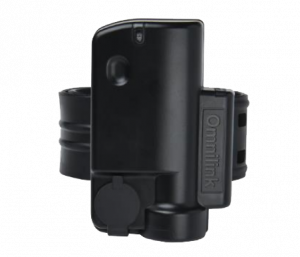

The Evolution of Ankle Monitor Technology: From 1964 to 2026
Six decades of innovation and recurring electronic ankle monitor advances: how GPS ankle monitors evolved from crude radio devices to intelligent, AI-powered supervision systems.
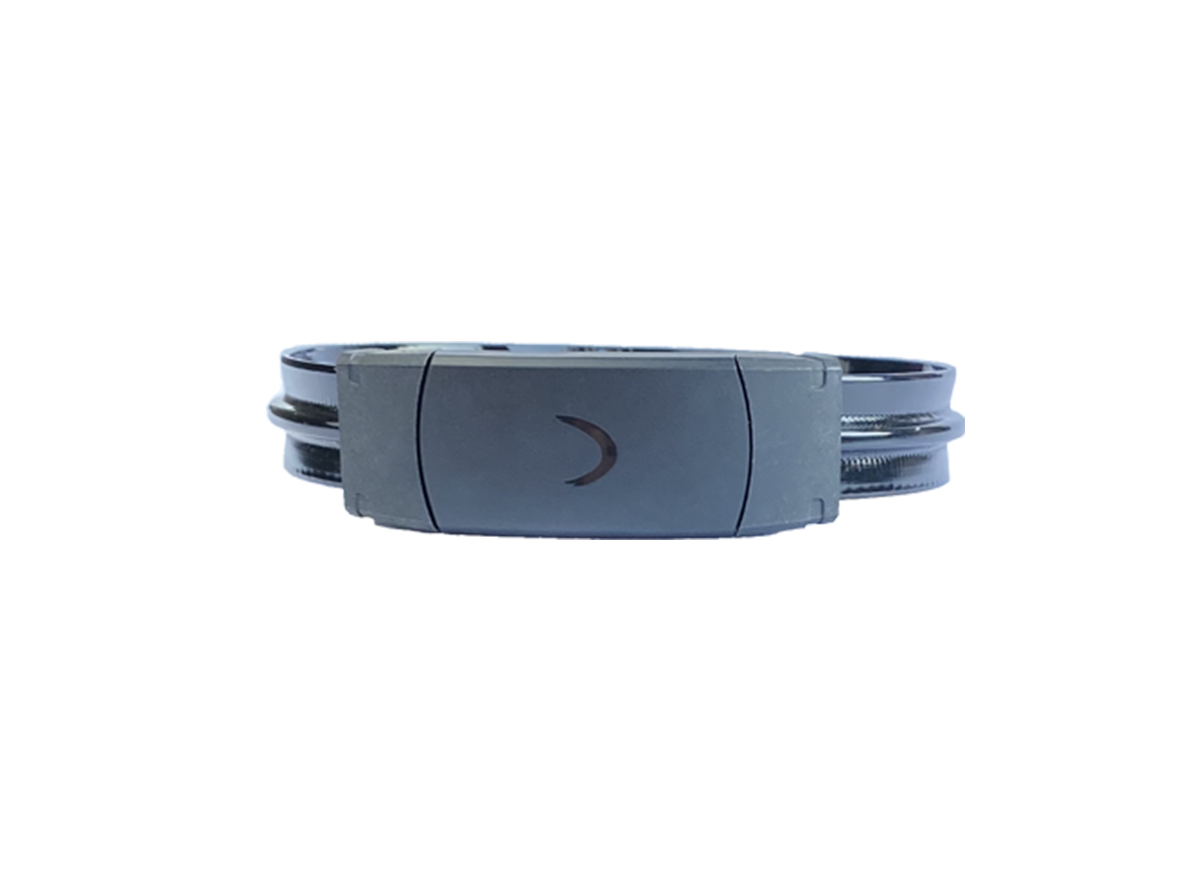
The Origin Story: Harvard, 1964
The concept of electronic offender tracking systems originated with a Harvard University study conducted by Ralph Kirkland Gable and William S. Hurd in the 1960s. In 1964, they obtained U.S. Patent #3,478,344, describing how electronic monitoring devices could track an offender’s location. Using surplus military radio equipment, Gable and Hurd demonstrated that radio transmitters attached to individuals could communicate their coordinates, allowing their position to be plotted on a map.
It would take another two decades before their concept became a practical law enforcement tool.
Era 1: Radio Frequency Curfew Monitoring (1980s-1990s)
The first commercially viable EM systems appeared in the early 1980s, using radio frequency (RF) technology for simple presence/absence detection:
- 1987: ~900 people were participating in EM programs across 21+ U.S. states (Schmidt, 1988)
- 1998: The number grew to over 95,000 (Kilgore, 2013)
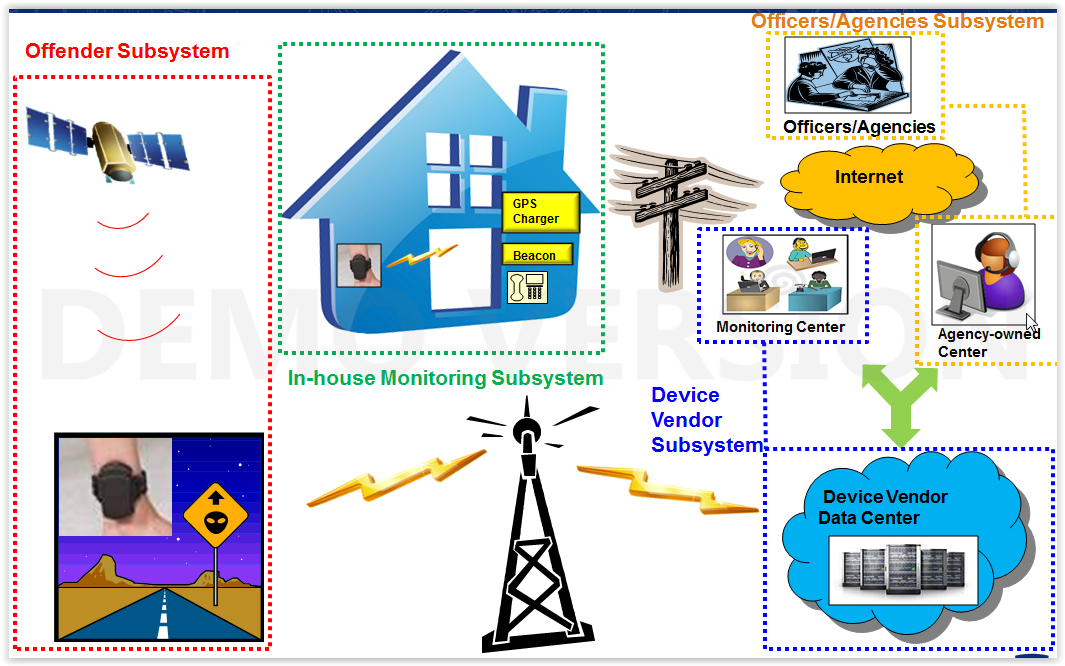
- Technology: RF transmitter on ankle communicates with a base station at the offender’s home. The system only detects whether the person is within range of the base station — it cannot determine their location outside the home.
- Use case: House arrest and curfew enforcement only
Era 2: GPS Revolution (2000s)
The integration of GPS technology transformed electronic monitoring from simple curfew enforcement to continuous location tracking:
- 2009: More than 200,000 GPS and RF monitoring devices in use across the United States (DeMichele & Payne, 2009)
- Architecture: Primarily two-piece systems (ankle transmitter + portable GPS tracker)
- Connectivity: 2G GSM/GPRS for data transmission
- Modes: Active (real-time), passive (daily upload), and hybrid
- Limitation: GPS-only positioning, poor indoor performance, short battery life (~20 hours)
Era 3: One-Piece Integration (2010s)
The market migrated toward integrating all components into a single ankle-worn device. As the NIJ market survey vendor interviews confirmed in 2016: “The market seems to be migrating toward a one-piece model.”
| Parameter | Two-Piece (2000s) | One-Piece (2016 avg) | One-Piece (2026 best) |
|---|---|---|---|
| Total weight | 200-400g system | 159g average | 108g |
| Battery life | Tag: months; Tracker: 24h | 41 hours average | 7 days (168 hours) |
| GPS accuracy | 10-30m (GPS-only) | 4.75m average | <2m (quad-GNSS) |
| Cellular | 2G GSM | 3G WCDMA/2G GSM | 5G-compatible LTE-M/NB-IoT |
| Installation | 5-20 minutes | 4.39 minutes average | <3 seconds (snap-on) |
| Tamper detection | Fiber-optic strap detection | 44% fiber optic | Fiber optic (zero false positive) |
| Satellite systems | GPS only | GPS + some GLONASS | GPS+GLONASS+Galileo+BeiDou |
| Indoor positioning | None | 13% had WiFi | WiFi + LBS + BLE standard |
Era 4: Connected Intelligence (2020s-2026)
The current generation represents a paradigm shift from simple location reporting to intelligent supervision platforms:
Key Innovations
- LTE-M / NB-IoT connectivity: 80% lower power consumption than 3G, enabling week-long battery life
- eSIM technology: Remote carrier provisioning eliminates SIM logistics and carrier lock-in
- BLE connected mode: Ankle monitor communicates through a nearby smartphone or base unit, extending battery to 6+ months
- AI-powered alert filtering: Machine learning reduces false alarm investigation burden by 50-80%
- OTA firmware updates: Remote over-the-air updates eliminate recall-for-upgrade cycles
- Cybersecurity compliance: EN 18031 cybersecurity certification, AES-256 encryption
The Growth Trajectory
EM users in 1987
EM users in 1998
Devices in 2009
Estimated global 2026
What the Next Decade Holds
Based on current technology trajectories and the NIJ’s own predictions (many of which have already been realized), the next decade will likely bring:
- Fully autonomous monitoring: AI handles routine alert triage, escalating only genuine violations to human officers
- Biometric integration: Continuous health monitoring (heart rate, stress indicators) as additional compliance signals
- Sub-meter indoor positioning: BLE 5.1 Angle of Arrival for precise indoor tracking
- Invisible monitoring: Devices small enough to be indistinguishable from fitness trackers
- Predictive supervision: AI predicts violation probability days in advance, enabling proactive intervention
Frequently Asked Questions
When were ankle monitors first invented?
The concept of electronic offender monitoring was first described in a 1964 Harvard University study by Ralph Kirkland Gable and William S. Hurd, who obtained U.S. Patent #3,478,344. They demonstrated how radio transmitters attached to individuals could communicate location coordinates. Practical EM systems became available in the early 1980s, with 900 people on electronic monitoring by 1987.
How has ankle monitor technology improved over the years?
Ankle monitor technology has improved dramatically: weight decreased from 200-400g to 108g, battery life increased from 20 hours to 7 days, GPS accuracy improved from 10-30 meters to under 2 meters with quad-constellation GNSS, installation time dropped from 20 minutes to under 3 seconds, and fiber optic tamper detection eliminated the false alarm problem that plagued earlier capacitive sensors (reducing false positives from 15-25% to zero).
How many people wear ankle monitors in the US?
Approximately 125,000 people are on electronic monitoring in the United States at any given time, according to Pew Charitable Trusts and Bureau of Justice Statistics estimates. This number has grown from 900 in 1987 to over 200,000 devices by 2009. Including immigration monitoring (ISAP program with ~180,000 participants), the total supervised population is significantly higher.
References
- Schwitzgebel, R., Schwitzgebel, R.K., Pahnke, W., & Hurd, W. (1964). U.S. Patent #3,478,344.
- Schmidt, A.K. (1988). “The Use of Electronic Monitoring by Criminal Justice Agencies.”
- Kilgore, J. (2013). “Progress or More of the Same? Electronic Monitoring and Parole.” Critical Criminology, 21(1), 123-139.
- DeMichele, M., & Payne, B. (2009). Offender Supervision with Electronic Technology. Bureau of Justice Assistance.
- Taylor, S.R., et al. (2016). Market Survey of Location-Based Offender Tracking Technologies. JHU/APL / NIJ.
- Anderson, E. (2014). “The Evolution of Electronic Monitoring Devices.” NPR.