
Ankle monitor cost is one of the most searched questions in community corrections—and for good reason. County pretrial units, state probation departments, specialty courts, and bail bond programs all need predictable line items for budgets, grants, and fee schedules. Supervised individuals and their families also need clarity on what monitoring fees cover so payment plans stay fair and enforceable, noting that orders often embed GPS ankle bracelet restrictions on travel and charging. Against that backdrop, electronic monitoring is routinely framed as a cost-saving alternative to jail: incarceration often runs roughly $100–$200+ per day when fully loaded staffing and facility costs are included, while continuous GPS electronic monitoring commonly falls in a $5–$25 per day band for vendor service—representing on the order of 80–95% savings versus bed days, before accounting for downstream compliance benefits. Vendor roadmaps for latest electronic ankle monitor technology also change spare-pool and radio-sunset costs, so TCO models should include planned hardware refreshes.
This guide translates vendor quotes into a finance-friendly view of GPS ankle monitor cost, electronic monitoring cost, and GPS ankle bracelet cost structures. You will see how daily rates interact with activation fees, how payer models shift risk, where hidden labor shows up after contract signature, and how to compare annual totals across modalities. For a deeper historical walkthrough of pricing mechanics, see our companion article on how much an ankle monitor costs. For procurement language and evaluation criteria, start with the GPS ankle monitor buyers guide. When you are ready to model hardware and service for your program, use Contact Sales or Request Quote.
How ankle monitor pricing works in real contracts
Most ankle monitor price conversations are not a single number—they are a stack of components that vendors combine into a per-participant quote. Understanding that stack is what lets legal, finance, and operations speak the same language during RFP review.
Equipment purchase versus lease or rental
Some agencies buy capital equipment outright and pay only for airtime, software seats, and support. Others lease or rent devices so refresh cycles and warranty swaps stay with the vendor. Purchase models can lower long-run unit economics when caseloads are stable and inventory management is mature; rental models shift balance-sheet risk and often bundle replacements for damaged straps or cracked housings. Your finance team should ask explicitly whether quoted monitoring fees assume vendor-owned inventory or agency-owned inventory, because that single assumption changes who pays when a device is lost in the field.
Daily monitoring fees by modality
Daily rates are the backbone of electronic monitoring cost. Industry practice commonly bands continuous GPS supervision around $5–$25 per day depending on contract volume, risk tier, reporting interval, and whether analytics bundles are included. RF or smartphone-centric programs that emphasize curfew or tether checks rather than continuous outdoor tracks often land lower—roughly $2–$8 per day—because cellular data loads and map-based alerting are lighter. Alcohol monitoring layers (transdermal or breath schedules) frequently add a parallel daily fee because lab calibration, test scheduling, and review workflows are specialized.
Installation and activation fees
One-time ankle bracelet cost line items typically include intake imaging, strap fitting, device provisioning, and account activation in the monitoring center. Activation fees often range $50–$200 per enrollment, though high-volume statewide contracts sometimes waive them. Programs should budget this cash spike in Q1 when new legislation expands eligibility overnight.
Contract terms: monthly, annual, and per-enrollment billing
Vendors may invoice per calendar month, per 30-day supervision period, or per court order lifecycle. Per-enrollment billing aligns with pretrial files that open and close quickly; monthly billing fits stable probation caseloads. Clarify minimum terms: some contracts impose 90-day minimums that collide with short dockets if not negotiated upfront.
Who pays: agency-funded versus participant-funded models
Agency-funded programs build ankle monitor cost into operating budgets or grants. Participant-funded models shift daily fees to supervised individuals, sometimes with sliding scales. Each approach has compliance implications: when daily rates strain household budgets, payment failure can be misread as technical noncompliance. Courts increasingly ask for plain-language fee disclosures at sentencing or release so expectations match actual monitoring fees.
Volume tiers, SLAs, and invoice mechanics
County-wide or statewide master service agreements often ladder ankle monitor price down as active enrollments cross 200, 500, or 1,000 concurrent devices. Ask whether tier breaks apply to daily service, activation, or both—and whether dormant devices on “shelf ready” inventory count toward the tier. Service-level language should spell out mean time to answer for priority-one alerts, escalation paths when the primary queue is saturated, and whether credits apply if uptime or support metrics miss contract thresholds. Finance teams should reconcile invoice cadence with fiscal year close: some vendors bill arrears on a 45-day cycle, which can push December spend into January if not tracked as encumbrances.
Procurement documentation that prevents surprise line items
RFP attachments should require vendors to separate capital, service, professional services, training, spare-pool maintenance, and software module fees. When those categories are bundled, apples-to-apples comparison of GPS ankle monitor cost becomes impossible and board presentations inherit unexplained variances. Request a sample monthly invoice redacted for PII so reviewers can see how overages, international roaming (if any), and third-party map API surcharges appear in practice.
Ankle monitor cost breakdown by supervision type
The following bands summarize how markets usually price supervision tiers. Actual quotes vary by state, volume, and service-level agreements—use them for internal planning, not as a substitute for vendor proposals.
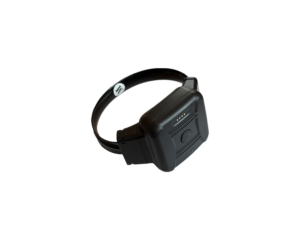
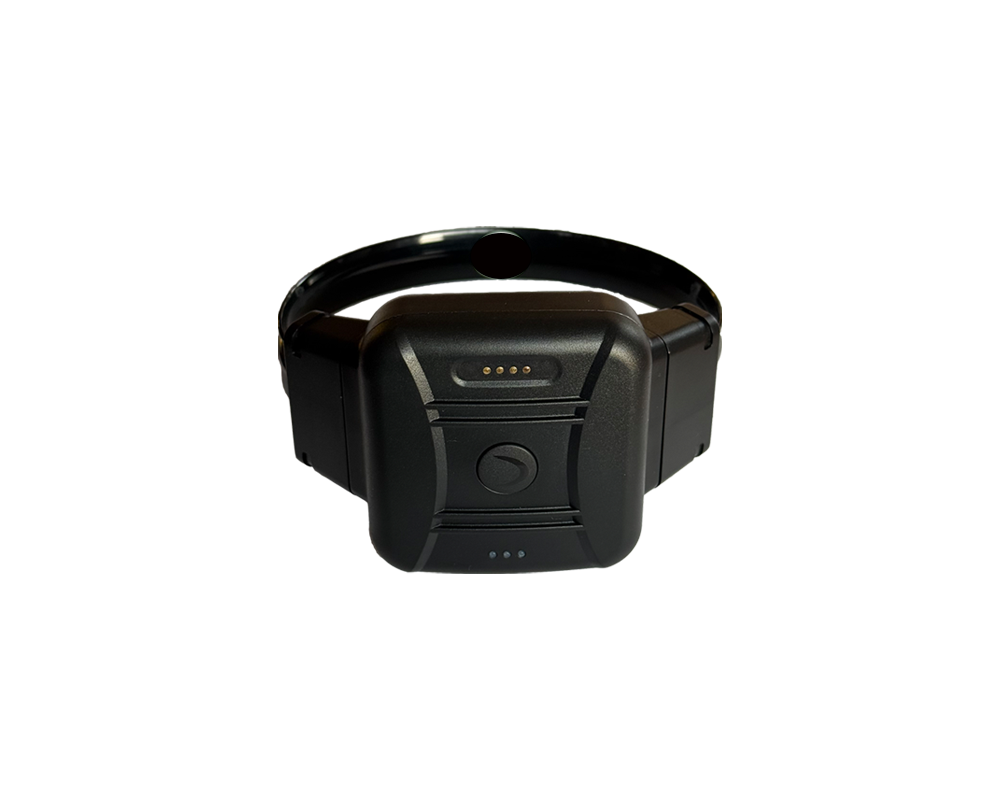
- One-piece GPS ankle monitor (all-inclusive cellular device): Often $5–$15 per day when GPS tracking, tamper logic, and cellular backhaul are bundled into a single wearable. The CO-EYE ONE one-piece GPS ankle monitor is engineered for this model: 108g weight, fiber-optic strap and case tamper detection, seven-day standalone battery on LTE-M/NB at a five-minute reporting interval, and 5G-compatible LTE-M/NB-IoT/GSM connectivity.
- Two-piece GPS plus home beacon: Typically $8–$25 per day because the ecosystem includes a separate radio tether, cradle logistics, or base-station provisioning in addition to cellular reporting from the hub device.
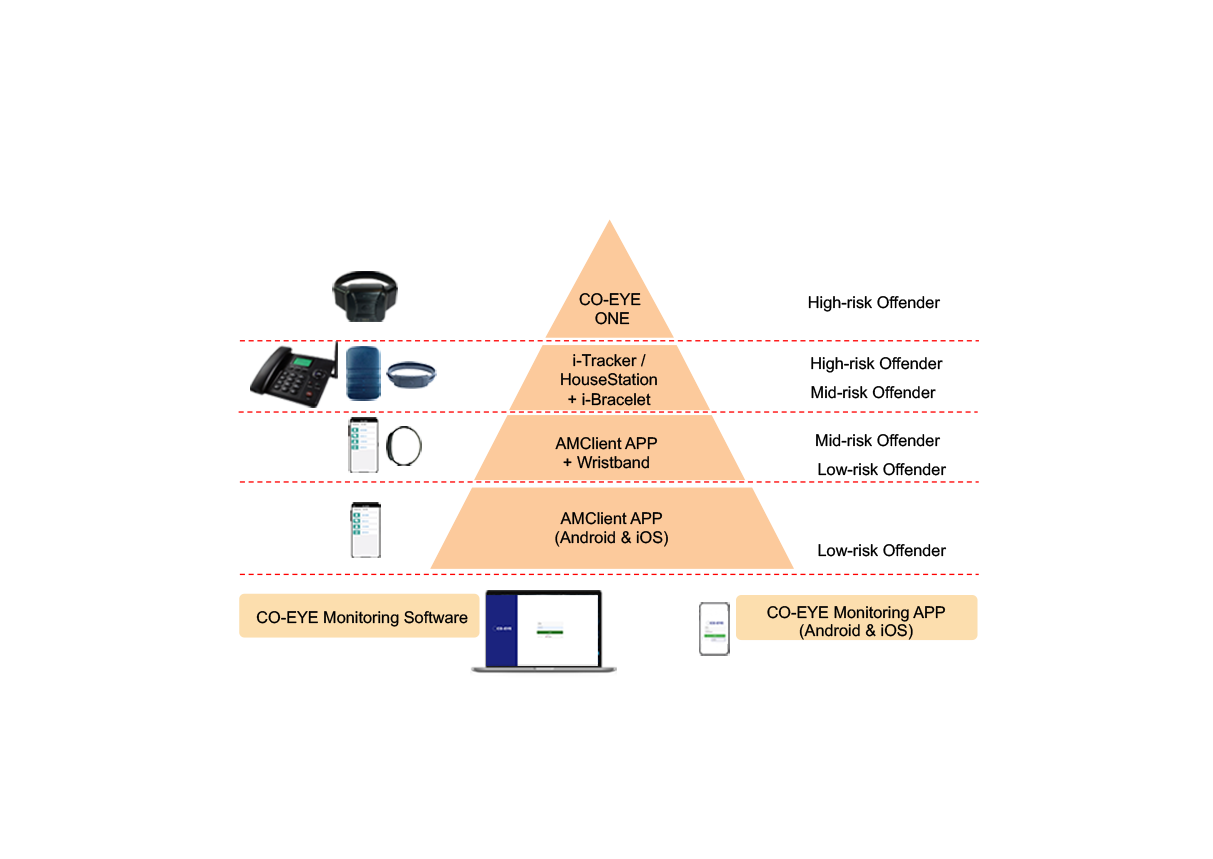
- RF or home curfew monitoring: Commonly $3–$8 per day when supervision questions are primarily “is the person near the residence during ordered windows?” RF home monitoring with CO-EYE HouseStation pairs with RF or BLE CO-EYE i-Bracelet transmitters for presence-centric programs.
- Smartphone application supervision: Often $2–$5 per day when checks are app-driven, biometric or check-in based, and continuous GNSS ankle hardware is not required. CO-EYE AMClient supports continuous smartphone tracking modes with SOS, schedules, and Bluetooth tether options for lower-risk pathways.
- Alcohol monitoring add-ons: Many programs layer $12–$20 per day (or structured weekly minimums) for transdermal or breath protocols on top of location supervision. This is additive to base GPS ankle monitor cost when courts order both tracks.
Hidden costs agencies should model before signing
Published daily rates rarely capture the full electronic monitoring cost story. Operational teams discover the rest in overtime, truck rolls, and supervisor burnout.
False alarm response and officer time
Traditional strap-only tamper architectures can generate substantial false-positive volumes. According to the National Institute of Justice market survey context used across the industry, false-positive tamper alerts in legacy architectures are frequently discussed in the 15–30% range—meaning officers may spend significant time clearing alerts that never corresponded to genuine removal attempts. Each cleared alert has an opportunity cost: it is time not spent on victim safety callbacks, employment verifications, or new intakes.
By contrast, CO-EYE’s fiber-optic tamper path on CO-EYE ONE is designed for zero false-positive tamper signaling on the optical strap and case detection chain—shrinking hidden labor tied to bogus tamper queues while preserving evidentiary clarity when a true break occurs.
Charging management and field visits
Two-piece and short-battery architectures can implicitly tax programs through “charging compliance” work—call trees, home visits, and swap logistics when participants miss charging windows. One-piece designs that reach seven-day standalone battery life reduce the number of charge-touchpoints per month, which directly reduces officer phone time even when the daily vendor rate looks similar on paper.
Equipment replacement, loss, and damage
Contracts differ on whether cracked lenses, cut straps, or water damage are capped, fully covered, or billed per incident. Agencies should assign a conservative annual loss rate and multiply by vendor replacement fees when building board-ready budgets.
Base station and ancillary hardware
Two-piece GPS or RF models that require dedicated home units may add $200–$400 per unit (sometimes more with extended antennas or multi-dwelling installs) depending on quantity and support tiers. Spread that capital over expected device life to compare with one-piece cellular wearables that do not need a separate beacon for basic GPS tracking.
Cellular sunset and network migration
Programs still running 2G/3G-dependent hardware face forced upgrades as carriers retire legacy bands. Modern 5G-compatible LTE-M/NB-IoT paths—like those on CO-EYE ONE—reduce stranded-device risk and avoid emergency capital events that do not appear in yesterday’s per-day quote.
Evidence exports, discovery, and long-term data retention
Courts and prosecutors increasingly expect downloadable timelines, KML or shapefile exports, and audit logs that show who acknowledged each alert. If your vendor charges per-gigabyte archive fees, per-export professional services, or “legal hold” retainers, those costs belong in the electronic monitoring cost model even though they are not part of the daily per diem. Clarify retention defaults—many programs must keep supervision data for years after discharge for post-conviction review. Building retention assumptions into the first-year budget avoids mid-contract amendments when discovery requests spike.
Monitoring-center staffing and training
Even perfect hardware still needs humans to triage maps, call participants, and document outcomes. When alert volume drops because tamper logic is trustworthy and battery life is long, centers can reallocate shifts to victim services or pretrial check-ins. When alert volume is high because devices are chatty or prone to false tamper, the same census consumes more FTE than the contract assumed. Program directors should tie staffing models to expected alerts per hundred participants, not only to headline monitoring fees.
Total cost of ownership (TCO): one-year snapshot
Use the table below in leadership briefings to show how ankle monitor cost aggregates across hardware, service, labor assumptions, and loss. Figures are illustrative planning ranges for a single supervised individual over twelve months; substitute your vendor quotes and local labor rates before finalizing appropriations.
| Cost component | One-piece GPS | Two-piece GPS + beacon | RF / curfew focus | Smartphone app program |
|---|---|---|---|---|
| Hardware capital or implied lease | $300–$900 | $500–$1,400 | $250–$800 | $50–$300 |
| Monthly monitoring service (12×) | $1,800–$5,400 | $2,880–$9,000 | $1,080–$2,880 | $720–$1,800 |
| Installation / activation | $50–$200 | $75–$250 | $50–$200 | $25–$150 |
| False-alarm response labor (est.) | $200–$600 | $400–$1,200 | $150–$500 | $100–$400 |
| Charging support / field touches (est.) | $120–$400 | $300–$900 | $80–$250 | $60–$200 |
| Loss / damage reserve (est.) | $100–$350 | $150–$500 | $80–$300 | $40–$150 |
| Indicative annual TCO band | $2,570–$7,850 | $4,305–$13,250 | $1,740–$4,930 | $995–$3,000 |
TCO modeling is where electronic monitoring cost debates become honest. A slightly higher daily vendor rate can be cheaper overall if it eliminates two truck rolls a month or halves monitoring-center alert volume.
Cost versus incarceration: the supervision business case
Jail and prison bed costs vary by jurisdiction, but finance committees routinely use $100–$200+ per day loaded figures for local detention when benefits, medical, and capital depreciation are included. Against that baseline, GPS electronic monitoring at $5–$25 per day presents a stark differential—supporting pretrial release, parole pathways, and specialty dockets without sacrificing public-safety workflows when paired with strong monitoring-center rules.
Electronic monitoring also aligns with outcomes data agencies cite when requesting recurring funding. Florida Department of Juvenile Justice research on electronic monitoring programs reported roughly a 31% reduction in recidivism for youth supervised with electronic monitoring compared with non-monitored comparators—evidence leadership can place beside budget math. Separately, National Center for State Courts guidance on pretrial reminders and notifications pointed to roughly 30% fewer failures to appear when reminder systems were implemented—showing how supervised release infrastructure, when operationalized well, protects docket integrity.
Specialty courts—DV dockets, behavioral health tracks, and veterans’ programs—often blend location supervision with curfew, treatment attendance, and third-party check-ins. That mix means finance officers should avoid a single blended ankle bracelet cost assumption across dockets. Instead, allocate budgets by risk tier: continuous GPS for high-acuity files, RF or smartphone channels for stable employment-focused tracks, and additive alcohol protocols only where statutes require them. Transparent tiering keeps elected officials from comparing your pretrial per diem to another county’s probation-only rate without context.
Finally, compare alternatives on a timeline. A short jail stay might look cheaper in a single-week snapshot but breaks employment, childcare, and treatment continuity—generating downstream costs in homelessness services, rearrests, and court time. Electronic monitoring purchases continuity; its value shows up across agencies, not only in the corrections line item.
How CO-EYE reduces total monitoring cost
CO-EYE focuses on shrinking the hidden rows of the TCO table, not just quoting a low daily rate.
- Operational weight and battery: CO-EYE ONE delivers a 108g one-piece wearable with up to seven-day standalone battery life (five-minute LTE-M/NB reporting), reducing charging interruptions and support calls.
- Tamper economics: Fiber-optic strap and case tamper detection provides zero false-positive signaling on the optical detection path, cutting supervisor hours wasted on phantom removals.
- Installation time: Patented snap-on installation completes in under three seconds without tools—lowering intake labor at the door and speeding mass enrollment events.
- Network longevity: 5G-compatible LTE-M/NB-IoT/GSM connectivity (with eSIM options on CO-EYE ONE-AC for flexible carrier profiles) avoids legacy sunsets that trigger surprise refresh costs.
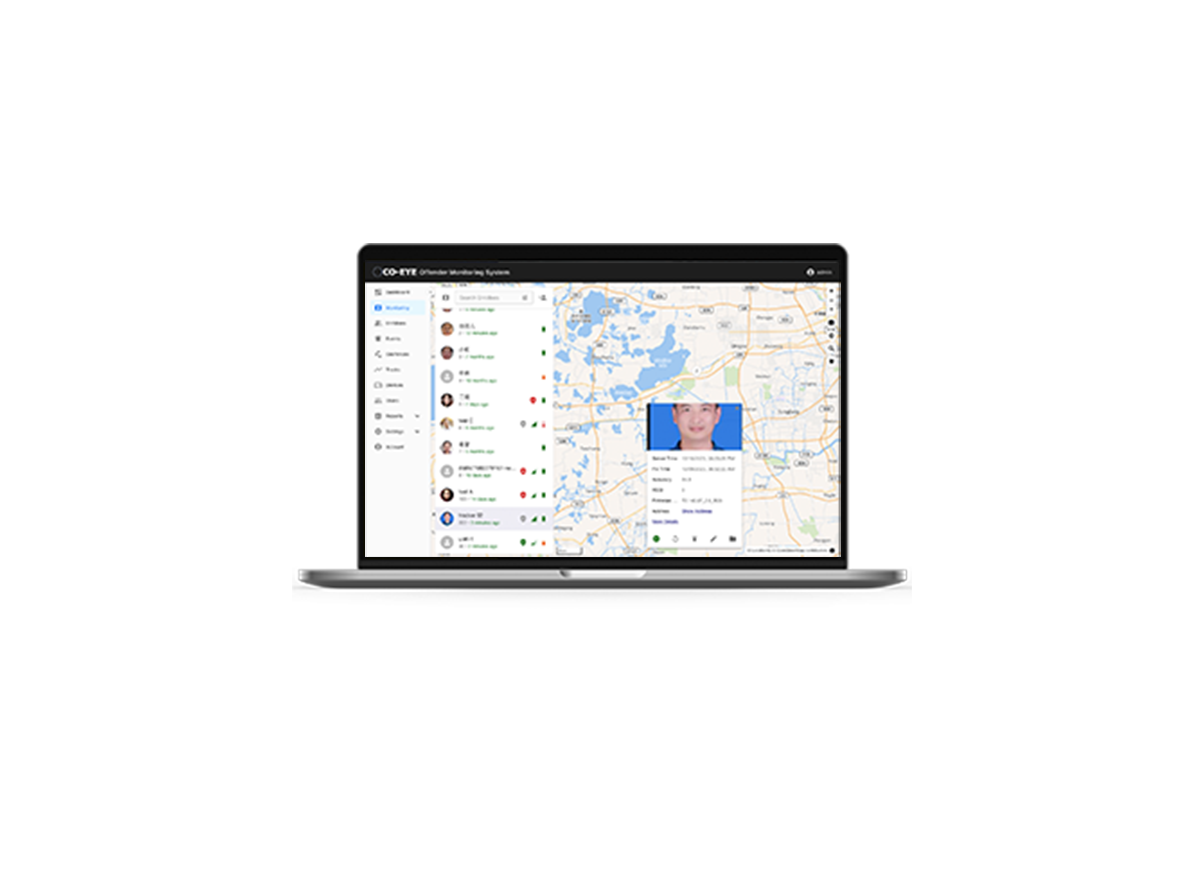
- Unified software: CO-EYE Monitoring Software consolidates device classes into one operational picture, reducing ad hoc integrations that quietly bill engineering time.
- Risk-stratified portfolio: High-intensity GPS (ONE / DUO), RF home supervision (HouseStation + i-Bracelet), and smartphone pathways (AMClient with optional BLE wristband) let agencies match ankle monitor price to risk without maintaining disconnected vendor silos.
Bring your caseload volume, payer rules, and risk tiers to our team through Contact Sales or Request Quote so we can translate these benchmarks into a program-specific GPS ankle monitor cost worksheet.
When comparing two vendor quotes side by side, require each to complete the same TCO template: hardware ownership, daily service, activation, expected false-alert burden, charging touches per month, replacement assumptions, and sunset risk. The vendor with the lower daily rate is not always the vendor with the lower annual ankle monitor cost once operations speak honestly about labor.
Frequently asked questions about ankle monitor cost
What is the average ankle monitor cost per day?
Most continuous GPS programs quote $5–$25 per day in vendor monitoring fees, while RF or smartphone-centric programs often fall near $2–$8 per day. Alcohol monitoring add-ons are usually priced separately.
Do defendants always pay ankle monitor fees?
No. Some jurisdictions are fully agency-funded; others use participant payment with sliding scales. Payment design changes compliance risk, so courts should align monitoring fees with ability to pay.
What activation fees should we budget?
One-time installation and activation commonly run $50–$200 per enrollment unless high-volume contracts waive the charge.
Why is our electronic monitoring cost higher than the brochure daily rate?
Hidden labor—false tamper clears, charging support, truck rolls, and replacements—can exceed the vendor’s daily line item. Model TCO annually, not just calendar per diems.
How does CO-EYE ONE affect long-run ankle monitor price?
Seven-day battery life, sub-three-second installs, LTE-M/NB-IoT migration paths, and zero false-positive fiber tamper signaling reduce operational drag that otherwise inflates true ankle monitor cost after go-live.