When procurement teams evaluate a GPS ankle bracelet for pretrial, probation, or specialized dockets, the decision is rarely about a single specification sheet. It is about operational load: how much officer time disappears into charging reminders, how often analysts chase phantom tamper queues, and whether your ankle monitoring device inventory can survive a legislative spike in enrollments. This buyer-focused comparison of one-piece versus two-piece ankle GPS hardware contrasts architectures so agencies can align choices with caseload reality—not brochure headlines.
If you need a foundational walkthrough of definitions, compliance themes, and program design, start with our comprehensive GPS ankle bracelet guide. When you are ready to compare vendors and modalities side-by-side with pricing context, pair this article with our analysis of ankle monitor costs. For device specifications and RFQ language tied to the flagship one-piece line, see the CO-EYE ONE GPS ankle monitor product page and the full GPS ankle monitor products catalog.
Why GPS Ankle Bracelet Selection Matters for Agency Operations
Every GPS ankle bracelet program balances three pressures at once: public safety expectations, court demands for explainable location evidence, and finite staff hours. The same electronic ankle bracelet contract can look inexpensive on a per diem slide until hidden tasks appear—nightly charging calls, beacon swaps, strap false alarms, and help-desk tickets from participants who cannot keep a two-unit routine straight.
Choosing between one-piece and two-piece designs therefore is not an aesthetic preference. It is a workflow decision. Supervision agencies should treat every deployment as part of a stack that includes software alerting rules, escalation playbooks, and victim-notification integrations where applicable. When those layers misfire because hardware is bulky, power-hungry, or prone to false tamper alerts from legacy detection methods, the cost lands on supervisors—not on the spreadsheet cell labeled “daily rate.”
For release-order contexts, also map how your hardware choice for continuous electronic ankle bracelet supervision interacts with intake throughput. Programs referenced in our pretrial monitoring guide often need repeatable installs during business hours, rapid strap sizing, and clear participant instructions. A lighter ankle monitoring device with tool-free attachment can shrink room time and reduce improper wear that later shows up as “noncompliance” in court narratives.
One-Piece GPS Ankle Bracelet Technology Explained
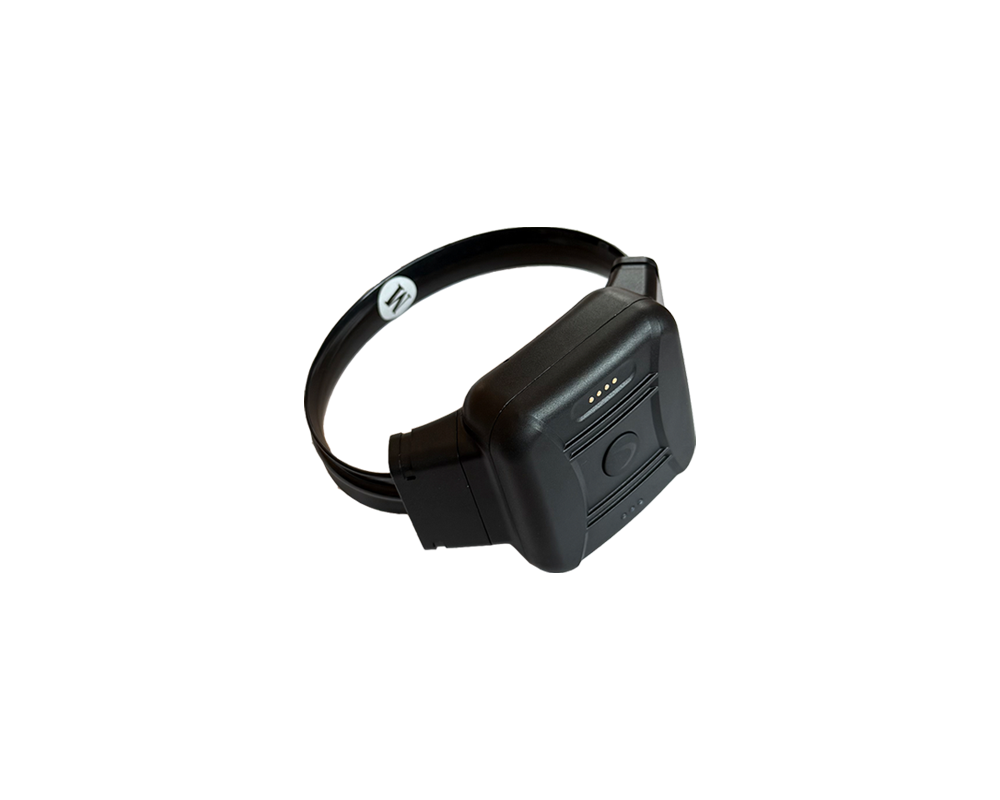
A one-piece GPS ankle bracelet places the radio, antenna elements, battery pack, processing, and tamper sensing into one enclosure strapped to the ankle. From a buyer perspective, the benefit is operational simplicity: participants carry one item, charging is one cable routine, and spare-pool logistics track a single SKU class for that tier of supervision.
CO-EYE ONE exemplifies the modern one-piece GPS ankle monitor category at 108 g and 60×58×24 mm, with IP68 ingress protection, <3 second snap installation, and standalone battery life of about seven days (1700mAh, typical LTE-M/NB-IoT reporting modes per manufacturer specifications). GNSS performance is rated at <2 m CEP under stated test conditions—tighter than many legacy modules that drift toward 3–5 m in field discussions—helping analysts defend track histories when maps are Exhibit A.
Tamper is another buyer lens. CO-EYE ONE uses fiber-optic strap and case sensing marketed as zero false-positive tamper detection—a materially different maintenance profile than legacy non-fiber tamper approaches (resistive/electrical) that could generate nuisance events when humidity, strap torque, or skin contact impedance wiggles the electrical baseline.
Cellular strategy matters for any GPS ankle bracelet expected to operate for years inside carrier sunset timelines. CO-EYE ONE supports 5G-compatible LTE-M / NB-IoT plus GSM fallbacks, aligning with narrowband IoT directions while older two-piece ecosystems may still lean on 2G/3G dependencies in the field. The CO-EYE ONE-AC variant adds eSIM flexibility, up to six months battery life in BLE-connected modes, and 8M on-board event storage—inputs that matter when comparing total lifecycle costs for high-volume contracts.
Two-Piece GPS Ankle Bracelet Systems: How They Work
Traditional two-piece electronic ankle bracelet architectures separate functions. A bracelet or beacon on the ankle enforces proximity or short-range tethering while a second unit—sometimes worn on the belt, carried in a bag, or placed in the home—hosts the cellular modem and GPS fix logic. Supervision centers still receive continuous or interval tracks, but the participant must maintain correct pairing distance, charge two power budgets, and replace two categories of wear items when straps crack or clips fatigue.
Buyer diligence should ask vendors to specify combined weight because marketing sheets often show only the ankle module. Representative market discussions for legacy stacks frequently land near 200–350 g for the cellular/GPS tracker plus 150–250 g for the ankle-side beacon or transmitter, before straps and chargers. That total mass changes ergonomics, shoe fit, sleep comfort, and stigma—factors that influence tamper attempts and “forget charging” failure modes.
Battery reality is equally split. Even when the ankle beacon sips power, the cellular tracker is the hungry subsystem; many two-piece electronic ankle bracelet deployments still expect roughly one to two days between charges for the reporting path participants interact with most. Waterproofing also varies: IP65–IP67 is common on portions of two-piece kits, whereas one-piece CO-EYE ONE is rated IP68 as a fully integrated wearable.
Installation time is an underrated procurement line item. Tool-assisted pairing, belt clips, docked beacons, and home-base calibration can stretch onboarding to 5–10 minutes per enrollment compared with sub-three-second snap fits on mature one-piece designs. Multiply those minutes by weekly intakes and you have measurable FTE demand hidden outside the monitoring fee.
Head-to-Head GPS Ankle Bracelet Comparison Table
Use the following matrix as a board-ready summary when stakeholders ask how a flagship one-piece design contrasts with traditional two-piece stacks. Numbers for CO-EYE ONE reflect manufacturer specifications; traditional columns summarize commonly cited legacy ranges seen in RFP comparisons—always validate against your vendor’s attestation and pilot data.
| Feature | One-Piece (CO-EYE ONE) | Two-Piece (Traditional) |
|---|---|---|
| Weight | 108 g integrated module (60×58×24 mm) | Typically ~200–350 g tracker + ~150–250 g ankle beacon (combined system) |
| Battery | ~7 days standalone (1700mAh; LTE-M/NB-IoT modes); ONE-AC up to ~6 months in BLE-connected mode | Often ~1–2 days for cellular tracker leg; beacon may differ |
| Tamper detection | Fiber-optic strap + case; zero false-positive signaling (per manufacturer) | Varies by vendor: most modern two-piece systems use fiber-optic strap detection; SCRAM GPS uses metal wire clasp; legacy systems used resistive/electrical methods now largely phased out |
| Cellular | 5G-compatible LTE-M / NB-IoT / GSM; eSIM on ONE-AC | Frequently dependent on 2G/3G-era modules or transitional LTE variants |
| Install time | <3 seconds snap-on, tool-free | Often ~5–10 minutes including pairing, clips, or home-base steps |
| Waterproof | IP68 | Commonly IP65–IP67 on components (varies by vendor) |
| GPS accuracy | <2 m CEP (manufacturer) | Often ~3–5 m class fixes in legacy modules (vendor-dependent) |
Remember that bracelet-mounted GPS accuracy claims should be read alongside NIJ Standard 1004.00 expectations: GPS ankle bracelet devices must meet NIJ Standard 1004.00 requiring 10m CEP50 and 30m CEP95 horizontal accuracy thresholds under the standard evaluation framework. Your acceptance testing should document how vendor data maps to those benchmarks—not just marketing peak numbers.
Total Cost of Ownership: GPS Ankle Bracelet TCO Analysis
Daily monitoring fees are only the visible layer of bracelet-supervision economics. Published per diem bands for continuous GPS supervision often fall roughly between $5 and $35 per day depending on risk tier, analytics bundles, payer of record, and contract volume—but finance teams should insist on a TCO worksheet that adds hardware ancillaries and labor.
Hidden costs frequently include home or dock base stations in two-piece models, commonly quoted in roughly the $200–$400 per unit range when agencies must purchase spares; training blocks for officers and vendors; replacement straps; overnight shipping when pools run dry; and overtime triggered by alert storms. A one-piece GPS ankle monitor architecture can eliminate base station purchases entirely when the legacy design depended on a separate beacon hub—shifting capital from wall warts and Ethernet placements to straightforward bracelet spares.
Charging labor deserves its own line item. If a two-piece electronic ankle bracelet stack averages one to two days of battery life on the reporting path, your contact center will hear more “low battery” predicates, and your field officers will conduct more compliance visits. Stretching to a seven-day class standalone profile changes the slope of those curves even before counting tamper desk time.
Finally, map replacement cycles against cellular sunsets. A participant-worn modem that cannot migrate cleanly to narrowband or LTE-M/NB-IoT strategies may force a mid-contract forklift, whereas forward-compatible one-piece hardware reduces stranded capital risk. Combine those factors with the comparison table above when you defend a vendor score sheet to elected officials.
Procurement officers should also pressure-test vendor claims with sample monthly invoices: ask how overage minutes, international roaming (if applicable), map API line items, and rush replacement shipping appear in practice. A monitoring services contract that looks cheaper on paper can invert once those pass-through fees appear quarterly. Document spare-pool ratios—active devices versus bench stock—because two-piece programs often need doubled spare coverage when either leg of the pair fails in the field.
Key Specifications Agencies Should Evaluate in GPS Ankle Bracelets
Use this checklist when scoring any vendor proposal for continuous ankle GPS programs:
- Accuracy and integrity: Map vendor test methods to NIJ 1004.00 CEP50/CEP95 expectations and demand independent validation data.
- Power and reporting interval: Match battery claims to the exact cellular mode and ping cadence your court orders require.
- Tamper evidentiary value: Ask how strap alerts are generated, logged, and reviewed; quantify false-positive handling procedures.
- Environmental hardening: Confirm IP rating across the entire wearable surface participants actually submerge.
- Onboarding ergonomics: Measure install/remove time under realistic intake desks, not lab benches.
- Interoperability: Ensure the ankle monitoring device exposes APIs or data feeds your supervision platform needs for audits.
Buyers comparing a flagship one-piece design against older two-piece stacks should require apples-to-apples weight totals, combined battery timelines, and paired-device failure rates. Those three metrics predict real-world workload better than a glossy map screenshot.
Security and IT reviewers should parallel this hardware review with data-handling questions: encryption in transit and at rest, audit logs for configuration changes, and role-based access for supervisors versus vendors. The ankle monitoring device is only as trustworthy as the chain of custody from sensor to court exhibit number.
Real-World GPS Ankle Bracelet Deployment Scenarios
Pretrial monitoring
Pretrial units need fast enrollments, defensible maps for release hearings, and predictable participant burden. A one-piece GPS ankle bracelet with multi-day battery reduces the odds that a low-battery gap is misread as absconding. Cross-link program design with our pretrial monitoring resource and the foundational GPS ankle bracelet guide for policy context.
Probation and parole
Longitudinal supervision stresses durability and charging adherence. Lighter GPS ankle monitor ergonomics can improve wear compliance, while fiber-optic tamper signaling protects officer trust in alerts over months or years. Align procurement with workload metrics your district already tracks—call handle times, field visit counts, and revocation filings tied to technical violations.
Domestic violence protection orders
Geofence and proximity alerting scenarios demand low-latency reporting and clean tamper semantics. When an ankle monitoring device cries wolf, victims and advocates lose confidence in the tool. Evaluate how each architecture handles strap events and whether software can separate true breaches from maintenance noise.
Immigration ATD
Alternatives to detention programs often mix national coverage requirements with intense compliance scrutiny. A future-ready electronic ankle bracelet cellular profile reduces stranded-device risk when carriers rebalance bands. Document spare-pool math up front because international caseloads can scale faster than warehouse planning.
FAQ: GPS Ankle Bracelet Buyer Questions
Is a one-piece ankle GPS design always better? Not automatically—buyers should match architecture to risk tier, victim-safety workflows, and charging support capacity. One-piece designs win on simplicity metrics, but your evaluation must still score software, training, and service SLAs.
How should we pilot two finalists? Run parallel cohorts with identical alerting rules, measure tamper desk minutes, charging interventions per hundred participant-days, and mean time to install. Those operational KPIs beat anecdotal officer preference.
Where do we get neutral background? Revisit our GPS ankle bracelet guide for definitions, then deepen pricing with our ankle monitor costs article before issuing an RFP.
Which product page should we send engineers? Use the CO-EYE ONE GPS ankle monitor specification sheet for the one-piece column values cited here, and browse GPS ankle monitor products for the wider CO-EYE portfolio.