Procurement teams are under pressure to award ankle monitor contracts that survive audit, court scrutiny, and 3 a.m. call-outs from the monitoring center. The right GPS ankle monitor or GPS ankle bracelet specification reduces false alerts, keeps participants compliant with humane wearability, and future-proofs cellular as carriers retire legacy bands. This 2026 buyer guide distills what matters into seven essential ankle monitor features—each with practical benchmarks and a direct mapping to CO-EYE ONE specifications from REFINE Technology’s published technical data.
Whether you are refreshing a county electronic monitoring program, writing an RFP for pretrial services, or comparing one-piece versus layered architectures, treat the electronic ankle bracelet as one component in a system that also includes officer workflows, data retention, and escalation policy. For program-level depth, pair this article with our GPS ankle monitor buyer’s guide for government agencies and the one-piece GPS ankle monitor buyer’s guide.
1. Weight and ergonomics: comfort drives compliance
Every ankle monitor program eventually learns the same lesson: a heavy strap changes behavior. Bulk increases snagging, sleep disruption, and requests for improper loosening—each of which shows up later as technical exceptions or disputed tamper events. Lighter GPS ankle bracelet designs are easier to normalize during intake briefings and reduce the “I can’t wear it at work” friction that sends cases back to court.
Benchmark: industry-leading one-piece GPS ankle monitor designs now target under 110 g in manufacturer specifications for the lightest integrated cellular units. Many legacy one-piece devices cited in third-party equipment surveys and older field inventories often clustered roughly in the 180–250 g range, which still appears in mixed fleet replacements today.
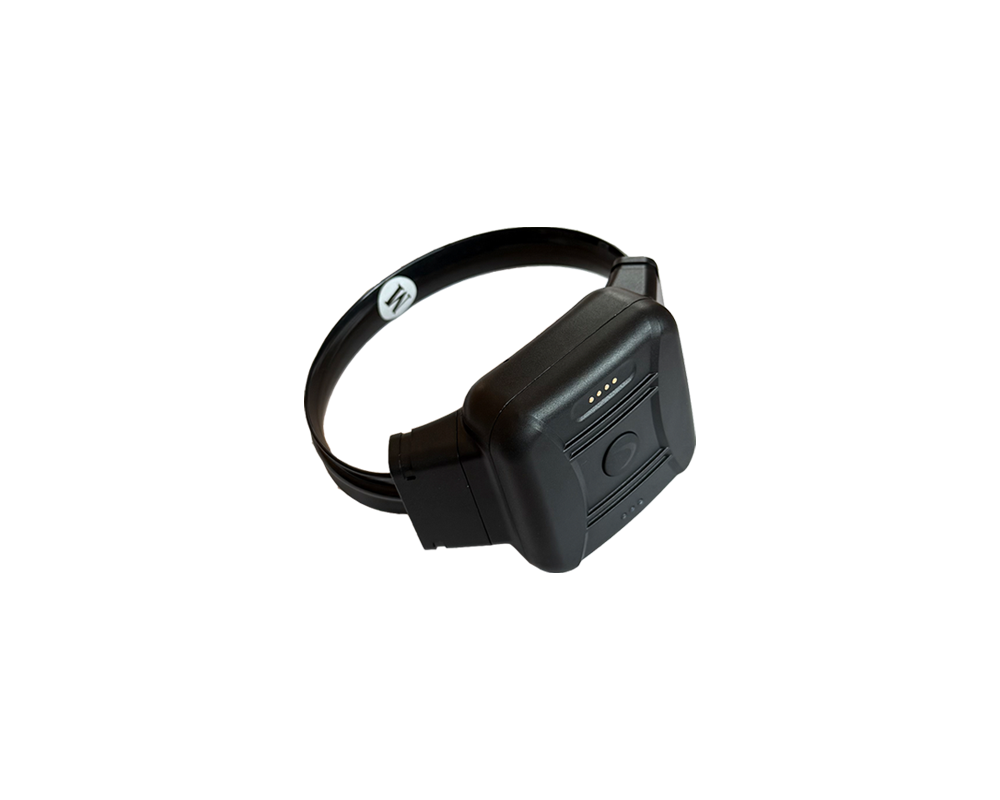
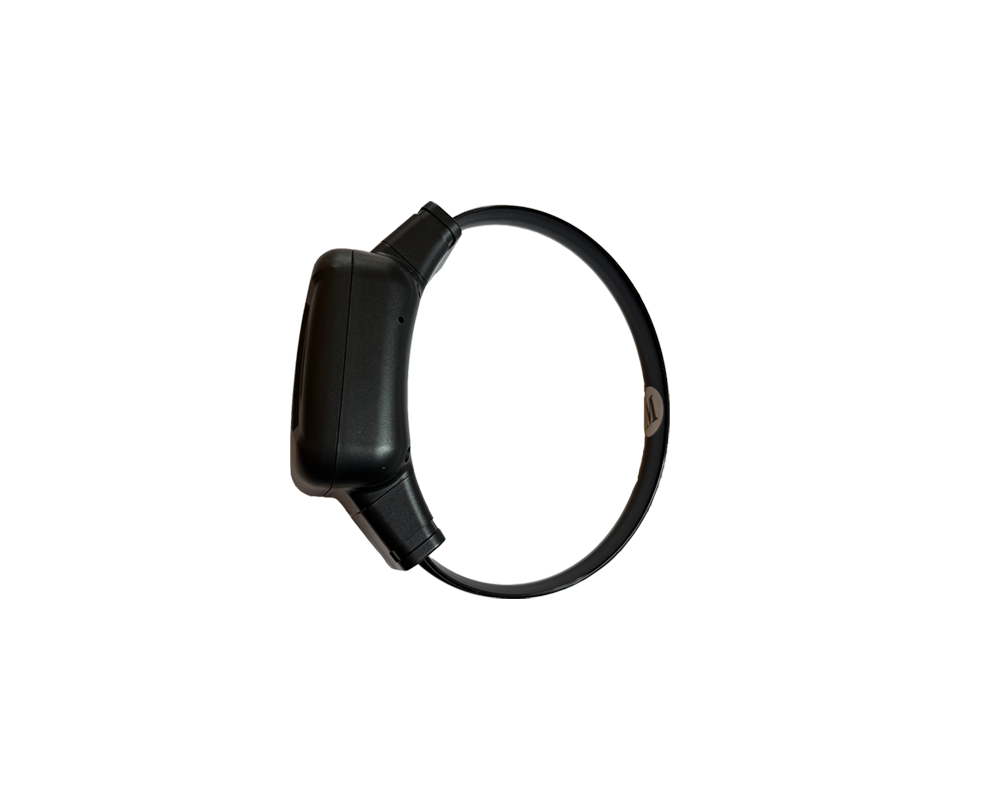
CO-EYE ONE: 108 g (60×58×24 mm) per official spec sheet—positioned for programs that want the ankle monitor to disappear into daily life as much as security policy allows.
2. Battery life and reporting cadence: the real operational cost
Battery spec sheets must be read next to reporting interval. A GPS ankle monitor that reports every few minutes burns energy faster than one that batches fixes for community-corrections tiers—but pretrial and high-risk tracks may require the denser cadence regardless. Short battery life shifts cost from hardware capex to officer time (chase calls, bench swaps, hearings) and to participant failure modes when charging is misunderstood.
Benchmark: programs should ask vendors for battery curves at the exact reporting profile they plan to enforce. As a reference point, representative LTE-M/NB-IoT one-piece designs increasingly advertise on the order of multi-day to one-week endurance; same hardware may drop to daily charging if you crank fix frequency to near-real-time.
CO-EYE ONE: up to 7 days standalone battery life with 5-minute interval LTE-M/NB-IoT reporting in manufacturer documentation; 1700 mAh cell; 2.5-hour recharge. CO-EYE ONE-AC adds eSIM and BLE-connected modes with up to 6 months battery in connected-mode specifications where that architecture applies.
3. Tamper detection: fiber optic versus resistive strap sensing
Tamper is where electronic ankle bracelet programs win or lose credibility in court. Resistive or simple continuity loops can generate ambiguous alerts from moisture, strap wear, or installer technique—multiplying reviews and training ankle monitor fatigue. Optical fiber sensing detects physical strap or housing compromise with a different physics stack; buyers should ask how each vendor classifies false positives versus true tampers and how evidence packets are exported.
Benchmark: ask for written alert definitions, sample exports, and whether strap/case tamper are independently sensed. Programs migrating off legacy resistive fleets often target materially lower false tamper volumes within 90-day pilots—set that expectation in the RFP.
CO-EYE ONE: fiber-optic tamper on strap and case per product documentation. Marketing materials describe zero false-positive fiber tamper signaling when installed per manufacturer guidance—use pilot data to validate against your local strap protocol and participant demographics.
Technical buyers may also want our deep dive on optical fiber anti-tamper technology in GPS ankle monitors for diagrams and failure-mode language suitable for standards committees.
4. Cellular connectivity and sunset risk: will the modem work in 2028?
A GPS ankle monitor is only as current as its radio. Carriers worldwide continue re-farming spectrum; programs that locked into narrow 3G-only modems have lived through expensive truck rolls. Your ankle monitor RFP should request explicit multi-band LTE-M/NB-IoT (or equivalent low-power wide-area) support, SIM logistics (nano vs eSIM), and a published firmware/OTA path.
Benchmark: score bids higher when they show 5G-compatible low-power cellular (LTE-M/NB-IoT) and GSM/GPRS/EDGE fallbacks for coverage holes—rather than single-mode radios that paint you into a corner.
CO-EYE ONE: 5G compatible LTE-M / NB-IoT / GSM with nano SIM per spec sheet. ONE-AC adds eSIM plus nano SIM for operators that want carrier flexibility without physical swap logistics.
For roadmap context on eSIM and LPWAN, see 5G and eSIM in electronic monitoring.
5. IP rating and environmental hardening: showers, work sites, weather
Participants will not follow compliance instructions that conflict with hygiene or outdoor employment. If your electronic ankle bracelet cannot survive rinse and sweat, you will see off-body charging patterns that mimic violations. Specify ingress protection, operating temperature, and charging connector durability up front.
Benchmark: court-grade community supervision hardware should target at least IP6X dust and sustained water ingress resistance; leading one-piece ankle monitor designs commonly advertise IP68 for full device submersion resistance per IEC labeling—verify with your vendor’s test reports.
CO-EYE ONE: IP68 certified per manufacturer documentation; operating temperature −20 to +60 °C.
6. GNSS accuracy and assisted location: maps that hold up in hearings
GPS-only fixes struggle in urban canyons, parking structures, and some residential layouts. Modern GPS ankle bracelet stacks combine multi-constellation GNSS with Wi-Fi and LBS assists; buyers should demand disclosure of which assists are enabled and how location uncertainty is represented in officer dashboards.
Benchmark: NIJ-style public-sector discussions often cite horizontal accuracy benchmarks on the order of tens of meters for some legacy performance classes; leading integrated one-piece vendors now commonly specify sub-5 m or better under favorable sky view. Use pilot drives near courts, schools, and victim addresses to stress-test what your ankle monitor actually produces—not what a brochure claims in open sky.
CO-EYE ONE: multi-constellation GPS / BeiDou / Galileo / GLONASS with WiFi and LBS; manufacturer-stated < 2 m GPS accuracy (CEP) under favorable conditions.
7. Installation speed and monitoring software integration
Intake throughput matters when jails release to pretrial GPS the same afternoon. Complicated strap tools, multi-step pairing, or desktop-only enrollment create queues and training debt. Likewise, the ankle monitor modem is only half the product: alerts, schedules, geofences, and audit trails live in the monitoring platform.
Benchmark: require documented enrollment time on a live account, API or bulk-import paths for caseloads, role-based access, retention settings, and export formats your prosecutors and auditors already accept. Tool-free fitting in under one minute is a realistic discriminator; sub-30-second installs separate next-generation hardware from legacy two-piece workflows.
CO-EYE ONE: < 3 seconds install or removal with snap-on strap mechanics per manufacturer claims; encrypted transport (HTTPS/SSL, AES128/256) and OTA update support from the CO-EYE platform.
Platform buyers should review CO-EYE Monitoring Software—13 functional modules in the unified stack described in product materials—alongside your IT security questionnaire.
Scoring demos: what a 30/60/90-day ankle monitor pilot should prove
Paper comparisons of GPS ankle monitor brochures rarely survive first contact with your county’s RF environment. Structure demonstrations so vendors collect fixes along the same corridors your officers already distrust—near courthouses, public housing, industrial zones, and victim-adjacent addresses where multipath spikes. Log alert volumes by category (tamper, communication loss, zone breach) and have supervisors tag outcomes: true positive, false positive, inconclusive. That spreadsheet becomes the defensible record when council asks why one ankle monitor bid looked cheaper on paper but consumed twice the monitoring-center labor.
Pair each hardware candidate with the same monitoring seat and reporting templates so you are not accidentally praising a dashboard while punishing a modem. For electronic ankle bracelet programs with mixed risk tiers, run at least two reporting profiles (for example, a denser pretrial track and a medium cadence probation track) so battery claims are tested where your policy actually operates.
Total cost of ownership beyond per-device ankle monitor pricing
Unit price is a small fraction of what agencies spend on an ankle monitor program. Model spare-device ratios, overnight shipping for strap failures, charger replacement, field service radius, training refreshers, and prosecutor discovery exports. A GPS ankle bracelet that enrolls in seconds and stays on-body longer between charges reduces supervised-person hours and jail-alternative bed-days—line items finance officers recognize even when capital budgets are tight.
Cellular obsolescence is a hidden TCO trap: if your fleet cannot OTA to new bands, you will rebuy the entire GPS ankle monitor population years earlier than planned. Ask vendors for a written roadmap item tied to carrier notices you can file with the purchasing file. eSIM-capable SKUs such as CO-EYE ONE-AC can reduce truck rolls when carriers require profile changes, provided your legal and telecom teams accept the architecture.
How to use this checklist inside an RFP
Translate each heading into scored line items: weight class, battery at defined reporting intervals, tamper physics and evidence packet, cellular bands and sunset plan, IP rating with test house, GNSS assist stack, install SOP with photos, and software integration artifacts. Weight the GPS ankle monitor section to match your risk tiers: pretrial high-risk caseloads should not inherit low-risk battery assumptions, and victim-safety programs should prioritize tamper evidentiary clarity alongside electronic ankle bracelet location quality.
When leadership asks why the lightest ankle monitor costs more, answer in total cost of ownership: fewer swap trucks, fewer contested hearings from ambiguous strap alerts, and longer usable life before modem obsolescence. The procurement goal is not the cheapest strap—it is the most defensible system.
FAQ: Ankle monitor procurement features
What is the first specification to fix when writing an ankle monitor RFP?
Define reporting cadence and battery life together. Without that pair locked, vendors quote incompatible GPS ankle monitor modes and your evaluation committee compares apples to oranges.
How much does ankle monitor weight matter for compliance?
More than many IT-led procurements assume. Heavier electronic ankle bracelet hardware correlates with comfort complaints and improper wear adjustments—both of which increase technical alerts and officer workload.
Why specify fiber-optic tamper instead of legacy resistive loops?
Buyers seek clearer physical-evidence style tamper signaling and fewer ambiguous continuity breaks. Always confirm with pilot data, but optical strap sensing is a common upgrade path for agencies reducing ankle monitor false tamper volume.
Should agencies still require GSM fallback in 2026?
Yes, when your coverage maps show pockets where LPWAN is immature. Dual-path cellular is a hedge against uneven carrier modernization and rural dead zones for continuous GPS ankle bracelet reporting.
What software questions belong beside hardware in ankle monitor bids?
Ask for API documentation, alert taxonomy, geofence versioning, role-based access, export formats, uptime SLAs, and training hours. The ankle monitor is the sensor; the platform is where supervisors spend their day.
Specifications for CO-EYE ONE and related products reflect REFINE Technology documentation at publication. Verify current datasheets before contractual incorporation. General industry ranges are illustrative; always run structured pilots in your jurisdiction.