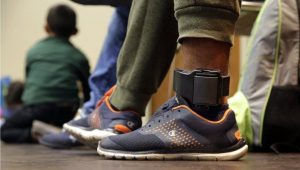
When courts, sheriffs, and pretrial offices ask for a single number, ankle monitor cost is never one line on a budget—ankle monitor programs bundle hardware, cellular backhaul, monitoring-center labor, field response, and policy-driven payer rules that change county by county. This 2026 breakdown gives supervisors and wearers a realistic map: who typically pays, how ankle monitor cost differs between GPS and lower-touch modalities, state-level planning bands (not legal quotes), and the hidden charges that inflate ankle monitor cost after go-live. Pair it with our pillar ankle monitor cost guide for deep TCO math, then walk program leads through what is an ankle monitor before you finalize RFP language. For modality context, see the GPS ankle monitor guide and the technology outlook in ankle monitor technology 2026 guide. Industry reporting on supervision populations and fee models—useful when you brief councils on ankle monitor cost tradeoffs—is summarized by the Vera Institute of Justice and broader electronic monitoring research.
Who Pays for Ankle Monitors?
Ankle monitor cost allocation is a policy choice first and a vendor invoice second. In many U.S. jurisdictions, courts order supervision but statutes decide whether the county general fund, a state grant, a supervision vendor pool, or the supervised person pays all or part of the ankle monitor fee. Research-oriented organizations such as the Vera Institute of Justice have documented wide variation in how participant fees interact with ability-to-pay protections—so a “standard” ankle monitor cost rarely exists even inside the same state.
Agency-funded models simplify compliance (fewer payment-related technical violations) but concentrate ankle monitor cost on taxpayers. Participant-funded models attempt cost recovery yet can collide with indigency rulings and create administrative churn when invoices bounce. Hybrid models—county pays base monitoring and statutes cap participant co-pays—are common where legislators want accountability without pricing people back into jail for nonpayment.
Procurement tip: your master agreement should spell out who pays replacement hardware after negligent damage, who pays cellular overages, and whether monitoring pauses when a court waives fees. Ambiguity there is one of the fastest ways ankle monitor cost disputes land on your general counsel—not your vendor.
Court orders also interact with billing cadence. Some jurisdictions bill calendar-day supervision; others bill only “active” monitoring days after installation is confirmed. If your vendor’s invoice does not match the court’s expectations, supervised individuals experience confusion—and your clerk’s office absorbs the phone calls. Documenting billing definitions in the same packet as the fee schedule prevents ankle monitor cost surprises during the first monthly close after rollout.
Average Daily Costs by Program Type
Daily ankle monitor cost is driven by risk tier, reporting interval, map and rules complexity, bilingual monitoring, after-hours SLA, and whether the stack is full outdoor GPS ankle monitor tracking versus RF home presence or smartphone check-ins. The National Institute of Justice (NIJ) literature on location-based supervision emphasizes that reliable reporting, evidence-grade logs, and tamper integrity are operational requirements—not optional add-ons—so per-diem pricing reflects real labor and telecom, not “software only.”
| Program type | Typical daily band | Cost drivers |
|---|---|---|
| GPS ankle monitor (continuous outdoor accountability) | Roughly $5–$25/day | Fix interval, geofence count, victim-notification integrations, after-hours escalation |
| RF / home-presence tethering | Roughly $3–$12/day | Lower continuous outdoor tracking burden; beacon inventory still matters |
| Smartphone supervision + optional wearable | Roughly $2–$10/day | BYOD vs agency handset, MDM, biometric check-ins, tethered accessories |
Because ankle monitor daily rates bundle cellular and monitoring-center time, always request an itemized per-diem: carrier profile, dashboard seats, training hours, spare swap SLA, and whether firmware updates are included. If those lines are vague, your “low” ankle monitor cost becomes a change-order story halfway through the contract.
NIJ’s body of work on location-based supervision underscores that reliability, auditability, and tamper adjudication are not “premium features”—they are baseline expectations when GPS coordinates become court exhibits. That is why seemingly similar GPS ankle monitor quotes can diverge: one bid assumes conservative fix intervals and human review of every strap event; another assumes aggressive automation that may not survive your prosecutor’s discovery standards. When finance asks why two per-diems differ, the honest answer is usually labor and evidence packaging, not a mysterious margin.
Cost Breakdown by State
States do not publish a single official ankle monitor cost table—counties contract with vendors, courts set fees, and statutes change. The ranges below are industry planning bands commonly cited in public reporting, vendor RFPs, and legislative debate; treat them as orientation for budgeting, not a quote. When your finance team models ankle monitor cost, anchor assumptions in your own solicitation responses.
The Vera Institute’s research on people under electronic monitoring highlights how fee structures intersect with poverty and compliance: when ankle monitor cost becomes unpayable, technical violations can stack even when GPS hardware is functioning. That policy reality is why many counties publish fee-waiver forms, payment plans, and clear statements of what happens during nonpayment—because the social cost of a poorly designed payer model can exceed the fiscal savings of shifting fees to participants.
| State | Typical daily band | Notes for agencies & wearers |
|---|---|---|
| Florida | About $5–$15/day | Large vendor market; GPS ankle monitor dockets often mid-band depending on victim services |
| California | About $3–$35/day | Wide spread across counties and fee waivers; always model indigency impact on ankle monitor cost |
| Texas | About $5–$20/day | County systems differ; pretrial expansion can shift who pays base monitoring |
| New York | About $4–$18/day | Urban density and transit corridors affect GPS ankle monitor fix strategies |
| Illinois | About $5–$17/day | Cook County and collar counties often show different ankle monitor fee schedules |
| Ohio | About $4–$16/day | Domestic-violence GPS tiers can run higher than standard pretrial RF programs |
| Georgia | About $5–$18/day | Participant-funded models common—document hardship processes to avoid compliance cliffs |
| Arizona | About $5–$19/day | Heat and outdoor work patterns increase charging logistics for any GPS ankle monitor |
| Pennsylvania | About $4–$17/day | County-by-county contracts mean ankle monitor cost variance inside the same media market |
| Michigan | About $5–$16/day | Winter response and road conditions can raise field-service costs beyond the per-diem |
For operational context on how dashboards and caseload drive labor—not just device sticker price—supervision teams may also reference probation GPS monitoring operations checklists when aligning reporting intervals with staffing reality.
If you supervise across multiple counties inside one media market, do not assume one state row equals one contract. Adjacent counties may use different vendors, different payer rules, and different victim-notification integrations—so regional jail boards should normalize ankle monitor cost assumptions before they publish a single “county-wide” estimate in a press release.
Hidden Costs: Installation, Replacement, and Travel Permits
The line item labeled “monitoring” rarely captures the full ankle monitor cost story. Installation and fitting visits—especially when courts require same-day placement—consume transport and overtime. Replacement after strap damage, lost chargers, or failed seals triggers depot cycles and evidence-grade chain-of-custody paperwork. Travel permits and interstate compact scenarios can require reprogramming, additional risk reviews, and temporary SLA upgrades; each event nudges effective ankle monitor cost upward even when the daily vendor rate stays flat.
Two-piece GPS ankle monitor architectures may add home beacon hardware, power routing, and spare-pool logistics that do not appear on page one of a quote. NIJ-sponsored technical discussions of electronic supervision ecosystems remind buyers that weak tamper narratives generate emergency hearings—prosecutor and defender time is a real cost center even if it never hits the vendor invoice.
Wearers should ask for written fee schedules: activation, daily monitoring, payment processing, late fees, and equipment loss. Agencies should require vendors to disclose pass-through cellular overages and whether firmware or carrier changes trigger truck rolls. Transparency is how you keep ankle monitor cost predictable through an entire budget cycle.
Travel permits illustrate how policy converts into invoices. When a supervised person receives permission to cross state lines for work or family care, some programs charge reprogramming or “case reopen” fees; others absorb the labor inside the base per-diem. Interstate supervision can also require additional risk reviews. If your policy manual is silent, staff improvise—and improvisation is expensive. Write permit workflows and fee caps before you scale a GPS ankle monitor cohort past the pilot phase.
How to Reduce Monitoring Costs
Lowering ankle monitor cost without lowering public safety starts with matching device modality to court orders—over-specifying GPS ankle monitor tracking for low-risk curfew cases buys map complexity you will pay for twice (vendor fees + officer triage). Risk-stratified reporting intervals, geofence discipline, and consolidated monitoring contracts across county departments reduce duplicate platform fees.
Operational efficiency matters as much as per-diem negotiation. Programs that cut false tamper noise spend fewer hours on worthless field deployments; programs that extend battery life shrink welfare checks tied to dead batteries. Training magistrates and line officers on what GPS can and cannot prove reduces court churn. Each lever lowers the all-in ankle monitor cost your community actually feels—even when the published daily rate looks unchanged.
Finally, centralize spare pools and standardize charging accessories. Mismatched chargers and orphaned hubs are a silent multiplier on ankle monitor fleet TCO.
Grant-funded expansions—pretrial pilots, VOCA-adjacent victim safety initiatives, or justice reinvestment line items—often include reporting requirements that your baseline contract did not price. If you anticipate federal or state pass-through funds, bake deliverables (data fields, export cadence, audit logs) into the original ankle monitor cost model so you are not retrofitting analytics six months later.
Agency Procurement Cost Guide
Procurement is where ankle monitor cost becomes enforceable. Require apples-to-apples SLA terms: mean time to replace, evidence export formats, after-hours escalation, and alert taxonomy mapping. Score bids on equivalent fix intervals and tamper adjudication workflows—not headline device MSRP alone. Reference NIJ guidance on performance and integrity expectations when you write specifications so vendors cannot “meet” RFPs with consumer-grade traceability.
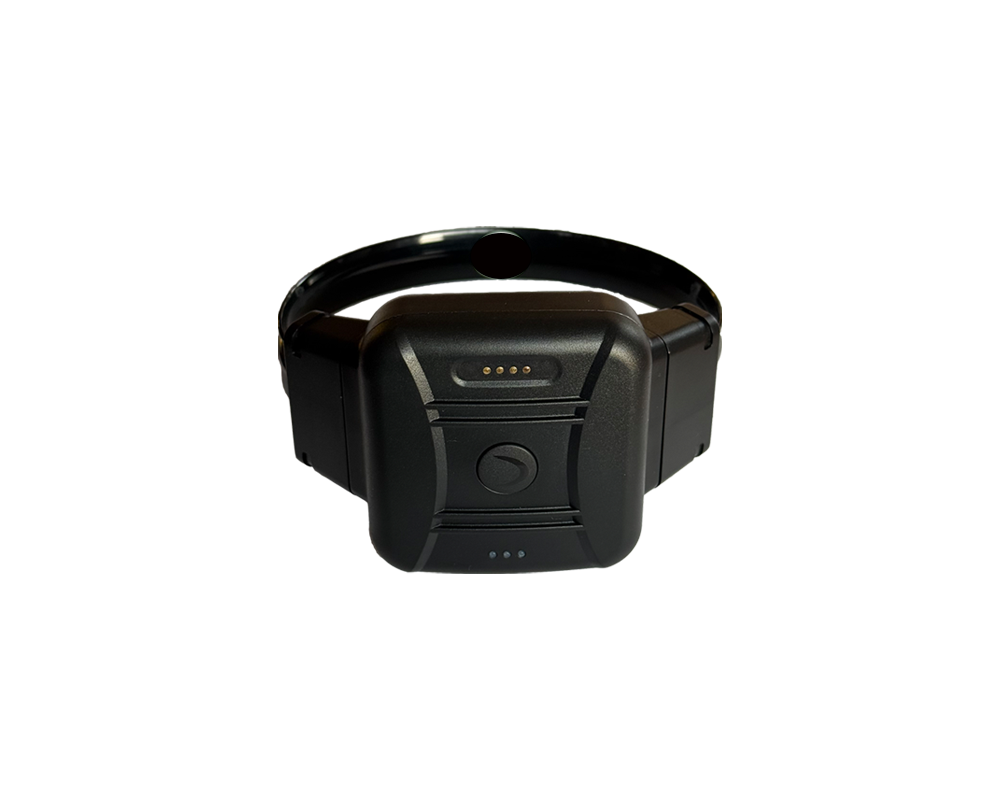
On the hardware side, evaluate total cost of ownership for a GPS ankle monitor fleet: one-piece designs can avoid separate home beacon purchases and the install/refresh cadence those beacons require, while longer battery endurance reduces charge-related officer workload. CO-EYE ONE illustrates an engineering path agencies increasingly ask about in TCO workshops: a one-piece GPS ankle monitor that does not depend on a separate home base station for core outdoor tracking, up to about seven days of standalone battery life (typical LTE-M/NB reporting per manufacturer specifications), and fiber-optic strap and case tamper sensing designed for zero false-positive true tamper events—reducing manual alert review and emergency deployments that inflate ankle monitor cost after award. See full specifications on the CO-EYE ONE product page and use Contact Sales / Request Quote for certified fleet pricing.
Bundle training hours, integration connectors, and dashboard seats into the evaluated price—not optional change orders. If your team also runs pretrial and probation stacks separately, consider whether a single monitoring platform (with appropriate data segregation) can collapse duplicate ankle monitor cost lines across divisions.
Use a scored RFP matrix that separates mandatory compliance items from “nice to have” analytics. Mandatory items should include evidence export formats, chain-of-custody for device swaps, tamper adjudication rules, and uptime commitments. Optional items—fancy heatmaps, experimental risk scores—should be priced as add-ons so you can drop them without renegotiating the entire ankle monitor program when budgets tighten.
When comparing community supervision to incarceration on a dollars-per-day basis, NIJ-supported research on electronic supervision outcomes is frequently cited in legislative packets: community EM is not free, but detention bed-day economics often remain an order of magnitude higher depending on how your state fully loads jail costs. That framing helps elected officials understand why shaving ankle monitor cost through under-specified monitoring can be a false economy if it increases revocations or officer overtime.
FAQ
What is a realistic ankle monitor cost per day in 2026? Many active GPS ankle monitor programs budget in the roughly $5–$25/day band depending on SLA and integrations; RF and smartphone-first programs often sit lower. Always validate against your county contract.
Why does ankle monitor cost vary so much by state? Vendor markets, payer statutes, victim-notification requirements, and local wage rates for monitoring staff all move the number—even before indigency waivers.
Does ankle monitor cost include cellular data? Usually yes in per-diem pricing, but confirm overages, roaming, and whether carrier migrations trigger fees or truck rolls.
What hidden fees raise ankle monitor cost for wearers? Activation, payment processing, permit changes, replacement straps, and lost chargers are common add-ons that should be disclosed up front.
How should agencies compare ankle monitor cost across vendors? Model five-year TCO with alert volumes, spare swap SLAs, training, integrations, and replacement curves—not day-one per-diem alone.
Where can I read more about electronic monitoring research? Start with the ankle-monitor.org industry library for electronic monitoring policy and technology analysis alongside NIJ references.