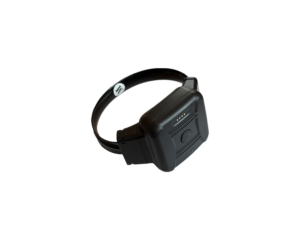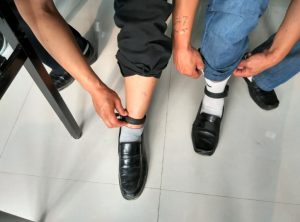
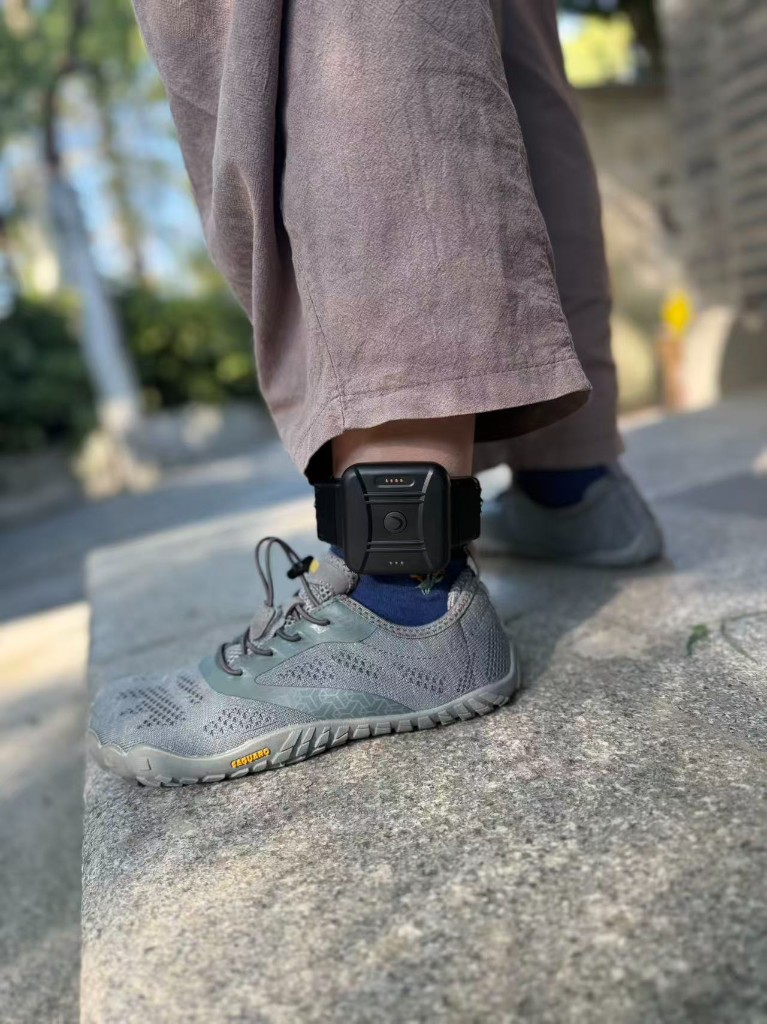
Most GPS ankle monitor procurement decisions start and end with a spec sheet. Weight, battery hours, IP rating — checked, checked, checked. Yet 18 months later, the same agency is drowning in false tamper alerts, managing a fleet of devices that can’t hold a charge past Tuesday, and facing a courtroom challenge because the vendor can’t produce a chain-of-custody audit trail.
The spec sheet lied? No. The spec sheet was irrelevant — because the agency chose a vendor that looked right on paper but lacked the deep, specialized EM engineering that separates professional-grade corrections equipment from consumer electronics wrapped in a different housing.
Why “Specialized EM Manufacturer” Is the Single Most Important Selection Criterion
After deploying 200,000+ devices across 30+ countries over 16 years, we’ve watched agencies repeat the same costly mistake: choosing a vendor based on price or a single impressive specification, without verifying that the manufacturer actually lives and breathes electronic monitoring.
The EM ankle monitor market has a dirty secret. A growing number of suppliers are essentially consumer-grade children’s GPS watch manufacturers who rebrand and minimally modify their existing wearable trackers for the corrections market. These products look acceptable in a PowerPoint presentation. They fail catastrophically in the field — because a device designed to track a 7-year-old walking to school operates under fundamentally different engineering constraints than a device strapped to a high-risk offender 24/7 for months in rain, sweat, and deliberate sabotage attempts.
Here’s what goes wrong when you buy from a non-specialized manufacturer:
- Tamper detection is an afterthought — consumer trackers use basic accelerometers or skin-contact sensors. A determined offender defeats them in minutes. Professional EM devices use fiber-optic loop continuity (zero false alarms) or equivalent dedicated hardware.
- Battery chemistry isn’t corrections-rated — consumer lithium cells optimized for daily charging cycles (phone pattern) degrade within 6 months under the EM use pattern (continuous drain + infrequent charging). You’ll see “7-day battery” become “3-day battery” by month eight.
- Firmware update infrastructure doesn’t exist — when a vulnerability or protocol change requires OTA patching, a consumer-product company has no secure firmware pipeline for corrections devices. Your fleet becomes permanently stuck on Day 1 firmware.
- Certification is incomplete or fraudulent — CE/FCC marks on consumer watches don’t cover the SAR (Specific Absorption Rate) testing required for 24/7 ankle-worn devices. Some vendors present their children’s watch CE certificate as if it applies to the ankle monitor version.
- Court-admissible evidence chain is nonexistent — consumer platforms store location data in standard cloud databases. There’s no cryptographic signing, no hash-chain integrity, no CJIS-aligned access control. A defense attorney will destroy this evidence.
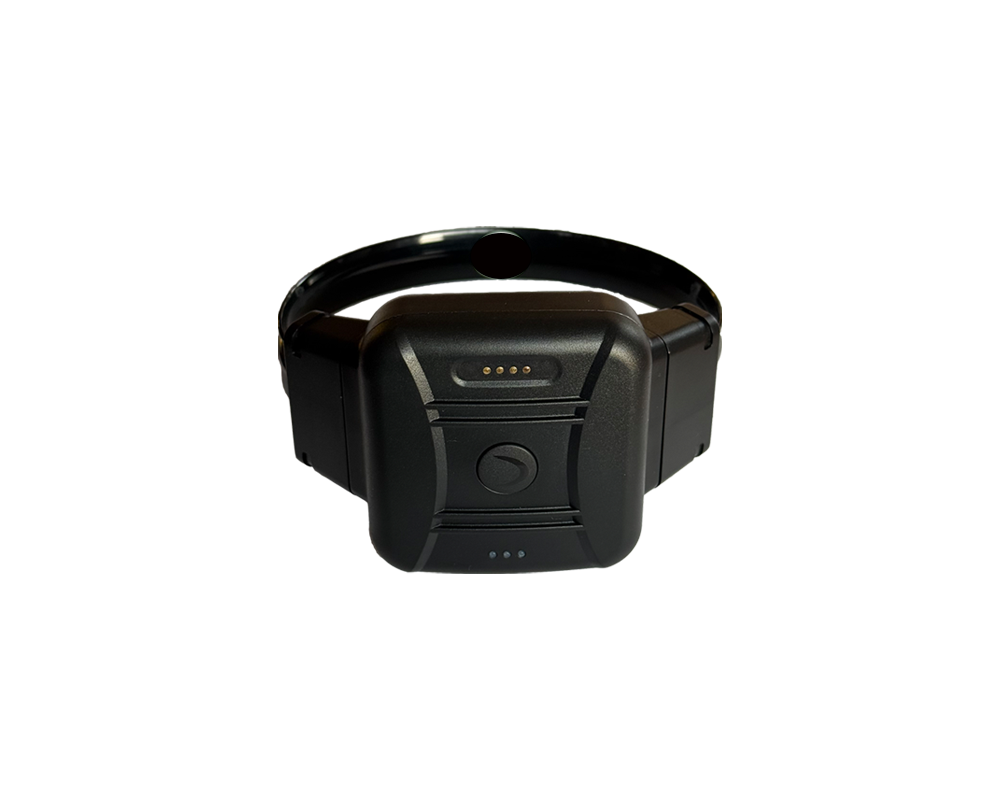
The 8 Due-Diligence Questions
Question 1: How many years has this manufacturer focused exclusively on electronic monitoring?
A vendor who entered the EM market 2 years ago by modifying an existing IoT product line is not the same as a manufacturer with 10+ years of dedicated corrections R&D. Ask for their product timeline. Ask which government agencies they supplied in 2018, 2020, 2022. Verify independently through NIJ community corrections resources and state procurement award databases.
Red flag: The vendor’s main product catalog includes children’s watches, pet trackers, fleet management devices, or personal safety pendants alongside their “corrections” product. This indicates EM is a side business, not a core competency.
Question 2: What is your tamper detection false-alarm rate — and can you prove it in a 90-day pilot?
Any vendor can claim “low false alarms.” Demand the methodology. Fiber-optic loop detection achieves zero false positives because the signal state is binary — light passes or it doesn’t. PPG/heart-rate based detection, accelerometer-based detection, and simple electrical-continuity straps all produce false alarms when the wearer exercises, sweats heavily, or shifts the device during sleep.
Red flag: The vendor cannot provide field data from an existing customer confirming their false-alarm rate over a minimum 90-day observation window.
Question 3: Does your device maintain tamper protection after battery depletion?
When a device’s battery dies — and it will, eventually — does the tamper detection system continue working? Most devices become inert bricks. A truly professional EM device maintains physical tamper evidence for months after battery depletion, because offenders know that a dead battery = undetectable removal window.
Red flag: The vendor has never been asked this question before — indicating they haven’t designed for this scenario.
Question 4: Show me your cybersecurity certification (not just your CE/FCC mark)
CE and FCC certify radio emissions. They say nothing about data security. The European EN 18031 Cybersecurity certification specifically addresses network-connected device security — authentication, encryption, firmware integrity, vulnerability disclosure. Ask whether the device has passed EN 18031 or equivalent cybersecurity audit.
Red flag: The vendor conflates CE radio certification with cybersecurity certification, or cannot explain the difference.
Question 5: How does your system ensure court-admissible data integrity?
Location data used in violation hearings must be tamper-proof. Ask specifically: Are location events digitally signed at the device level? Is there a cryptographic hash chain preventing record insertion/deletion? What encryption standard protects data in transit? Can a third party independently verify data integrity without accessing your platform?
Red flag: The vendor says “we use HTTPS and store data in AWS” — that’s transport security and hosting, not evidence-chain integrity.
Question 6: What happens when 3G/2G networks shut down?
Carriers worldwide are decommissioning 2G and 3G infrastructure. If your ankle monitors use these networks, you face a forced hardware replacement — often mid-contract. Ask: What cellular technology does the device use? Is it LTE-M/NB-IoT (5G-infrastructure compatible)? Does it support eSIM for carrier flexibility?
Red flag: The device uses 2G/3G-only modems, or the vendor cannot confirm LTE-M/NB-IoT support.
Question 7: What is your device’s connectivity strategy for cellular dead zones?
Every EM program has enrollees living in basements, rural areas, or buildings with poor cellular reception. The traditional answer is “we report signal loss.” The professional answer is an alternative connectivity path — WiFi-directed data transmission, BLE bridging through a smartphone app, or RF beacons for presence verification. Ask what happens when LTE isn’t available.
Red flag: The vendor’s only answer is “we log data locally and upload when signal returns” — this means hours or days of monitoring gaps.
Question 8: Can I speak with three reference agencies who have used your product for 12+ months?
The ultimate due diligence. Not a demo deployment — a full production deployment running for over a year. Ask the reference agency about: actual battery life vs. claimed, false-alarm volume per week, firmware update frequency, and vendor responsiveness when issues arise.
Red flag: The vendor offers testimonials but cannot connect you directly with a reference contact for a candid conversation.
How to Spot a Rebranded Consumer Tracker
The proliferation of modified children’s GPS watches in the corrections market is a growing problem. Here’s how to identify them during evaluation:
| Indicator | Professional EM Device | Rebranded Consumer Tracker |
|---|---|---|
| Housing material | Polycarbonate/ABS with IP68 rated sealing, designed for continuous skin contact | Standard ABS plastic, same mold as their consumer product with cosmetic modifications |
| Strap mechanism | Fiber-optic or dedicated tamper strap with tool-free locking mechanism | Generic silicone/rubber strap with basic buckle, sometimes with a simple wire loop |
| SAR certification | SAR tested specifically for ankle-worn position (differs from wrist) | SAR certificate is for wrist-worn position only (their watch CE cert) |
| Monitoring platform | Purpose-built corrections software with geofences, curfew schedules, violation workflows, audit trails | Modified consumer tracking app (often based on Traccar/GPS-server.net) with minimal corrections features |
| Firmware update mechanism | Secure OTA with signature verification, rollback capability, staged deployment | Manual USB update or no update capability at all |
| Company portfolio | 100% focused on criminal justice / EM products | Product line includes pet trackers, children’s watches, elderly pendants, fleet GPS |
What a Purpose-Built EM Manufacturer Looks Like
When evaluating GPS ankle monitor manufacturers, look for these hallmarks of a dedicated EM engineering company:
- Single-industry focus: Their entire R&D team works on corrections technology. They attend APPA, ACA, and corrections technology conferences — not consumer electronics shows.
- Regulatory depth: They hold cybersecurity certifications (EN 18031) beyond basic CE/FCC radio compliance. They understand CJIS Security Policy requirements.
- Field-proven deployments: 100,000+ devices deployed in actual government programs, not “units sold” to distributors who may resell for any purpose.
- Tamper engineering heritage: Multiple generations of tamper-detection technology, each iteration informed by actual defeat attempts in the field.
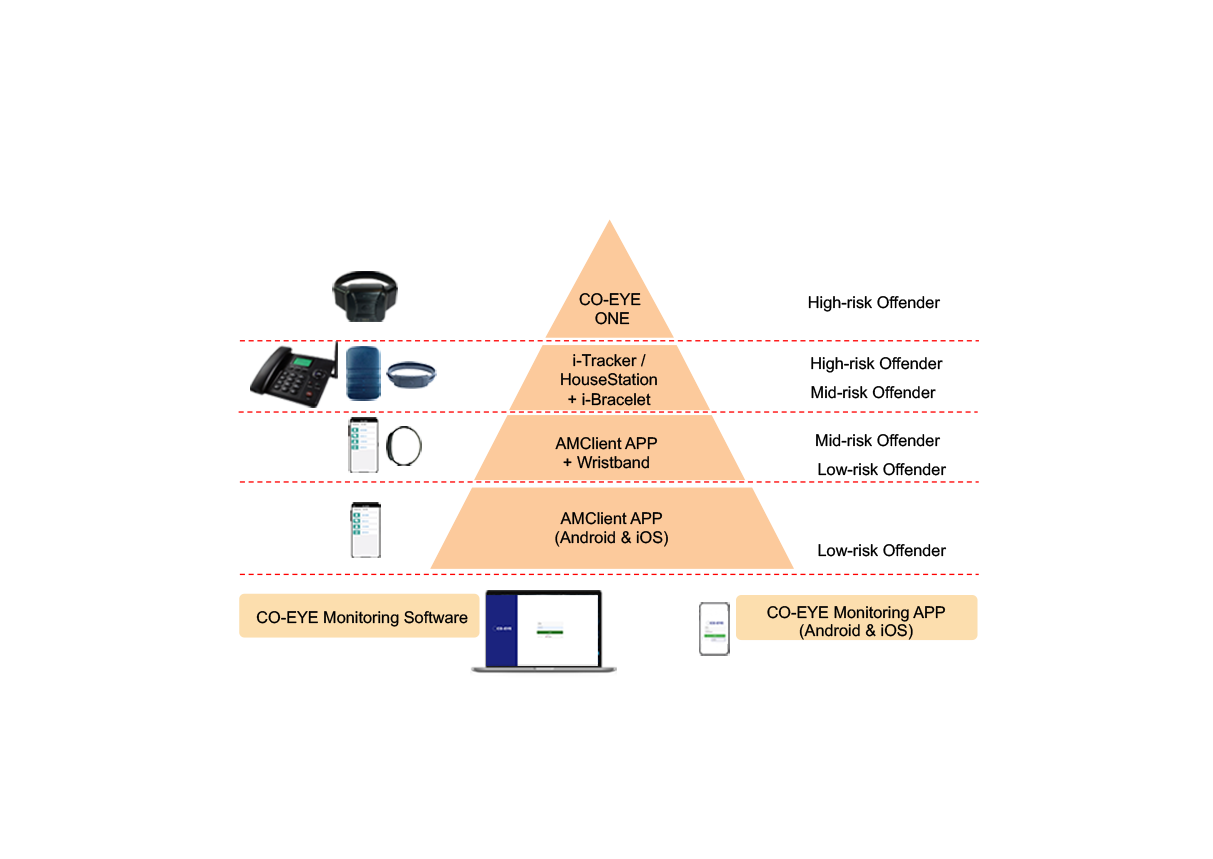
- Integrated ecosystem: GPS ankle monitor + indoor beacon + smartphone app + wristband + monitoring platform — all designed as one system, not cobbled together from third-party components.
- Evidence-grade data architecture: Cryptographic signing at the device level, hash-chain audit trails, WORM storage — designed to withstand Daubert challenges.
Frequently Asked Questions
What is the typical contract length for GPS ankle monitor procurement?
Government EM contracts typically run 3-5 years with renewal options. This makes manufacturer selection critical — you’re committing to a technology partner, not just buying hardware. A wrong choice locks you into years of operational problems that can’t be fixed by firmware updates alone.
How can agencies verify a manufacturer’s claimed deployment numbers?
Request reference contacts at named agencies (not anonymous testimonials). Ask for case studies with verifiable program names. Check whether the manufacturer appears in NIJ vendor directories or has participated in NIJ-funded pilot programs. Cross-reference with publicly available RFP award notices from state procurement portals.
What certifications should a GPS ankle monitor manufacturer hold?
At minimum: CE RED (radio), FCC Part 15/22/24 (US radio), IP68 (waterproof), UN38.3 (battery transport safety), IEC 62133 (battery safety). Ideally also: EN 18031 (cybersecurity), SAR compliance for ankle-worn position, RoHS/REACH/WEEE (environmental). Any manufacturer who cannot produce these certificates on request should be disqualified.
Why do some ankle monitors cost $5/day while others cost $15/day?
The $5/day devices are almost always rebranded consumer trackers with minimal monitoring infrastructure. The cost difference reflects: dedicated tamper detection hardware, purpose-built monitoring software with violation workflow automation, 24/7 technical support, secure evidence-grade data storage, and ongoing firmware security updates. The “cheap” device costs more in the long run through false alarms, court challenges, and premature hardware replacement.
About REFINE Technology (CO-EYE)
REFINE Technology is the leading electronic monitoring solutions provider in China with over 16 years of experience in the criminal justice industry. As the exclusive supplier for top security agencies, REFINE Technology has deployed 200,000+ devices across 30+ countries, monitoring 130,000+ individuals. The CO-EYE product line — featuring the next-generation all-in-one GPS ankle monitor, BLE wristbands, RF home beacons, and a unified monitoring platform — delivers high-security, low-stigma supervision for high-risk, mid-risk, and low-risk offender monitoring and victim protection. All CO-EYE devices carry full European NB CE directives (RED/Cybersecurity/LVD/SAR) and FCC certifications, with IP68 waterproof and REACH/RoHS/WEEE compliance.
For more information, visit www.ankle-monitor.com or contact marketing@rfidcn.com.
Related: GPS Ankle Bracelet Guide 2026: Costs, Technology & Vendor Selection