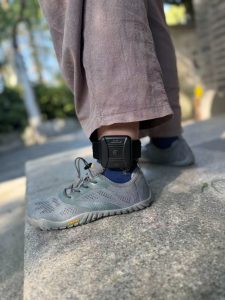
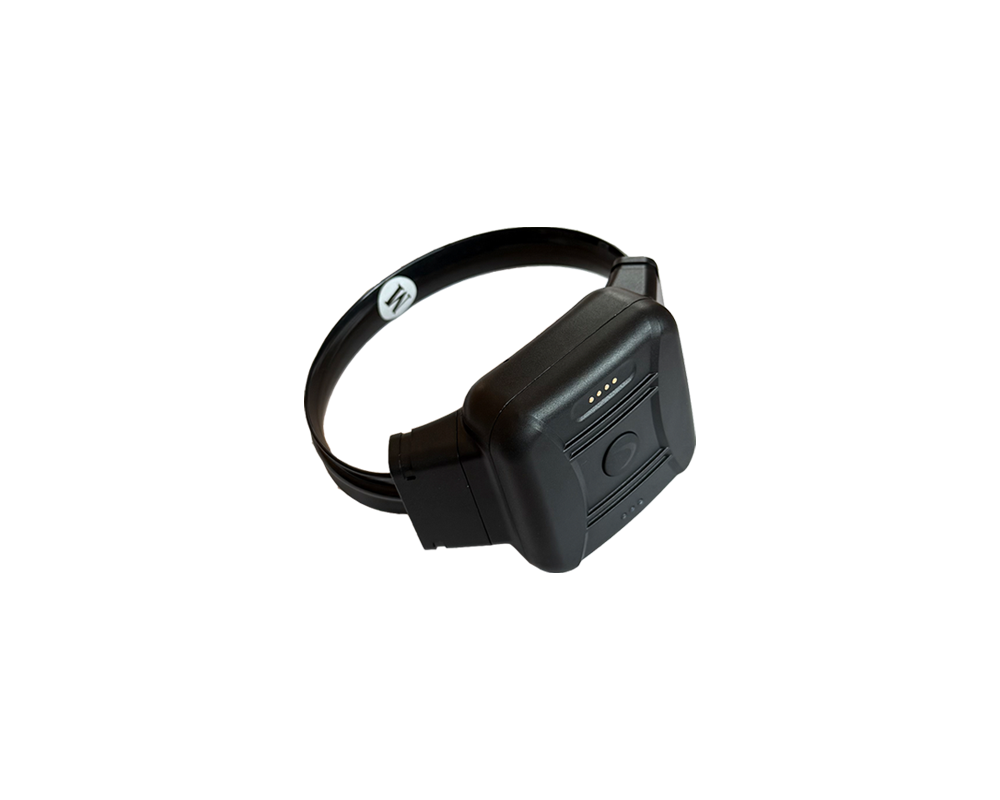
You’re evaluating GPS ankle monitor vendors. One offers a single device that does everything. Another offers a system: ankle tag plus portable tracking unit plus home base station. The two-piece vendor quotes 20% lower on hardware. Your procurement team leans toward the cheaper option.
Twelve months later, your officers are spending 35% of their shift managing the operational complexity that “cheaper” system created. Tracking units aren’t being carried. Base stations are unplugged. RF pairing keeps dropping. And every signal-loss event looks identical to a genuine absconder — until someone drives out to check.
This isn’t an argument that one architecture is universally superior. After 16 years of deploying both architectures across 30+ countries, what we’ve learned is that each architecture serves a distinct supervision purpose — and that procurement teams who match architecture to risk level consistently outperform those who standardize on one type. The nuances matter more than most comparison sheets suggest.
How Does a Two-Piece GPS Monitoring System Actually Work?
A two-piece system splits electronic monitoring across multiple physical components, typically three:
- Ankle-worn RF tag — a lightweight band containing only a short-range radio transmitter (usually 433MHz RF). It confirms the enrollee’s presence but cannot independently determine location or communicate with monitoring centers.
- Portable Tracking Unit (PTU) — a separate device (belt-clip or pocket-carried) containing the GPS receiver and cellular modem. This is the component that actually determines location and transmits data. The enrollee must carry it at all times.
- Home Beacon / Base Station — a desktop unit placed in the enrollee’s residence that communicates with the ankle tag via RF to confirm “at home” status during curfew hours.
The system works when all three components maintain continuous communication. Location tracking requires the PTU to be within RF range of the ankle tag (typically 15-30 meters). If the enrollee walks away from the PTU — leaves it charging, forgets it on the kitchen counter, or deliberately abandons it — the monitoring center loses all location data while the ankle tag continues to transmit “present” to the home beacon.
How Does a One-Piece GPS Ankle Monitor Work?
A one-piece design integrates every component — GPS/GNSS receiver, cellular modem, tamper detection, battery, and antenna array — into a single ankle-worn device. There is no separate tracking unit to carry, no home beacon required for basic operation (though optional beacons enhance indoor precision), and no RF pairing that can fail.
The device independently determines its location, independently communicates with the monitoring center, and independently detects tampering — regardless of what the enrollee does or doesn’t carry.
Why Architecture Choice Determines Operational Outcomes
1. The “Forgotten PTU” Problem (Two-Piece Only)
This is the single largest operational failure mode in two-piece systems and it has no engineering fix — because it depends on enrollee behavior.
The PTU must be carried continuously. Enrollees forget it. They leave it charging when they leave for work. They leave it in the car when they enter buildings. They deliberately leave it at known locations while traveling elsewhere. Every instance generates a “signal loss” or “PTU separation” alert.
Operational impact: A 500-enrollee two-piece program typically generates 30-60 PTU-separation alerts per day. At 15 minutes of officer time per alert (verification call, log entry, compliance warning), that’s 7.5-15 hours of daily officer labor responding to a device architecture limitation — not actual violations.
One-piece systems eliminate this failure mode entirely. The device goes where the ankle goes. Period.
2. Tamper Detection Reliability in Real-World Conditions
Professional one-piece GPS ankle monitors use fiber-optic tamper detection — a continuous optical loop running through the strap and (in advanced designs) through the device housing itself. The detection mechanism is binary: light passes through the fiber, or it doesn’t. There is no analog signal to drift, no threshold to calibrate, no environmental factor that causes ambiguity.
Why fiber-optic detection matters for procurement teams:
- Zero false alarms from daily life — showering, swimming (IP68-rated devices), sleeping, physical labor, extreme temperatures. The optical signal is unaffected by water, heat, cold, or pressure. Enrollees live normally without triggering alerts.
- Zero false alarms from long-term wear — unlike electrical continuity sensors that oxidize over months of skin contact and sweat exposure, fiber-optic loops don’t degrade. Performance at month 36 is identical to day 1.
- Immune to sophisticated attack vectors — conductive bridge attacks (defeating electrical loops with foil/wire), lubricant attacks (sliding electrical straps over joints), and thermal attacks (heating elements to change resistance readings) are all irrelevant to optical detection. The fiber either conducts light across its full path, or it’s been cut.
- Dual-loop coverage (strap + housing) — advanced implementations protect not just the strap but the device case itself. Attempts to drill into the housing, pry it open, or access internal components break the housing fiber loop independent of the strap.
- Post-battery tamper protection — when the battery is completely depleted, fiber-optic integrity detection can continue for months using passive optical properties. The device cannot report in real-time, but physical evidence of tampering is preserved for forensic inspection. No other tamper detection technology provides this capability.
Two-piece systems face an additional tamper vulnerability: the PTU itself. If an enrollee destroys or disables the PTU while keeping the ankle tag intact, the monitoring center loses tracking capability. The ankle tag continues transmitting “present” to the home beacon, masking the loss of active GPS monitoring.
3. Cellular Connectivity and Coverage Continuity
This is where architecture intersects with the realities of US cellular infrastructure — and where procurement teams frequently underestimate risk.
Network technology matters:
- LTE-M and NB-IoT are the only cellular technologies with guaranteed 15-20 year infrastructure support. They operate on licensed 5G-era spectrum bands, are explicitly maintained by all major carriers, and offer superior building penetration compared to traditional LTE. Professional one-piece devices built on LTE-M/NB-IoT modems will never face a network sunset during their operational lifetime.
- Traditional 4G LTE has a finite lifespan. While not immediately threatened, 4G-only devices face eventual forced replacement — the same disruption agencies experienced with 3G shutdown.
- 3G/2G devices are actively being disconnected. Any fleet still operating on these networks faces imminent forced replacement.
WiFi-directed connectivity — eliminating dead zones without infrastructure investment:
Even LTE-M penetrates poorly in certain environments: underground parking garages, concrete basements, steel-framed warehouses, and rural cellular fringes. Traditional devices in these environments simply stop reporting — generating “signal loss” alerts indistinguishable from absconding.
Advanced one-piece devices with WiFi-directed mode solve this by connecting to any available WiFi network (a $10 repeater, the enrollee’s home router, a workplace network) to transmit monitoring data. This is not WiFi positioning — it’s using WiFi as an alternative data transport channel when cellular is unavailable.
The operational result: continuous monitoring data flow regardless of cellular coverage quality, plus a 3-5x battery life extension (WiFi data transmission requires significantly less power than LTE). A single $10 WiFi repeater placed in an enrollee’s basement eliminates what would otherwise require a $3,000+ cellular signal booster or an accepted monitoring gap.
Two-piece systems cannot adopt this approach without adding a fourth hardware component — further increasing system complexity and failure modes.
4. Installation Speed and Officer Safety
Two-piece installation workflow:
- Fit ankle tag (requires tool for strap tensioning/cutting, 3-5 minutes)
- Pair ankle tag with PTU (RF pairing process, 1-3 minutes)
- Configure PTU cellular connectivity and verify GPS lock (2-5 minutes)
- Pair PTU with home beacon (additional RF pairing, 1-2 minutes)
- Place home beacon in optimal location and verify range (2-3 minutes)
- Instruct enrollee on PTU carrying requirements, charging protocols for multiple devices (5-10 minutes)
Total: 15-30 minutes per installation, requires tools and training
Professional one-piece installation workflow:
- Select pre-configured strap size (S/M/L/XL) based on ankle measurement
- Wrap strap, engage tool-free clasp mechanism — secure in under 3 seconds
- Device auto-activates, auto-connects to cellular, auto-acquires GPS — officer confirms green status on mobile app
Total: under 60 seconds from package to active monitoring
For agencies processing multiple enrollments per day — county jails releasing pretrial defendants, probation offices handling intake — the time difference compounds. A 20-enrollment day costs 5-10 hours of officer time with two-piece systems vs. 20-30 minutes with one-piece.
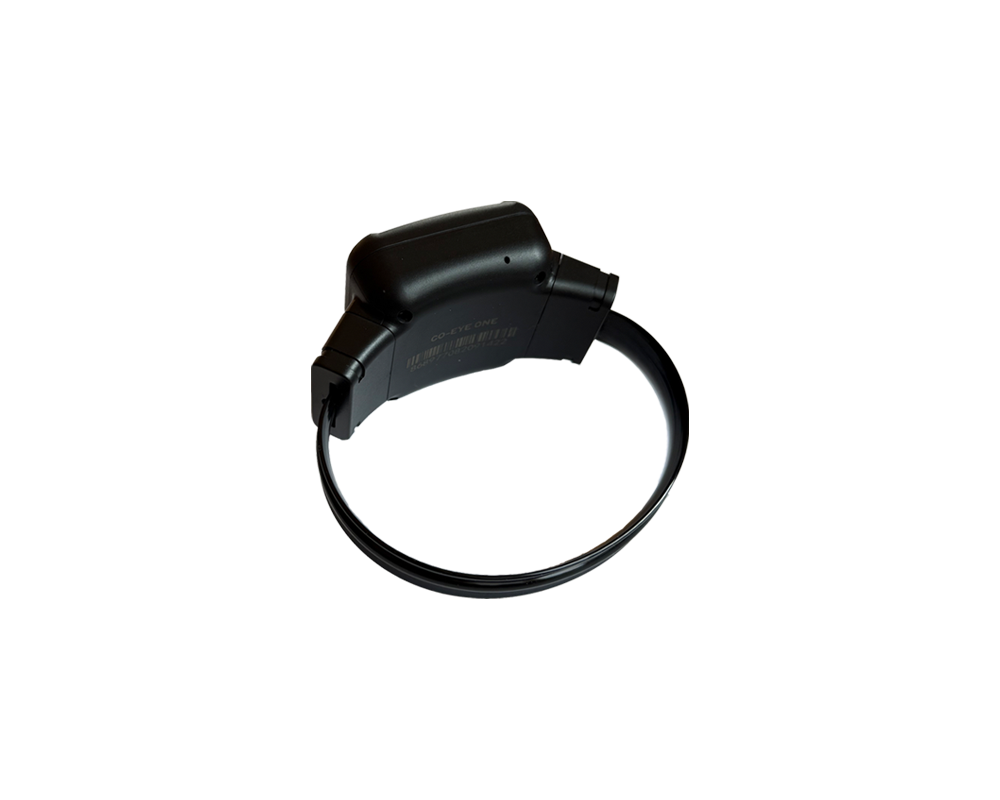
Operational Comparison Matrix
| Operational Factor | One-Piece (Professional) | Two-Piece (Traditional) |
|---|---|---|
| Components enrollee must manage | 1 (ankle device only) | 2-3 (ankle tag + PTU + chargers) |
| Failure modes from enrollee behavior | 1 (charge compliance) | 4+ (PTU carry, PTU charge, beacon power, separation) |
| Installation time | < 60 seconds, tool-free | 15-30 minutes, tools required |
| Battery life (full GPS/LTE mode) | 7 days (professional) / 24-72h (legacy one-piece) | PTU: 12-24h / Ankle tag: months (RF only) |
| Extended battery (BLE/WiFi modes) | 3 weeks (WiFi) / 6 months (BLE) | Not architecturally possible |
| Tamper detection scope | Strap + housing (dual fiber-optic) | Strap only (ankle tag) |
| Post-battery tamper protection | 3+ months | None |
| Cellular coverage backup | WiFi-directed + BLE relay | None (LTE/3G only) |
| Network future-proofing | LTE-M/NB-IoT (5G-era, 15-20yr) | 4G LTE or 3G (sunset risk) |
| Typical weight | 108-165g | Ankle: 60-90g / PTU: 150-250g (combined 210-340g) |
| Daily false alerts (500-device fleet) | 0-5 (fiber-optic) | 30-90 (PTU separation + RF pairing) |
The Strategic Role of Two-Piece Systems: Where They Excel
The comparison above addresses the industry’s traditional two-piece architecture — where a dumb RF ankle tag pairs with a separate GPS tracking unit that the enrollee must carry. That architecture has clear operational weaknesses. But dismissing all two-piece designs would be a procurement mistake, because professional EM vendors have evolved two-piece systems into purpose-built tools for specific supervision scenarios where one-piece devices are operationally overbuilt.
Industry-Standard Two-Piece: Purpose-Built for House Arrest and Low-Risk Supervision
The legitimate use case for two-piece architecture is clear:
- House arrest / curfew enforcement — when the supervision requirement is confirming an enrollee is at their approved residence during specific hours, not continuous GPS tracking. A lightweight BLE wrist tag paired with a home beacon delivers presence verification at a fraction of the operational cost of full GPS monitoring.
- Low-risk enrollee humanization — a 17-gram wrist tag that looks identical to a fitness band carries zero social stigma. The enrollee wears it 24/7 without self-consciousness, without explaining to employers or family members. This directly improves compliance rates for low-risk populations where stigma-driven non-compliance is the primary failure mode.
- Zero-charging supervision — BLE wrist tags with 2-year coin-cell batteries eliminate charging compliance entirely. For low-risk populations, removing the “forgot to charge” failure mode is operationally more valuable than continuous GPS positioning they don’t need.
The operational trade-off is explicit: two-piece architecture accepts increased monitoring-center workload (managing tag-tracker separation alerts) in exchange for enrollee-facing benefits (lighter, more discreet, no charging). For agencies with mature alert-triage workflows and tiered supervision models, this is a rational trade-off for their low-risk caseload.
Professional Two-Piece vs. One-Piece: Complementary, Not Competing
Experienced EM service providers don’t choose between architectures — they deploy both, matched to risk level:
| Risk Level | Recommended Architecture | Typical Device | Why |
|---|---|---|---|
| High risk (abscond history, violent) | One-piece GPS ankle | Full GPS/LTE with fiber-optic tamper, steel-reinforced strap | Maximum security, court-admissible continuous tracking |
| Medium risk (pretrial, DV protection) | One-piece GPS ankle | Standard GPS/LTE one-piece with fiber-optic tamper | Continuous location tracking + zone enforcement |
| Low risk (curfew/house arrest) | Two-piece: BLE wrist tag + home beacon | 17g fitness-band-style wrist tag, 2-year battery | Presence verification, zero stigma, zero charging |
| Low risk (mobile supervision) | Two-piece: BLE wrist tag + smartphone app | 17g wrist tag paired with enrollee’s own phone running monitoring app | Ultra-low-cost GPS tracking using enrollee’s phone as the tracker — no dedicated hardware needed beyond the wrist tag |
The smartphone-as-tracker model deserves special attention: pairing a BLE wrist tag with a monitoring app installed on the enrollee’s own phone creates a two-piece GPS tracking system at essentially zero hardware cost beyond the wrist tag itself. The phone provides GPS positioning, cellular data transmission, and even geofence enforcement — while the wrist tag provides tamper-evident physical tethering that confirms the phone is carried by the correct person, not left at a friend’s house. For low-risk populations who already carry smartphones, this is the lowest-cost supervision path that still provides verified location data.
The Critical Distinction: Professional EM Vendors vs. Consumer-Electronics Resellers
Only professional EM manufacturers can offer a coherent multi-architecture product line — one-piece GPS ankle monitors, two-piece BLE wrist tags, home beacons, smartphone apps, and unified monitoring software — all sharing consistent tamper detection engineering (fiber-optic), consistent security standards (EN 18031, CJIS alignment), and a single management platform.
What you will encounter in vendor evaluations (and what you must reject):
- Consumer GPS watch rebranders — these are Chinese consumer electronics export companies who take children’s GPS watches (designed for parents tracking kids at playgrounds), add a plastic buckle to prevent casual removal, and market them as “ankle monitors” to agencies unfamiliar with corrections-grade requirements. Their pitch: “It looks like a smartwatch — discreet and modern!” The reality: no fiber-optic tamper detection (a plastic buckle can be cut with kitchen scissors), no corrections-grade cellular (consumer LTE, not LTE-M/NB-IoT), no IP68 survivability, no device-lifecycle management (no sanitization, no strap replacement, no multi-enrollee reuse workflow), consumer-grade lithium batteries not rated for the charge cycles of daily monitoring use. These products fail catastrophically within months of deployment — but by then the purchase order is signed.
- How to identify them: Ask for their strap tamper detection mechanism. If the answer involves a “special buckle” or “reinforced clasp” rather than fiber-optic or at minimum electrical-continuity loop detection, you are looking at a consumer device in a corrections marketing wrapper. Ask for their device turnaround procedure. If they cannot describe a documented sanitization and strap-replacement workflow, their device was never designed for multi-enrollee institutional use.
Professional EM devices — whether one-piece ankle monitors or two-piece wrist tags — share a family of security engineering principles: fiber-optic tamper detection, tool-free installation in seconds, medical-grade materials rated for repeated sanitization, and cellular connectivity designed for the next two decades of network infrastructure.
Procurement Evaluation Checklist: Architecture Questions
Include these in your next RFP or vendor evaluation:
- How many separate devices must the enrollee manage? For each additional device, what is the documented non-compliance rate?
- What happens to monitoring continuity if the enrollee does not carry the portable tracking unit?
- What is the tamper detection false-alarm rate under independent testing? Does the vendor guarantee this rate contractually?
- Does tamper detection cover both strap AND housing? What happens to tamper detection when the battery is depleted?
- What cellular technology does the device use? If not LTE-M/NB-IoT, what is the network sunset timeline and who bears replacement costs?
- What is the vendor’s solution for monitoring enrollees in cellular dead zones? What is the per-site cost?
- What is the documented installation time from package-open to active monitoring?
- What is the device turnaround process between enrollees? Time from recovery to re-issuance?
Frequently Asked Questions
What is the main operational difference between one-piece and two-piece GPS ankle monitors?
One-piece integrates GPS, cellular, and tamper detection into a single ankle device — nothing to carry, nothing to forget. Two-piece separates location tracking into a portable unit the enrollee must carry, creating 30-60 daily PTU-separation alerts per 500-device program that officers must investigate.
Why does fiber-optic tamper detection eliminate false alarms?
Fiber-optic detection is binary — light either passes through the continuous optical loop or it doesn’t. Unlike accelerometer, electrical resistance, or capacitive sensors, fiber optics are unaffected by water, temperature, sweat, or physical pressure. Showering, swimming, sleeping, and exercise cannot trigger false alerts. The loop doesn’t degrade over years of continuous wear.
How does WiFi-directed mode improve monitoring reliability?
WiFi-directed mode uses available WiFi networks as an alternative data channel when cellular coverage is poor. A $10 WiFi repeater in a basement eliminates dead-zone signal loss that would otherwise require $3,000+ cellular boosters or accepted monitoring gaps. It simultaneously extends battery life 3-5x by using less power than cellular transmission.
When should agencies choose two-piece over one-piece architecture?
Two-piece systems (BLE wrist tag + home beacon or smartphone app) are optimal for low-risk enrollees on house arrest or curfew supervision. A 17-gram wrist tag with 2-year battery life eliminates charging compliance issues, carries zero social stigma, and costs a fraction of full GPS monitoring. Experienced EM providers deploy both architectures matched to risk level — one-piece for high/medium risk requiring continuous GPS, two-piece for low risk requiring presence verification.
How can procurement teams identify consumer GPS watches being sold as ankle monitors?
Ask two questions: What is the tamper detection mechanism? If the answer is a “special buckle” rather than fiber-optic or electrical-continuity loop, it’s a consumer device. Second: What is the device turnaround procedure between enrollees? If there’s no documented sanitization and strap-replacement workflow, the device was never engineered for institutional multi-enrollee use and will fail within months of fleet deployment.
About REFINE Technology (CO-EYE)
REFINE Technology is the leading electronic monitoring solutions provider in China with over 16 years of experience in the criminal justice industry. As the exclusive supplier for top security agencies, REFINE Technology has deployed 200,000+ devices across 30+ countries, monitoring 130,000+ individuals. The CO-EYE product line — featuring the next-generation all-in-one GPS ankle monitor, BLE wristbands, RF home beacons, and a unified monitoring platform — delivers high-security, low-stigma supervision for high-risk, mid-risk, and low-risk offender monitoring and victim protection.
For more information, visit www.ankle-monitor.com or contact marketing@rfidcn.com.
Related: GPS Ankle Bracelet Guide 2026: Costs, Technology & Vendor Selection