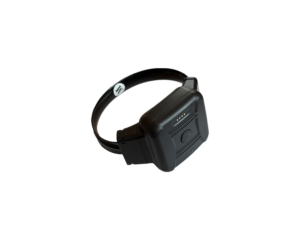

On August 26, 2026, the UK Ministry of Justice announced a policy that no other country has attempted at national scale: restriction zones — geographic boundaries that confine serious sexual and violent offenders to areas as small as a few miles wide after prison release, enforced by mandatory GPS ankle bracelet monitoring. The program launches across England and Wales in October 2026 under Section 17 of the Sentencing Act 2026.
This is not an incremental expansion of existing exclusion zones. It is a fundamental inversion of the supervision model — and it demands GPS hardware and monitoring infrastructure that most current electronic monitoring deployments are not built to deliver. For agencies and procurement teams evaluating GPS ankle bracelet technology, the UK’s restriction zone framework reveals exactly where the next generation of device requirements is heading.
Exclusion Zones vs Restriction Zones: Why the Difference Matters for GPS Technology
For two decades, exclusion zones have been the primary geofencing tool in criminal justice supervision. An exclusion zone defines a boundary the offender must not enter — typically a 300-to-1,000-foot perimeter around a victim’s home, workplace, or school. The GPS device triggers an alert when the offender crosses into the prohibited area.
Restriction zones invert that logic entirely. Instead of defining where an offender cannot go, a restriction zone defines the only area where an offender is allowed to be. Every location outside the boundary is prohibited. The offender is confined — not excluded.

The distinction creates a cascade of technical requirements that fundamentally change what a GPS ankle monitor must do:
| Parameter | Exclusion Zone | Restriction Zone |
|---|---|---|
| Alert trigger | Offender enters prohibited area | Offender leaves permitted area |
| Boundary definition | Small perimeter (300–1,000 ft) | Large polygon (miles-wide area) |
| GPS sampling when compliant | Standard interval (every 60 sec) | Must be continuous — any gap could mask a boundary crossing |
| Indoor accuracy requirement | Low (offender rarely near boundary) | High (offender may live near boundary edge) |
| False alert tolerance | Moderate (alerts are rare events) | Very low (offender is always near or inside the boundary) |
| Battery drain | Low (standard tracking mode) | High (continuous GPS + boundary checks) |
A device that adequately serves a traditional exclusion zone program may fail catastrophically in a restriction zone deployment. The UK’s program is about to demonstrate this at national scale.
Inside the UK’s Electronic Tagging Infrastructure: Scale, Challenges, and the NAO Warning
The UK currently operates one of the largest electronic tagging programs in the world. As of June 2026, 27,847 individuals were assigned electronic monitoring equipment across England and Wales — with GPS location monitoring accounting for 16,034 of those, the largest single category.
The scale is growing fast. The Ministry of Justice estimates an additional 22,000 people per year will need to be tagged from 2027 onward, driven by the Sentencing Act 2026’s expanded use of community supervision as an alternative to prison.
But a July 2026 National Audit Office (NAO) report exposed serious operational gaps in the existing system:
- As of March 2026, authorities were reviewing approximately 8,900 cases — 24% of those required to be tagged — where individuals had an active monitoring order but no functioning tag.
- The MoJ disputed the figure, citing approximately 5,450 unmonitored individuals, but acknowledged the problem.
- A backlog of tagging installation visits peaked at 7,000 in October 2024.
- As of February 2026, contractor Serco met its 95% timeliness target for visits but successfully fitted tags on only 62% of individuals seen within two attempts.
- A staffing shortfall of approximately 2,200 probation officers persisted as of March 2026.

The current UK system is operated by Serco (£200 million field and monitoring service contract awarded in 2023, operational from May 2024), which replaced Capita. Buddi provides GPS technology for specific pilot projects, including the London Mayor’s Office for Policing and Crime. The infrastructure uses a combination of RF curfew devices, GPS location monitors, alcohol monitoring devices, and non-fitted devices for immigration cases.
Adding restriction zones to this already-strained system introduces a fundamentally different monitoring workload. Each restriction zone requires continuous boundary compliance verification — not the periodic location checks that standard GPS trail monitoring provides.
What Restriction Zones Demand from GPS Ankle Bracelet Hardware
The UK’s restriction zone model creates four non-negotiable hardware requirements that separate devices built for traditional monitoring from those capable of boundary confinement enforcement:
1. Continuous GPS Fix with Indoor Fallback
An offender confined to a restriction zone who lives near the boundary edge will regularly produce GPS readings within meters of the zone perimeter. Standard GPS accuracy — approximately 10 meters outdoors and 30 meters indoors under NIJ Standard-1004.00 — means that a device relying solely on satellite positioning will generate false boundary crossings every time the offender moves near the edge of their zone.
Multi-mode positioning engines that fuse GPS, WiFi, and BLE signals can reduce indoor position uncertainty from 30+ meters to under 10 meters. For a restriction zone deployed in an urban UK city center — where tall buildings create severe GPS multipath effects — this fallback is not optional. It is the difference between a workable zone boundary and an alert storm that overwhelms the monitoring center.
2. On-Device Geofence Processing
Traditional EM architectures evaluate geofence compliance at the server: the device reports its position, and the server checks it against stored zone boundaries. This approach introduces latency — typically 60 to 120 seconds between a boundary crossing and an alert. For exclusion zones protecting a victim 10 miles away, that latency is acceptable. For a restriction zone where the offender’s entire permitted area may be three miles wide, a two-minute detection gap means the offender could be half a mile outside the zone before anyone knows.
Devices with on-board polygon geofence engines evaluate every position fix against the stored boundary locally, generating instant alerts without server round-trip delays. When the UK program processes tens of thousands of restriction zone evaluations simultaneously, server-side-only architectures will face scaling limitations that device-side processing eliminates.
3. Battery Architecture for Always-On Boundary Monitoring
Restriction zone compliance verification requires continuous GPS sampling. A device that drops to sleep mode or reduces sampling frequency to conserve battery creates monitoring gaps during which boundary crossings go undetected. The UK’s existing tagging challenges — where devices disconnected for 14+ days were still counted as “monitored” — make battery reliability a critical vulnerability.
Multi-mode battery management that adapts power consumption to connectivity context — full LTE when outdoors on cellular, WiFi-directed mode when within range of a home beacon, BLE-connected standby in proximity to infrastructure — can deliver multi-week battery life without reducing GPS sampling rates below the frequency needed for boundary compliance checks.
4. Tamper Detection That Eliminates False Positives
When an offender is confined to a restriction zone, a tamper event is not just a compliance violation — it is a potential escape from confinement. The monitoring response must be immediate and unambiguous. Tamper detection systems that generate frequent false positives (capacitive sensors, strain gauges affected by moisture and temperature) degrade the response by training monitoring staff to treat tamper alerts as routine noise.
Fiber optic tamper detection — where the optical signal through the strap is either intact or severed — produces a definitive binary result with zero false positives. When the alert fires, the strap has been cut. When it does not fire, the strap is intact. For a restriction zone program managing thousands of confined offenders, this signal clarity eliminates the alert triage burden that plagues systems using probabilistic tamper detection.
The UK’s Restriction Zone Model: Policy Architecture
The Sentencing Act 2026 creates a structured legal framework for restriction zones that other jurisdictions are already watching as a model:
- Duration: Restriction zones can last up to 2 years, with mandatory reviews at least every 3 months.
- Multi-area provisions: Courts can specify multiple non-adjacent permitted areas with transit corridors between them — allowing, for example, an offender to live in one zone and attend mandatory appointments in another.
- Mandatory electronic compliance monitoring: Any restriction zone order must include an electronic monitoring requirement (GPS tagging) unless specific statutory exceptions apply.
- Victim input: Victims have a say in how zone boundaries are drawn, ensuring the restricted area does not overlap with the victim’s regular movements.
- Breach consequences: Offenders who leave their restriction zone face recall to prison. Under the 2026 Act, GPS tag alert data alone constitutes sufficient evidence for immediate arrest and compliance review.
The program builds on existing UK EM expansion initiatives. A 2025 GOV.UK study found that GPS tagging of burglars, robbers, and thieves reduced reoffending by 20%, with 160 out of 3,360 tagged offenders convicted after their movements were mapped against unsolved crimes. The restriction zone model extends this proven surveillance approach from reactive investigation to proactive confinement.
Global Implications: Where Restriction Zones Are Heading Next
The UK is not developing this model in isolation. Several jurisdictions are converging on similar confinement-based supervision models:
- South Korea has operated GPS-enforced exclusion zones for sex offenders since 2010, with recent legislative reforms expanding to real-time joint response systems between police and probation.
- Louisiana (US) enacted Act 858 and HB 556 establishing mandatory vendor accountability and performance standards for EM providers — a regulatory foundation that restriction zone-level monitoring would require.
- Australia (Queensland) is debating new bail laws that would impose “breach bail, go to jail” provisions with GPS monitoring as a condition of release.
- The UK Domestic Abuse Perpetrators on Licence (DAPOL) program — which deployed 442 GPS monitoring orders for high-risk domestic abuse offenders in its first six months — serves as a direct precursor to the broader restriction zone rollout.
For GPS ankle bracelet manufacturers and monitoring platform providers, the message is clear: devices and systems designed for exclusion zone monitoring will not meet restriction zone requirements without significant hardware and software upgrades.
Procurement Implications: What the UK’s Program Means for EM Equipment Selection
Agencies watching the UK’s restriction zone deployment should incorporate the following into their GPS monitoring procurement evaluations:
- On-device geofence engine: Can the device evaluate polygon boundaries locally, or does all geofence processing occur server-side?
- Multi-mode positioning: Does the device fuse GPS/WiFi/BLE for indoor accuracy, or rely solely on satellite positioning?
- GPS sampling continuity: What is the minimum GPS fix interval during boundary proximity? Does the device reduce sampling to save battery?
- Buffer zone support: Can the platform define multi-layer zones (outer warning zone + inner compliance zone) with different alert escalation rules?
- Push notification to device: Can the system warn the offender when approaching a boundary, as the UK program requires?
- Battery life under continuous GPS: What is the guaranteed battery duration when GPS is sampling at maximum frequency?
- Tamper detection false positive rate: What is the documented 90-day false tamper alert rate? Does the vendor provide performance data?
- Multi-zone transit corridors: Can the platform define permitted travel corridors between non-adjacent restriction zones?
- Scalability: Can the server infrastructure handle real-time boundary compliance checks for 20,000+ simultaneously monitored individuals?
Agencies that cannot answer “yes” to these questions with their current vendor should begin evaluating alternatives before restriction zone legislation reaches their jurisdiction.
About REFINE Technology (CO-EYE)
REFINE Technology is the leading electronic monitoring solutions provider in China with over 16 years of experience in the criminal justice industry. As the exclusive supplier for top security agencies, REFINE Technology has deployed 200,000+ devices across 30+ countries, monitoring 130,000+ individuals. The CO-EYE product line — featuring the next-generation all-in-one GPS ankle monitor with on-device polygon geofence processing, multi-mode BLE/WiFi/LTE connectivity, fiber optic tamper detection, and unified monitoring platform — delivers restriction-zone-ready supervision for high-risk, mid-risk, and low-risk offender monitoring and victim protection. All CO-EYE devices carry full European NB CE directives (RED/Cybersecurity/LVD/SAR) and FCC certifications, with IP68 waterproof and REACH/RoHS/WEEE compliance.
For more information, visit www.ankle-monitor.com or contact marketing@rfidcn.com.