

When ICE fitted a GPS ankle monitor on 20-year-old Pierre Damas Bel in Springfield, Ohio, this July, the device was one of roughly 53,000 GPS trackers strapped to immigrants under the agency’s Alternatives to Detention program — a 76% increase over the previous fiscal year, according to federal data reviewed by WCPO. Meanwhile in Prince George’s County, Maryland, an assault suspect named Henry Vasquez-Pineda cut off his court-ordered ankle monitor and disappeared — turning a monitored pretrial case into a fugitive manhunt under Maryland Criminal Law § 9-405, which makes tampering with a monitoring device a misdemeanor carrying up to three years in prison.
These two September 2026 stories capture the full spectrum of ankle monitor technology in the criminal justice system — and the wildly different contexts in which these devices operate. Whether you’re a supervision agency evaluating equipment, a defense attorney advising clients, or someone who’s been ordered to wear one, understanding the types of ankle monitors and what each actually does is the starting point.
This guide breaks down every category of ankle monitor used in the United States in 2026: how each works, what it costs, who wears it, and where the technology is headed.
What Are the Main Types of Ankle Monitors?
Ankle monitors fall into five distinct categories, each answering a different supervision question. The term “ankle monitor” describes the physical form factor — a device worn around the ankle or wrist — not the underlying technology. A person wearing an ankle monitor could be GPS-tracked across a city, confined to their living room by radio frequency, tested for alcohol through their skin, or some combination of all three.
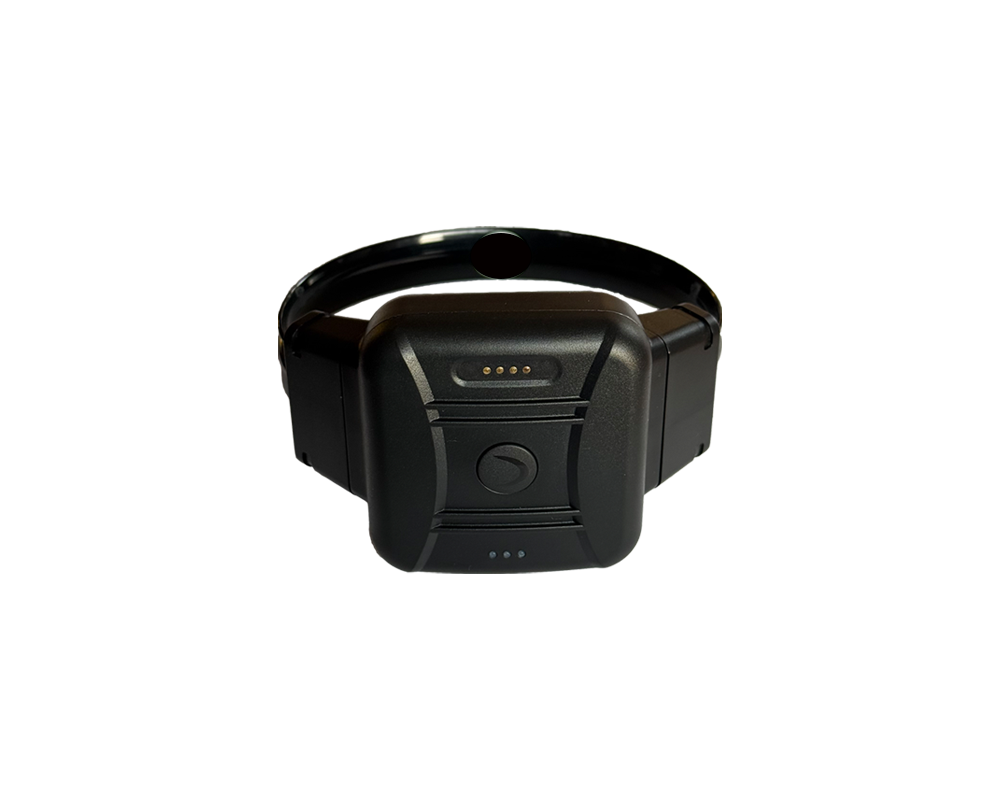
 cut off GPS ankle monitor and fled to Italy — highlights critical gaps in electronic monitoring enforcement” class=”wp-image-8573″/>
What About Hybrid and Multi-Technology Monitors?
Hybrid ankle monitors combine two or more technologies into a single device or coordinated system. The most common configurations:
GPS + RF beacon: The device runs GPS when the wearer is away from home and automatically switches to RF mode near a home beacon. This extends battery life (RF draws far less power than continuous GPS) and reduces indoor false-position alerts. SCRAM GPS 9 Plus uses this approach with an optional external beacon. (Related: ankle monitor battery failures that send people back to jail.)
GPS + Alcohol: Some jurisdictions order both location and sobriety monitoring for repeat DUI offenders assessed as high-risk. This can mean two separate devices or, increasingly, integrated units that combine both sensor sets.
GPS + BLE connectivity: Next-generation devices use Bluetooth Low Energy to connect to a wearer’s smartphone or a home station, offloading the power-hungry GPS and cellular operations to the companion device. This is the architecture behind CO-EYE ONE-AC’s 180-day BLE battery life — the ankle unit runs in ultra-low-power BLE mode when a connected device is nearby, switching to full GPS+LTE only when the wearer is outdoors and disconnected.
GPS + Victim Protection: In domestic violence cases, the supervision system can include a companion app installed on the victim’s phone. When the GPS device detects the offender approaching an exclusion zone around the victim, both the victim and monitoring center receive simultaneous alerts. CO-EYE’s AMClient app and BI’s Guardian companion system support this workflow.
How Does ICE Use Ankle Monitors for Immigration Cases?
The September 2026 death of Pierre Damas Bel has put ICE’s ankle monitor program under intense scrutiny. Federal data tells the scale: ICE now tracks approximately 53,192 immigrants with ankle monitors through its Alternatives to Detention (ATD) program — up from 30,249 in the previous fiscal year, a 76% increase. Ankle monitors now represent 29% of ICE’s overall ATD population of 183,181, up from 17% the year before.
ICE’s ATD program uses the same GPS technology as criminal justice supervision, primarily supplied by BI Incorporated (a subsidiary of The GEO Group). However, the supervision context is fundamentally different: most ATD participants have not been charged with a crime. They’re wearing monitors as a condition of release while their immigration cases proceed — a process that can take months or years.
The program’s court-appearance rate of 98% — a figure ICE frequently cites — raises questions that advocates like the Vera Institute have highlighted: if compliance is already near-universal, is physical monitoring necessary? Could less invasive methods — like the SmartLINK smartphone app that 71% of ATD participants already use — achieve similar results without the documented psychological harm?
Bel’s Instagram post, written weeks before his death, captures the human dimension that specifications sheets don’t: “I came to this country to pursue my education. I didn’t come here to commit a crime or hurt anyone. Yet now I’m walking through the streets of the United States with a GPS monitor on my leg, carrying a feeling of shame and humiliation that I never imagined I would experience.”

What Happens If You Tamper With an Ankle Monitor?
The Henry Vasquez-Pineda case in Prince George’s County illustrates the consequences. Under Maryland Criminal Law § 9-405, removing, blocking, deactivating, or tampering with a monitoring device constitutes second-degree escape — a misdemeanor carrying up to 3 years in prison and a $5,000 fine. Under § 9-407, any escape sentence must run consecutive to the underlying criminal sentence and cannot be suspended.
Most states have similar statutes. The penalties and detection mechanisms vary by technology:
| Tamper Method | Detection Technology | Alert Speed | False Alarm Risk |
|---|---|---|---|
| Strap cutting | Fiber optic loop / metal wire / electronic lock | Instant (signal break) | Zero (fiber optic) to moderate (other methods) |
| Signal jamming | GNSS carrier-to-noise ratio monitoring | Seconds to minutes | Low |
| GPS spoofing | Multi-constellation cross-check, motion sensors | Minutes | Low |
| Device shielding (Faraday) | Loss-of-signal alert after timeout | Minutes to hours | Moderate (indoor dead zones trigger same alert) |
| Strap stretching/sliding | Strap tension sensors / body proximity detection | Varies | Higher with older systems |
Maryland’s one-hour notification requirement — providers must alert law enforcement within 60 minutes of a tamper event — puts pressure on monitoring equipment to minimize false alarms. A fiber optic anti-tamper system, which detects strap integrity as a binary signal (light passes through the fiber or it doesn’t), produces zero false positives. Metal wire clasps and electronic locks have higher ambiguity, potentially delaying response because officers must first determine whether the alert is real.
How Much Do Different Types of Ankle Monitors Cost?
Costs vary by device type, jurisdiction, and who pays. In most criminal justice programs, the wearer pays daily monitoring fees directly to the monitoring company. Immigration monitors under ICE’s ATD program are funded federally through GEO Group contracts.
| Monitor Type | Installation Fee | Daily Rate | Monthly Estimate | Who Typically Pays |
|---|---|---|---|---|
| GPS (active tracking) | $50–$200 | $8–$25 | $240–$750 | Wearer (criminal); Federal (immigration) |
| RF (home curfew) | $25–$100 | $5–$15 | $150–$450 | Wearer |
| Alcohol (SCRAM CAM) | $50–$100 | $10–$15 | $300–$450 | Wearer |
| Hybrid (GPS + alcohol) | $100–$300 | $15–$35 | $450–$1,050 | Wearer |
| Smartphone app (SmartLINK) | $0 | $0–$5 | $0–$150 | Federal (immigration); varies (criminal) |
For agencies evaluating total cost of ownership, device purchase price is only 30–40% of the real expense. The remaining 60–70% is operational: monitoring center staffing, officer response time, false-alert triage, charging logistics, and device replacement. One-piece GPS designs consistently reduce these operational costs — see our complete ankle monitor cost and pricing guide for a detailed TCO analysis.
Which Type of Ankle Monitor Is Right for Each Situation?
| Supervision Scenario | Recommended Type | Why |
|---|---|---|
| DV exclusion zone enforcement | GPS (active, one-piece) + victim app | Real-time proximity alerts protect victim safety |
| Sex offender registry compliance | GPS (active, one-piece) | Continuous school/park exclusion zone enforcement |
| House arrest / curfew | RF or GPS with home beacon | Home presence verification at lowest cost |
| DUI / alcohol-related offense | SCRAM CAM (± GPS for high-risk) | Continuous sobriety verification |
| Pretrial release (flight risk) | GPS (active) | Court appearance compliance + location accountability |
| Immigration (ATD program) | GPS or smartphone app | Court appearance compliance (98% rate suggests app may suffice) |
| Low-risk probation check-in | Smartphone app | Lowest cost, least intrusive, adequate compliance rates |
What Does the Next Generation of Ankle Monitor Technology Look Like?
The biggest pain points driving innovation in 2026 are battery life, cellular dead zones, and false alerts. Traditional GPS monitors burn through batteries in 24–72 hours because they run full-power satellite positioning and cellular transmission around the clock — even when the wearer is sleeping at home.
Next-generation designs attack this with adaptive connectivity: instead of running GPS+LTE 24/7, the device automatically switches between ultra-low-power modes (BLE when a companion device is nearby, WiFi when available) and full GPS+LTE only when continuous outdoor tracking is needed. This architectural shift — from single-mode to multi-mode adaptive connectivity — extends battery life from days to weeks or months while maintaining continuous supervision. A $10 WiFi repeater in a basement apartment eliminates the cellular dead zone that would cause a legacy device to report “signal lost.”
Other advances reshaping the market:
- LTE-M/NB-IoT cellular replacing legacy 3G networks (which carriers are actively shutting down)
- Fiber optic dual-loop anti-tamper covering both strap and device housing — zero false alarms versus single-fiber or metal-wire systems
- eSIM technology enabling carrier switching without physical SIM card replacement
- Sub-110-gram one-piece designs reducing the stigma and discomfort that drove cases like Pierre Damas Bel’s — because a device that weighs less than a smartphone and sits discreetly under clothing is less likely to trigger the social consequences that undermine compliance
- CJIS-aligned evidence chains with hardware-signed location data and tamper-proof audit logs for courtroom admissibility
For a detailed comparison of specific devices and vendors, see our GPS ankle monitor buyer’s guide for agencies and the OmniLink OM500 review with head-to-head vendor specifications.