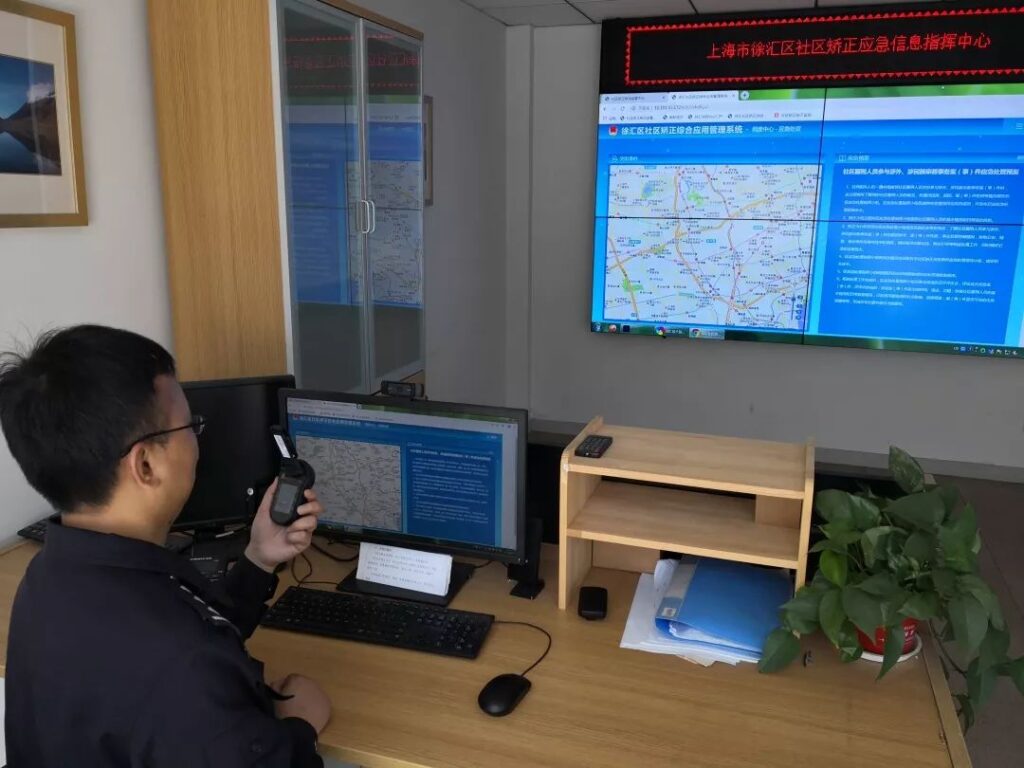
A probation officer reviews a caseload of 80 offenders. Each one generates a GPS fix every five minutes—that is 1,152 data points per person per day, or 92,160 across the caseload. Scroll through any monitoring dashboard and the problem is obvious: thousands of dots moving across a map, but no narrative, no pattern, no intelligence. This is the data paradox in electronic monitoring—the hardware collects more location data than any human can process, yet most agencies use GPS ankle monitors as expensive compliance alarms rather than analytical tools.
What if the same data stream that confirms an offender is home at curfew could also reveal cross-jurisdiction drug transaction patterns, identify emerging behavioral deterioration before a violation occurs, and generate court-grade evidence chains for prosecution?
This is not a theoretical scenario. Agencies that treat GPS monitoring as an intelligence platform—rather than a glorified check-in system—are achieving outcomes that redefine what electronic monitoring can accomplish.
Why does most GPS monitoring data go to waste?
The gap between data collection and data utilization in electronic monitoring is staggering. A single GPS ankle monitor operating at 5-minute intervals generates approximately 288 location fixes per day. Over a 12-month supervision period, that is 105,120 location records per individual. For an agency monitoring 500 offenders, the annual dataset exceeds 52 million data points.
Yet the typical monitoring center workflow processes this data through a narrow filter: zone violations, tamper alerts, low-battery warnings, and schedule deviations. Everything else—the 95%+ of data that shows compliant behavior—is archived and effectively discarded. NIJ research on GPS monitoring practices in community supervision identifies this as a fundamental efficiency gap: agencies invest in continuous tracking infrastructure but extract value from less than 5% of the data generated (NIJ, GPS Monitoring Practices in Community Supervision).
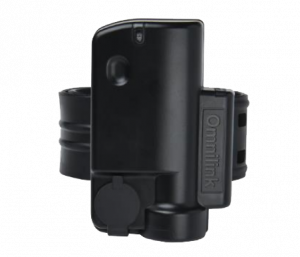
The problem is not the hardware—modern GPS ankle monitors like the CO-EYE ONE collect high-fidelity multi-constellation GNSS data at sub-2-meter accuracy with BLE/WiFi/LTE connectivity options. The problem is the software layer between the device and the officer’s decision.
How does cross-offender location analysis reveal hidden patterns?
The most powerful analytical capability in GPS monitoring is one that almost no agency exploits: cross-referencing location data across multiple monitored individuals to detect convergence patterns.
Here is how it works in practice. An agency monitors 200 offenders with drug-related convictions across a metropolitan region. Rather than reviewing each offender’s movements in isolation, the monitoring platform analyzes all 200 simultaneously, flagging locations where multiple unrelated offenders—especially co-defendants or individuals with similar offense profiles—converge at overlapping times.
When five offenders from separate cases independently visit the same commercial restroom in a shopping complex within a 72-hour window—each staying for 3-8 minutes—that spatial and temporal convergence is statistically unlikely to be coincidental. The system automatically flags it as a potential transaction point. Over months, these convergence patterns aggregate into a continuously updated geographic intelligence database of suspected activity locations, complete with precise environmental signatures (floor level, indoor/outdoor, electromagnetic fingerprints) that traditional law enforcement intelligence often lacks.
This approach has been validated in real-world deployments. One community corrections agency operating across multiple jurisdictions used CO-EYE’s monitoring platform to perform exactly this type of cross-offender analysis. Because co-defendants in drug cases were often supervised across different district offices—but all wore GPS ankle monitors reporting to the same unified monitoring platform—the system could detect when these separately supervised individuals were independently visiting the same locations at overlapping times. The intelligence product was a dynamically updated geographic database of suspected transaction sites, built entirely from electronic monitoring data, with precision that complemented existing law enforcement intelligence.
What makes continuous indoor positioning critical for cross-agency intelligence?
Outdoor GPS positioning tells you someone visited a shopping mall. Indoor positioning with floor-level resolution tells you they visited the third-floor restroom near the food court—a dramatically different intelligence value proposition.
Most GPS ankle monitors lose effective tracking capability the moment a subject walks indoors. Cellular-only devices fall back to tower triangulation with 100-500 meter accuracy—useless for distinguishing between a probation-approved job at a restaurant and an unapproved visit to a bar next door. This indoor tracking gap is the single biggest limitation of GPS monitoring as an intelligence platform.
CO-EYE’s tri-mode connectivity architecture (BLE + WiFi + LTE) addresses this directly. In BLE-connected mode, the ankle monitor leverages the offender’s smartphone GPS and WiFi positioning to maintain location resolution indoors. The WiFi-directed mode can connect to local access points for positioning even without smartphone presence. The device continuously collects environmental electromagnetic fingerprints that, while not providing meter-level indoor maps, do provide consistent “location signatures” that can be cross-referenced across different visits and different individuals.
This means the system can determine not just that two offenders visited the same building, but that they spent time in the same specific indoor area—the kind of granularity that turns GPS data from a compliance tool into an analytical platform.
From compliance alarms to behavioral intelligence: the data-driven supervision model
The cross-offender convergence analysis described above is one application of a broader paradigm shift: treating GPS monitoring data as a behavioral intelligence stream rather than a violation detection system.
The NIJ-funded IDRACS project (Integrated Dynamic Risk Assessment for Community Supervision), developed by RTI International with the Georgia Department of Community Supervision using data from over 160,000 supervised individuals, demonstrated that dynamic factors—drug test results, employment verification, technical violations, program attendance—are significantly more predictive of recidivism than static intake assessments (NIJ, IDRACS Final Report). The Swedish OxMore tool, validated on 59,676 community-sentenced individuals, confirmed these findings with c-index scores of 0.74 for violent reoffending prediction using dynamic variables.
GPS ankle monitors are the richest source of dynamic behavioral data in community supervision. From continuous location streams, a properly configured analytics layer can derive:
- Employment stability indicators: Is the offender consistently present at their reported workplace during scheduled hours? Has this pattern changed over the past two weeks?
- Residence stability: Are overnight locations consistent? Has the offender started spending nights at unregistered addresses?
- Schedule regularity: How consistent is the offender’s daily movement pattern? Sudden disruptions in routine correlate with behavioral destabilization.
- Association patterns: Is the offender frequenting locations associated with prior criminal activity or known co-offenders? (Cross-referenced with the convergence analysis described above.)
- Nighttime behavior changes: A shift from stable nighttime patterns to irregular late-night movements often precedes substance relapse or new criminal activity.
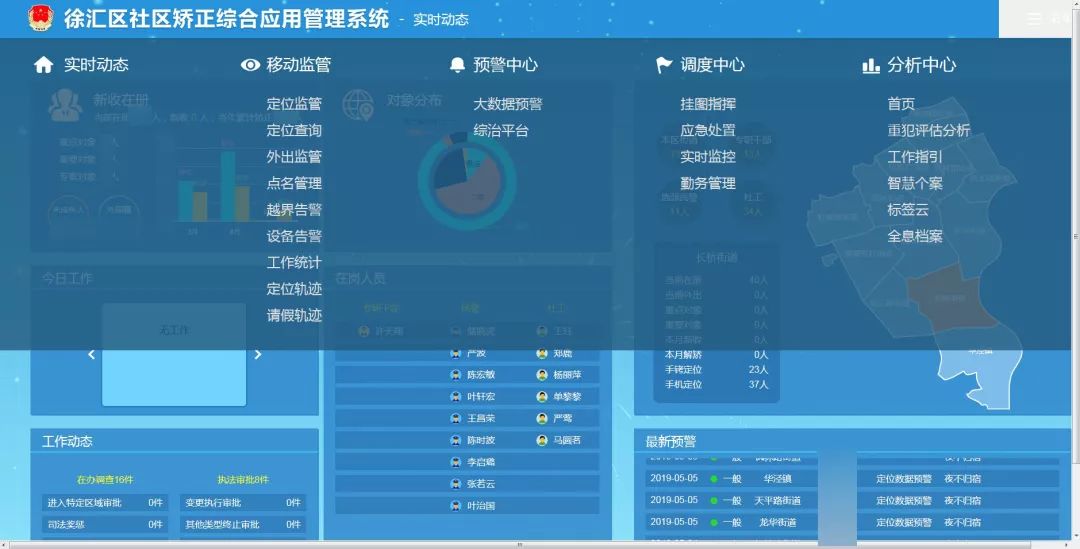
CO-EYE’s monitoring software incorporates these behavioral dimensions into a continuously updated risk profile. The platform’s AI-powered behavioral analysis module evaluates residence stability, employment regularity, device compliance, geofence adherence, and overall behavioral patterns to generate dynamic risk assessments—not as a replacement for officer judgment, but as an early warning system that highlights which of an officer’s 80 cases need immediate attention today.
What does the data show about GPS monitoring outcomes?
The evidence base for GPS monitoring effectiveness is substantial when the technology is deployed as part of a data-driven supervision framework rather than passive surveillance:
- The landmark Florida Department of Corrections study demonstrated a 31% reduction in recidivism among GPS-monitored offenders compared to unmonitored controls—one of the largest effect sizes in community corrections research (National Institute of Justice)
- A 2023 RAND Corporation meta-analysis of 22 quasi-experimental studies across eight states found an average 24-29% recidivism reduction for GPS-monitored populations
- Programs combining GPS monitoring with active case management produced 2-3x the recidivism reduction of surveillance-only programs—underscoring that the analytical layer matters more than the hardware
- Arnold Ventures research across six pretrial jurisdictions found GPS-monitored defendants had a failure-to-appear rate of 7-12% versus 15-22% for defendants on monetary bond alone
The pattern across all of these studies is consistent: GPS monitoring works best when the data is actively analyzed and used to inform supervision decisions—not when it simply generates alerts that officers acknowledge and close.
Building a GPS monitoring intelligence platform: what procurement teams should evaluate
For agencies considering GPS monitoring as an intelligence platform rather than a compliance tool, the evaluation criteria shift significantly from traditional procurement metrics:
| Capability | Compliance-Only Platform | Intelligence Platform (CO-EYE) |
|---|---|---|
| Data collection interval | 15-30 min (sufficient for zone checks) | 5 min continuous (required for pattern analysis) |
| Indoor positioning | Cell tower fallback (100-500m) | BLE/WiFi + environmental fingerprinting with floor-level indicators |
| Cross-offender analysis | ❌ Not supported | ✅ Unified platform enables multi-offender spatial-temporal convergence detection |
| Behavioral analytics | Zone violation / tamper alerts only | AI-powered 5-dimension behavioral profiling (residence, employment, compliance, geofence, behavior regularity) |
| Risk trajectory | Static risk score at intake | Dynamic risk score with trend analysis, key change identification, and risk direction indicators |
| Evidence grade exports | CSV email attachments | Timestamped, attributed, audit-trailed exports with chain-of-custody fields for court proceedings |
| Battery life for continuous tracking | 24-72 hours (data gaps from dead batteries) | 7 days LTE / 3 weeks WiFi / 180 days BLE—continuous data collection without gaps |
The battery life dimension deserves special attention. An analytics platform is only as good as its data continuity. A GPS ankle monitor that dies after 24 hours creates a 12-16 hour daily data gap (assuming offenders charge during sleep)—precisely the period when the most analytically valuable nighttime behavior occurs. CO-EYE ONE’s tri-mode architecture ensures continuous data collection across all three connectivity modes, eliminating the dead-battery blind spots that compromise analytical integrity.
The bottom line: GPS monitoring is an intelligence asset, not just a compliance tool
The agencies achieving the strongest outcomes from GPS monitoring share a common approach: they treat every data point as a potential intelligence input, not just a compliance checkbox. Cross-offender convergence analysis, behavioral pattern profiling, and dynamic risk assessment are not future capabilities—they are operational today in monitoring platforms designed for analytical depth.
For EM program directors and procurement teams evaluating GPS ankle monitor vendors, the question is no longer “can it track location?”—every device on the market does that. The question is: can it turn 52 million annual data points into the 50 actionable insights that actually change supervision outcomes?
If your current monitoring platform generates alerts but not intelligence, it is time to evaluate what a data-driven supervision architecture looks like. Contact our team to discuss how CO-EYE’s monitoring platform transforms GPS data from raw coordinates into cross-agency intelligence.