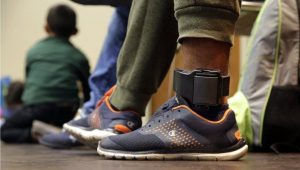

Ghana’s Parliament passed the Community Service Act, 2026 in July 2026, and the Interior Ministry simultaneously laid Parole Regulations, 2026 before the House — two pieces of legislation that together represent West Africa’s most comprehensive non-custodial sentencing reform in a generation. The laws tackle a crisis that has festered for decades: Ghana’s 43 prisons hold approximately 13,620 inmates in facilities designed for fewer than 9,875, an occupancy rate exceeding 150%.
Director-General of Prisons Mrs Patience Baffoe-Bonnie (Esq.) announced the reform’s significance in a message marking Nelson Mandela International Day on July 18, 2026, describing the measures as part of Ghana’s broader “Think Prisons 360 Degrees Initiative” — a paradigm shift from custodial punishment to rehabilitation, skills development, and community reintegration.
For the electronic monitoring industry, Ghana’s reform is not an isolated event. It is the latest signal in a continent-wide pattern: African governments are building the legal frameworks for community supervision faster than they are deploying the technology to enforce it. That gap between legislation and implementation is both a risk and an opportunity — and the vendors who understand Africa’s specific operational challenges will define the next decade of EM deployment on the continent.
What Does Ghana’s Community Service Act Actually Require?
The Community Service Act empowers courts to impose supervised community work — between four and eight hours per day, for up to six months — as an alternative to custodial sentences for offences carrying prison terms of three years or less. The law establishes a National Community Service Secretariat to coordinate, monitor, and enforce community service orders across all districts.
Interior Minister Alhaji Muntaka Mohammed-Mubarak, who presented the Bill under Article 106(1) of the 1992 Constitution, was explicit about the law’s limitations: “This Community Service Bill, if passed into law, will remain incomplete if we are not able to get the parole regulation passed. That is what will complement the bill and help us decongest our prisons effectively.”
The Parole Regulations complement the Act by creating a structured framework for supervised early release of eligible inmates. Together, these two instruments cover the full spectrum of non-custodial alternatives: diversion at sentencing (community service) and conditional early release (parole). Both require one thing that Ghana does not yet have at scale: reliable offender supervision infrastructure.

Why “Electronic Case-Tracking” Is Not Electronic Monitoring
Ghana already operates a Case Tracking System (CTS), developed with USAID support, that digitally tracks criminal cases from arrest through prosecution, judgment, and rehabilitation across seven of sixteen regions. Judges have praised the CTS for reducing missing dockets and court delays. But the CTS tracks cases through a judicial workflow — it does not track people through physical space.
The Community Service Act explicitly provides for “an electronic case-tracking and attendance system to monitor compliance” with community service orders. This is an attendance-verification system — essentially a digital check-in mechanism to confirm that offenders are showing up to their assigned community work. It is not GPS-based location monitoring, it does not enforce geographic boundaries, and it cannot verify an offender’s whereabouts between check-in events.
For the Parole Regulations to work as intended — providing structured supervision of inmates serving the remainder of their sentences in the community — Ghana will eventually need the other kind of electronic monitoring: continuous location tracking, geofence enforcement, curfew verification, and tamper-proof wearable devices. This is the technology gap that the current legislation acknowledges implicitly but does not yet address.
The African Continental Pattern: Legislation Leads, Technology Lags
Ghana is following a pattern now visible across the continent. Five African nations are simultaneously building or expanding non-custodial supervision frameworks — each at a different stage of the legislation-to-deployment pipeline:
| Country | Reform Status (2026) | EM Deployment | Key Challenge |
|---|---|---|---|
| South Africa | Parole system in crisis — 28,000+ absconded parolees; R15M allocated for EM procurement restart | Pilot stalled since 2012; CSIR developing 10 prototype bracelets | Procurement corruption (ESS/TMM scandal); rural coverage gaps |
| Rwanda | Ankle monitor legislation since 2019; Senate pushing for implementation in 2025-2026 | Not yet operational despite legislative framework | Budget allocation; technology procurement process |
| Tanzania | Presidential directive for post-release monitoring system across 129 prison jurisdictions | Requirements-definition stage | Vast rural territory; cellular coverage gaps; 129 jurisdictions |
| Kenya | Judiciary exploring GPS tracking as bail condition for non-violent offences | Limited pilot in Nairobi | Scaling beyond capital city; cost per device |
| Ghana | Community Service Act + Parole Regulations passed July 2026; National Secretariat established | Case tracking only; no GPS EM infrastructure | Building monitoring capacity from zero; funding (5% DACF) |
The pattern is consistent: every country has moved from acknowledging overcrowding to passing legislation to establishing supervisory bodies. What none of them have successfully completed is the final step — deploying reliable, scalable electronic monitoring hardware that works in African operating conditions.
South Africa’s cautionary tale is instructive. The Department of Correctional Services launched a 150-offender GPS ankle monitor pilot in 2012, but procurement was derailed by corruption (the ESS/TMM Group contract was cancelled after allegations of SITA non-compliance and BBEE fronting). Fourteen years later, the country still has 28,000+ absconded parolees and is essentially starting over with 10 prototype bracelets from the CSIR. Ghana has an opportunity to skip that false-start cycle entirely — if it specifies the right technology from the beginning.
What Ghana’s Parole Infrastructure Actually Needs
Ghana’s operational environment presents four specific challenges that any electronic monitoring deployment must address:
1. Cellular Coverage Is Not Universal
Ghana’s major carriers — MTN, AirtelTigo, and Vodafone — provide strong LTE coverage in Accra, Kumasi, and regional capitals, but coverage degrades rapidly in rural districts. According to the National Communications Authority (NCA), 4G population coverage reached approximately 75% by 2025, but geographic coverage — the physical land area with usable signal — remains significantly lower, particularly in the Northern, Upper East, and Upper West regions where prison facilities also exist.
Any GPS ankle monitor that relies exclusively on LTE cellular connectivity will produce chronic “out of coverage” alerts in these zones. The device reports “signal lost,” the monitoring officer cannot distinguish a genuine absconder from a parolee at home in a coverage dead zone, and the system generates false violations that erode institutional trust in the technology.
2. Power Supply Is Intermittent
Ghana’s national grid experiences periodic load-shedding (dumsor), and rural electrification remains incomplete. Offenders on community service or parole cannot be expected to charge monitoring devices every 24-48 hours — the standard battery life of legacy GPS ankle monitors. A device that dies between charges generates a low-battery alert, triggers a compliance investigation, wastes parole officer time, and potentially returns a compliant offender to custody for a technical failure.
3. Cost Per Device Must Be Sustainable
Ghana’s Community Service Act is funded through 5% of the District Assemblies Common Fund (DACF), with a quarter of that allocation going to the National Community Service Secretariat. This is not the budget structure of a U.S. state corrections department spending $5-12/day per monitored offender. Any EM solution for Ghana must deliver a dramatically lower per-unit cost, with total cost of ownership that accounts for African operational realities: limited technical support staff, minimal spare parts inventory, and devices that must survive tropical humidity and heat without frequent replacement.
4. Scale Requires Simplicity
The Parole Regulations will eventually apply across all 43 prison facilities and their catchment communities. The National Community Service Secretariat must coordinate across 261 Metropolitan, Municipal, and District Assemblies. Any monitoring system that requires specialized installation tools, multi-day officer training, or complex multi-device configurations (ankle tag + portable tracker + home beacon) will not scale in this environment. The technology must be operationally simple: one device, one strap, one training session.
How Multi-Mode Connectivity Solves Africa’s Coverage Problem
The single biggest reason South Africa’s 2012 GPS ankle monitor pilot failed operationally — before procurement corruption killed it administratively — was that LTE-only devices produced unacceptable false-alarm rates in areas with weak cellular coverage. The monitoring center could not distinguish between a genuine absconder and a parolee in a rural area with no signal.
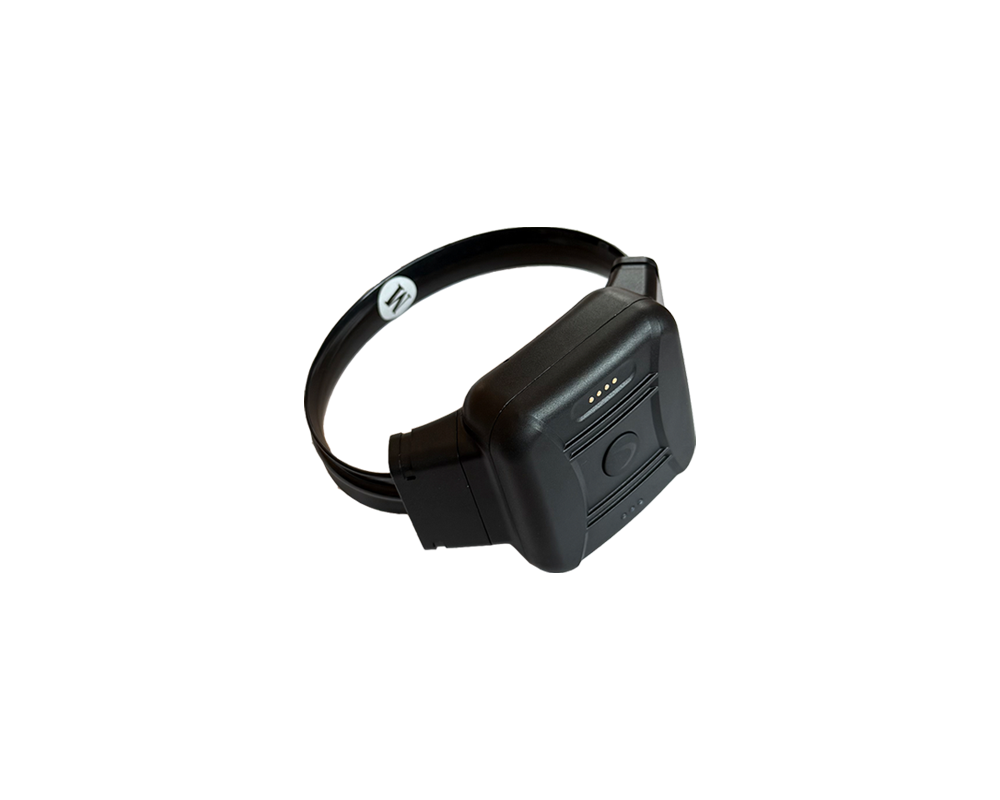
The solution is architectural, not incremental. Next-generation GPS ankle monitors built with adaptive multi-mode connectivity — BLE (Bluetooth Low Energy), WiFi, and LTE working in seamless auto-switching — fundamentally change the reliability equation:
- In urban areas with strong LTE: The device operates in full GPS + LTE mode, providing sub-2-meter positioning accuracy and real-time data transmission.
- In peri-urban or indoor environments: The device automatically switches to WiFi-directed mode, using any available WiFi access point — including a low-cost WiFi repeater placed in the offender’s residence — to maintain data transmission without cellular dependency. A single $10 WiFi repeater eliminates a coverage dead zone.
- In areas with a smartphone present: The device offloads GPS/LTE processing to the offender’s phone via encrypted BLE connection, extending battery life to 180 days while maintaining monitoring continuity through the phone’s own cellular and WiFi connections.
This three-mode architecture directly addresses Ghana’s coverage challenge. An offender in a rural Northern Region village with no LTE coverage but a basic WiFi router (increasingly common through Ghana’s rural internet expansion programs) remains fully monitored. An offender in an Accra suburb whose device cannot get indoor GPS fix maintains presence confirmation through BLE connection to their phone or a home beacon.
The battery implications are equally significant for Ghana’s context. A device that lasts 7 days on LTE-only mode, 3 weeks on WiFi-directed mode, or 6 months on BLE-connected mode eliminates the daily charging requirement that has been identified as the single largest operational burden in every African EM pilot to date.
From “Think Prisons 360 Degrees” to Operational Reality
Director-General Baffoe-Bonnie’s Think Prisons 360 Degrees Initiative describes a three-stage approach: pre-incarceration (crime prevention), incarceration (rehabilitation through vocational training — carpentry, tailoring, welding, aquaculture), and post-incarceration (reintegration support). The Initiative’s five strategic pillars — officer and inmate welfare, industrialisation, agricultural mechanisation, business creation, and strategic partnerships — position prisons as “centres of hope, healing, productivity, and national development.”
The gap in this framework is the post-incarceration supervision mechanism. The Initiative envisions former inmates leaving prison “not as outcasts, but as skilled citizens ready to contribute positively to their communities.” But without a supervision and accountability infrastructure, the parole system relies entirely on manual check-ins — parole officers visiting or being visited by parolees at scheduled intervals, with no real-time verification of compliance between those contacts.
Manual-only supervision has a well-documented failure mode. South Africa’s experience demonstrates this at scale: between 2021 and 2026, over 24,000 parolees absconded, and only 6,060 were traced — a 75% failure rate in recovery. The Department of Correctional Services has 234 community corrections offices, 861 monitoring teams, and 1,764 officials (of whom 933 are monitoring officers) — and still cannot maintain supervision without electronic monitoring tools.
Ghana, building its parole infrastructure from the ground up, has the advantage of designing the system correctly from the start rather than retrofitting technology onto a broken manual process. The Community Service Secretariat’s electronic attendance system is a good first step. The next step — GPS location monitoring for parolees — should be specified with African operating conditions in mind from day one.
What Should Ghana’s EM Procurement Specify?
Based on the operational realities outlined above and the lessons from South Africa’s false start, Ghana’s eventual EM procurement should prioritize five technical requirements:
- Multi-mode connectivity (BLE + WiFi + LTE) — not LTE-only devices that fail in rural coverage gaps
- Battery life measured in weeks, not hours — daily charging is operationally unsustainable in the Ghanaian context
- One-piece architecture — multi-component systems (ankle tag + tracker + beacon) multiply failure points and training requirements
- Sub-3-second tool-free installation — scalability across 261 districts requires minimal officer training
- Tamper detection with zero false alarms — fiber-optic binary detection (signal passes or it does not) eliminates the false-tamper alerts that destroy court credibility
These are not aspirational specifications. They describe technology that exists today and is deployed across 30+ countries. The question for Ghana is not whether the technology is available — it is whether the procurement process will be structured to select devices based on operational performance rather than lowest unit price.
The Broader Significance for West Africa
Ghana’s dual-track reform — community service at the front end, parole at the back end — creates a model that neighboring ECOWAS states will study. Nigeria, with prisons operating at an estimated 200%+ capacity, has discussed non-custodial alternatives for years without legislative action. Sierra Leone and Liberia face similar overcrowding challenges with even fewer resources.
If Ghana successfully implements electronic monitoring as part of its parole framework, it establishes a proof-of-concept for the entire region. The technology deployed in Ghana will be evaluated by procurement officers in Lagos, Freetown, and Monrovia. The mistakes Ghana makes will be repeated; the successes will be replicated.
This is why getting the technology specification right matters beyond Ghana’s borders. A successful deployment that demonstrates reliable multi-mode connectivity, sustainable battery life, and zero-false-alarm tamper detection in West African conditions would accelerate EM adoption across the continent. A deployment that fails — as South Africa’s did — would set the region back another decade.
About REFINE Technology (CO-EYE)
REFINE Technology is the leading electronic monitoring solutions provider in China with over 16 years of experience in the criminal justice industry. As the exclusive supplier for top security agencies, REFINE Technology has deployed 200,000+ devices across 30+ countries, monitoring 130,000+ individuals. The CO-EYE product line — featuring the next-generation all-in-one GPS ankle monitor, BLE wristbands, RF home beacons, and a unified monitoring platform — delivers high-security, low-stigma supervision for high-risk, mid-risk, and low-risk offender monitoring and victim protection. All CO-EYE devices carry full European NB CE directives (RED/Cybersecurity/LVD/SAR) and FCC certifications, with IP68 waterproof and REACH/RoHS/WEEE compliance. CO-EYE solutions are trusted in the USA, Europe, Africa, Bhutan, Papua New Guinea, Dominican Republic, Armenia, and expanding globally.
For more information, visit www.ankle-monitor.com or contact marketing@rfidcn.com.