
On October 1, 2026, the United Kingdom launched what the Ministry of Justice calls “the toughest supervision in British history” — a sweeping overhaul of post-prison monitoring backed by £700 million in new funding. The centerpiece is a world-first “restriction zone” system that confines high-risk sexual and violent offenders to geographic areas as small as a few miles wide, enforced by electronic monitoring technology with near-real-time GPS tracking.
For corrections agencies, probation departments, and GPS ankle monitor procurement officers worldwide, this represents the most significant policy shift in community supervision technology since the adoption of GPS tracking in the early 2000s. Here is what the UK’s expansion means for the global EM industry — and what it reveals about the technology requirements that modern supervision programs demand.
What Changed: The Sentencing Act 2026 and Restriction Zones
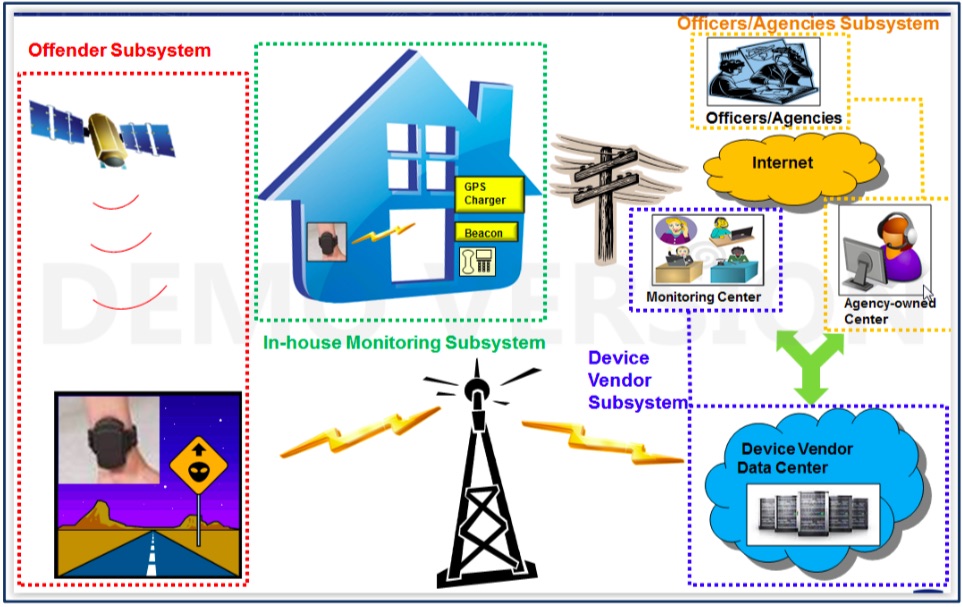
The UK’s Sentencing Act 2026 (Section 17) introduced a legally defined “restriction zone requirement” — a court-imposed condition that requires an offender on licence to remain within one or more specified geographic areas for up to two years. Unlike traditional exclusion zones that ban offenders from specific locations (such as a victim’s home), restriction zones flip the model: they define where an offender must stay, creating what officials describe as “a prison in the community.”
The legislation mandates that every restriction zone order must include an electronic compliance monitoring requirement — meaning GPS-enabled ankle monitors are not optional but legally required infrastructure for enforcement. This is a significant departure from jurisdictions where electronic monitoring is discretionary.
Key Provisions at a Glance
- £700 million total investment in probation and community punishment, including £100 million specifically for electronic monitoring expansion
- Presumption of tagging: All prison leavers under the progression model will be electronically tagged on release
- Near-live data access: New technology rollout gives probation staff near-real-time visibility into offender location data
- 12-month mandatory trail monitoring for all convicted rapists and certain child sex offenders upon release
- DAPOL national rollout: Domestic Abuse Perpetrators on Licence (DAPOL) pilot expanded from 8 to all 12 probation regions across England and Wales
- 1,300 new probation officers hired specifically to handle expanded caseloads
- Additional restrictions: Offenders can be banned from pubs, clubs, and public events including football matches
Why This Matters for the Global EM Industry
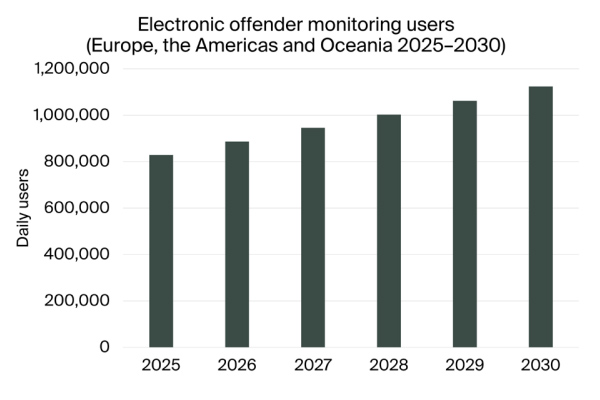
The UK’s £100 million EM budget represents one of the largest single-country investments in electronic monitoring infrastructure ever announced. But the implications extend far beyond funding levels.
1. “Presumption of Tagging” Sets a New Legislative Standard
By establishing a presumption — rather than a discretionary option — that prison leavers will be tagged, the UK creates a model that other jurisdictions are watching closely. In the United States, at least 14 states introduced EM expansion legislation in 2026 alone. Florida’s HB 277 expanded GPS monitoring authority for domestic violence cases. Oklahoma’s SB 1325 advanced GPS supervision requirements for pretrial DV defendants. Ohio is tightening real-time GPS oversight for violent offenders on post-release control.
The pattern is clear: legislative bodies are moving from “GPS monitoring as an option” to “GPS monitoring as a default requirement” for high-risk populations. Agencies that have not yet evaluated their GPS ankle monitor fleet capacity should begin planning now.
2. Near-Live Data Access Raises the Technology Bar
The UK’s emphasis on “near-live” data access reflects a critical lesson from US monitoring failures. In Harris County, Texas, a capital murder defendant cut off his GPS ankle monitor on a Friday evening in May 2026 — and prosecutors did not learn about it until three days later, after the FBI caught him at Milan’s airport. The county subsequently invested $1.4 million for 24/7 alert-response staffing.
In Baton Rouge, Louisiana, an ankle monitoring company allowed a defendant to commit as many as 1,181 bond violations in two months, including traveling to Houston at 119 mph on Interstate 10, without reporting to the court. The district attorney is now pursuing legislation to tighten state monitoring requirements.
These failures illustrate why the UK’s legislative requirement for near-real-time monitoring capability is significant. It is not enough to track — agencies must be able to act on data within minutes, not days. This places specific technology demands on GPS hardware: reliable cellular connectivity, rapid alert transmission, and monitoring platforms with automated escalation workflows.
3. Restriction Zones Demand Advanced Geofencing Capability
Traditional exclusion zones — defining where an offender cannot go — require relatively simple geofencing. Restriction zones — defining where an offender must remain — are technically more demanding. The monitoring system must continuously verify that the offender remains within a defined polygon, trigger alerts instantly when they approach boundaries, and maintain accurate positioning even in dense urban environments where GPS signals degrade.
This is where multi-layer positioning technology becomes critical. Systems relying solely on GPS are vulnerable to signal loss in urban canyons, underground transit, and multi-story buildings. The most robust solutions deploy 5-layer positioning resilience — combining GNSS (GPS, GLONASS, Galileo, BeiDou) with Wi-Fi fingerprinting, BLE beacons, cell-tower triangulation, and home base stations — to eliminate blind spots that could trigger false boundary violations or miss genuine ones.
Technology Requirements for Next-Generation EM Programs
The UK’s expansion, combined with accelerating US legislative mandates, is reshaping what government procurement officers should require in their next RFP cycle. Based on the operational demands these programs create, five technology capabilities have become non-negotiable:
Battery Life That Supports Continuous Monitoring
Restriction zones require 24/7 continuous GPS tracking — not periodic check-ins. Legacy two-piece systems with 24-72 hour battery life cannot sustain this without daily charging, which creates compliance gaps and administrative burden. Modern one-piece GPS devices need to deliver multi-week or multi-month battery life depending on the communication mode.
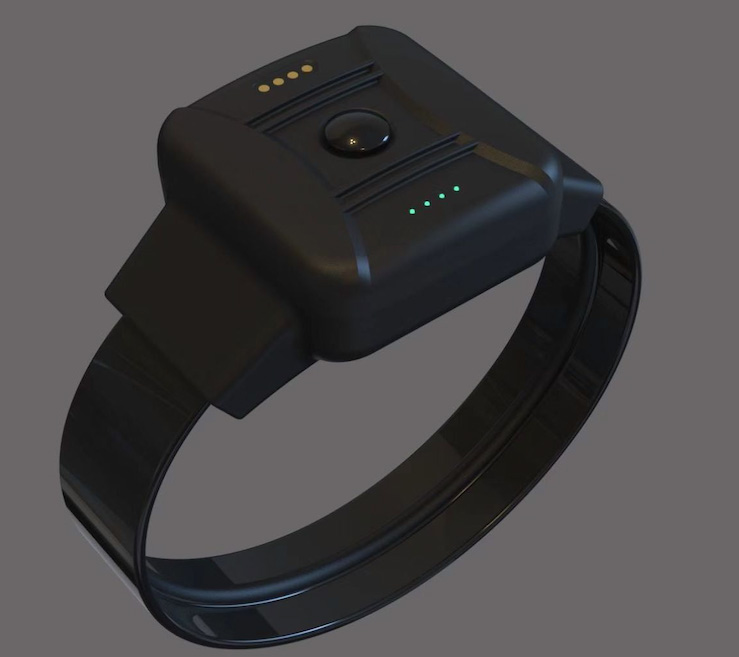
CO-EYE’s ONE ankle monitor addresses this with its Adaptive Multi-Mode Connectivity Engine — an industry-first architecture that automatically switches between BLE-Connected mode (180-day battery life), WiFi-Directed mode (20-day battery life), and LTE Standalone mode (7-day battery life) based on supervision tier. For agencies managing tiered populations — from low-risk curfew monitoring to high-risk restriction zones — a single device platform that adapts its power consumption to match supervision intensity eliminates the need for multiple hardware SKUs.
Zero False Tamper Alarms
When 1,300 new probation officers are monitoring an expanded caseload under a “presumption of tagging” policy, every false alarm erodes staff trust in the system and wastes response resources. Industry benchmarks suggest legacy EM devices generate false tamper alarm rates of 15-30%. At scale — potentially tens of thousands of tagged offenders across England and Wales — even a 10% false alarm rate would be operationally devastating.
Multi-layer anti-tamper technology — combining optical fiber monitoring on both the strap and case, electronic induction sensing, and mechanical protection — can reduce false alarms to near zero. The CO-EYE ONE’s anti-tamper system maintains detection capability for over 3 months after battery depletion, ensuring that even a device that has not been charged cannot be silently removed.
Lightweight Design for Compliance
The UK’s expanded program will include domestic violence perpetrators (DAPOL), sex offenders, and violent offenders — populations with varying risk profiles and compliance challenges. Research consistently shows that device weight and visibility affect compliance rates and mental health outcomes. The lightest one-piece GPS designs now weigh 108 grams — 40-55% less than competitors ranging from 150 to 252 grams — reducing stigma and improving long-term wearability.
Rapid Deployment at Scale
Processing thousands of new tagging orders requires field-installable hardware that does not demand specialized training. Tool-free installation systems with pre-configured strap sizes (S/M/L/XL) enable 3-second installation by any probation officer, compared to the 15-30 minutes required by some legacy systems that need on-site calibration.
Cloud Platform Integration
The UK’s near-live data requirement implies a cloud monitoring platform with real-time event streaming, automated alert routing, configurable escalation rules, and multi-agency access. Federal procurement standards in the US (see CSOSA’s ongoing solicitation 9594CS26Q0053) are already requiring FedRAMP Moderate authorization, CJIS compliance, and 99.9% availability. UK programs will likely demand equivalent certification standards.
The US Parallel: Legislative Momentum Accelerates
While the UK leads on restriction zones, the United States is seeing its own legislative surge. In October 2026 alone:
- SuperCom won its 4th and 5th Texas contracts, displacing incumbent monitoring providers after county adult and juvenile probation agencies selected PureOne GPS technology following multi-week live-unit evaluations
- Harris County invested $1.4 million in 24/7 monitoring staffing after high-profile escape incidents
- Baton Rouge proposed a $200,000 police-operated monitoring program to replace private vendors after systematic compliance failures
- ICE’s GPS ankle monitor population grew to nearly 54,000 — tripling from approximately 17,000 in early 2025
For ankle bracelet monitoring companies and hardware manufacturers, this convergence of UK and US expansion creates the most favorable market conditions in the industry’s history. However, it also raises the performance bar: agencies are no longer willing to tolerate the monitoring gaps, slow response times, and false alarm rates that have defined prior-generation systems.
What Agencies Should Do Now
- Audit current fleet capability: Can your existing GPS devices support continuous restriction-zone-style monitoring? What is the true false tamper alarm rate?
- Evaluate battery life against 24/7 requirements: If your devices require daily charging, calculate the compliance gap and staff cost implications at expanded scale
- Test geofencing accuracy: Restriction zones demand centimeter-level boundary precision in urban areas — verify your system’s performance in realistic conditions
- Plan for cloud platform integration: Near-live data access requires real-time streaming infrastructure, not batch-uploaded reports
- Review procurement timelines: With the UK’s October 1 launch and multiple US states implementing 2026 legislation, vendor capacity will tighten — agencies that begin RFP processes now will have better options
Frequently Asked Questions
What are restriction zones in the UK’s Sentencing Act 2026?
Restriction zones are a new type of licence condition introduced by Section 17 of the UK Sentencing Act 2026. They require an offender to remain within a defined geographic area — potentially as small as a few miles wide — for up to two years. Unlike exclusion zones (which ban offenders from specific locations), restriction zones define where an offender must stay. GPS electronic monitoring is legally mandatory for enforcement.
How much is the UK investing in electronic monitoring expansion?
The UK government is investing £700 million in probation and community punishment, with £100 million (approximately $130 million USD) specifically allocated to expand electronic monitoring. This includes new GPS technology for near-live data access, 1,300 additional probation staff, and the national rollout of the DAPOL domestic abuse monitoring program.
What technology do GPS ankle monitors need for restriction zone enforcement?
Restriction zone enforcement requires continuous 24/7 GPS tracking (not periodic check-ins), multi-layer positioning for accuracy in all environments, instant boundary-crossing alerts, extended battery life to minimize charging gaps, and a cloud platform that delivers near-real-time data to probation staff. Multi-mode connectivity (BLE/WiFi/LTE) and optical fiber anti-tamper systems are considered best-practice for high-risk supervision.
How does the UK expansion compare to US electronic monitoring trends?
The UK and US are converging on similar directions. The UK’s “presumption of tagging” mirrors legislative trends across 14+ US states that expanded GPS monitoring mandates in 2026. However, the UK is ahead in creating a unified national framework and mandating specific technology standards (near-live data, restriction zones). US adoption remains state-by-state, with significant variation in monitoring quality and vendor oversight.
What GPS ankle monitor features are most important for expanded programs?
For agencies scaling EM programs, the five most critical capabilities are: (1) multi-week battery life supporting continuous tracking, (2) zero or near-zero false tamper alarm rates, (3) multi-layer positioning eliminating blind spots, (4) tool-free rapid installation for field deployment at scale, and (5) cloud-based monitoring platforms with automated alert escalation and multi-agency access.
The UK’s Sentencing Act 2026 marks a turning point for electronic monitoring globally. As both the UK and US move toward mandatory GPS supervision for expanding populations, the technology bar — and the procurement standards that define it — are rising. Agencies evaluating their next GPS ankle monitor procurement should align their RFP requirements with these emerging mandates.
For technical specifications on Generation 4 GPS ankle monitors designed for continuous restriction-zone monitoring, explore the CO-EYE ONE product specifications or contact our team for a demonstration.