
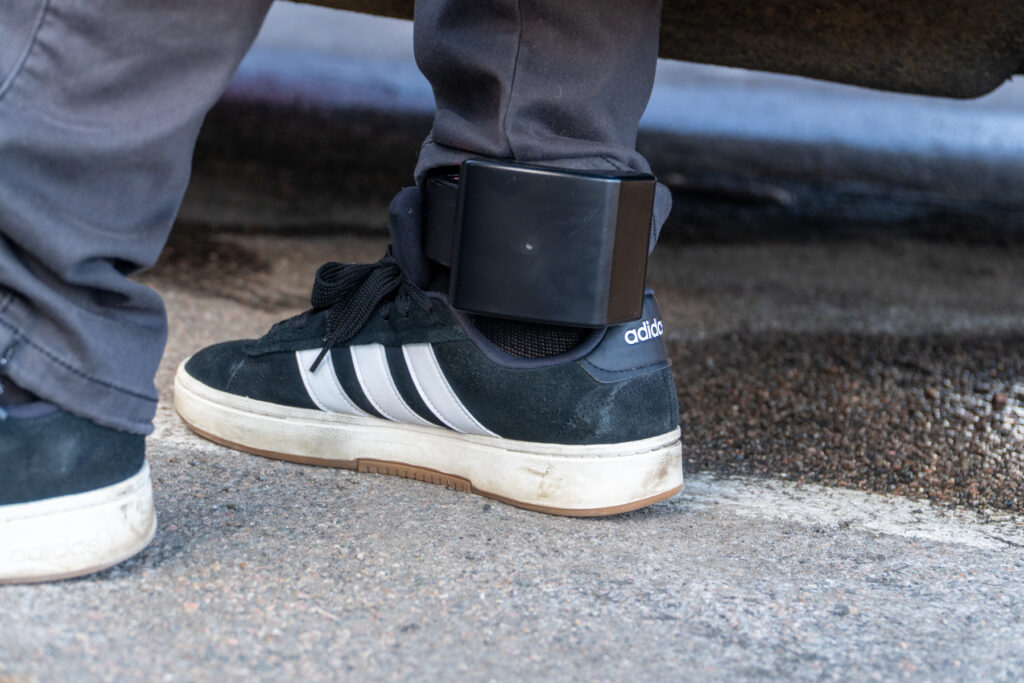
ICE’s Alternatives to Detention program just tripled its GPS ankle monitor fleet to 54,000 devices — all supplied by a single vendor, BI Incorporated, under a $1.02 billion contract. That kind of rapid scaling exposes every weakness in legacy GPS ankle monitor architecture. For agencies watching this unfold and planning their own procurement, the question isn’t whether electronic monitoring works — it’s whether the devices being deployed can actually handle the demands of large-scale, 24/7 supervision without drowning officers in false alerts and dead-battery calls.
The TRAC Immigration data tells the story: from roughly 18,000 GPS-monitored individuals in early 2025 to over 54,000 by mid-2026. That’s not an incremental rollout — it’s a stress test of monitoring technology at a scale most corrections agencies never reach. And the cracks are already showing.
What breaks when you scale GPS ankle monitors to 54,000?
Every GPS ankle monitor on the market shares the same fundamental architecture: a cellular radio (3G/4G LTE) talking to GPS satellites, powered by a rechargeable battery, strapped to someone’s ankle. At small scale — 500 devices, 2,000 devices — this works well enough. At 54,000 devices, the failure modes multiply exponentially.
The charging crisis. Traditional GPS ankle monitors burn through their batteries in 24–72 hours running continuous GNSS + LTE. At 54,000 devices, that means tens of thousands of daily low-battery alerts. Mission Local’s investigation documented immigrants struggling with rigid 2-hour nightly charging windows — miss one, and you trigger a compliance violation alert that an officer must review. Scale that to 54,000 and you’re looking at potentially 5,000–10,000 false low-battery alerts per day flooding monitoring centers.
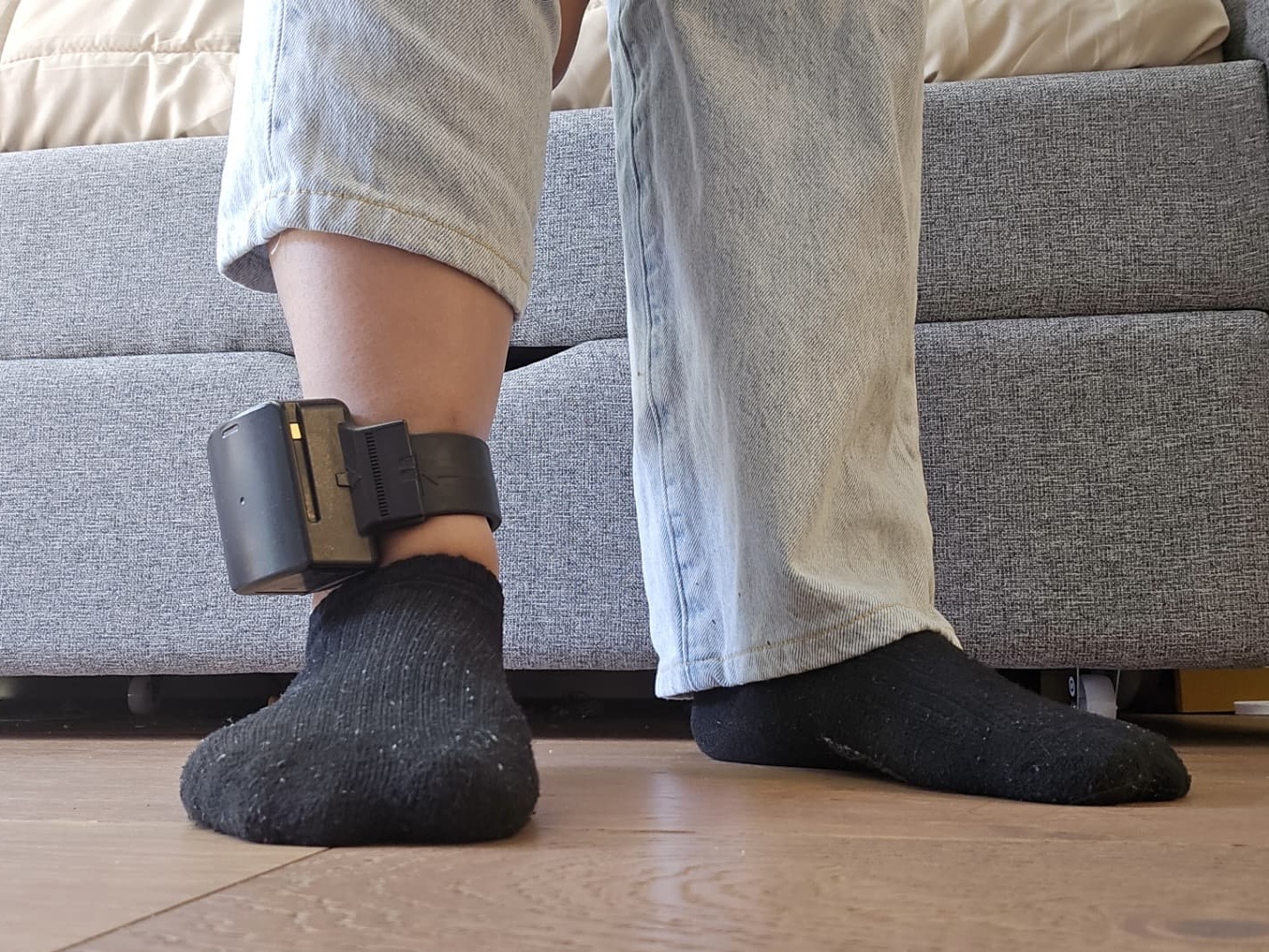
The cellular dead zone problem. Immigrants monitored by ICE don’t live in carefully selected RF-friendly apartments. They live in basement units, rural communities, industrial neighborhoods — exactly the environments where cellular signals are weakest. A device that relies solely on LTE connectivity reports “signal lost” in these locations, generating yet another alert that means nothing except poor coverage. At 54,000 devices spread across the entire United States, cellular dead zones become a systemic reliability issue.
The two-piece fragility. Legacy two-piece GPS systems — an RF ankle tag paired with a separate portable tracking unit — add another failure point. The wearer forgets the portable unit, the Bluetooth pairing drops, the tracker’s battery dies independently. Each disconnection triggers an alert. BI’s newer ExacuTrack One consolidates into a single unit, but at 220+ grams, it’s among the heavier one-piece devices on the market.
Why 24-hour battery life is the single biggest failure point at scale
Run the math on a 54,000-device fleet with 24–72 hour battery life:
- Daily charging events: 54,000 (every device, every day)
- Estimated non-compliance rate: 10–15% miss their charging window on any given night
- Daily low-battery alerts: 5,400–8,100
- Officer review time per alert: 5–15 minutes
- Daily officer-hours consumed by battery management: 450–2,025 hours
That’s not a monitoring program — it’s a battery management operation. The fundamental architectural problem is that every legacy GPS ankle monitor runs GNSS + LTE at full power 24/7, burning the same energy whether the person is sleeping at home or crossing state lines. There’s no intelligence in the power management because there’s only one connectivity mode.
How multi-mode connectivity solves the scale problem
The core insight that separates next-generation GPS ankle monitors from legacy devices is simple: not every monitoring moment requires full GNSS + LTE power. When someone is at home — which for ATD participants is most of the day — the device should switch to an ultra-low-power mode that maintains monitoring fidelity without draining the battery.
CO-EYE ONE’s adaptive multi-mode connectivity engine does exactly this. The device continuously evaluates its environment and auto-switches between three operating modes with zero manual intervention:
| Mode | How it works | Battery life | When it activates |
|---|---|---|---|
| BLE Connected | Offloads GNSS/LTE to paired smartphone or HouseStation via encrypted BLE | 180 days | Phone or home beacon in range (~60m) |
| WiFi-Directed | Connects to any WiFi access point for data transmission instead of LTE | 3 weeks | WiFi available, no BLE device in range |
| LTE Standalone | Full autonomous GNSS + LTE tracking | 7 days | No BLE/WiFi available (outdoors, transit) |
At 54,000 devices, the difference is staggering. If 70% of monitored individuals have their phone paired at home (BLE mode), and 20% have WiFi available but no phone pairing (WiFi mode), only 10% of the fleet — roughly 5,400 devices — ever needs to run in full LTE mode on any given day. Daily low-battery alerts drop from thousands to near zero.
What about cellular dead zones at national scale?
ICE monitors people in every corner of the United States — from downtown Manhattan to rural Montana. Any device that relies exclusively on cellular connectivity will produce “signal lost” alerts across vast portions of the country.
CO-EYE ONE’s WiFi-directed mode solves this with a remarkably simple approach: a $10 WiFi repeater placed in a basement apartment or rural home creates a reliable data path that bypasses cellular entirely. The device connects to the WiFi network, transmits location and status data through the internet, and maintains continuous monitoring where LTE-only devices go dark.
This is not a theoretical advantage. For an agency running 54,000 devices nationally, equipping even 5,000 problem locations with WiFi repeaters at $10 each ($50,000 total) would eliminate more false “signal lost” alerts than any amount of cellular network optimization.
The human cost of bulky, stigmatizing devices — and why it’s an operational problem
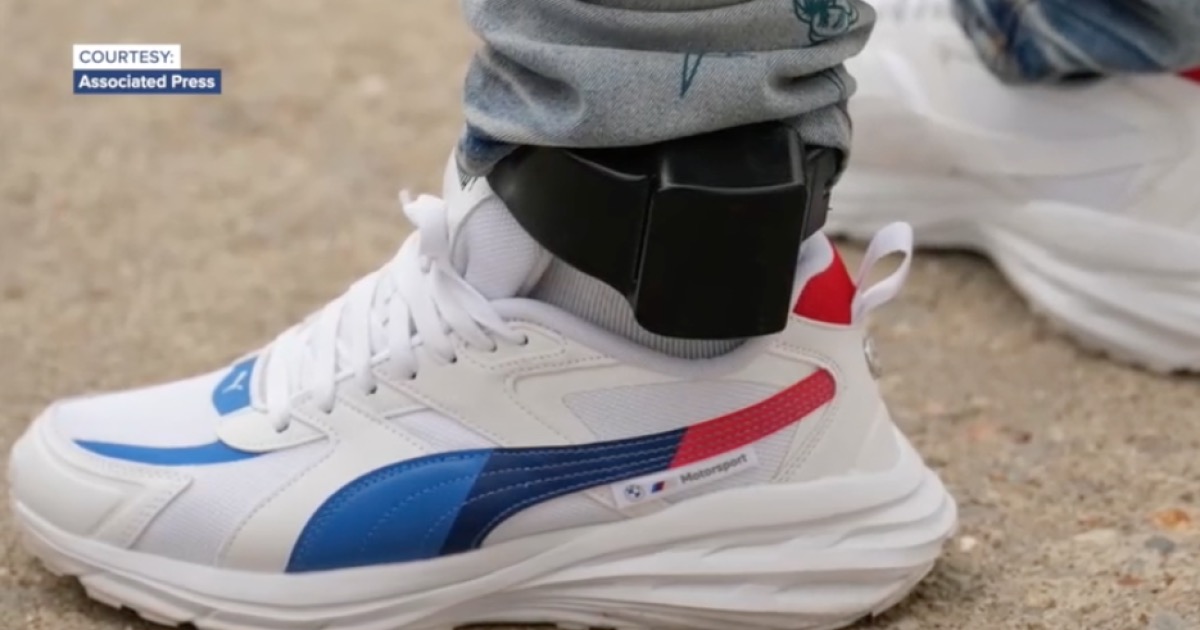
Here’s what rarely makes it into procurement RFPs but dominates the daily reality of large-scale monitoring: BI’s GPS ankle monitors are big, heavy, and impossible to hide. At 220+ grams and roughly the size of a deck of cards, they protrude visibly through pants, skirts, and socks. For the 54,000 people now wearing them, every trip to the grocery store, every school pickup, every job interview comes with a visible electronic shackle that broadcasts their legal status to everyone around them.
This isn’t just a humanitarian concern — it’s an operational problem. Stigmatization drives non-compliance. When a device is so bulky that it causes constant embarrassment, skin irritation from the weight pressing on the ankle bone, and swelling from restricted circulation, people try to remove it. Each removal attempt triggers a tamper alert. Each tamper alert requires officer response. At 54,000 devices, even a small increase in removal attempts driven by discomfort translates to hundreds of additional daily alerts.
The immigration context makes this worse. Many ATD participants are working, raising families, and attending immigration hearings — all while wearing a device that marks them as a monitored person. The psychological burden compounds the physical one. Reports from legal aid organizations describe immigrants avoiding medical appointments, declining job opportunities, and withdrawing from community activities because the ankle monitor is too visible and too stigmatizing.
CO-EYE ONE weighs 108 grams — 40–55% lighter than legacy devices, in a compact 60×58×24mm form factor. It sits flat against the ankle, fits under a sock, and doesn’t attract attention in daily life. That difference in size and weight isn’t cosmetic. It directly reduces the medical complaints, skin injuries, and frustration-driven tamper attempts that plague large-scale deployments of heavier devices.
Installation speed compounds the advantage. CO-EYE ONE’s tool-free snap-on design takes under 3 seconds per device — no Allen wrenches, no calibration, no multi-step enrollment. When ICE needs to onboard thousands of new participants per month, the difference between a 3-second installation and a 5-minute tool-assisted fitting is measured in hundreds of officer-hours and thousands of dollars in processing costs.
Tamper detection that holds up at scale — and in court
At 54,000 devices, even a 1% daily false tamper alert rate means 540 false alarms per day requiring officer response. Legacy tamper detection technologies — metal wire clasps, single-strand fiber optic straps, capacitive sensing — all have measurable false-positive rates that compound at scale.
CO-EYE ONE uses dual fiber-optic tamper detection covering both the strap and the device case. Fiber optic detection is binary: the light signal either passes through the loop intact, or it doesn’t. There is no “maybe” state, no environmental interference, no false positive. The result is zero false tamper alarms — not “low,” not “below 1%,” but zero.
CO-EYE ONE continues tamper detection for 3+ months after battery depletion — a capability no competitor matches. If a monitored individual lets the battery die hoping the device “goes blind,” the tamper detection circuit continues operating on residual power, preserving evidence integrity.
What agencies should evaluate before their next GPS procurement
ICE’s 54,000-device deployment is the largest real-world stress test of GPS electronic monitoring technology in U.S. history. The operational challenges being documented — battery management overload, cellular dead zones, alert fatigue — aren’t unique to immigration monitoring. Every corrections, pretrial, and parole agency running GPS ankle monitors faces the same physics.
The question for procurement teams is whether to keep buying devices built on 2010-era single-mode LTE architecture, or invest in next-generation multi-mode devices designed for the operational realities of large-scale monitoring.
Key specifications to compare in your next RFP:
| Specification | Legacy (single-mode) | CO-EYE ONE (multi-mode) |
|---|---|---|
| Battery (LTE standalone) | 24–72 hours | 7 days |
| Battery (BLE mode) | Not available | 180 days |
| Cellular dead zone solution | None | WiFi-directed mode ($10/location) |
| Weight | 150–252g | 108g |
| False tamper alert rate | Varies (>0%) | Zero (dual fiber-optic) |
| Post-battery tamper detection | None | 3+ months |
| Installation time | 2–5 minutes (tools required) | <3 seconds (tool-free) |
| Network | 3G/4G (3G sunset risk) | 5G-compatible LTE-M/NB-IoT + eSIM |
The scale of ICE’s deployment makes the cost of these architectural differences measurable in hard dollars. An agency can calculate exactly what 5,000 fewer daily battery alerts saves in officer time, what eliminating cellular dead zones saves in false violation investigations, and what zero false tamper alarms means for courtroom credibility.
Contact our team to request evaluation hardware and test CO-EYE ONE against your current fleet. The data speaks for itself.
About REFINE Technology (CO-EYE)
REFINE Technology is the leading electronic monitoring solutions provider in China with over 16 years of experience in the criminal justice industry. As the exclusive supplier for top security agencies, REFINE Technology has deployed 200,000+ devices across 30+ countries, monitoring 130,000+ individuals. The CO-EYE product line — featuring the next-generation all-in-one GPS ankle monitor, BLE wristbands, RF home beacons, and a unified monitoring platform — delivers high-security, low-stigma supervision for high-risk, mid-risk, and low-risk offender monitoring and victim protection. All CO-EYE devices carry full European NB CE directives (RED/Cybersecurity/LVD/SAR) and FCC certifications, with IP68 waterproof and REACH/RoHS/WEEE compliance. CO-EYE solutions are trusted in the USA, Europe, Africa, Bhutan, Papua New Guinea, Dominican Republic, Armenia, and expanding globally.
For more information, visit www.ankle-monitor.com or contact marketing@rfidcn.com.