
Probation Monitoring Software Requirements
Probation supervision software processes 50,000+ location points per offender per month. That data must produce court-admissible compliance reports, support audit trails for grant funders, and integrate with case management systems. Probation monitoring cloud software has largely replaced on-premise deployments — but the decision involves more than cost. This guide covers what to evaluate when selecting probation electronic monitoring platforms: cloud versus on-premise tradeoffs, CJIS compliance, compliance report types, and case management integration.
Cloud vs On-Premise: Comparison for Probation Departments
| Factor | Cloud Probation Monitoring Software | On-Premise Platform |
|---|---|---|
| Upfront capital cost | None — operational expense (OpEx) only | High — servers, licenses, network |
| IT burden | Vendor-managed; patches, backups, scaling | Agency-managed; dedicated IT staff |
| Scalability | Add users/devices without hardware purchase | Requires hardware upgrades for growth |
| Availability | 99.9%+ SLA typical; multi-region redundancy | Depends on agency infrastructure |
| Data residency | Verify vendor data location (US-only for CJIS) | Full control over data location |
| Customization | Limited to vendor roadmap; API for integration | Full control; requires development |
| Ongoing cost | Per-device or per-user monthly fee | Maintenance, support, power, cooling |
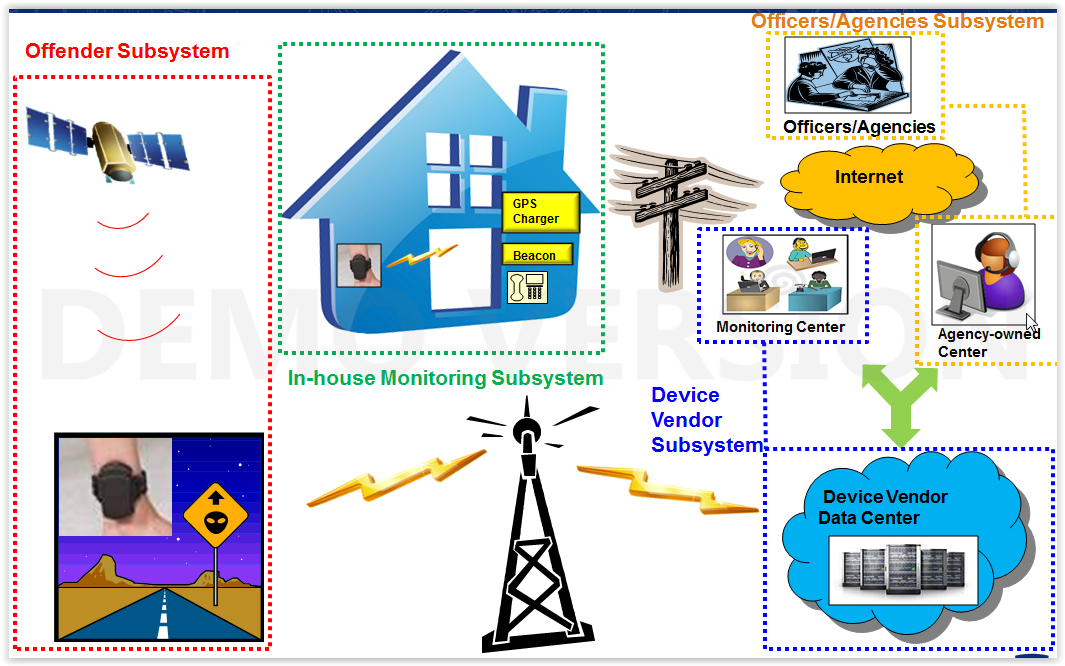
Most probation monitoring software deployments are now cloud-based. Capital-constrained agencies avoid six-figure server purchases. Vendors handle security patches, disaster recovery, and capacity planning. The tradeoff: reliance on vendor uptime and less control over customization timelines.
CJIS Compliance for Probation Supervision Reporting Software
Criminal Justice Information Services (CJIS) security standards govern systems that store or transmit criminal justice data. Probation monitoring compliance reports contain offender location history — data that falls under CJIS scope when integrated with case management or shared with courts.
Require from probation monitoring platform providers:
- CJIS compliance certification or attestation: Documentation that the vendor meets CJIS security policy requirements
- FBI CJIS Security Addendum: Vendors hosting CJIS data must sign the addendum and undergo state/federal audits
- Encryption in transit and at rest: AES-256 for stored data; TLS 1.2+ for transmission
- Access controls and audit logging: Role-based access; log all access to offender data
- Background checks for vendor personnel: Personnel with access to CJIS data typically require fingerprint-based checks
On-premise deployments shift CJIS compliance burden to the agency — the agency owns the infrastructure and must ensure it meets standards. Cloud deployments require the vendor to demonstrate compliance. Request the vendor’s CJIS documentation before contract signing.
Probation Monitoring Compliance Report Types
Probation officers and courts need specific report formats. Evaluate whether the probation supervision reporting software supports:
- Zone violation reports: Timestamped boundary crossings with map visualization; exclusion zone entries highlighted
- Curfew compliance summaries: Daily/weekly percentages; exceptions and explanations
- Tamper event reports: Date, time, device ID, event type; chain-of-custody documentation
- GPS trail maps: Date range, location history overlay; exportable for court exhibits
- Program-level dashboards: Completion rates, violation types, recidivism during monitoring
- Export formats: PDF for court filing; CSV/Excel for audit and grant reporting
One-click evidence packaging — generating a court-ready violation report with maps and timestamps — saves hours per violation hearing. Manual report assembly from raw GPS exports is error-prone and time-consuming.
Integration with Case Management Systems
Probation departments typically use case management systems (CMS) for supervision planning, court dates, and offender demographics. Probation electronic monitoring platforms should offer:
- API or integration layer: Push compliance data to CMS; pull offender IDs for device assignment
- Single sign-on (SSO): Reduce credential management; integrate with agency identity provider
- Bulk import/export: Load caseload assignments; export compliance data for CMS reporting
Without integration, officers maintain data in two systems and manually reconcile. Integration reduces duplicate entry and improves reporting accuracy.
Evaluation Checklist for Probation Monitoring Platforms
- Request live demo with realistic caseload (100+ simulated offenders)
- Verify CJIS compliance documentation and data residency (US-based)
- Test compliance report generation — court-ready format, one-click export
- Confirm mobile access for field officers
- Document API capabilities and CMS integration options
- Review uptime SLA and disaster recovery procedures
For a complete framework on probation technology selection, see our Probation GPS Monitoring Guide and How to Choose a Probation Monitoring Vendor.
What Core Features Should Probation Monitoring Software Include?
Enterprise-grade probation monitoring software must include real-time GPS tracking on interactive maps, automated alert management with priority tiers, geofence creation and curfew scheduling, comprehensive reporting for court and agency stakeholders, mobile officer apps, and secure API integrations with existing case management systems.
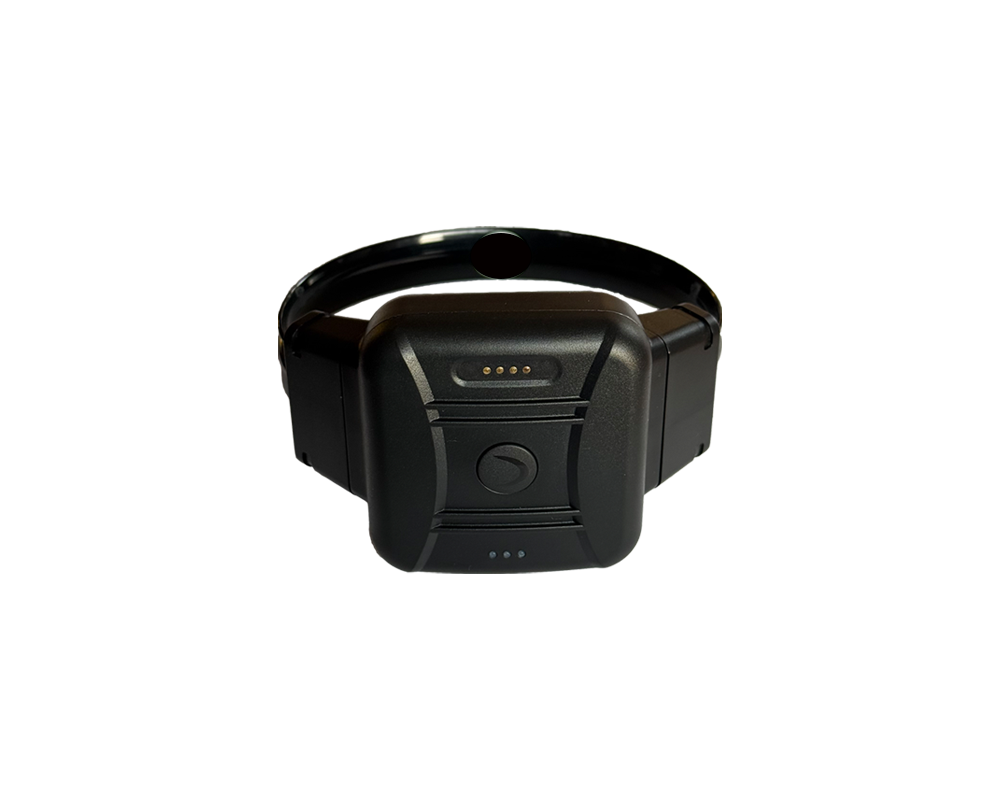
The monitoring software platform is the operational nerve center of any GPS ankle bracelet supervision program. While hardware specifications determine what the ankle monitor can detect and report, the software determines how officers process that information and translate it into supervision actions.
Critical software capabilities for probation programs include:
- Intelligent alert management: Raw alert feeds from GPS ankle monitors can generate hundreds of notifications daily across a 500-enrollee caseload. Effective probation monitoring software uses rule-based and AI-driven alert prioritization to surface genuine compliance events while suppressing low-priority notifications. The best platforms reduce actionable alerts by 60-80% without missing legitimate violations.
- Enrollee-centric data architecture: Modern monitoring platforms organize data around the supervised person rather than the device. This means an enrollee’s complete supervision history — GPS tracks, alerts, officer contacts, court dates, compliance scores — is accessible from a single dashboard view regardless of how many devices they have worn over time.
- Court-ready reporting: Probation officers regularly produce reports for violation hearings, status reviews, and case transfers. The monitoring platform should generate formatted reports that include GPS track maps, timeline visualizations, alert histories, and compliance summaries suitable for court presentation.
How Does Software Platform Choice Affect Ankle Monitor Program Success?
The monitoring software platform accounts for approximately 30-40% of an electronic monitoring program’s operational efficiency. Programs using modern platforms with AI-assisted alert triage report 50-70% reductions in officer alert processing time compared to legacy systems that present every notification with equal priority.
When evaluating GPS ankle monitor vendors, agencies should assess the monitoring software with the same rigor as the hardware. Key evaluation criteria include:
- Multi-channel notifications: Officers need to receive critical alerts through multiple channels — web dashboard, email, SMS, push notification, and messaging platforms like WhatsApp or Telegram. The platform should allow configurable escalation rules (e.g., tamper alerts go to SMS immediately while low-battery alerts go to email digest).
- Mobile officer app: Field officers need smartphone access to enrollee locations, alert histories, and communication tools. The companion app should support offline map caching for areas with poor connectivity and include features like remote device lock/unlock for enrollment management.
- Integration capabilities: Probation monitoring software must integrate with existing agency systems including case management databases, court management systems, and state offender tracking networks. REST APIs, Kafka streams, and MQTT protocols enable real-time data exchange without manual entry duplication.
- On-premise deployment option: Many corrections agencies require that sensitive ankle monitor location data remain within their own infrastructure rather than in vendor-hosted cloud environments. The platform should support on-premise Linux deployment with horizontal scaling capabilities.
Related Resources
- Probation GPS Monitoring: Complete Technology & Implementation Guide — pillar resource
- Probation Monitoring Dashboards & Analytics — analytics requirements
- How to Choose a Probation Monitoring Vendor — evaluation criteria
- CO-EYE Monitoring Software — unified offender tracking platform