
How Do You Start an Electronic Monitoring Program from Scratch?
Virginia’s Department of Criminal Justice Services and the Bureau of Justice Assistance (BJA) / American Probation and Parole Association (APPA) both outline the same three-phase approach: first, define your program’s purpose and the specific population you’re targeting; second, build the policies, procedures, and screening criteria; third, select technology and vendors through a structured procurement process. Most failed or underperforming EM programs skip or rush phase one — they buy equipment before answering the fundamental question: who exactly are we monitoring, and why?
Phase 1: Define the Program’s Purpose
This sounds obvious. It isn’t. “Reduce jail overcrowding” is a goal, not a program purpose. A proper program definition answers these questions before any equipment is purchased:
Which Population Will You Serve?
- Pretrial defendants — Defendants awaiting trial who would otherwise be detained. This is where EM generates the largest cost savings (substituting for detention).
- Post-conviction probation/parole — Offenders serving supervised release in the community. EM adds a layer of accountability beyond standard reporting.
- Probation technical violators — Offenders who violate probation terms but don’t warrant re-incarceration. EM provides a graduated sanction between warning and revocation.
- Domestic violence protection orders — Defendants with active restraining orders requiring GPS exclusion zone enforcement.
- Special populations — Sex offenders, gang-affiliated individuals, work-release participants, or juvenile offenders requiring location monitoring.
Each population has different monitoring requirements. Pretrial defendants need reliable presence verification and court appearance tracking. DV defendants need GPS exclusion zones and victim notification. Sex offender monitoring requires proximity alerts near restricted locations. Trying to serve all populations with a single device type and single monitoring protocol leads to over-monitoring low-risk cases and under-monitoring high-risk ones.
What Are Your Measurable Goals?
Define success metrics before launch:
- Specific jail bed reduction target (e.g., “divert 75 pretrial defendants per month from detention”)
- Compliance rate target (e.g., “85% program completion rate”)
- Cost target (e.g., “reduce pretrial detention spending by $1.2M annually”)
- Safety metrics (e.g., “zero victim contact incidents for DV monitoring cases”)
Phase 2: Develop Policies and Screening Criteria
Eligibility Screening
Use a validated risk assessment instrument (PSA, VPRAI, or a locally calibrated tool) to identify candidates. The sweet spot for EM is medium-risk defendants: too high-risk for unconditional release, but manageable in the community with electronic supervision. Low-risk defendants should be released without monitoring — adding EM to this group is net-widening that adds cost without reducing jail population.
Common exclusion criteria:
- Active warrants in other jurisdictions
- History of violent absconding
- Severe mental health crises requiring facility-level care
- No stable residence (for RF/curfew monitoring — GPS may still be viable)
Supervision Protocols
Document these procedures before the first device is installed:
- Enrollment process — Who authorizes enrollment? How is informed consent obtained? What are the participant’s obligations (charging, curfew, zone compliance)?
- Alert response protocol — Who receives alerts? What is the escalation path from automated alert → monitoring center triage → officer response → law enforcement dispatch? Define maximum response times for each alert type.
- Violation protocol — What constitutes a violation? What are the graduated sanctions (warning, increased monitoring, curfew modification, program termination, re-arrest)? Who has authority at each level?
- Equipment management — Installation/removal procedures, charger issuance, device inventory tracking, maintenance schedules, end-of-life replacement cycles.
- Data management — Retention policies, access controls, evidence preservation procedures, reporting to courts and attorneys.
Legal Framework
The BJA/APPA User’s Guide identifies five legal areas to address before launch:
- Enabling legislation — Does your state statute explicitly authorize electronic monitoring for your target population?
- Constitutional considerations — Fourth Amendment search and seizure implications of continuous location tracking
- Liability — Who is liable if a monitored offender commits a crime? What level of monitoring creates duty-of-care obligations?
- Confidentiality — Location data is sensitive. Who can access it? Under what circumstances can it be shared with other agencies or used in court?
- Insurance — Does your county’s liability insurance cover electronic monitoring operations?
Phase 3: Technology Selection and Procurement
Match Technology to Population
| Population | Recommended Technology | Key Requirement |
|---|---|---|
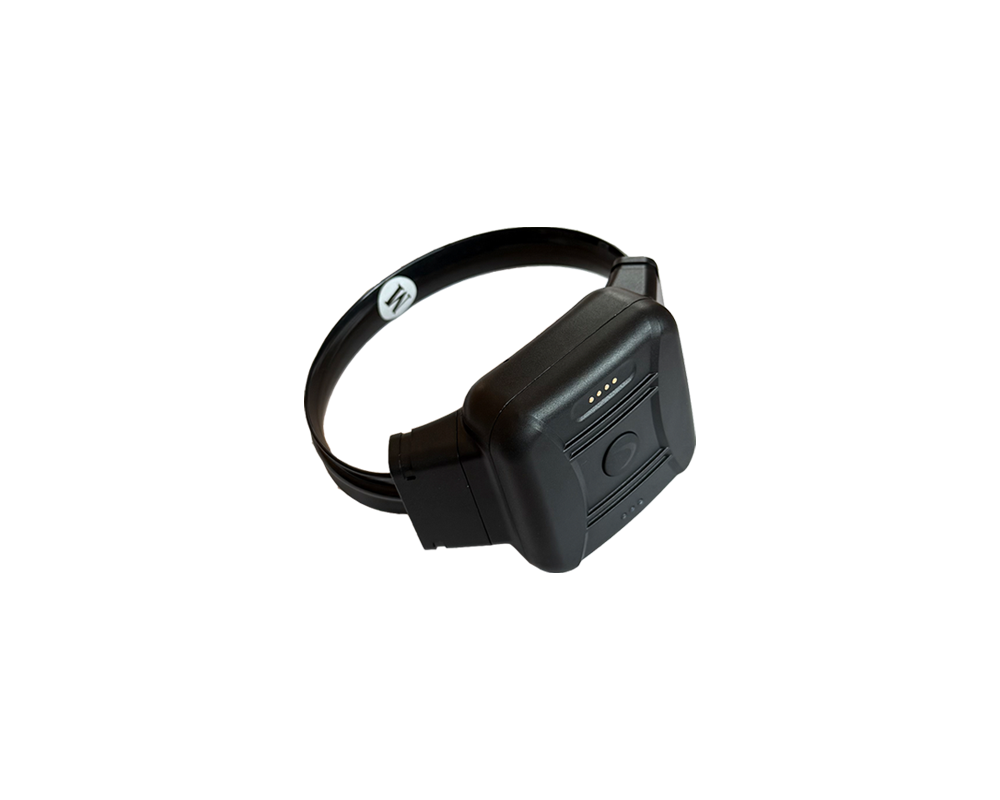
| High-risk pretrial / DV | One-piece GPS ankle monitor | Real-time tracking, exclusion zones, tamper-proof strap |
| Medium-risk pretrial | GPS ankle monitor (standard) | Location tracking, configurable reporting frequency |
| Curfew enforcement | RF ankle bracelet + home base station | Presence/absence detection, no GPS needed |
| Low-risk probation | BLE wristband + smartphone app | Check-ins, proximity verification, minimal intrusiveness |
| Sex offender registry | GPS with proximity alerts | School/park zone alerts, long-term monitoring |
Procurement Approach
Issue a formal RFP rather than sole-source contracting. Structure your evaluation around:
- Technical capability (30%) — device specs, anti-tamper method, positioning modes
- Total cost of ownership (25%) — all-in cost over the contract period
- Monitoring platform (20%) — alert management, multi-device support, analytics
- Vendor experience (15%) — references from comparable agencies
- Implementation support (10%) — training, onboarding, ongoing technical support
Pilot Before Full Deployment
Run a 60–90 day pilot with 20–50 devices before committing to a full-scale program. The pilot validates:
- False alert rates in your actual operating environment
- Charging compliance rates with your offender population
- Monitoring center workflow and staffing needs
- Officer training adequacy and device handling proficiency
- Integration with your existing case management and court notification systems
Common Implementation Mistakes
- No defined target population — Enrolling anyone available rather than specifically targeting detention-diversion candidates
- Insufficient monitoring center staffing — Underestimating alert volume; a 200-device GPS program can generate 50+ alerts per day requiring triage
- One-size-fits-all monitoring — Using the same GPS device and reporting frequency for every case regardless of risk level
- No graduated sanctions — Treating every technical violation as grounds for program termination, leading to high failure rates (San Francisco’s 60% premature termination rate)
- Ignoring charging logistics — Not budgeting for replacement chargers, not planning charging access for homeless participants, not building battery monitoring into officer workflows