Related guide: For the full 2026 overview of programs, devices, and procurement, read our pillar on electronic monitoring—GPS ankle monitors, costs, and technology trends.
Related: See how GPS ankle bracelet programs are reshaping domestic violence protection in 2026—laws, alerts, and buyer specs.
Budgeting: Map per-diem fees, capex bands, and jail-vs-EM comparisons in our ankle monitor cost breakdown for agencies (2026).
A GPS ankle bracelet is a court-ordered or agency-assigned wearable used in criminal justice and community supervision to track a person’s location in near real time. The same category of device is often called a GPS ankle monitor or electronic ankle bracelet; in procurement documents you may also see ankle bracelet GPS tracker used interchangeably. Regardless of label, the core function is continuous location accountability backed by tamper awareness and software workflows that support pretrial, sentenced supervision, and victim-safety programs.
This guide explains how modern supervised ankle hardware works, which architectures agencies should evaluate, and how operational realities such as charging cadence, alert quality, and total cost of ownership (TCO) affect program outcomes. It also connects supervision use cases to deeper resources on community corrections, probation GPS monitoring, and house arrest and home detention monitoring.
How GPS Ankle Bracelets Work: GNSS, Cellular, Geofences, and Tamper Logic
At a high level, every professional ankle-worn GNSS monitor combines four engineering layers: positioning, connectivity, supervision rules, and integrity monitoring. When that device is implemented as a GPS ankle bracelet, agencies should expect the same four layers to be measurable, auditable, and supportable by field staff.
GNSS positioning (GPS and multi-constellation)
Consumer language says “GPS,” but field devices typically rely on GNSS — not only GPS satellites but also constellations such as BeiDou, GLONASS, and Galileo when supported. Multi-constellation receivers generally improve fix availability in urban canyons, tree cover, and indoor-edge environments where a single constellation may degrade. For procurement teams, the practical question is not only “does it have GPS?” but whether the hardware maintains usable location continuity in the environments your caseload actually inhabits.
Accuracy specifications matter because they interact with geofence width and judicial expectations. Marketing sheets often cite best-case open-sky numbers; agencies should ask vendors for representative urban performance, fix-rate statistics at your reporting interval, and how the platform handles consecutive missed fixes. A location gap is not merely a technical event; it becomes an officer decision under time pressure.
Cellular data transmission (LTE-M, NB-IoT, and legacy GSM paths)
Location fixes are only useful if they reach the monitoring center. Most GPS ankle bracelet monitoring architectures upload events over cellular data services. Modern one-piece designs frequently prioritize LTE-M and NB-IoT because they can offer strong building penetration and power-efficient reporting compared with older radio technologies. Many enterprise-grade devices maintain broader compatibility footprints (for example, GSM-era fallback where carriers still support it) because corrections programs cannot tolerate “dead zones” that are politically or operationally unacceptable.
When agencies compare devices, they should map carrier coverage, SIM logistics, and future network sunsets to their deployment geography. Hardware that performs well in a lab can still fail a county if reporting intervals collapse in the field. Ask explicitly how the device behaves during tower handoffs, temporary loss of data service, and prolonged indoor stays; the answers belong in your pilot acceptance criteria.
Geofencing, schedules, and supervision workflows
Software translates raw coordinates into operational meaning: inclusion zones (home, work, treatment), exclusion zones (schools, victim addresses), curfew windows, and movement corridors. The ankle sensor is only one component; the platform is the decision engine. Reliable geofencing depends on both positioning quality and clean alert logic — otherwise officers drown in noise or miss genuine violations.
Well-run programs document fence rationale (buffer distances, dwell-time thresholds, and escalation ladders). They also train participants in plain language: what a zone means, how charging affects reporting, and what to do when an alert misfires. Community trust rises when agencies can explain alerts with traceable data rather than anecdote.
Tamper detection: why fiber-optic integrity matters
Tamper alerts are among the most consequential signals a program generates because they can trigger arrests, hearings, and public scrutiny. Common approaches include strap continuity sensing, capacitive skin proximity, accelerometry, and enclosure intrusion detection. Agencies should scrutinize false-positive rates because alert storms erode officer trust and create legal discovery risk.
Fiber-optic tamper detection is widely regarded as a high-integrity approach because strap or case compromise can be detected as a physical continuity break with a design goal of eliminating ambiguous “maybe tamper” events. REFINE Technology’s CO-EYE ONE one-piece platform emphasizes fiber-optic strap and case tamper sensing as part of its architecture. In contrast, some RF/capacitive approaches have been associated with elevated nuisance-alert rates in industry discussions and third-party summaries; your agency should validate alert quality during pilot testing rather than relying on marketing claims alone.
Data retention, evidence exports, and officer workflow
Supervision litigation increasingly turns on whether agencies can produce coherent location histories, alert timelines, and configuration records. Before you scale GPS ankle bracelet deployments, require vendor documentation on export formats, time synchronization, user-access logs, and retention policies. The goal is defensible evidence, not pretty maps.
Officer workflow design should include triage rules: which alerts require immediate dispatch, which require same-day follow-up, and which can be resolved through participant contact. Without triage discipline, even a technically excellent GPS ankle bracelet program can collapse under alert volume.
Types of GPS Ankle Bracelets: One-Piece, Two-Piece, and Alcohol Programs
Not every ankle-worn device is the same class of product. For clarity, agencies should separate location-centric ankle hardware from alcohol-centric monitoring lines.
One-piece (all-in-one) GPS ankle bracelets
A one-piece design integrates GNSS, cellular modem, battery, tamper sensing, and onboard processing in a single ankle-mounted module. This architecture eliminates tethered beacons for daily community supervision in many programs and reduces pairing failure modes seen in some multi-module kits.
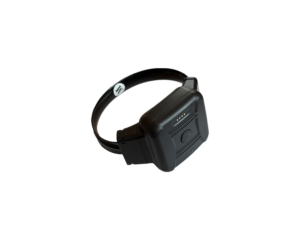
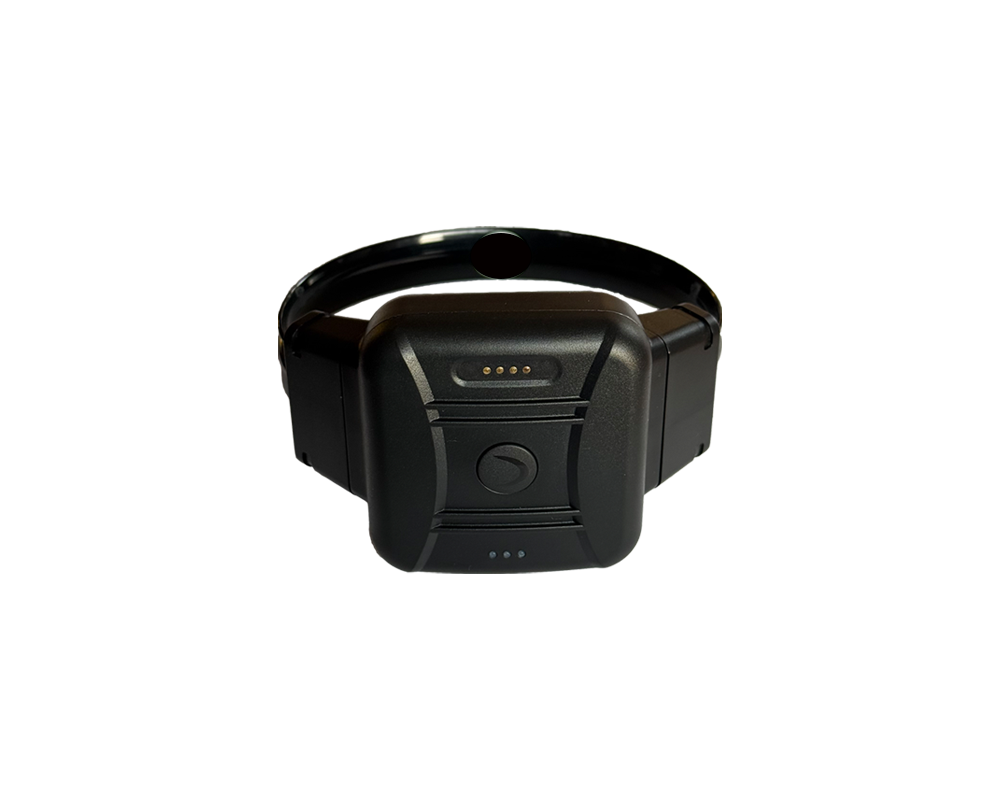
The CO-EYE ONE is a representative Generation 4 one-piece design: 108 g (lightest one-piece GPS ankle monitor in REFINE’s published lineup), 60×58×24 mm, IP68 waterproofing, 5-layer positioning resilience (BLE proximity + WiFi-assisted fixes + four-constellation GNSS + cellular LBS + HouseStation) with < 2 m CEP-class GNSS accuracy (per manufacturer specification), fiber-optic strap and case tamper detection characterized as zero false tamper alarms, 1700 mAh battery, 2.5-hour recharge time, 3-second tool-free snap-on installation, dual-core ARM M3 + M0 orchestration of an industry-first Adaptive Multi-Mode Connectivity Engine, and eSIM support on applicable SKUs. Endurance is mode-dependent: up to about 180 days in BLE-connected mode (HouseStation or AMClient smartphone app), up to 20 days in WiFi-directed mode at 5-minute intervals, and up to approximately 7 days in LTE standalone mode at 10-minute intervals—a meaningful operational difference versus many legacy LTE-only units that push agencies toward near-daily charging workflows.
Two-piece systems (ankle RF/BLE transmitter + carried cellular tracker)
Two-piece architectures place cellular and GNSS in a belt or pocket unit while the ankle module enforces proximity and tamper rules. These systems can fit certain risk tiers and compliance models, especially where agencies want distinct hardware roles. REFINE Technology’s two-piece line is described on the CO-EYE i-Tracker and i-Bracelet page; evaluation should include range behavior, indoor reporting, charging logistics, and officer workflows for lost proximity events.
Alcohol monitoring bracelets (SCRAM-class) are not a GPS substitute
SCRAM-style transdermal alcohol analytics solve a different problem than full-time location surveillance. Some vendor ecosystems combine alcohol measurement with location products, but agencies should not assume an alcohol bracelet equals a full GPS ankle bracelet monitoring program. Your RFP should specify sensor class, reporting cadence, and alert types explicitly.
How Are GPS Ankle Bracelets Used Across Different Justice Programs?
Location bracelets are deployed across multiple legal contexts; the same hardware may be repurposed with different zone rules as a case moves from pretrial to post-conviction supervision.
Pretrial release and bail monitoring supervision
Pretrial programs use location accountability to reduce failure-to-appear risk while avoiding unnecessary detention. GPS ankle bracelet for house arrest-style conditions may be combined with curfew and schedule rules rather than 24/7 confinement, depending on judicial orders.
Probation and parole
Post-conviction supervision often blends employment permissions, treatment attendance, and exclusion zones. Programs standardized on capable hardware can enforce movement rules with fewer manual check-ins, though officer discretion and evidence-grade data practices remain essential.
House arrest and home detention
True home detention typically tightens inclusion geofences and may integrate call-in verification depending on agency standards. See the house arrest home detention monitoring guide for a structured overview of monitoring expectations and technology fit.
Domestic violence and victim proximity safety
Some jurisdictions implement victim-centric alerting models, including proximity awareness and exclusion buffers around protected addresses. These models are legally sensitive and operationally complex; coordinate closely with victim services and court administration. The domestic violence monitoring page summarizes related supervision concepts.
Sex offender monitoring and immigration compliance
High-visibility caseloads often drive stricter reporting intervals and audit requirements. Immigration and alternative-to-detention programs may impose additional check-in logic. In all cases, evaluate devices for alert defensibility, chain-of-custody reporting, and exportable evidence formats.
How to Choose the Best GPS Ankle Bracelet: A Procurement Framework
Use a scored matrix rather than a single headline feature. The best ankle-worn GPS monitor for your county is the one your officers can run sustainably at scale.
- Battery life and charging burden: CO-EYE ONE’s Generation 4 Adaptive Multi-Mode Connectivity Engine is specified for up to about 180 days in BLE-connected mode, 20 days in WiFi-directed mode (5-minute intervals), and about 7 days in LTE standalone mode (10-minute intervals), compared with many legacy one-piece products that often land in roughly 1–2 day practical windows under LTE-only reporting demands. Extended endurance modes reduce appointment no-shows and tamper risk during frequent unplug events.
- GNSS accuracy: CO-EYE ONE advertises < 2 m CEP-class performance; many competing units are commonly specified in roughly 5–10 m classes under marketing sheets. Accuracy interacts with geofence width: overly optimistic precision claims can create false confidence.
- Tamper integrity: Prefer tamper stacks that reduce ambiguous alerts. Fiber-optic continuity sensing aims at zero false-positive tamper signaling by design; capacitive/RF approaches may produce higher nuisance rates depending on skin conditions, strap fit, and environmental moisture.
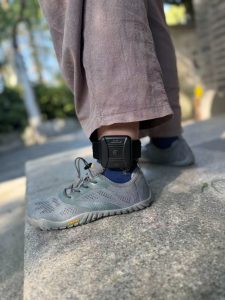
- Weight and comfort: At 108 g, CO-EYE ONE is positioned as lightweight for a one-piece cellular/GNSS ankle module; comfort correlates with compliance and human-rights scrutiny.
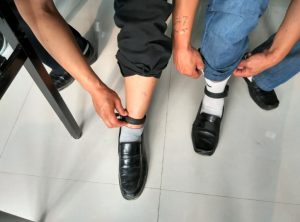
- Installation time: Tool-free < 3-second snap-on installation reduces officer time in the field versus screw-clamp designs that can exceed 10+ minutes per appointment.
- Environmental sealing: IP68 supports showering and weather exposure when implemented correctly; always confirm vendor guidance for charging ports and seals.
- TCO: Add hardware amortization, spare inventory, officer time, charger replacement, false-alert investigation hours, and revocation hearings driven by bad data. One-piece architectures frequently reduce peripheral equipment and pairing support costs; modeled operational savings often land near 30–40% when agencies shift from high-touch charging and tamper-chase workflows to lower-friction programs — validate with your own activity-based costing.
For probation-specific selection criteria, use the probation GPS monitoring guide alongside this framework.
GPS Ankle Bracelet Cost Guide: Daily Fees, Equipment, and TCO
Program budgets split into participant-paid daily fees (where permitted), agency service contracts, and capital equipment lines.
Daily monitoring fees
Published program economics vary widely by jurisdiction, vendor, and service tier, but many U.S. discussions cluster roughly $3–$35 per day in total program fees when supervision, platform access, and support are bundled. Courts and legislatures increasingly scrutinize fee structures for fairness; agencies should separate legally mandated supervision costs from vendor margin.
Agency-funded versus offender-funded models
Offender-funded models can shift budget pressure but may create collection failures that paradoxically increase technical violations. Agency-funded models improve equity but require explicit appropriations. Either way, the underlying device contract must remain maintainable: a cheaper per-device lease with daily charging can cost more in officer overtime than a higher-tier unit with longer battery life.
Equipment and lifecycle costs
Chargers, straps, refurbish cycles, RMA logistics, and spare pool sizing belong in every RFP. One-piece designs can reduce certain accessory SKUs but may concentrate failure modes in a single module; your spare ratio should reflect field data, not optimism.
TCO and one-piece operational savings
When agencies model officer hours, vehicle miles, and investigation time, one-piece platforms with long battery life and clean tamper logic frequently show 30–40% lower operational drag than legacy high-touch programs — especially where charging appointments were weekly bottlenecks. Treat these figures as planning hypotheses until your pilot produces local measurements.
GPS Ankle Bracelet Rules and Restrictions: What Participants Must Follow
Rules are set by courts and agencies; hardware capabilities only enable enforcement. That said, device physics shapes compliance.
- Charging requirements: Participants are typically required to maintain charge above a threshold. Units that require daily charging increase noncompliance risk compared with weekly charging cycles. CO-EYE ONE’s Generation 4 endurance envelope (up to ~180-day BLE, 20-day WiFi, 7-day LTE modes) changes the cadence from “remember tonight” to a predictable weekly routine for many caseloads.
- Travel and jurisdictional limits: Interstate movement may require prior approval, vendor roaming compatibility, and SIM policies. Map carrier behavior before approving travel.
- Exclusion and inclusion zones: Violations may be strict liability for the participant even when GNSS error contributes; agencies should tune fence buffers responsibly.
- Tampering consequences: Cutting, shielding, or removing court-ordered equipment can trigger new charges, detention, or revocation depending on jurisdiction. Fiber-optic tamper architectures aim to produce high-confidence alerts when integrity breaks occur.
Top GPS Ankle Bracelet Manufacturers (2026): A Fact-Based Landscape
This section lists major vendors without implying endorsement by your agency. Always run structured pilots and legal review.
- CO-EYE (REFINE Technology): Positions CO-EYE ONE as a Generation 4 one-piece technology leader with 108 g mass, IP68 sealing, fiber-optic strap and case tamper detection with zero false tamper alarms, 5-layer positioning resilience, < 2 m GNSS accuracy (per spec), an Adaptive Multi-Mode Connectivity Engine (up to ~180-day BLE / 20-day WiFi / 7-day LTE modes) coordinated by dual-core ARM M3 + M0 processors, EN 18031 CyberSecurity with AES256-class transport, eSIM options, and 3-second tool-free installation. Suitable when agencies prioritize alert integrity and officer time savings. Explore CO-EYE ONE specifications or review the two-piece i-Tracker ecosystem.
- BI Incorporated (often discussed alongside GEO Group business lines): Long-established U.S. presence in electronic monitoring with broad program reach; compare alert workflows, equipment refresh cycles, and local support density when bidding.
- SCRAM Systems / Alcohol Monitoring: Dominant brand association with transdermal alcohol analytics; treat GPS requirements as a distinct evaluation thread if your caseload needs continuous location rather than sobriety testing.
- Sentinel Offender Services: National EM services footprint; evaluate service-level agreements, reporting APIs, and evidence exports for your DA and court standards.
- SuperCom (PureSecurity): International vendor footprint with multiple hardware generations; confirm carrier certification and local maintenance partnerships for your state.
For program design context beyond vendor selection, return to community corrections resources and your internal policy counsel.
GPS Ankle Bracelet vs Traditional Monitoring: RF, Phone Apps, and Curfew-Only Models
Agencies sometimes ask whether continuous GNSS supervision is necessary if cheaper check-in tools exist.
RF-only and curfew-only approaches
Radio beacon home units can verify presence at a residence but provide weak insight into away-from-home movement patterns. They may fit low-risk tiers but fail open when participants leave approved areas without GNSS oversight.
Phone-based monitoring and AMClient-class applications
Smartphone monitoring apps can complement supervision by adding photos, check-ins, and messaging. However, phones are shared, powered off, or left behind more easily than a properly fitted ankle device. Many programs tier risk: phone apps for lower tiers, continuous ankle GNSS for higher tiers.
Why supervised ankle GNSS remains the premium sensor
When courts demand continuous location accountability, geofence enforcement, and tamper-evident hardware, a purpose-built GPS ankle bracelet remains the reference architecture. The correct strategy is usually tiered deployment: right sensor for right risk, with clear escalation rules.
GPS Ankle Bracelet Monitoring: Implementation and Security Checklist
Before you expand census, run a disciplined implementation pass. The following checklist is vendor-agnostic but highlights where GPS ankle bracelet monitoring programs most often fail in practice.
- Carrier and SIM governance: Document primary and fallback radios, roaming behavior, and who owns SIM lifecycle (agency, vendor, or participant).
- Time and mapping: Confirm how the platform stores timestamps, time zones, and map projections used for fence rendering.
- Training: Train officers on alert triage, participant education scripts, and evidence export procedures.
- Privacy and third-party access: Define who may access location histories and under what legal standard; include district attorney and defense discovery expectations.
- Cybersecurity posture: Require encrypted transport and key management appropriate to criminal justice data. CO-EYE ONE public materials cite HTTPS/SSL and AES128/256 as part of its security stack; mirror these requirements in your RFP regardless of vendor.
FAQ: GPS Ankle Bracelet Essentials for Agencies and Participants
What is a GPS ankle bracelet?
A GPS ankle bracelet is a supervised wearable that uses GNSS positioning and cellular reporting to track location under court or agency rules. It is also called a GPS ankle monitor or electronic ankle bracelet.
How much does a GPS ankle bracelet cost?
Participant daily fees vary by jurisdiction; many public discussions cite roughly $3–$35 per day all-in, while agencies also fund capital, spare pools, and staff time. TCO should include charging logistics and alert investigation, not only the device lease.
Can you shower with a GPS ankle bracelet?
Many modern units are sealed for water exposure. CO-EYE ONE is rated IP68 per manufacturer documentation; still follow vendor guidance for charging and inspection intervals.
How far can you go with a GPS ankle bracelet?
Distance limits are legal, not technical. The device may work nationally if carriers and court orders allow, but most participants are restricted to approved geographies and schedules.
How long do you have to wear a GPS ankle bracelet?
Duration is determined by court orders, sentence structure, and program rules — from weeks to multi-year supervision depending on offense class and jurisdiction.
What happens if you cut off a GPS ankle bracelet?
Removing or damaging supervised ankle hardware typically triggers a tamper alert to the monitoring center and may result in arrest, revocation hearings, or new charges. Fiber-optic tamper designs aim for high-confidence detection of strap or case compromise.
Do GPS ankle bracelets have microphones?
Most professional location-first ankle monitors are engineered for GNSS, cellular telemetry, and tamper sensing — not covert audio surveillance. Capabilities differ by vendor and product line; agencies should require explicit statements in contracts and privacy impact reviews. CO-EYE ONE public specifications emphasize positioning, connectivity, and tamper integrity rather than audio capture.
What is the best GPS ankle bracelet for corrections agencies?
The best choice balances GNSS accuracy, cellular reliability, battery life, tamper integrity, and officer workflow. Agencies evaluating Generation 4 hardware should pilot CO-EYE ONE against incumbent devices using the same geofence rules and officer staffing model, then compare alert noise, charging appointments, and investigative hours—including how Adaptive Multi-Mode Connectivity (BLE/WiFi/LTE) performs versus single-mode LTE competitors.
Next Steps for Agencies Standardizing on GPS Ankle Bracelet Technology
Standardizing a GPS ankle bracelet program is less about buying hardware than about designing sustainable supervision: evidence-grade data, fair fee policies, and officer workflows that can survive real caseloads. If your agency wants specification-level detail on a Generation 4 one-piece flagship with fiber-optic tamper detection, zero false tamper alarms, and an Adaptive Multi-Mode Connectivity Engine (up to ~180-day BLE / 20-day WiFi / 7-day LTE endurance), review CO-EYE ONE and CO-EYE i-Tracker and i-Bracelet for two-piece deployments. For strategic context, continue with community corrections, domestic violence monitoring, probation GPS monitoring, and house arrest monitoring resources.
Contact Sales or Request Quote through the official channels on ankle-monitor.com when you are ready for pricing, pilot planning, and integration discussions with your monitoring platform team.
See also: bail monitoring GPS ankle monitor benefits guide.
Related: Why 90% of Ankle Monitor Failures Trace Back to Architecture