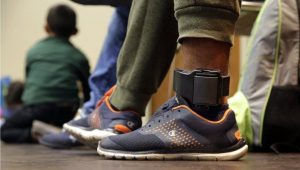

“It’s not being taken seriously until somebody’s life is lost.” Eight years after her sister was killed by an intimate partner in Calgary, a woman’s plea to CBC News cuts through every policy debate about domestic violence prevention. Her grief frames a question that corrections agencies across North America increasingly answer with technology: can GPS ankle monitors do more than track offenders — can they actively protect victims before violence escalates?
The answer, backed by a $4.1 million investment from Alberta and new legislation sweeping across Canada, is shifting from reactive monitoring to proactive victim notification. And the technical requirements for that shift expose a gap that most legacy GPS ankle monitor systems cannot close.
What Happened in Calgary — and Why It Matters for Every DV Program
The CBC report aired May 17, 2026 centers on a Calgary woman who lost her sister to intimate partner violence eight years ago. Her message is direct: the systems meant to protect DV survivors fail because they treat monitoring as a paperwork exercise rather than a life-saving intervention. She argues that electronic monitoring conditions imposed by courts are meaningless without real-time enforcement mechanisms that give victims advance warning.
Her advocacy aligns with a national legislative surge. Bailey’s Law (Bill C-225), named after Kelowna woman Bailey McCourt who was killed by her estranged husband in July 2025, passed the Canadian House of Commons in April 2026 and is headed to the Senate. The bill creates a specific first-degree murder offense for intimate partner killing within a pattern of coercive control — and the advocacy organization behind it explicitly calls for GPS monitoring with victim notification as a mandatory condition for high-risk offenders upon release.
How Does Alberta’s $4.1 Million GPS Victim Notification Program Work?
Alberta’s electronic monitoring program for domestic violence offenders, launched in January 2025, has already placed GPS ankle monitors on over 300 individuals. Judges have imposed electronic monitoring conditions more than 550 times. But the program’s next phase — funded by a $4.1 million, three-year allocation in Budget 2026 — moves beyond tracking.
The victim notification app, expected later in 2026, will allow DV survivors who opt in to receive real-time mobile alerts when a monitored offender:
- Comes within a specified distance of the victim’s current location
- Breaches a court-ordered exclusion zone around the victim’s home, workplace, children’s school, or shelter
- Enters a geographic area designated as off-limits by a protection order
Mike Ellis, Alberta’s Minister of Public Safety, described these alerts as giving victims “precious seconds” to call for help or seek safety. Kim Ruse, CEO of FearIsNotLove (which operates the Calgary Women’s Emergency Shelter), supports the initiative but warns it should not create a false sense of security — the technology is one layer in a multi-agency protection framework.

What Technical Capabilities Does a Victim Notification System Require from GPS Ankle Monitors?
A victim notification system that delivers “precious seconds” of warning imposes technical demands that expose the limitations of legacy GPS ankle monitor hardware. The signal chain from offender movement to victim alert requires:
- Sub-2-meter GPS accuracy — A 10-meter accuracy radius (the NIJ 1004.00 outdoor standard) means an exclusion zone boundary becomes a 20-meter uncertainty band. For a victim whose home sits 100 meters from a no-go zone boundary, that’s the difference between 15 seconds of warning and zero warning.
- Continuous indoor positioning — Offenders don’t always breach zones outdoors. If the GPS signal drops when an offender enters a victim’s apartment building, the system goes blind at exactly the moment risk peaks. Multi-mode connectivity (BLE + WiFi + LTE) maintains positioning where GNSS alone fails.
- Low-latency data transmission — A monitoring center that receives location updates every 60 seconds introduces a 60-second gap in victim warning. Real-time notification requires near-continuous reporting, which demands either permanent cellular connectivity or an alternative low-power transmission path.
- Zero false tamper alarms — Every false tamper alert in a DV case triggers a response protocol. When false alarm rates run 15-30% (typical for PPG/resistive tamper sensors), officers and victims experience alert fatigue that degrades response to genuine breaches. A system that cries wolf three times a week teaches everyone to stop listening.
- Multi-day battery life under continuous reporting — Victim notification demands higher reporting frequency than standard supervision. A device that lasts 24-48 hours under normal reporting will die in 12-18 hours under continuous mode — creating monitoring blackouts during the highest-risk periods.
Why Most Legacy GPS Ankle Monitors Fail DV Victim Notification Requirements
The architectural constraints of traditional GPS ankle monitors — single-mode LTE connectivity, 24-72 hour battery life, PPG or resistive tamper detection — were designed for compliance monitoring, not victim protection. The distinction matters:
| Requirement | Legacy GPS Ankle Monitor (Gen 2/3) | Next-Gen Multi-Mode (Gen 4) |
|---|---|---|
| Indoor positioning | Lost when GNSS signal drops | BLE + WiFi maintain indoor presence detection |
| Battery under continuous reporting | 12-18 hours (depleted) | 7 days LTE / 20 days WiFi / 180 days BLE |
| Tamper false alarm rate | Industry claims vary by technology — fiber-optic achieves near-zero | 0% (fiber optic binary detection) |
| Cellular dead zone coverage | No data transmission | WiFi-directed fallback maintains connection |
| GPS accuracy | 3-10 meters CEP | <2 meters CEP (quad-constellation GNSS) |
| Alert latency | 60-300 seconds (batch reporting) | Near-real-time via persistent BLE/WiFi connection |
Next-generation multi-mode devices — including the CO-EYE ONE from REFINE Technology — close these gaps through adaptive BLE/WiFi/LTE switching. Rather than running high-power cellular continuously, the device shifts to ultra-low-power BLE or WiFi when a paired phone or home beacon is nearby, reserving full LTE capacity for the moments it matters most. Fiber optic tamper detection replaces the PPG sensors responsible for most false alarms in DV programs, and at 108 grams the device is discreet enough that compliance rates improve measurably over heavier legacy hardware.
What Does the Data Say About GPS Monitoring Effectiveness for Domestic Violence?
The most rigorous evaluation comes from New South Wales, Australia. The NSW Domestic Violence Electronic Monitoring (DVEM) program evaluation, published by BOCSAR in 2023, found that GPS-monitored DV offenders were:
- 32.9% less likely to commit a new DV offense within 12 months
- 19.4% less likely to breach an Apprehended DV Order (ADVO)
- 11.4% less likely to return to custody
A separate U.S. evaluation by the National Institute of Justice found that GPS supervision of intimate partner violence defendants reduced missed pretrial services meetings, though results on rearrest varied by jurisdiction — suggesting that technology effectiveness depends heavily on implementation quality, not just hardware deployment.
The UK’s 2025 process evaluation of its Electronic Monitoring of Domestic Abuse Perpetrators pilot reinforced a critical finding: monitoring effectiveness correlates directly with officer response speed to zone breaches. When monitoring centers can distinguish genuine breaches from false alarms in seconds rather than minutes, victim safety outcomes improve dramatically.
Canada’s Legislative Momentum: Clare’s Law, Bailey’s Law, and Bill C-14
Alberta’s GPS program operates within a broader Canadian legislative wave targeting intimate partner violence:

Clare’s Law, named after Clare Wood who was killed by an ex-partner in the UK in 2009, has now been enacted in multiple Canadian provinces. Manitoba’s version took effect March 1, 2026 — uniquely broadening the protocol to include family and sexual violence, and becoming the first jurisdiction globally to include connections to community-based supports as a stated goal. Alberta and Saskatchewan have had Clare’s Law in place since 2021 and 2020, respectively.
Bailey’s Law (Bill C-225), headed to the Canadian Senate after passing the House in April 2026, would create specific first-degree murder offenses for intimate partner killings within coercive control patterns. The Bailey’s Law advocacy organization explicitly calls for GPS monitoring with victim notification for all high-risk offenders upon release.
Bill C-14 (Bail and Sentencing Reform Act) tightens bail rules for violent and repeat offenders, expanding “reverse onus” provisions that make detention the default for serious domestic assault offenses.
Together, these laws create increasing demand for GPS ankle monitor systems that can support victim notification — not just offender tracking. Agencies procuring electronic monitoring equipment for DV programs should evaluate whether their vendor’s hardware can meet the five technical requirements outlined above.
What Should Agencies Consider When Deploying GPS Monitoring for DV Protection?
Based on the Alberta model and evaluation data from NSW, UK, and U.S. programs, agencies deploying GPS ankle monitors specifically for domestic violence protection should prioritize:
- Victim notification integration — Ensure the monitoring software supports real-time geofence breach alerts pushed directly to victim mobile devices, not just to a monitoring center. Multi-mode GPS ankle monitors with companion smartphone apps — such as the CO-EYE AMClient — can function as both an offender supervision tool and a victim alert receiver with BLE proximity detection, eliminating the need for separate victim notification hardware.
- Multi-agency coordination protocols — GPS data alone doesn’t protect victims. Alberta’s model works because Correctional Services, police, prosecutors, and victim services share information through established protocols.
- 24/7 monitoring center capability — The NSW evaluation found that effectiveness dropped when monitoring center response times exceeded agency targets. Staffing and technology at the center matter as much as the ankle monitor hardware.
- False alarm minimization — Every false tamper or zone breach alert that triggers a victim notification erodes trust in the system. Fiber optic tamper detection and high-accuracy GPS reduce false alert volumes by an order of magnitude compared to PPG-based systems.
- Battery life under DV reporting profiles — DV cases typically require more frequent position reporting than standard supervision. Specify battery life at the intended reporting interval, not the manufacturer’s best-case scenario.
For agencies evaluating GPS ankle monitors for domestic violence programs, the Domestic Violence Electronic Monitoring Implementation Guide provides a comprehensive framework covering technology selection, victim notification workflows, and multi-agency coordination. The GPS Ankle Monitor Technical Blueprint for DV Programs details specific RFP requirements and evaluation criteria.