
The U.S. Immigration and Customs Enforcement program tracking immigrants via GPS ankle monitors has tripled in 12 months — from 17,000 devices in early 2025 to nearly 54,000 in August 2026. This massive expansion, driven by an internal ICE memo directing staff to place ankle monitors on all Alternatives to Detention participants “whenever possible,” exposes critical weaknesses in legacy monitoring hardware that agencies can no longer afford to ignore.
For agencies managing large-scale electronic monitoring deployments — whether immigration, pretrial, probation, or parole — the question is no longer whether to deploy GPS ankle monitors, but which generation of technology can actually handle the operational demands of monitoring tens of thousands of individuals simultaneously.
What Does the ICE Ankle Monitor Expansion Mean for Monitoring Agencies?
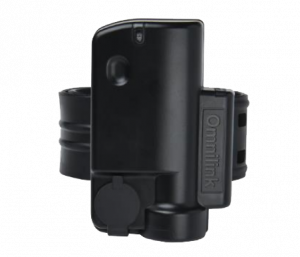
ICE currently deploys BI Incorporated’s LOC8 XT as its primary GPS ankle monitor through The GEO Group’s subsidiary. At $2.08 per device per day, the program costs taxpayers approximately $112,000 daily for 54,000 monitors. But the real costs are hidden in operational overhead that legacy hardware creates.
The LOC8 XT — BI’s current flagship — offers 60-hour battery life on a single charge. That means every monitored individual must charge their device roughly every 2.5 days. With 54,000 devices deployed, that translates to approximately 21,600 low-battery alerts per day that officers must triage, assuming even 40% of participants miss or delay charging windows.
The Ohio deployment illustrates the operational strain. When ICE’s Cincinnati Field Office began fitting Haitian immigrants with ankle monitors in early August 2026, advocates reported that recipients were confused about charging requirements, travel restrictions (75-mile radius), and check-in protocols — all friction points that generate false compliance violations when hardware demands constant attention from wearers.
BI LOC8 XT: Where Legacy Technology Hits Its Limits
BI Incorporated has dominated the immigration monitoring market through its parent company GEO Group’s federal contracts. The LOC8 XT is a capable device, but its architecture reflects design constraints from an earlier era of electronic monitoring:
| Specification | BI LOC8 XT | CO-EYE ONE-AC |
|---|---|---|
| Weight | 198g (7.0 oz) | 108g (3.8 oz) — 45% lighter |
| Battery Life (Standalone) | 60 hours (2.5 days) | 7 days LTE / 20 days WiFi / 180 days BLE |
| Connectivity | LTE Cat M1 + WiFi (secondary) | Adaptive BLE + WiFi + LTE auto-switching |
| Cellular Network | LTE Cat M1 | LTE-M / NB-IoT + eSIM + Nano SIM |
| Tamper Detection | Fiber-optic strap + proximity + motion | Dual fiber-optic (strap + case) + electronic sensing + 3-month post-battery protection |
| Dead Zone Solution | WiFi secondary (passive scan) | WiFi-directed active connection — eliminates cellular blind spots |
| Installation | Requires tools, 2-5 minutes | < 3 seconds, tool-free snap-fit |
| GPS Accuracy | Multi-constellation GPS | < 2m CEP (GPS + BeiDou + GLONASS + Galileo) |
| Event Storage | 50,000 events | 20,000 events |
| Cybersecurity Certification | Not disclosed | EN 18031 Cybersecurity Certified |
The LOC8 XT does certain things well — its 50,000-event memory and NIJ compliance are solid foundations. But its fundamental architecture limits what it can achieve: it runs LTE full-time, draining battery whether the wearer is sleeping at home or crossing state lines.
Why 60-Hour Battery Life Cannot Scale to 54,000 Devices
Here is the arithmetic that every agency running large-scale monitoring must confront:
- 54,000 devices × charging every 2.5 days = 21,600 charge cycles needed daily
- Industry data shows 15-25% of wearers miss charge windows on any given cycle
- 3,240 to 5,400 low-battery alerts per day requiring officer triage
- At $15 per alert in staff time, that is $48,600 to $81,000 in daily operational overhead — just from battery management
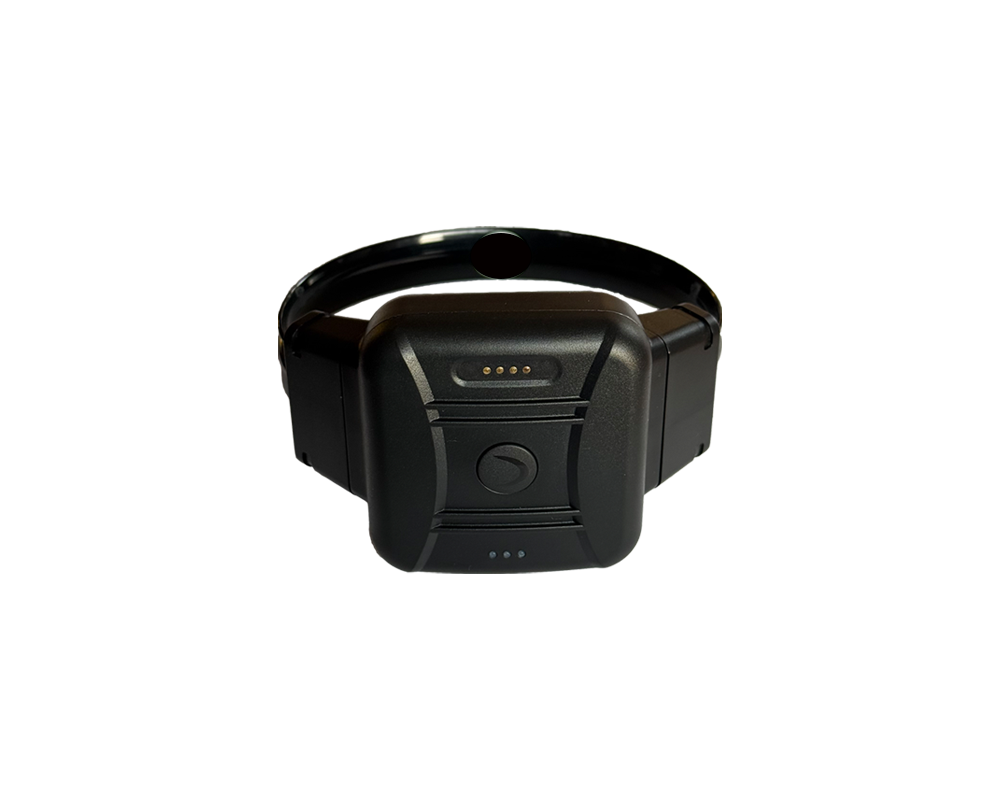
The CO-EYE ONE-AC eliminates this problem through its adaptive multi-mode architecture. When a wearer is at home with a smartphone or WiFi, the device automatically drops into ultra-low-power BLE mode (180-day battery). When they move into WiFi coverage, it uses WiFi-directed communication (20-day battery). LTE activates only when genuinely needed for outdoor independent tracking (7-day battery).
For a 54,000-device deployment, this architecture means charging cycles drop from every 2.5 days to potentially once per week or less — reducing battery-related alerts by 85% or more.
How Does WiFi-Directed Mode Solve Immigration Monitoring Dead Zones?
Immigration monitoring presents unique geographic challenges. Many immigrants live in basement apartments, rural communities with poor cellular coverage, or dense urban environments where LTE signals degrade. The LOC8 XT uses WiFi only as a passive secondary positioning source — if LTE connectivity drops, the device goes silent.
CO-EYE ONE-AC takes a fundamentally different approach: WiFi-directed mode establishes an active data connection through any available WiFi network. A $10 WiFi repeater placed in a basement apartment or rural home creates a reliable monitoring link independent of cellular coverage. This means:
- Basement apartments with no cellular signal — fully covered
- Rural communities with spotty LTE — WiFi bridge eliminates dead zones
- Dense urban canyons blocking GPS — WiFi positioning provides indoor location
For agencies managing geographically dispersed immigrant populations across states like Ohio, Texas, and Florida, this capability eliminates the single biggest source of false “out of service” alerts that plague legacy systems.
What Makes CO-EYE ONE the Direct Alternative to BI LOC8 for Large-Scale Deployments?
Agencies evaluating alternatives to the BI/GEO Group supply chain should consider three operational dimensions where CO-EYE ONE-AC delivers measurable improvements:
1. Enrollment Speed at Scale
When ICE’s Blue Ash office processed 8-10 immigrants per day in early August 2026, traditional ankle monitor installation (requiring tools and 2-5 minutes per device) created bottlenecks. CO-EYE ONE’s snap-fit installation takes under 3 seconds with pre-sized straps — enabling high-throughput enrollment that matches the pace of mass check-in operations.
2. Total Cost of Ownership
At $2.08/device/day, BI charges ICE approximately $41 million annually for 54,000 monitors. But the real TCO includes:
- Officer time managing battery alerts (~$18M-$30M/year at scale)
- False violation investigations from device failures
- Replacement costs when devices fail (non-removable battery degradation)
- Legal costs from defense challenges to unreliable monitoring data
CO-EYE ONE-AC’s 85% reduction in charging-related alerts alone could save agencies $15-25 million annually at this deployment scale.
3. Evidence Integrity for Immigration Court
Immigration judges rely on ankle monitor data to determine flight risk and compliance. CO-EYE’s CJIS-aligned evidence chain — featuring ECDSA hardware-signed data, SHA-256 cascading hash chains, and write-once storage — ensures that every location event, tamper alert, and zone violation is cryptographically verified and court-admissible. Defense attorneys cannot challenge evidence whose provenance is mathematically proven.
The 75-Mile Radius Problem: How Geofencing Technology Matters
ICE restricts monitored immigrants to a 75-mile radius from their registered address. Violations trigger immediate alerts. But accurate geofencing requires accurate positioning — and this is where sub-2-meter GPS accuracy (CO-EYE ONE) versus 3-10 meter accuracy (legacy devices) makes a practical difference.
At geofence boundaries, accuracy gaps create two problems:
- False violations — a person 74 miles from home registers as 76 miles due to GPS drift, triggering an unnecessary alert
- Missed violations — a person 76 miles away registers as 74 due to the same drift, creating enforcement gaps
With 54,000 devices operating near geofence boundaries daily, even a 1% false violation rate generates 540 unnecessary alerts requiring officer investigation. Higher accuracy directly reduces this operational noise.
From 17,000 to 54,000: What Comes Next
GEO Group executives disclosed in Q2 2026 earnings that the overall ATD enrollment remained flat at 184,000, but participants were shifted from phone check-ins ($0.96/day) to ankle monitors ($2.08/day). The revenue implication is clear — and so is the trajectory. If the administration continues pushing ankle monitor adoption across the full 184,000-person ATD population, devices in service could exceed 100,000 within 12 months.
At that scale, the operational math becomes unforgiving. A 60-hour battery means 40,000 charging events needed daily. A 7-day battery means 14,300 — a 64% reduction in baseline operational overhead before accounting for BLE/WiFi mode benefits.
Agencies preparing for this expansion need hardware built for scale — not hardware designed for an era when monitoring 5,000 people was considered ambitious.
About REFINE Technology (CO-EYE)
REFINE Technology is the leading electronic monitoring solutions provider in China with over 16 years of experience in the criminal justice industry. As the exclusive supplier for top security agencies, REFINE Technology has deployed 200,000+ devices across 30+ countries, monitoring 130,000+ individuals. The CO-EYE product line — featuring the next-generation all-in-one GPS ankle monitor, BLE wristbands, RF home beacons, and a unified monitoring platform — delivers high-security, low-stigma supervision for high-risk, mid-risk, and low-risk offender monitoring and victim protection. All CO-EYE devices carry full European NB CE directives (RED/Cybersecurity/LVD/SAR) and FCC certifications, with IP68 waterproof and REACH/RoHS/WEEE compliance. CO-EYE solutions are trusted in the USA, Europe, Africa, Bhutan, Papua New Guinea, Dominican Republic, Armenia, and expanding globally.
For more information, visit www.ankle-monitor.com or contact marketing@rfidcn.com.
The human cost of these devices extends beyond physical discomfort. In August 2026, a 20-year-old college student in Springfield, Ohio, died by suicide after being bullied over the GPS ankle bracelet that ICE had attached to his leg — a case that has intensified calls for risk-stratified device selection in the ATD program.