
When Justice Minister Sean Fraser declared that the goal of Canada’s new bail reform law is “to prevent crime from happening that demands incarceration” — not simply to lock up more people — he articulated a principle that corrections professionals across North America have been arguing for decades. The question has always been: how do you actually prevent crime among individuals awaiting trial?
On June 15, 2026, Bill C-14 — the Bail and Sentencing Reform Act — received Royal Assent, introducing over 80 amendments to Canada’s Criminal Code. The legislation comes into force on July 15, 2026. While media coverage has focused on its “tougher on crime” provisions — reverse-onus bail for violent offenders, consecutive sentences for auto theft and extortion — the deeper story lies in what the legislation demands from provincial governments: properly managed and resourced bail supervision programs.
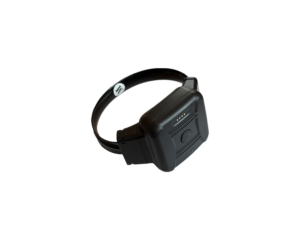
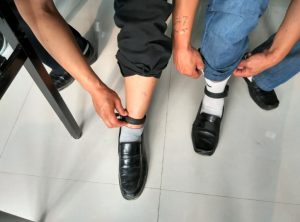
That demand is where electronic monitoring enters the picture. And it’s where technology — particularly GPS ankle monitoring enhanced by artificial intelligence — offers the most credible path toward Fraser’s stated objective.
What Does Bill C-14 Actually Change for Bail Supervision?
Bill C-14 introduces seven new categories of reverse-onus bail, meaning the accused must prove why they should be released rather than the Crown proving why they should be detained. These include violent auto theft, residential break-and-enter, trafficking in persons, and extortion involving violence. Courts must now consider “random or unprovoked violence” when making any bail decision.
The legislation also mandates weapons prohibition orders at bail for serious offences, requires geographic limitations and curfews for auto theft and break-and-enter suspects, and demands that courts scrutinize bail plans more closely in reverse-onus cases.
Here’s the critical implementation gap: the federal government writes these Criminal Code amendments, but provincial and territorial governments are responsible for actually supervising released individuals. The legislation itself acknowledges this, stating that “these changes to the Criminal Code will only be effective if provincial and territorial governments do their part in supporting their implementation” — including “bail supervision programs.”
Traditional bail supervision relies on periodic check-ins with probation officers — typically during business hours, Monday through Friday. For high-risk repeat offenders now subject to geographic restrictions and curfews under Bill C-14, that model is fundamentally inadequate.

The Provincial GPS Arms Race Is Already Underway
Canadian provinces didn’t wait for Bill C-14’s passage to recognize that technology-enabled supervision is the only viable path forward. The investment numbers tell the story:
- Alberta launched its GPS ankle monitoring program in January 2025, investing $2.8 million in the inaugural year. By mid-2026, 300 offenders are wearing GPS trackers, and Budget 2026 allocated an additional $4.1 million over three years to add victim-notification features via a mobile app.
- Manitoba reinstated its electronic monitoring program in August 2024 with an initial investment of $2.9 million, deploying 100 GPS devices. By 2026, a further $1.2 million expansion doubled capacity to 200 devices. All 100 original units are currently in active use monitoring 321 cumulative participants.
- Saskatchewan announced in March 2026 a $2 million expansion adding 100 GPS-enabled units, specifically citing the need to “track individuals in the community and respond quickly when conditions are breached.”
- Ontario operates a province-wide GPS monitoring program for adult offenders on bail, conditional sentences, and temporary absence permits.
- Quebec utilizes tracking bracelets primarily for intimate partner violence victim protection.
The total provincial investment in electronic monitoring infrastructure across Canada now exceeds $13 million annually — and Bill C-14’s stricter bail conditions will accelerate this spending dramatically.
Why “Prevention” Requires Continuous Monitoring — Not Periodic Check-Ins
Fraser’s framing — prevention rather than incarceration — is not merely political rhetoric. It reflects an evidence-based reality that corrections professionals understand intimately: crime prevention among bail-released individuals requires real-time awareness of their movements and compliance.
Consider what Bill C-14 now requires courts to impose as bail conditions for certain offences:
- Geographic limitations (stay away from retail stores for organized shoplifting suspects, stay away from victims’ residences)
- Curfews (for auto theft and break-and-enter suspects)
- Non-communication orders (for extortion and organized crime)
- Weapons prohibition (mandatory for serious offences unless not required for safety)
A probation officer who sees the defendant once a week cannot enforce a geographic exclusion zone. A 9-to-5 check-in system cannot verify a midnight curfew. Only continuous GPS monitoring — with real-time geofence alerts — can provide the 24/7 accountability that these bail conditions actually demand.
This is not speculation. Manitoba’s Justice Minister Matt Wiebe stated explicitly: “Electronic monitoring is a tool that can be used to ensure [released individuals] are following the conditions of their release and prevent the type of chronic, repeat offending that is so frustrating and damaging to public safety.”
The Economics: $150,505 Per Inmate vs. $15 Per Day for GPS Monitoring
Canada’s 2025-26 federal budget allocates $3.86 billion to incarcerate approximately 13,000 people in 53 federal prisons. The annual cost per inmate in a men’s facility: $150,505. For women’s facilities: $259,654. Even community supervision on parole costs $38,418 annually per person.
Electronic monitoring? Approximately $15 per day per unit — roughly $5,475 per year. That’s a 96% cost reduction compared to incarceration, and an 86% reduction compared to community residential facilities ($100/day).
The Swedish natural experiment published in the Journal of Quantitative Criminology (2025) provides the most rigorous evidence yet: when offenders sentenced to up to six months’ imprisonment served their sentences under EM instead of in prison, the reform produced reduced 10-year reconviction and reincarceration rates while simultaneously decreasing the likelihood of being “not in education, employment, or training” (NEET). The mechanism? EM helps offenders sustain regular employment — breaking the criminogenic cycle of incarceration-driven labor market detachment.
This is precisely what Fraser means by “prevent crime from happening that demands incarceration.” Keep people connected to employment, family, and community while maintaining strict accountability — and you address the root causes of recidivism rather than simply warehousing individuals until their next offence.

How AI Transforms GPS Monitoring from Reactive to Predictive
The next frontier — and the one that makes Fraser’s “prevention” vision genuinely achievable — is the integration of artificial intelligence with electronic monitoring infrastructure.
Traditional GPS monitoring is reactive: an alert fires when a geofence is breached, and officers respond after the fact. AI-enhanced monitoring shifts the paradigm toward predictive intervention:
- Behavioral pattern analysis: Machine learning algorithms analyze an individual’s movement history to identify deviations from established routines before a violation occurs. A monitored person who normally takes Route A to work but suddenly begins frequenting areas associated with criminal associates triggers a risk flag — not an arrest, but a proactive check-in from their supervising officer.
- Dynamic risk scoring: Rather than static risk assessments made once at the bail hearing, AI enables continuous recalibration based on real-time compliance data. An individual demonstrating consistent compliance for 90 days presents a fundamentally different risk profile than on Day 1.
- Resource optimization: AI-driven alert triage reduces the false-alarm burden on officers. Not every geofence proximity event requires an emergency response — machine learning can distinguish between a GPS signal bounce near a boundary and a genuine incursion, reducing alert fatigue by 60-80%.
- Victim protection integration: Alberta’s forthcoming victim-notification app represents the convergence of GPS monitoring and AI-driven proximity prediction. Rather than alerting a victim only when the offender has already arrived at their doorstep, predictive analytics can provide advance warning based on trajectory analysis.
A 2026 Rochester Institute of Technology framework proposes integrating convolutional neural networks and artificial neural networks with offender tracking systems to “flag high-risk individuals early, enabling preventative measures to be taken in a timely and effective manner.” This is the technological realization of Fraser’s stated goal: preventing the crime rather than merely punishing it after the fact.
The UK Evidence: GPS Monitoring Reduces Reoffending Among Prison Leavers
The UK Ministry of Justice published its most comprehensive evaluation yet in 2025: the Impact Evaluation of the Acquisitive Crime Electronic Monitoring Project. The findings are unambiguous — GPS location monitoring was associated with a reduction in proven reoffending among male prison leavers in the year following release.
Perhaps more significant: the study found that supplying GPS location data to police regarding monitored individuals in the vicinity of reported crimes “appeared to reduce the number of adult arrests made, and it likely helped to make these types of criminal investigations more efficient.” In other words, GPS monitoring doesn’t just deter the monitored individual — it makes the entire investigative apparatus more targeted and efficient.
This connects directly to the Canadian context. Saskatchewan explicitly partners its electronic monitoring program with the Warrant Enforcement Suppression Team (WEST), ensuring “a rapid response if those offenders breach any of their conditions.” When courts know exactly where every high-risk bail-released individual is at every moment, law enforcement can focus resources on genuine threats rather than conducting blanket sweeps.
Manitoba’s Innovation: Smartphone-Based Curfew Monitoring
Manitoba’s 2026 expansion introduces a particularly forward-looking element: “new curfew monitoring software that uses secure video conferencing and biometric identification to monitor offenders who do not require a traditional ankle bracelet.”
This tiered approach — GPS ankle monitors for high-risk individuals, smartphone-based biometric check-ins for lower-risk populations — represents the maturation of electronic monitoring from a single blunt instrument into a graduated supervision spectrum. It “lessens the burden on police officers completing in-person curfew checks and allows them to focus on responding to emergency situations.”
The implication for Bill C-14 implementation is profound: as courts impose curfews on larger categories of bail-released individuals (auto theft, break-and-enter, organized crime), provinces need scalable solutions. A $15/day GPS ankle monitor is appropriate for the violent extortionist subject to reverse-onus bail. A $3/day smartphone-based curfew check may suffice for the first-time property offender. The technology stack must match the risk profile.
The 31% Recidivism Reduction That Changes the Calculus
The National Institute of Justice’s Florida study — analyzing over 5,000 medium-risk and high-risk offenders compared to 266,000 non-monitored offenders over six years — found that electronic monitoring reduced the likelihood of supervision failure by approximately 31%. GPS-based monitoring outperformed radio frequency systems across all offender categories, including violent offenders.
A 31% reduction in supervision failure, applied to Canada’s bail-released population, translates directly into fewer victims, fewer emergency responses, fewer courtroom hours processing new charges — and fewer prison beds occupied by individuals who reoffend while on release.
This is the math behind Fraser’s rhetoric. “Preventing crime” isn’t an aspiration — it’s a measurable outcome that current GPS monitoring technology demonstrably achieves. The question is no longer whether electronic monitoring works, but whether provincial governments will deploy it at the scale Bill C-14 demands.
What Comes Next: The Five-Year Parliamentary Review
Bill C-14 includes a requirement for the Justice Minister to table annual reports on “the state of bail in Canada” — including data on bail outcomes, compliance, recidivism, and the accessibility of bail — as well as a mandatory parliamentary review beginning five years after Royal Assent.
This creates both accountability and opportunity. Provinces that invest now in GPS monitoring infrastructure, AI-enhanced supervision platforms, and graduated risk-based deployment will have five years of data demonstrating measurable crime prevention outcomes. Those that rely on traditional periodic check-ins will face difficult questions when the evidence shows their bail-released populations reoffending at preventable rates.
The technology exists today. The legal framework — as of July 15, 2026 — demands it. The only remaining variable is political will and procurement speed at the provincial level.
Fraser said the goal is prevention, not incarceration. GPS ankle monitoring, enhanced by artificial intelligence, is the only supervision tool that makes that goal operationally achievable for repeat and violent offenders released on bail. Everything else is aspiration without infrastructure.
About REFINE Technology (CO-EYE)
REFINE Technology is the leading electronic monitoring solutions provider in China with over 16 years of experience in the criminal justice industry. As the exclusive supplier for top security agencies, REFINE Technology has deployed 200,000+ devices across 30+ countries, monitoring 130,000+ individuals. The CO-EYE product line — featuring the next-generation all-in-one GPS ankle monitor, BLE wristbands, RF home beacons, and a unified monitoring platform — delivers high-security, low-stigma supervision for high-risk, mid-risk, and low-risk offender monitoring and victim protection. All CO-EYE devices carry full European NB CE directives (RED/Cybersecurity/LVD/SAR) and FCC certifications, with IP68 waterproof and REACH/RoHS/WEEE compliance. CO-EYE solutions are trusted in the USA, Europe, Africa, Bhutan, Papua New Guinea, Dominican Republic, Armenia, and expanding globally.
For more information, visit www.ankle-monitor.com or contact marketing@rfidcn.com.