
Governor Kevin Stitt signed Senate Bill 1618 into law last week, mandating that all 77 Oklahoma counties adopt validated pretrial risk assessment tools before setting bail. The legislation—officially named the Public Protection Act—takes effect November 1, 2026. On the surface, it reads like procedural reform. Beneath it lies one of the most important questions in criminal justice technology: who belongs in the community, and what does it actually take to keep them there safely?
In my fifteen years working in corrections technology—first as a probation officer fitting ankle monitors in Georgia, then managing EM contracts across eight states—I have watched monitoring programs succeed brilliantly in some jurisdictions and fail catastrophically in others. The difference was never the hardware. It was always the decision about who wears the hardware. Oklahoma’s new law represents a belated acknowledgment of that reality—and a case study in why the EM industry must stop pretending that technology alone solves the public safety equation.
What Does Oklahoma’s SB 1618 Actually Require?
The Public Protection Act amends the state’s Pretrial Release Act (22 O.S. § 1105.2) to require courts to administer a validated risk assessment before any bail determination. The assessment must evaluate:
- Criminal history and severity of current charges
- Substance abuse history
- Community ties (employment, family, residential stability)
- Risk of failure to appear in court
- Risk of danger to others if released
Courts must presume the accuracy of the assessment, though prosecutors can rebut that presumption with “clear and convincing evidence” that deviation is necessary. Judges who deviate must explain their reasoning on the record.
“This bill is made to ensure that we have consistency across the state,” said Sen. Todd Gollihare (R-Kellyville), the bill’s author. Rep. Erick Harris (R-OKC) noted that the federal system already uses comparable tools for all federal cases—SB 1618 replicates that model at the state level.

Why Oklahoma Needs This — The Numbers Tell a Brutal Story
Oklahoma’s incarceration crisis provides the urgent backdrop for SB 1618. Consider the data:
- 905 per 100,000 residents — Oklahoma’s incarceration rate exceeds that of any independent democratic country on earth (Prison Policy Initiative)
- 75% of county jail inmates have not been convicted — they are legally innocent, detained pretrial because they cannot afford bail
- 9,000+ Oklahomans sit in local jails on any given day, with 70% being pretrial detainees
- Oklahoma County Jail, designed for 1,200, routinely holds double that number — 80% are pretrial
- 96,000 different people cycle through Oklahoma jails annually — the human and fiscal cost is staggering
The MODERN Justice Task Force, commissioned by Governor Stitt in 2023, identified the pretrial system as the primary driver of jail overcrowding. Its core finding: people charged with crimes in Oklahoma spend more days in jail awaiting trial than comparable defendants in other states, not because they pose greater risk, but because Oklahoma lacked standardized tools to distinguish risk levels consistently across its 77 counties.
The Critical Balance: Public Safety vs. Over-Incarceration
Here is where the conversation gets uncomfortable—and where I diverge from both the “lock them all up” crowd and the “release everyone” advocates.
The fundamental tension: Electronic monitoring and pretrial release programs exist because mass incarceration is unsustainable—fiscally, morally, and practically. Jailing low-risk defendants destroys their employment, housing, and family ties, making them more likely to reoffend upon release. But releasing high-risk defendants into the community—even with GPS ankle monitors—creates real danger for victims and neighborhoods.
The critical insight that SB 1618 embeds in law: the decision about who gets released matters more than the supervision technology applied after release.
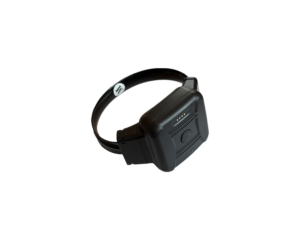
An ankle monitor cannot prevent a determined violent offender from committing a new crime. It can track their location. It can alert authorities after a violation occurs. But it cannot physically restrain. It cannot intervene in real-time. Any EM professional who tells you otherwise is selling fantasy.
What Risk Assessment Tools Actually Measure — And Their Limitations
The Public Safety Assessment (PSA), developed by Arnold Ventures and used in over 40 U.S. jurisdictions, is the most widely deployed pretrial risk tool. It evaluates nine factors to generate scores on three scales: Failure to Appear (FTA), New Criminal Activity (NCA), and New Violent Criminal Activity (NVCA).
Recent validation research paints a nuanced picture:
- A 2025 statewide validation in New Mexico found safety rates declining from 92% in the lowest-risk category to approximately 60% in the highest-risk category—confirming that the PSA does meaningfully stratify risk
- AUC scores (a measure of predictive accuracy) range from 0.58 to 0.69, indicating “fair to good” performance—better than unstructured judicial judgment, but far from perfect
- The PSA demonstrates lower accuracy in predicting violent criminal activity specifically—the very category that most concerns public safety advocates
- A 2025 New York City validation study found that each one-point increase in risk score reduced the likelihood of any re-offense by 16% and violent felony re-offense by 10%
These numbers matter because they quantify both the tool’s value and its ceiling. An AUC of 0.65 means that in 65% of random pairs (one who failed, one who didn’t), the tool correctly identifies who failed. That is meaningfully better than chance (0.50) and better than typical judicial gut instinct. But it also means 35% of the time, the tool gets the relative ranking wrong.
The New Jersey Precedent: What Success Actually Looks Like
Oklahoma is not operating in a vacuum. New Jersey’s 2017 Criminal Justice Reform Act provides the most comprehensive real-world dataset on risk-based pretrial reform.
Results after implementation (NJ Courts Annual Reports, 2017-2025):
- Jail population dropped 52% — from 15,006 (2012) to 7,937 (2019)
- Court appearance rates remained stable — no increase in failure-to-appear
- Crime rates did not increase — public safety was maintained
- 67% reduction in pretrial detention rates among defendants with indictable charges
- Citation-summonses increased from 54% (2014) to 68% (2018) — fewer unnecessary jail bookings
But New Jersey’s experience also reveals uncomfortable truths: racial disparities in jail populations persisted even after reform. Black defendants represented 54% of the jail population before PSA implementation—and the same 54% afterward. The tool did not create bias, but it did not eliminate pre-existing systemic bias either.
Why Electronic Monitoring Cannot Compensate for Bad Risk Decisions
This is the point where the EM industry needs intellectual honesty.
A 2025 Abell Foundation report on pretrial EM in Maryland synthesized the available research and concluded: “There is no clear and convincing evidence that EM effectively reduces FTA rates or recidivism for pretrial supervisees.” An Indiana study (George Mason University, 2020) found “no differences in pretrial supervision failure outcomes between defendants who received electronic monitoring or not.”
This does not mean EM is useless. It means EM is a supervision tool, not a crime prevention tool. The distinction is crucial:
| What EM Can Do | What EM Cannot Do |
|---|---|
| Track location in real-time | Physically prevent movement to a prohibited zone |
| Alert authorities when exclusion zones are breached | Intervene before a crime is committed |
| Provide evidence for court proceedings | Change the underlying risk factors driving criminal behavior |
| Create accountability through monitoring awareness | Substitute for substance abuse treatment or mental health services |
| Reduce some defendants’ flight risk through deterrence | Guarantee community safety for high-risk offenders |
When a jurisdiction puts a GPS ankle monitor on someone who scores “high risk” on a validated assessment—because the jail is full, or because the judge lacks better options—it is not providing public safety. It is providing the appearance of public safety. The monitor will faithfully report the offender’s location right up until the moment they choose to commit a new crime. After that, the data becomes evidence for the next prosecution—cold comfort for the victim.
The Right Framework: Risk Assessment as the Gatekeeper, EM as the Appropriate Response
Oklahoma’s SB 1618 implicitly recognizes a hierarchy that every EM program should adopt:
- Validated risk assessment first — determine who can safely be in the community
- Supervision intensity matched to risk level — low-risk gets minimal conditions; moderate-risk gets EM or check-ins; high-risk gets detained
- Judicial override with documentation — judges retain discretion but must explain departures from data
- Regular reassessment — risk is dynamic, not static; conditions should evolve
When EM is deployed within this framework—as a supervision tool for moderate-risk defendants who have been assessed as suitable for community release—it serves its legitimate purpose. It creates accountability, provides data for compliance monitoring, and offers victims (particularly in domestic violence cases) a layer of geographic awareness they would not otherwise have.
When EM is deployed without this framework—as a blanket condition for anyone the system is nervous about—it becomes what critics accurately call “cages without bars”: punitive, expensive, and no more effective than unsupervised release for the outcomes that actually matter.
Implementation Challenges Oklahoma Must Address
Sen. Michael Brooks (D-OKC) raised legitimate concerns during debate: “It seems like this will actually drag out the process and people will be detained for a longer period of time.” His worry is not unfounded. Implementation risks include:
- Resource disparity across 77 counties: Rural counties with limited budgets may struggle to staff and maintain assessment programs. Sen. Brooks noted counties may “opt out” or “have to find contractors and someone’s going to have to pay the expense.”
- Assessment-to-hearing timing: If assessments take days to complete, defendants may spend more time in pretrial detention waiting for their score—the opposite of the law’s intent.
- Tool selection and validation: The law requires “validated” tools but does not specify which ones. Without Oklahoma-specific validation studies, tools validated elsewhere may produce inaccurate results for Oklahoma’s population demographics.
- Override patterns: Research consistently shows that some judges override risk scores in both directions—releasing high-risk defendants (judicial leniency) and detaining low-risk defendants (judicial caution). Without monitoring override rates and outcomes, the tool’s value erodes.
What This Means for the Electronic Monitoring Industry
Oklahoma’s legislation signals a broader national trend: the era of EM as an “alternative to everything” is ending. Jurisdictions are beginning to demand evidence-based deployment frameworks rather than simply purchasing hardware and hoping for the best.
For EM providers, the implications are clear:
- Integrate with risk assessment outputs: Monitoring platforms must consume risk scores and tailor supervision intensity accordingly. A one-size-fits-all monitoring protocol is clinically and operationally indefensible.
- Demonstrate outcomes, not just compliance: The industry must move beyond “99.5% location accuracy” marketing and demonstrate measurable public safety outcomes—FTA reduction, recidivism reduction, victim safety improvement—within properly risk-stratified populations.
- Accept that some people should not be monitored in the community: The hardest truth for an industry that profits per-enrollee: advocating for appropriate use means sometimes recommending detention for high-risk defendants, even when that means fewer devices deployed.
- Support graduated supervision models: Technology that enables step-down (from GPS to BLE check-in to app-only as risk decreases) and step-up (from minimal monitoring to intensive GPS when violations indicate elevated risk) is where the field must evolve.
The Bottom Line: Technology Serves the Framework, Not the Reverse
Oklahoma joins a growing list of states—New Jersey, Kentucky, New Mexico, Virginia—that have legislated risk-informed pretrial decision-making. The Public Protection Act will not solve overcrowding overnight. It will not eliminate racial disparities embedded in arrest patterns. It will not prevent every tragedy where a released defendant commits a new crime.
What it will do—if implemented with adequate resources, proper tool validation, judicial training, and ongoing outcome monitoring—is create a rational framework for answering the question that matters most: who can safely be supervised in the community, and who cannot?
That question must be answered before we debate what brand of GPS ankle monitor to use. Every dollar spent monitoring someone who should have been detained is a dollar wasted—and worse, a false promise to the community. Every day a low-risk defendant spends in jail because no one ran a validated assessment is a day that increases their probability of future offending, destroys their family stability, and costs taxpayers -150 for detention that serves no public safety purpose.
Electronic monitoring is a powerful tool. But like any tool, its value depends entirely on whether the person wielding it understands its appropriate boundaries. Oklahoma’s Public Protection Act is, at its core, a law about boundaries—about drawing the line between who belongs in the community and who doesn’t, using data rather than intuition. The EM industry should welcome that discipline, even when it limits our market.