
What Training Do Officers Need Before Running an Electronic Monitoring Program?
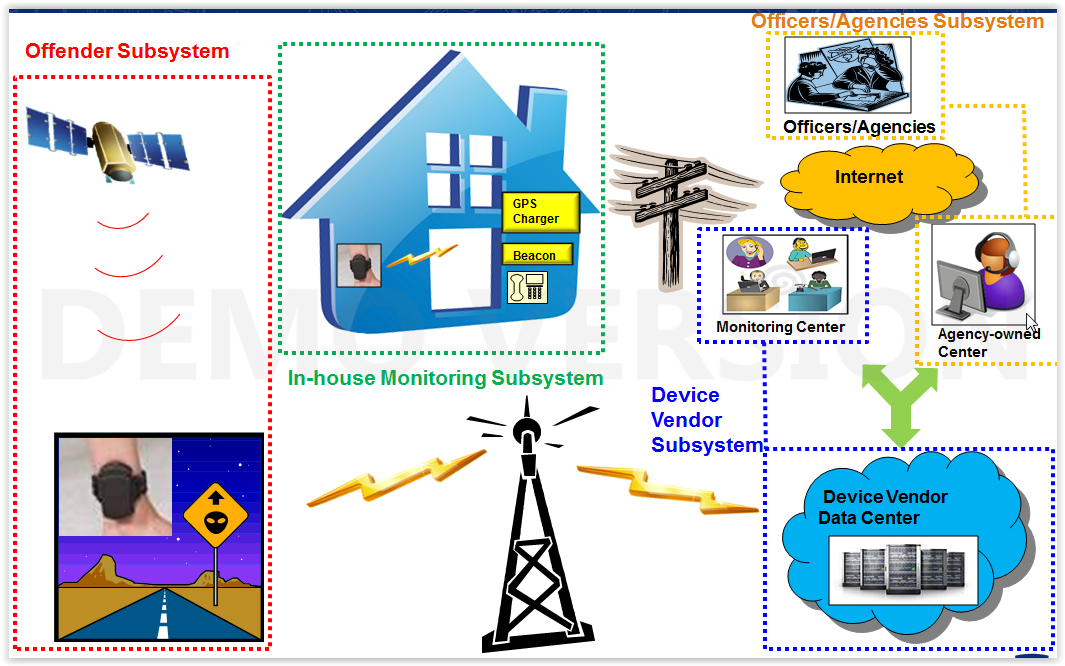
Staff training for electronic monitoring programs spans four domains: device operations (installation, removal, troubleshooting, charging procedures), monitoring center protocols (alert triage, escalation paths, documentation standards), field supervision skills (offender compliance management, home visits, violation response), and legal/ethical framework (Fourth Amendment considerations, data privacy, evidence handling). The UK HM Inspectorate of Probation’s effective practice guide found that programs investing in structured, ongoing training delivered measurably better compliance rates and fewer operational failures than programs that treated EM technology as self-explanatory.
Domain 1: Device Operations
Every officer who touches a device — from booking staff to field probation officers — needs hands-on training with the actual hardware they’ll use. Vendor demonstrations are a starting point, not a substitute.
Core Device Skills
| Skill | Who Needs It | Training Method |
|---|---|---|
| Device installation / removal | All field officers, booking staff | Hands-on practice with demo units on colleagues — not just watching a video |
| Strap sizing and fit | All installation staff | Practice with all available sizes (XS–XL); proper gap check for circulation |
| Charger issuance and instructions | All enrollment staff | Demonstrate to offender during enrollment; document charger serial number |
| Troubleshooting common issues | Field officers, monitoring center | Scenario-based: “device shows offline,” “offender reports charger broken,” “strap loose” |
| Device swap / replacement | Field officers | Practice full swap procedure: remove old device, document condition, install new, verify connectivity |
| Evidence preservation | Field officers, supervisors | How to photograph and document a tampered strap; chain of custody for damaged devices |
Florida’s Department of Corrections requires that officers demonstrate proficiency in equipment assignment, damage assessment, and tamper detection reporting before solo deployment. Virginia’s DCJS guidelines specify that vendor-provided training must be supplemented with agency-specific procedural training.
Installation Time Standards
After training, officers should be able to install a standard ankle monitor in under 3 minutes for one-piece snap-on designs and under 10 minutes for two-piece systems requiring pairing. Time these during training exercises — an officer who takes 20 minutes to install a device in the field creates booking bottlenecks and signals inadequate preparation.
Domain 2: Monitoring Center Operations
Monitoring center staff are the frontline of the entire program. They receive every alert and make the first triage decision: is this a real event requiring response, or a false alert that can be documented and cleared?
Alert Triage Training
Train center staff to classify every alert into one of five categories within 2 minutes of receipt:
- Tamper alert — Strap integrity compromised. Immediate escalation: contact offender, notify field officer, potentially dispatch law enforcement.
- Zone violation — Offender in exclusion zone or outside inclusion zone. Check direction of travel (approaching vs. departing), contact offender, escalate per protocol.
- GPS signal loss — Device lost satellite lock. Check if offender is in a known dead zone (subway, parking garage). Apply suppression window before escalating.
- Low battery / communication failure — Device running low or unable to report. Contact offender for charging compliance. Document pattern if recurring.
- Proximity alert (two-piece systems) — Ankle bracelet and tracker out of Bluetooth range. Often caused by offender leaving tracker in another room. Contact to verify.
Use historical alert data from your first 30 days of operation (or from the vendor’s similar deployments) to build a training library of real scenarios. New monitoring center staff should triage 50+ practice alerts before going live.
Documentation Standards
Every alert must be documented with: timestamp, alert type, triage decision, actions taken, resolution, and time to resolution. This data feeds your program metrics (compliance rates, false alert rates, response times) and may be subpoenaed in court proceedings. Train staff that documentation is not administrative overhead — it’s evidence.
Domain 3: Field Supervision Skills
Offender Enrollment Briefing
The enrollment conversation sets the tone for the entire monitoring period. Train officers to cover:
- What the device does and doesn’t track (dispel myths — it doesn’t record conversations)
- Charging obligations: when, how long, what happens if the battery dies
- Zone restrictions: show the offender a map of their inclusion/exclusion zones
- Consequences of non-compliance: graduated sanctions, not immediate revocation
- How to report problems (damaged device, broken charger, medical emergency)
- Water exposure limits and physical activity restrictions (if any)
Graduated Sanctions
San Francisco’s pretrial EM program experienced a 60% premature termination rate, partly because minor technical violations escalated directly to program removal. Train officers on graduated response:
| Violation Level | Example | Response |
|---|---|---|
| Level 1: Technical | Missed one charging session, brief GPS dropout | Verbal warning, re-education on charging |
| Level 2: Pattern | Repeated charging failures, frequent low-battery alerts | Written warning, increased check-in frequency, office charging requirement |
| Level 3: Substantive | Zone violation without reasonable explanation, prolonged device offline | Curfew modification, GPS sampling increase, in-person review |
| Level 4: Critical | Tamper attempt, new arrest, victim contact (DV cases) | Immediate program termination review, potential re-arrest |
Domain 4: Legal and Ethical Framework
The BJA/APPA User’s Guide identifies five legal areas that every EM officer must understand:
- Fourth Amendment — Continuous GPS tracking is a search. Officers must understand the legal authority for monitoring (court order, conditions of release, consent) and the boundaries of that authority.
- Data privacy — Location data reveals intimate life patterns. Who can access it? Under what circumstances? Can it be shared with other agencies? Train officers on your jurisdiction’s specific data handling requirements.
- Evidence handling — GPS data, alert logs, and tampered devices may be introduced in court. Train officers on chain of custody, screenshot documentation, and report writing standards for admissibility.
- Use of force — What happens during a field contact when an offender resists device installation or removal? Officers need clarity on their authority and limitations.
- Ethical considerations — EM is intrusive. The UK Inspectorate emphasizes that monitoring should be “applied justly and proportionately based on individual circumstances.” Officers who view EM purely as punishment will manage their caseloads differently than those who understand its rehabilitative purpose.
Training Schedule Template
| Phase | Duration | Content |
|---|---|---|
| Initial classroom | 2 days | Program overview, legal framework, monitoring platform navigation, alert classification |
| Hands-on device lab | 1 day | Installation/removal practice, troubleshooting scenarios, charger/swap procedures |
| Shadowing | 5 days | Observe experienced officers during enrollments, home visits, alert responses |
| Supervised solo | 10 days | Handle cases with mentor review; debrief daily |
| Quarterly refreshers | 4 hours | New features, common errors review, policy updates, case discussion |